MBDA Aster 30 / SAMP-T NG: Europe’s Ballistic Missile Defence Shield
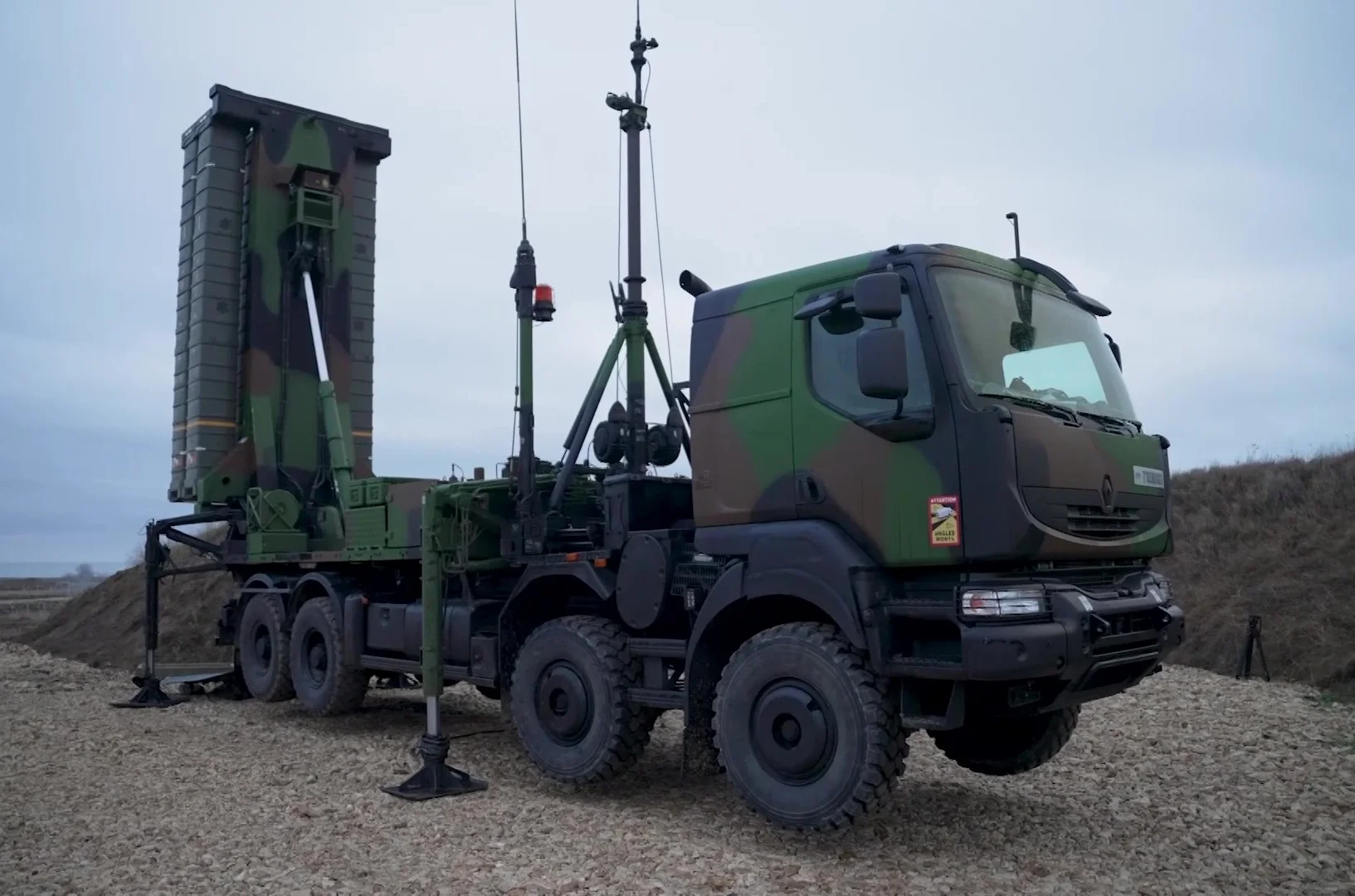
Aster 30 / SAMP-T NG is EUROSAM’s land-based medium-to-long range air and missile defence system, co-developed by MBDA, Thales, and Leonardo. With a 100–150 km intercept range, Mach 4.5 speed, and dual ballistic-missile/airbreathing capability, it represents Europe’s most capable indigenous ground-based air defence solution. France and Italy deployed SAMP-T to Ukraine in 2023–2024, providing the first real-world operational data from a live combat environment.
1. System Architecture and EUROSAM Consortium
EUROSAM was formed in 1989 by France, Italy and — initially — the UK (which later withdrew). MBDA supplies the Aster missile, Thales provides the ARABEL multi-function active phased-array radar, and Leonardo contributes Italian platform integration. The land-based SAMP-T entered French and Italian service in 2006; SAMP-T NG was unveiled at Eurosatory 2022 with its centrepiece being the Aster 30 Block 1NT missile’s enhanced ballistic intercept envelope.
2. Aster 30 Block 1NT — The Ballistic Intercept Upgrade
The core distinction between SAMP-T and SAMP-T NG is the Block 1NT (NATO Theatre) missile. Key improvements include:
- Extended range: ~150 km vs ~100 km for Block 1
- Higher intercept altitude: 25+ km vs ~20 km
- MRBM capability: Engages medium-range ballistic missiles in addition to SRBMs
- Enhanced discrimination: Improved seeker algorithms to differentiate RV from decoys
- Network integration: Updated LINK-16 data fusion from NATO air picture, AWACS, and space-based sensors
3. Technical Specifications
| Specification | Aster 30 Block 1 | Aster 30 Block 1NT |
|---|---|---|
| Length (with booster) | 4.9 m | 4.9 m |
| Diameter | 180 mm | 180 mm |
| Launch weight | ~310 kg | ~310 kg |
| Speed | Mach 4.5 | Mach 4.5+ |
| Range | ~100 km | ~120–150 km |
| Altitude | ~20 km | ~25+ km |
| Guidance | INS + active radar terminal | INS + active radar + upgraded nav |
| Ballistic target | Limited SRBM | SRBM + MRBM |
4. Operators and Export Market
| Country | Version | Status | Notes |
|---|---|---|---|
| France | SAMP-T / SAMP-T NG | Operational | ~10 batteries; 2 committed to NATO |
| Italy | SAMP-T / SAMP-T NG | Operational + upgrading | ~6 batteries |
| Ukraine | SAMP-T | Combat active (2023+) | FR (1) + IT (1) |
| Romania | SAMP-T NG | Contract signed 2024 | Delivery 2026–2027 |
5. Ukraine: Operational Validation
France delivered the first SAMP-T to Ukraine in March 2023; Italy followed in 2024. Deployed around Kyiv and Odessa, the systems have engaged Russian Kalibr cruise missiles, Onyx supersonic weapons, and Iskander-M ballistic projectiles. Field reports confirm high availability rates under sustained combat tempo — a metric that no exercise environment can replicate. The Ukraine experience is directly informing SAMP-T NG upgrades currently in production.
6. Turkey: SİPER as the Domestic Alternative
| Feature | SAMP-T NG | Turkey SİPER Phase-1 |
|---|---|---|
| Range | 100–150 km | ~150 km (target) |
| Ballistic intercept | SRBM + MRBM (Block 1NT) | SRBM (Phase-1); MRBM Phase-2 |
| Guidance | INS + active radar | INS + active radar (ASELSAN) |
| Combat record | Active Ukraine 2023+ | None |
7. NATO Context and Implications
SAMP-T NG’s Romania order — NATO’s first eastern-flank SAMP-T deployment outside France/Italy — signals a structural shift in European air defence procurement away from pure US-system dependency. With Patriot production fully allocated to existing customers and Ukraine resupply, SAMP-T NG fills a critical window for the Baltic, Balkan and Southeastern European countries rebuilding air defence depth. Expected additional customers: Greece (Patriot upgrade alternative), Poland (exploring EUROSAM offer), Belgium (air defence gap post-F-16 drawdown).
8. Assessment
SAMP-T NG is the strongest European case for missile defence autonomy. Its Ukraine combat record, Romania export breakthrough and Aster 30 Block 1NT’s MRBM capability position it as the credible Patriot alternative NATO Europe has needed. Production ramp at MBDA’s French and Italian facilities will determine whether it scales to meet growing demand. Turkey’s SİPER programme — if Phase-1 qualifies on schedule — will provide its own benchmark by 2027.