US Army Rehearses Rapid HIMARS Airlift Between Hawaiian Islands: JPMRC 27-01

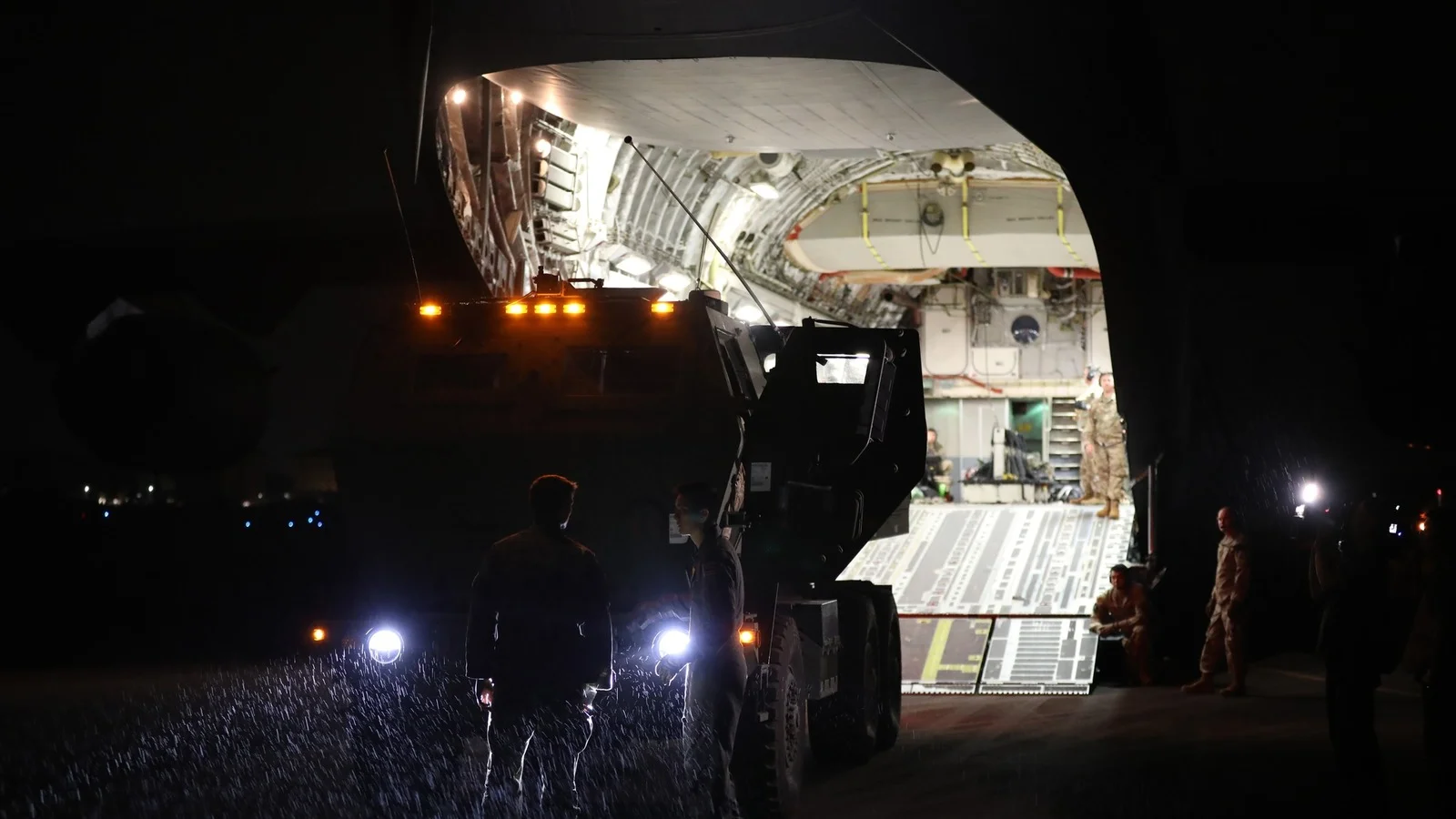
Artillery crews from the U.S. Army’s 25th Infantry Division rehearsed flying a HIMARS rocket launcher between Hawaiian islands and getting it into firing position within hours, part of the JPMRC 27-01 rotation that ran this week at the Army’s newest Combat Training Center. The November 10 rehearsal was a dry-fire drill; no rockets were launched.
Who did what
Soldiers from 2nd Battalion, 11th Field Artillery Regiment, 25th Infantry Division Artillery Brigade, handled the launcher and prepared the simulated fire mission, while airmen from the 15th Wing flew and loaded a C-17 Globemaster III. The launcher was moved by air to establish a temporary firing position, then secured again for follow-on movement once the drill wrapped up. The Army calls the maneuver HIMARS Rapid Infiltration, or HIRAIN — pairing the launcher’s road mobility with airlift to cross stretches of open ocean no road can cover.
It is not a new trick for this unit. The 25th Infantry Division’s shift to HIMARS began in July 2025, when it received its first launchers at Joint Base Pearl Harbor-Hickam, and crews have since run similar infiltration drills in earlier JPMRC rotations and during Cobra Gold 2026 in Thailand, where a C-130J handled the lift in March.
What the rehearsal didn’t show
Army Recognition, which first reported the drill, was careful to note its limits: no live-fire accuracy, no measured deployment timeline, and no ammunition performance data came out of the exercise. Whether the concept holds up is a separate question from whether it was rehearsed — sustainment, airfield capacity, ammunition stocks, targeting data, communications and force protection all have to work together before rapid-reposition tactics mean anything under actual enemy observation or attack, a point the outlet’s reporting underlined directly.
Why the Pacific’s geography drives this
Scattered island chains make positioning rocket artillery harder than in a contiguous theater: a launcher on one island is of limited use if it cannot move to reinforce another. Airlifting HIMARS between islands and setting up temporary firing points is meant to let the Army reinforce threatened sectors quickly while also making the launcher harder for an adversary to find and target between shots — a “shoot and scoot” logic familiar from artillery doctrine, extended here to interisland distances a truck alone cannot cross. JPMRC 27-01 draws participants from South Korea, Singapore, France, New Zealand, Japan and the Maldives, though broad participation in the rotation does not mean all of them took part in the HIMARS portion specifically.
Part of a busier 2026 training calendar
This rehearsal is one entry in a thickening schedule of similar drills across the Indo-Pacific this year: HIMARS insertion from a Maneuver Support Vessel (Light) in Hawaii in February-March, a HIRAIN certification run by I Corps in April, a HIRAIN mission during Balikatan 2026 in the Philippines, and airlift drills during Orient Shield 26 and Keen Sword 27 in Japan in September and October. Together they suggest the Army now treats rapid air movement of HIMARS as a routine readiness task for a Pacific contingency rather than a one-off demonstration.
Sources
Army Recognition, “U.S. Army Rehearses Rapid HIMARS Rocket Launcher Deployment for Dispersed Indo-Pacific Operations,” November 11, 2026, armyrecognition.com. Used for: unit identification, exercise name, date, location and scope of the HIMARS air-deployment rehearsal.