ROKETSAN LAÇİN and L-POD: The Smart Bomb the Pilot Can Steer After Release, Explained

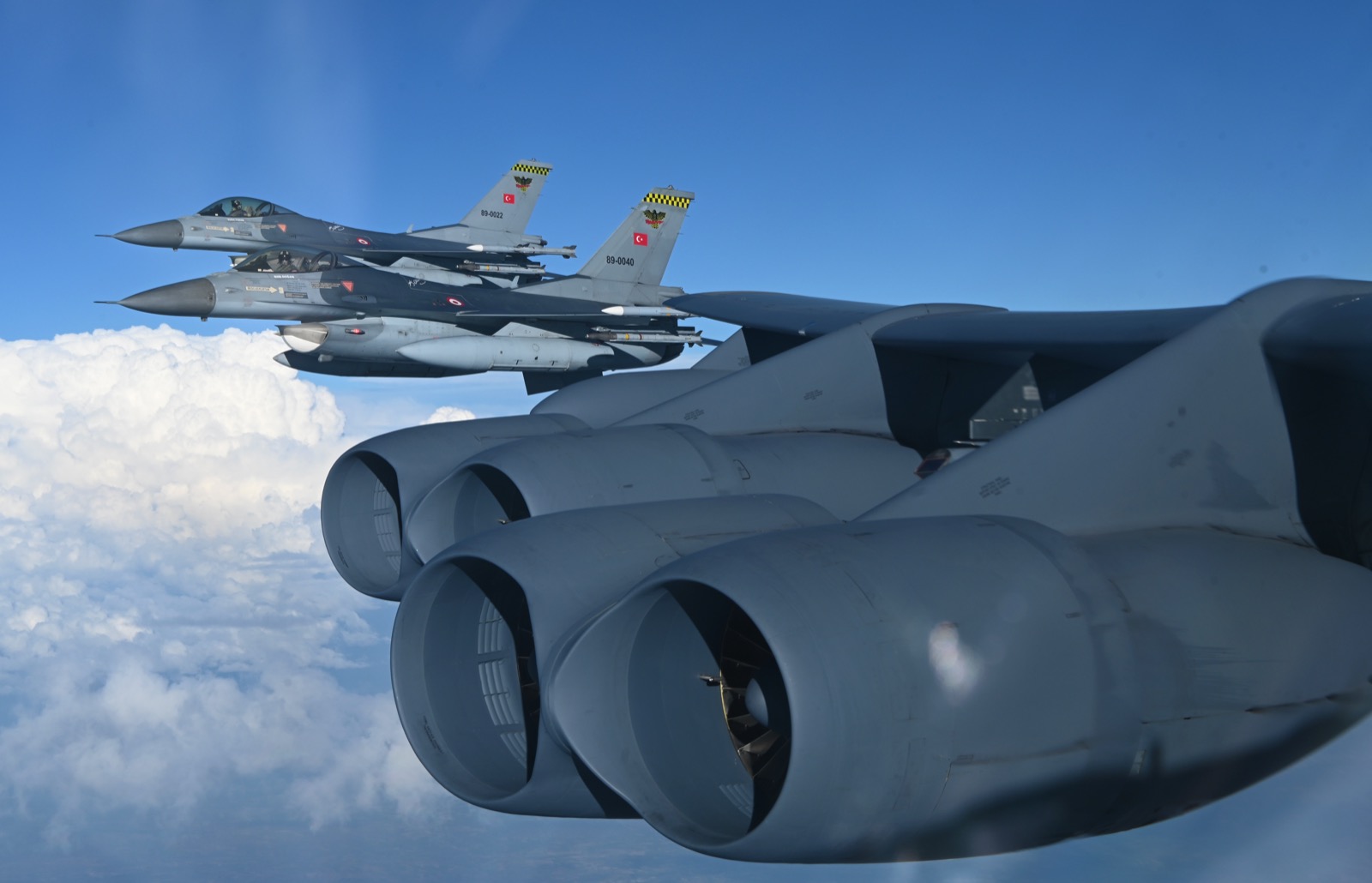
Image: Turkish Air Force F-16 — the launch platform for ROKETSAN LAÇİN with its L-POD targeting capsule. U.S. Air Force photo by Tech. Sgt. Jael Laborn, public domain (Wikimedia Commons).
A classic smart bomb works like this: you launch it, it flies to the pre-loaded GPS coordinate, and it stops being your problem. If the target moves, if a civilian car drives into the impact area, if the wrong building is about to be hit — too late, the bomb is already in the air and committed. ROKETSAN LAÇİN was built specifically to undo that limitation.
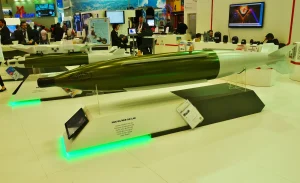
LAÇİN is a guidance kit for the standard Mk-82 (227 kg) general-purpose bomb. Two features set it apart from a plain GPS-guided smart bomb. First, the kit has an imaging-infrared (thermal) camera in its nose. Second, it has a two-way data link with the launching aircraft. While the bomb is in the air, the pilot watches the bomb’s-eye view on a cockpit display and can change the target — or abort the strike — right up to the last few seconds before impact.
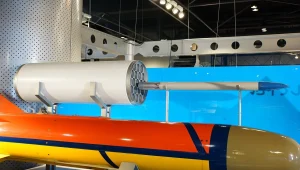
The pod that makes that possible is called L-POD (the LAÇİN POD). It hangs under the aircraft and carries the high-bandwidth data link and processing electronics needed to stream video from the bomb back to the cockpit and send commands the other way. Together, LAÇİN and L-POD give a Turkish F-16 pilot a capability the US Air Force has had for decades with AGM-65 Maverick — and that few other air forces field at all.
At a Glance
How LAÇİN Works
LAÇİN combines three navigation sources: an inertial measurement unit that tracks the bomb’s motion regardless of GPS, GPS itself, and a thermal camera in the nose. They cooperate in sequence — inertial and GPS get the bomb roughly to the target, and the thermal seeker takes over for the final dive. A moving vehicle shows up on a thermal camera as a bright spot (because of engine heat); LAÇİN chases that spot.
L-POD’s role is different from the bomb. It is a pod that hangs under the wing of the launching aircraft. Inside the pod sits a high-speed processor and a wideband data link. Two functions: stream the camera feed from the bomb back to the pilot’s cockpit display in real time, and carry the pilot’s commands the other way — “switch target,” “abort,” “go to new coordinate.” This style of operation is called man-in-the-loop: the human stays in the kill chain right up to impact.
What LAÇİN Buys You
Why It Matters
The defining LAÇİN scenario is this: the pilot has released the bomb, but before it reaches the target a civilian vehicle drives into the impact area. With a press of a button, the pilot can change the bomb’s direction or abort the mission entirely. From an ethical and legal point of view, this is exactly the kind of capability modern air operations are increasingly required to demonstrate.
In the Turkish operational context — Syria, Iraq, Libya — targets are often close to civilian zones or constantly relocating. A classic GPS-guided bomb cannot adapt after release. LAÇİN and L-POD give the Turkish Air Force a domestic answer to that grey zone of modern warfare.
Specifications
| Specification | Value |
|---|---|
| Type | Thermal-imaging, pilot-controlled guidance kit + command pod |
| Base bomb | Mk-82 (227 kg class) |
| Total weight | 262 kg |
| Length | 2.7 m |
| Range | 2 – 28 km |
| Accuracy (CEP) | Under 3 metres |
| Release altitude | 0 – 40,000 ft (up to ~12 km) |
| Guidance | IMU + GPS + imaging-infrared seeker |
| Targets | Fixed and moving |
How LAÇİN Compares Internationally
| System | Country | Notes |
|---|---|---|
| LAÇİN + L-POD | ROKETSAN — Türkiye | Thermal seeker + pilot data link on Mk-82 |
| AGM-65 Maverick | Raytheon — USA | Doctrine ancestor — thermal-seeker air-to-ground missile |
| GBU-54 LJDAM | Boeing — USA | Laser + GPS hybrid JDAM — partial peer |
| Spice 1000/2000 | Rafael — Israel | Image-based + INS — closest international peer |
| AASM Hammer | Safran — France | Modular kit family — thermal variant exists |
Place in the Turkish Guidance-Kit Family
LAÇİN sits at the higher end of Turkey’s domestic guidance-kit portfolio — the option to reach for when the mission needs pilot judgement in the final seconds. The wider family:
- HGK (TÜBİTAK SAGE) — INS+GPS for Mk-83/84.
- KGK (TÜBİTAK SAGE) — long-range winged kit reaching 100+ km.
- LGK (TÜBİTAK SAGE) — pure laser-guidance kit.
- TEBER (ROKETSAN) — INS+GPS+laser triple-mode for Mk-81/82.
- LAÇİN + L-POD (ROKETSAN) — thermal-camera + pilot data link on Mk-82 — this article.
- ELÇİN (ROKETSAN) — winged laser kit for all four Mk sizes.
- BOZOK (TÜBİTAK SAGE) — mini smart bomb for unmanned aircraft.
Summary
| Name | ROKETSAN LAÇİN + L-POD |
|---|---|
| Class | Thermal-camera, pilot-controlled smart-bomb kit + command pod |
| Builder | ROKETSAN |
| Base bomb | Mk-82 (227 kg) |
| Special capability | Moving-target tracking + in-flight retargeting (man-in-the-loop) |
| Range / Accuracy | 2–28 km / under 3 m CEP |
Sources: