HAVELSAN BARKAN-3: Turkey’s First Level-2 Autonomous Ground Robot That Can Also Fly Drones, Explained

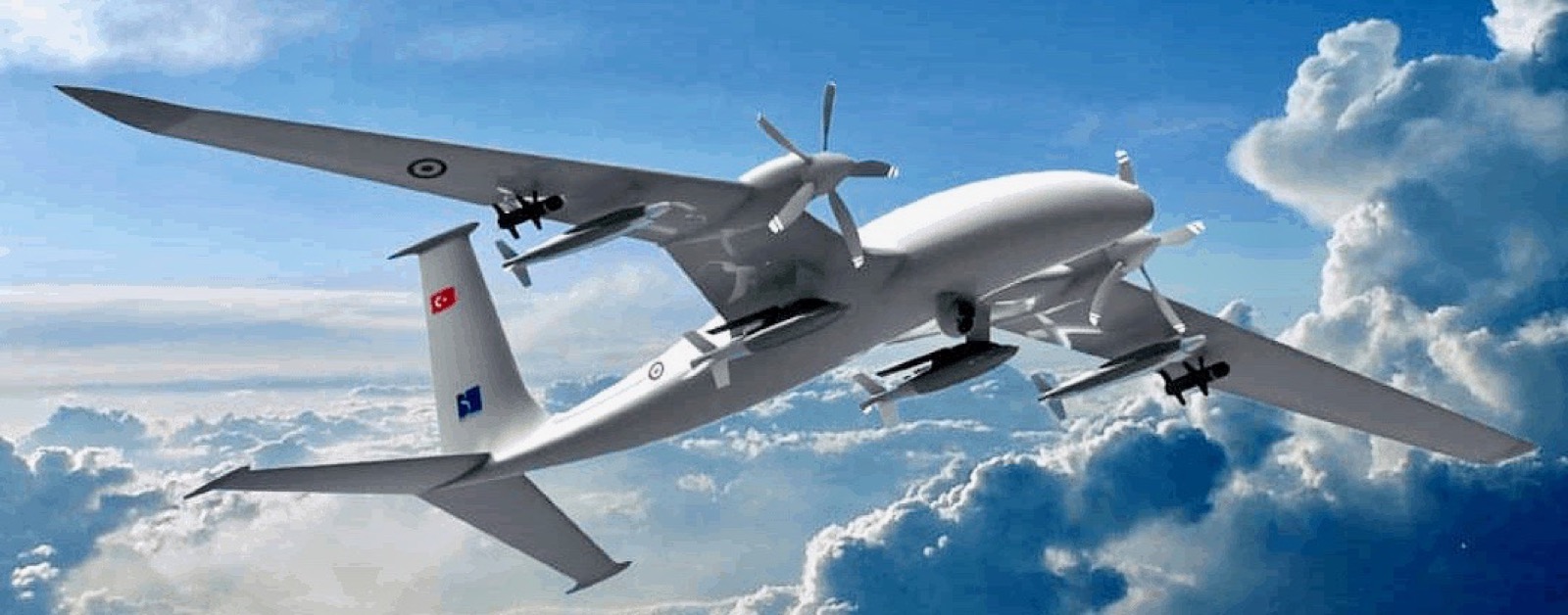
Image: Bayraktar AKINCI UCAV — representative of the kind of unmanned aircraft BARKAN-3 is designed to control directly from the ground. Photo by ArmyInForm, Wikimedia Commons, CC BY 4.0.
Drones in the sky are now familiar. Drones on the ground — vehicles that move themselves over hills and rivers, decide their own routes, and operate without anyone inside — are still the unusual cousin. HAVELSAN’s BARKAN family is Turkey’s serious answer to that gap. The newest member, unveiled at SAHA EXPO 2026, is BARKAN-3: a one-tonne, 250-kilogram-payload unmanned ground vehicle (UGV) with two features that put it ahead of the earlier BARKAN-1 and BARKAN-2 — a higher level of autonomy, and the ability to control drones in the air directly from its own command stack.
BARKAN-1 and BARKAN-2 are first-level autonomous vehicles — they can follow waypoints, avoid obstacles, return to a designated point. BARKAN-3 is the first Turkish UGV rated for level-2 autonomy: more capable AI for path planning, 360-degree environmental awareness from multiple sensors, and the ability to remember the route it took and drive itself back without any external input — what HAVELSAN calls “return home.”
The killer feature, though, is in the name: manned-unmanned teaming. BARKAN-3 is designed not just to drive, but to act as a ground-based command node for Turkish unmanned aircraft. A patrol of soldiers can deploy a BARKAN-3 forward; the vehicle scouts ahead, launches and controls a small drone for overhead vision, and pulls back when the route is mapped — all without a human in the lead vehicle.
At a Glance
What BARKAN-3 Actually Does
Specifications
| Specification | Value |
|---|---|
| Type | Level-2 autonomous unmanned ground vehicle (UGV) |
| Builder | HAVELSAN |
| First Display | SAHA EXPO 2026 |
| Dimensions | 2.7 m × 1.5 m |
| Weight | 1 tonne |
| Payload | 250 kg |
| Top Speed | 25+ km/h |
| Step Climb | 35 cm vertical |
| Trench | 70 cm |
| Side Slope | 60% |
| Fording | 50 cm of water |
| Autonomy Level | Level 2 (earlier BARKANs are Level 1) |
| Sensors | Driving + situational cameras, multiple LiDARs, radar |
| Key Capabilities | UAV management, return-home autonomous recovery |
The BARKAN Family Architecture
BARKAN-3 is not a standalone product. HAVELSAN’s Pelvan command software runs the whole family as a single fleet — multiple BARKAN platforms (1, 2, 3) co-ordinated by one operator. The architectural pay-off: a Turkish infantry unit can deploy a mixed convoy of BARKAN-1 reconnaissance robots, BARKAN-2 fire-support vehicles, and BARKAN-3 autonomous lead platforms all on the same logistics chain, sharing spare parts and operator training.
The other domestic UGVs in the Turkish ecosystem — HAVELSAN’s own ASLAN heavy-class, Shadow Rider tactical, KAPAN kamikaze and KARGI mini, plus Aselsan TOSUN, BMC TULGA and Otokar’s URAL/AKREP II-İKA — give Turkey one of the deeper unmanned-ground-vehicle line-ups in Europe.
How BARKAN-3 Compares Internationally
| System | Country | Payload |
|---|---|---|
| BARKAN-3 | HAVELSAN — Türkiye | 250 kg |
| THeMIS | Milrem Robotics — Estonia | 750 kg |
| Mission Master | Rheinmetall — Germany | 600 kg |
| Ripsaw M5 | Textron — USA | Very large (combat UGV) |
| MUTT | General Dynamics — USA | 270 kg |
| Uran-9 | Rosoboronexport — Russia | Heavy-class combat UGV |
BARKAN-3 sits in the same category as Milrem’s THeMIS and Rheinmetall’s Mission Master. The combination of level-2 autonomy and direct UAV management is what HAVELSAN points to as the distinctive Turkish contribution — most international peers offer one or the other, not both.
Why It Matters for Turkey
Ground robotics is the part of the unmanned story Turkey was slowest to develop. The country built a global drone brand around the Bayraktar, then a regional one around naval USVs with ULAQ and SANCAR. UGVs were the missing leg of the stool. BARKAN-3 is the platform that turns that into a complete picture: air, surface, sub-surface, and now ground — all unmanned, all Turkish, all on the same command software stack.
The doctrinal point is also worth stating. A BARKAN-3 with a small drone overhead and a soldier-operator at a safe distance is the Turkish military’s expression of a worldwide trend: pushing the dangerous parts of a mission into machines while keeping humans in the decision loop. That is the model Ukraine has demonstrated on a much larger scale since 2022, and BARKAN-3 is a clear sign that the Turkish General Staff has read those lessons closely.
Summary
| Name | HAVELSAN BARKAN-3 |
|---|---|
| Class | Level-2 autonomous unmanned ground vehicle |
| Weight / Payload | 1 tonne / 250 kg |
| First display | SAHA EXPO 2026 |
| Distinctive feature | Level-2 autonomy + onboard UAV management |
| International peers | THeMIS (Estonia), Mission Master (Germany), MUTT (USA) |
Sources: