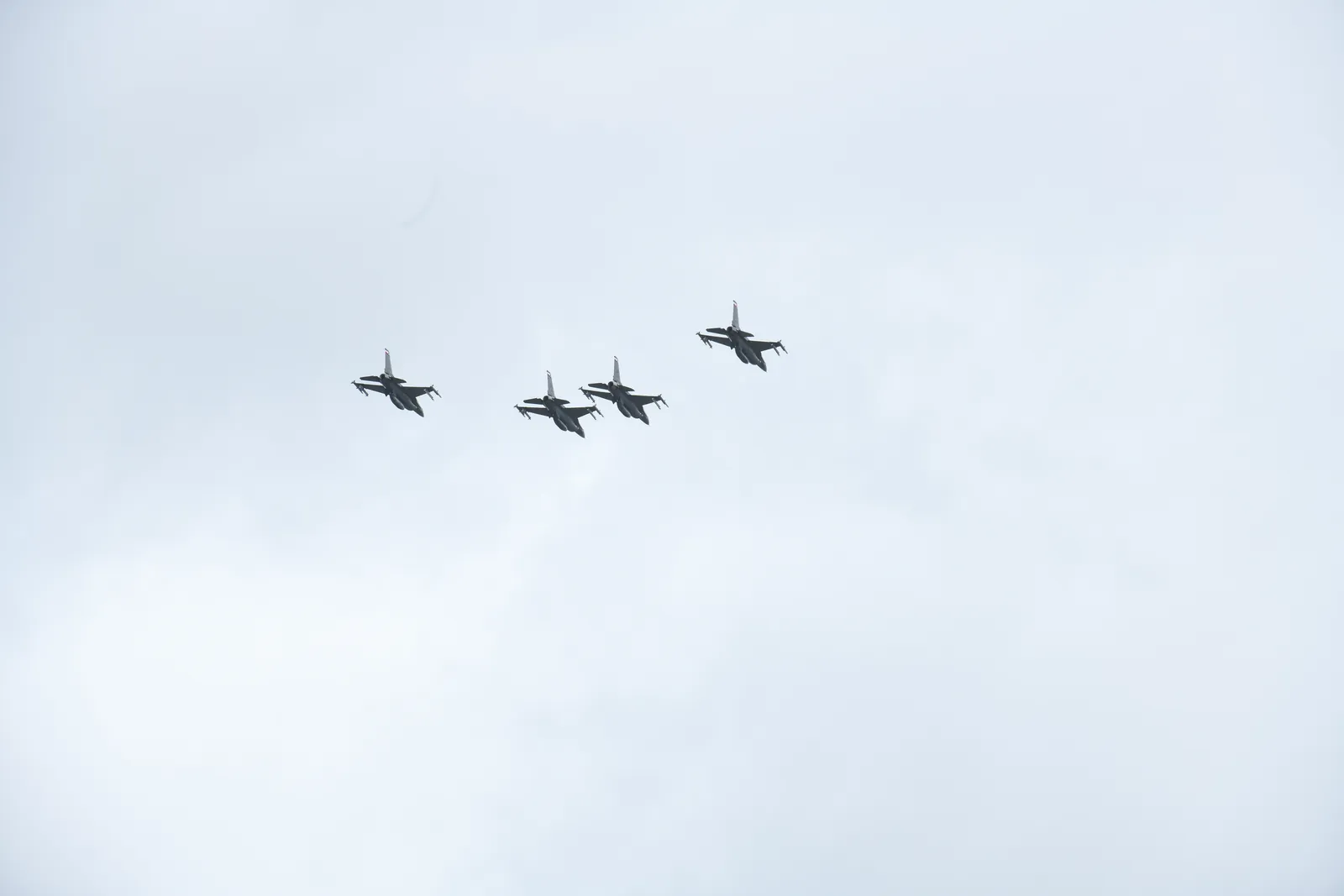
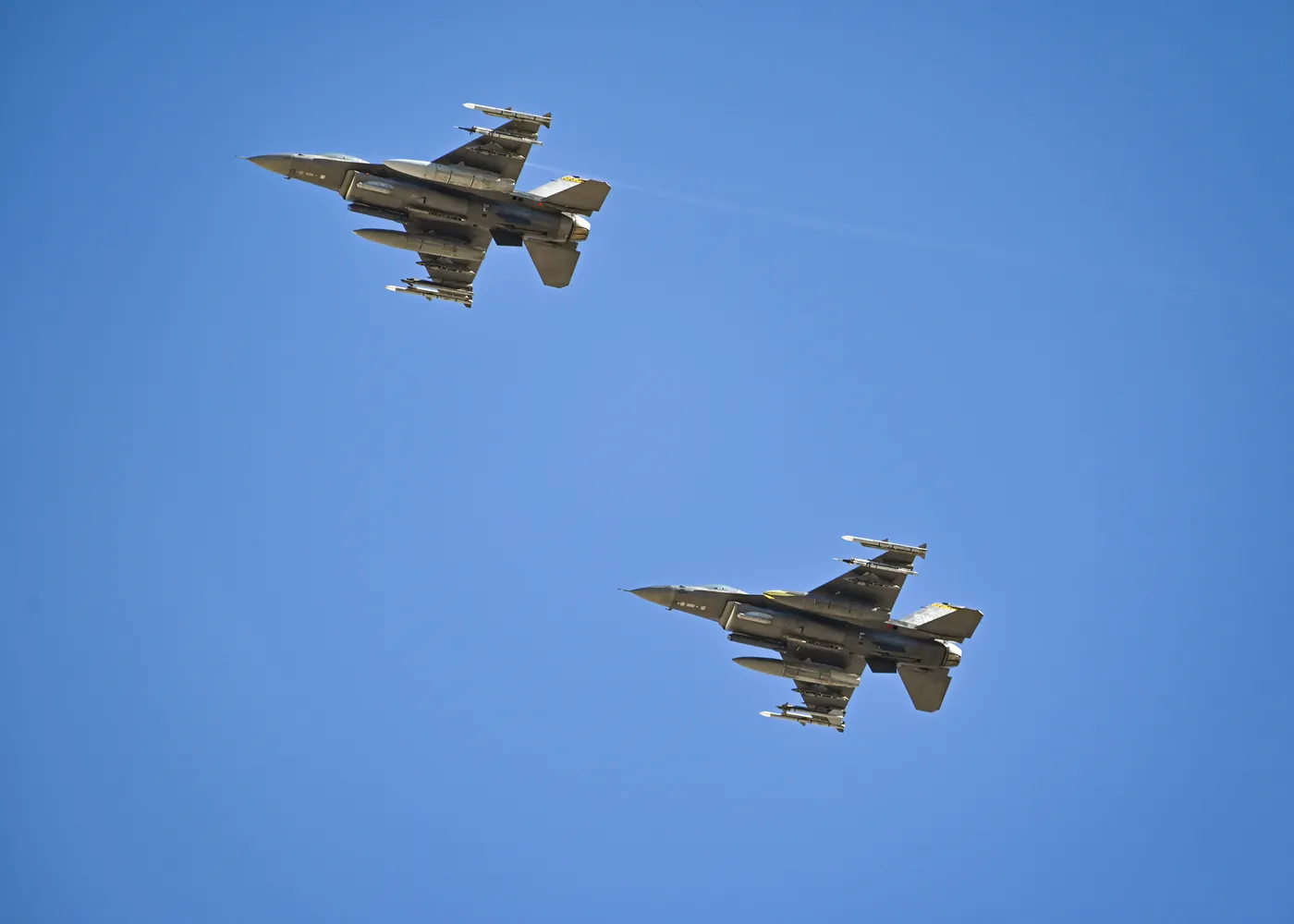
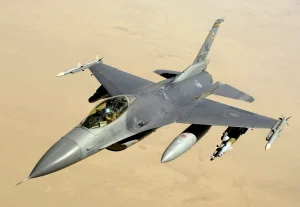
F-16 Fighting Falcon is the world’s most widely used multirole fighter, built by US-based Lockheed Martin (formerly General Dynamics). A total of 4,604 were built and it serves with 28 countries, with over 2,100 still active. This dossier compiles which countries operate it and in what numbers, its delivery timeline, its relationship with Türkiye (TUSAŞ production and ÖZGÜR modernization) and technical data from open sources.
The F-16 holds special significance for Türkiye: TUSAŞ produced 270 under license, the Turkish Air Force has one of the world’s largest F-16 fleets, and the jets are modernized through the indigenous ÖZGÜR project — also framed here as the bridge to KAAN.
4,604
Total built
28 countries
Operators
Türkiye 270
TUSAŞ production (~245 active)
Block 70
Latest Viper version
Contents: Tap each heading to expand — what the F-16 is, which countries, how many, Türkiye and the F-16 (TUSAŞ/ÖZGÜR), variants, timeline, specs, bridge to KAAN, manufacturer.
What is the F-16?
The F-16 Fighting Falcon was designed in the 1970s as a light, agile and affordable fighter and evolved into a multirole platform able to do everything from air superiority to ground attack. Its single engine, bubble canopy and fly-by-wire controls made it the reference aircraft of its class.
Produced and continuously modernized for over forty years, the F-16 gained AESA radar and modern avionics in the latest F-16V (Block 70/72) Viper. This gradual evolution made it the longest-serving and best-selling model in the fourth-generation fighter market.
Which countries operate it?
The F-16 is the common fighter of the US and its allies. The table summarises the main operators and approximate fleet sizes per open sources.
Figures are from open sources. As many European nations move to the F-35, they transfer older F-16s to Ukraine — bringing the F-16 back to prominence in a current conflict.
How many were built and delivered?
Since service entry in 1978, 4,604 F-16 have been built, and it is one of the few fourth-generation jets still in production. Production continues today for export, especially the F-16 Block 70/72 Viper.
Bahrain, Slovakia, Bulgaria, Taiwan and Peru have received or ordered new Block 70 Vipers. Türkiye also received US approval for 40 new Block 70 Vipers — showing the F-16 line is still alive in the 2020s.
The F-16 is the backbone of Türkiye’s aerospace industry. TUSAŞ produced 270 F-16 under license in the ‘Peace Onyx’ programs from 1987 to 2012 and modernized many. The Turkish Air Force has one of the world’s largest F-16 fleets at about 245 aircraft.
Today Türkiye advances on two fronts: the 40 new F-16 Block 70 Vipers the US approved in 2024, and the fully indigenous ÖZGÜR project modernizing existing Block 30/40/50 jets with domestic avionics, radar and software. Choosing ÖZGÜR over the originally planned 79 American kits shows the value Türkiye places on localization even in the F-16. The F-16 will eventually give way to the indigenous KAAN.
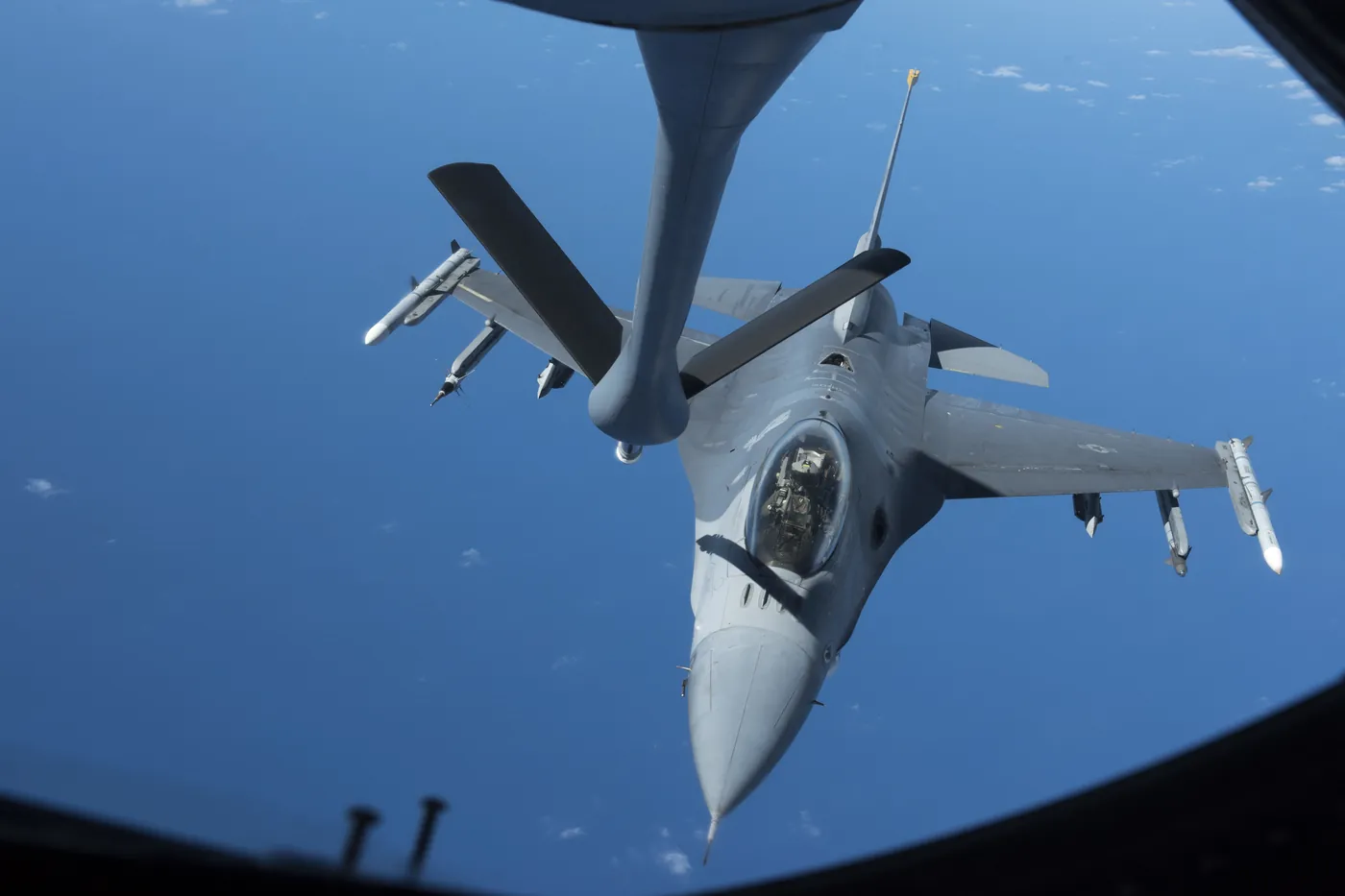
An F-16 during air refueling. Source: Wikimedia Commons (public domain).
Variants: from Block 30 to Block 70 Viper
Block 30/40/50 — common service versions (including Türkiye’s fleet)
F-16V / Block 70/72 Viper — AESA radar, modern avionics; latest production
KF-16 / customized versions — indigenous upgrades (e.g. South Korea)
Delivery and production timeline
Date
Event
Party
Source
1978
Entered US Air Force service
USA
Air Force Technology
1987–2012
TUSAŞ produced 270 F-16 (Peace Onyx)
Türkiye
Tabya Dijital
2010s
F-16V Viper / Block 70 modernization and production
Many nations
Lockheed Martin
2024
US approval of 40 Block 70 Vipers for Türkiye
Türkiye
Defensehere
2024–2025
Transfer of European F-16s to Ukraine
Ukraine
Open source
Ongoing
TUSAŞ ÖZGÜR-1/-2 modernization of Block 30/40/50
Türkiye
official source
Technical specifications
Feature
Value
Type
Single-engine multirole fighter (4th/4.5 gen)
Engine
Pratt & Whitney F100 or General Electric F110
Max speed
Mach 2
Range
~4,200 km (ferry)
Crew
1 (F-16D: 2)
Armament
20 mm cannon + AIM-120/AIM-9, air-to-ground munitions
Manufacturer
Lockheed Martin (formerly General Dynamics)
Total built
4,604
Bridge to KAAN and the Turkish equivalent
In Türkiye, the long-term successor to the F-16 is the indigenous 5th-generation fighter KAAN. With KAAN deliveries planned from 2028, the F-16 fleet will remain the backbone into the 2040s through ÖZGÜR modernization and new Block 70 Vipers.
In the interim, 40 Eurofighter Typhoons also serve as a bridge. This triad — modernized F-16, Eurofighter and new KAAN — forms the basis of Türkiye’s air-power transition. The F-16 is both its present and proof of how the domestic industry matured.
Manufacturer: Lockheed Martin
The F-16 was originally developed by General Dynamics; the program later passed to Lockheed Martin. With export demand, the line moved to Greenville (South Carolina), where the Block 70/72 Viper is still built.
Lockheed Martin positions the F-16 as the affordable leg of a ‘high-low’ mix alongside the F-35. The license-production model with partners like TUSAŞ also made the F-16 a vehicle of technology transfer.
Significance
The F-16 is the symbol of the fourth-generation fighter era and still the world’s most widespread combat aircraft. Its continuous modernization will keep it in the field for years.
For Türkiye, the F-16 is not just an aircraft; it is the key platform on which TUSAŞ gained aircraft-production capability, learned localization through ÖZGÜR, and paved the road to KAAN.
Frequently Asked Questions
Which countries operate the F-16?
Besides the USA, 28 countries operate the F-16, including Türkiye, Israel, Egypt, Greece, South Korea, Taiwan, Poland, the Netherlands, Belgium, Pakistan, UAE, Iraq, Morocco and (donated) Ukraine — one of the most widespread fighters ever.
How many F-16 were built?
A total of 4,604 F-16 were built, with over 2,100 still active — making it the world’s most common fixed-wing military aircraft in service.
How many F-16 does Türkiye operate / did it produce?
TUSAŞ produced 270 F-16 under license between 1987 and 2012; the Turkish Air Force operates about 245, one of the world’s largest fleets. Türkiye also modernizes them through the indigenous ÖZGÜR project.
Is Türkiye buying new F-16s?
Yes. The US approved 40 new F-16 Block 70 Vipers for Türkiye in 2024. Instead of the originally planned 79 modernization kits, modernization is being done through the indigenous TUSAŞ ÖZGÜR project.
What is the ÖZGÜR project?
ÖZGÜR is TUSAŞ’s project to modernize F-16 Block 30/40/50 jets with indigenous avionics, radar and software — letting Türkiye keep its F-16 fleet current without foreign dependence.
What will replace the F-16?
In Türkiye, the long-term successor is the indigenous 5th-generation fighter KAAN; in the interim, 40 Eurofighter Typhoons and Block 70 Vipers serve as a bridge.