What is the Kalibr Cruise Missile? Russia’s Standard Naval Strike Weapon, Explained
Summary Not Found.
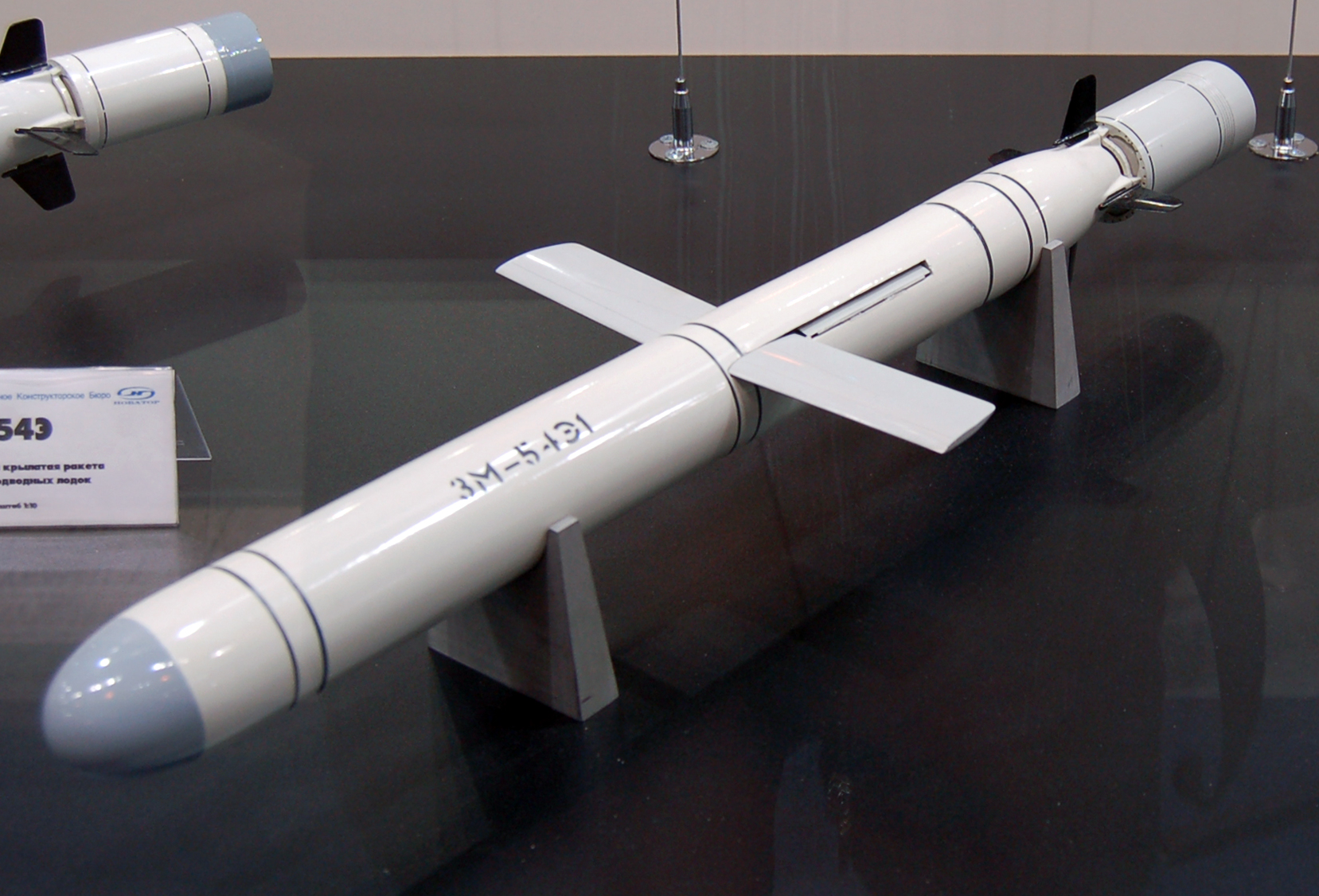
The Kalibr is a family of Russian long-range cruise missiles designed by the Novator Experimental Design Bureau. The most-discussed variants are the land-attack 3M14 Kalibr (NATO: SS-N-30A Sagaris) launched from surface ships and submarines, and the anti-ship 3M54 Kalibr with a supersonic terminal stage. First combat use occurred on 7 October 2015, when four Russian Buyan-M corvettes in the Caspian Sea launched 26 Kalibrs against Syrian targets. Since 2022 the Kalibr has become Russia’s primary naval strike weapon against Ukraine, with more than 500 rounds fired from Black Sea surface ships and Improved Kilo-class submarines.
Russia, India (Klub variant), Algeria, China, Vietnam
Variants
Variant
Role
Notes
3M14 (SS-N-30A)
Land attack
2,500 km Russian range
3M14E
Export land attack
MTCR-limited to 300 km
3M14T (Kalibr-NK)
Surface-ship
Used on Buyan-M, Gorshkov, Karakurt
3M14K (Kalibr-PL)
Submarine-launched
Standard for Improved Kilo, Yasen
3M54 (SS-N-27 Sizzler)
Anti-ship
Subsonic cruise + Mach 2.9 terminal sprint
91R / 91RT
Anti-submarine
Kalibr-launched rocket-torpedo
Kalibr-M (planned)
Land attack
4,500 km range; in development
Combat record
7 October 2015 – Syria. First combat use. 26 Kalibrs launched from Caspian Buyan-M corvettes against Syrian opposition targets.
2015-2017 – Syria. Sustained use against ISIS and opposition; submarine-launched strikes from Rostov-on-Don.
2022-present – Ukraine. Primary Russian Black Sea Fleet stand-off weapon. 500+ confirmed launches against Ukrainian infrastructure – energy, command, ammunition, railway. Ukrainian air-defense intercept rate is estimated at 50-70 percent.
The Sevastopol shock
13 September 2023 – Sevkabel shipyard. A Ukrainian Storm Shadow strike destroyed the Improved Kilo Rostov-on-Don in dry-dock – the submarine was loaded with Kalibrs at the time. Largest single Russian naval loss since WWII.
2024 – Black Sea Fleet relocation. Russia transferred surviving Kalibr-capable platforms from Sevastopol to Novorossiysk after sustained Ukrainian strikes.
Kalibr vs. its peers
Kalibr 3M14
Tomahawk Block V
Storm Shadow / SCALP
JASSM-ER
Range
2,500 km
1,600 km
560 km
900 km
Launch platform
Surface, submarine, container
Surface, submarine, truck
Aircraft
Aircraft
Stealth shaping
Partial
No
Yes
Yes (extensive)
Anti-ship variant
Yes (3M54)
Yes (MST)
No
Yes (LRASM)
Combat-proven
Heavy (Syria, Ukraine)
Heavy
Iraq, Libya, Ukraine
Syria, Yemen, Ukraine
Why Kalibr matters
The Kalibr is Russia’s most-used naval cruise missile of the modern era. It restored Russian stand-off strike capacity after the Cold War, demonstrated that a 533 mm-compatible round could deliver 2,500 km range from standard torpedo tubes, and is now the central weapon in Russia’s strategic strike campaign against Ukraine. The Kalibr-M follow-on, with 4,500 km range, will keep the family in production through the 2030s.