KARGU Explained: STM’s AI-Supported Kamikaze Drone

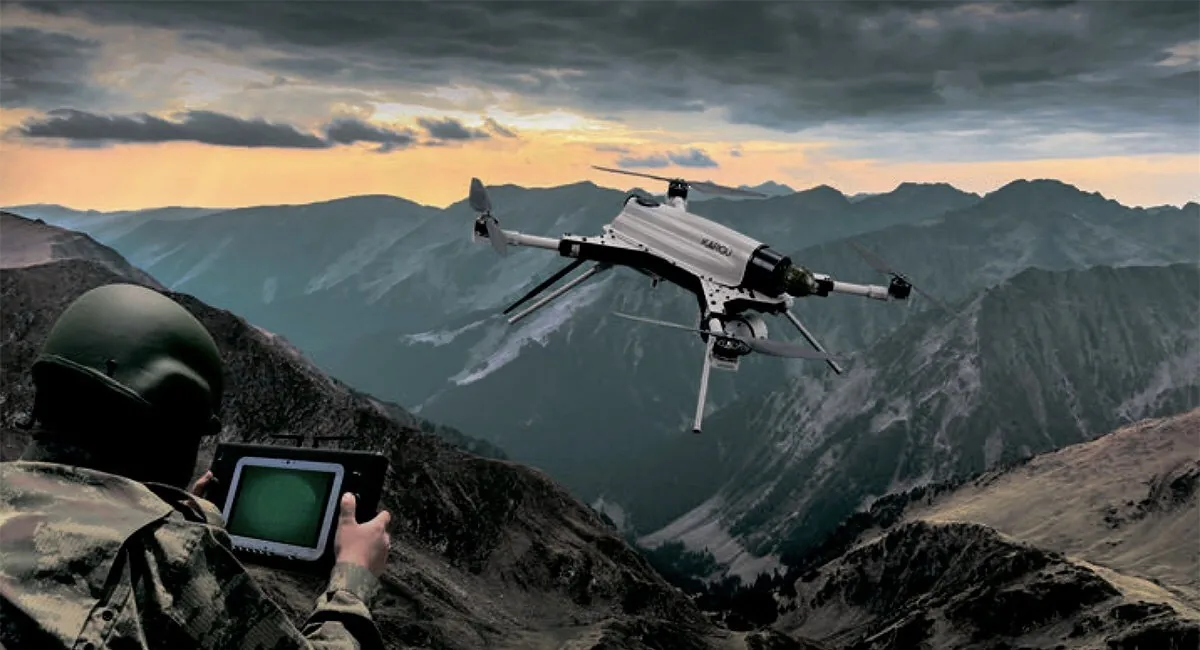
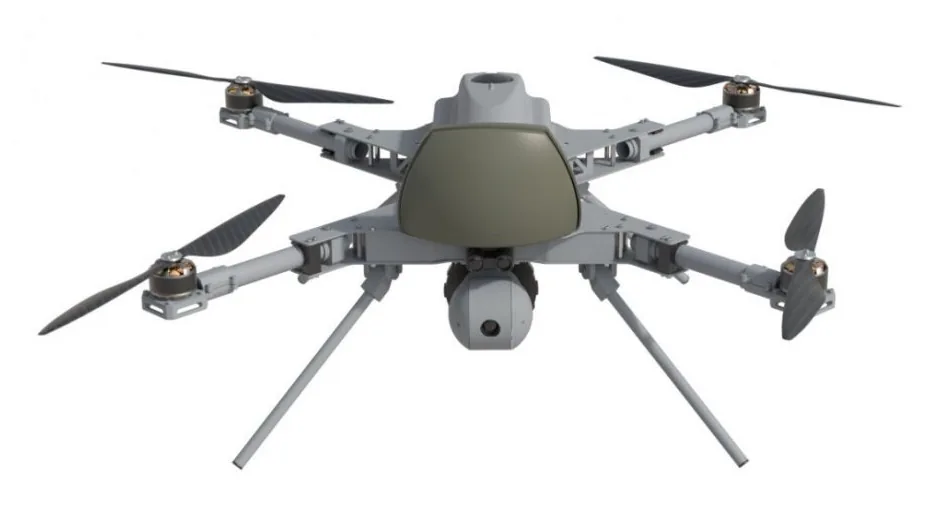
KARGU is a rotary-wing (multicopter) strike/kamikaze unmanned aerial vehicle developed by Türkiye’s STM. Backpack-portable and deployable by a single soldier, KARGU was designed as a “fire-and-forget” munition that, after flying toward the target, dives onto it and destroys it with its warhead. Able to detect targets with AI-supported image processing and suited to swarm operations, KARGU is in Turkish Armed Forces service and has been exported. This dossier compiles KARGU’s capabilities, use cases, the swarm concept and technical data from open sources.
Frequently Asked Questions
Sources
Related Reading
The loitering-munition concept blurs the line between a reconnaissance aircraft and a guided munition: KARGU is both a recon vehicle that can watch over an area and a munition that can dive onto a detected target to destroy it. This dual nature offers commanders a flexible, fast tool that shortens the time from detection to destruction — decisive especially against short-lived, fleeting targets.
Being backpack-portable makes KARGU a system that brings firepower even to the smallest units without large, expensive platforms. An infantry squad or special-forces team can carry its own organic reconnaissance and strike capability, reducing dependence on centralized air support, increasing operational autonomy and putting the decision loop in the hands of the unit on the ground.
AI-supported image processing is the most critical technology distinguishing KARGU from classic guided munitions. The system processes camera imagery to autonomously detect and track targets, while the destruction decision remains subject to operator approval. This approach balances autonomy with human control, ensuring both speed and accountability — a balance at the heart of debates over autonomous weapons.
The swarm concept stands out as one of KARGU’s most powerful future capabilities. Many KARGU operating in coordination over a shared target list can saturate enemy air defenses and neutralize multiple targets at once. This capability is seen as a concept signaling that quantity will regain importance on the future battlefield.
STM’s loitering-munition family is not limited to KARGU: the fixed-wing, longer-range ALPAGU and the reconnaissance-focused TOGAN offer complementary solutions for different mission profiles. This family structure lets user units meet various missions through a common logistics and training base, sourcing an integrated range of strike unmanned systems from a single supplier.
KARGU’s low cost creates an economic advantage in high-tempo, long-duration operations. Against small, dispersed targets that do not warrant wasting expensive missiles, low-cost strike systems like KARGU offer a budget- and logistics-sustainable solution, suiting the typical needs of modern low-intensity conflicts.
Türkiye’s early move into loitering munitions provided a doctrinal and technological lead. Experience gained in the field underpins continuous improvement and the development of next-generation autonomous capabilities; this accumulation forms a strategic foundation for future unmanned land and air systems and deepens the Turkish defense industry’s competence in AI.
The spread of KARGU and similar systems also opens new doors for Turkish defense exports. As global demand for portable, low-cost and effective strike unmanned systems rises, KARGU stands out as a competitive option — an advantage for Türkiye in both export revenue and international defense cooperation.
In short, KARGU is a strategic system that, despite its relatively small size, reflects the changing nature of modern warfare. Sitting at the intersection of unmanning, autonomy and swarming, KARGU shows Türkiye as an active developer in these next-generation war technologies and a concrete example of the national defense industry’s forward-looking vision.
KARGU’s development shows that Türkiye has achieved a fully independent design-and-production capability in small and medium unmanned systems too. The system’s reliance largely on indigenous components — from flight control and image-processing software to warhead and ground control unit — ensures supply security and adds the flexibility to sell in exports without third-country permits, making it one of the Turkish defense industry’s quiet but strategic items.
The modern battlefield is evolving toward an approach in which many cheap, smart systems work together rather than a few expensive platforms. KARGU is one of the Turkish defense industry’s pioneering examples of exactly this trend; with its low cost, portability and swarm capability, it is seen as a system able to offer both the quantitative and qualitative flexibility that future conflicts will demand.