Bayraktar AKINCI Deliveries Explained: How Many Built, and Which Operators?
Summary Not Found.
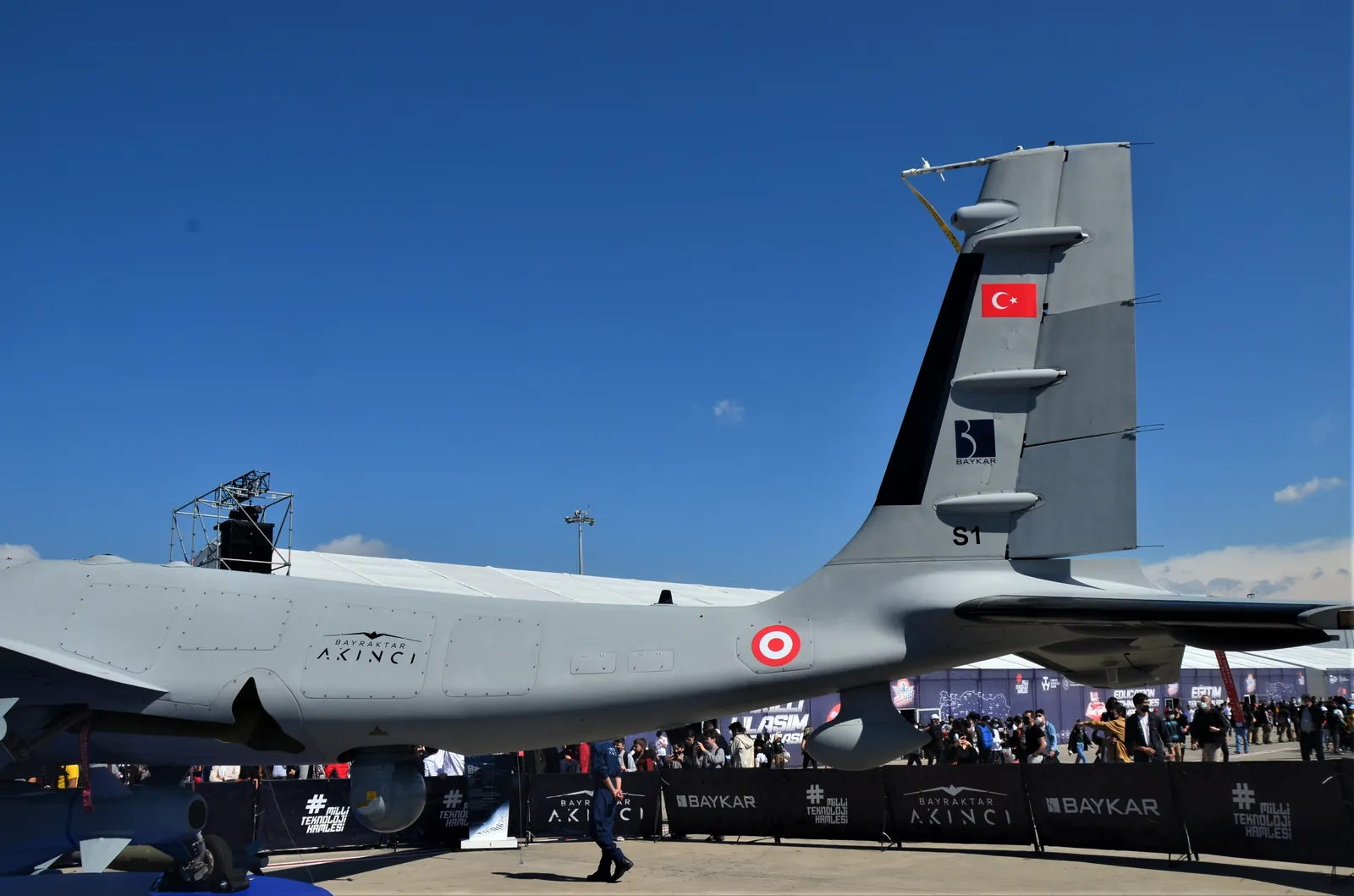
The Bayraktar AKINCI in Turkish Armed Forces service. Source: Wikimedia Commons (CC).
Bayraktar AKINCI is a high-altitude long-endurance (HALE) unmanned combat aerial vehicle (UCAV) developed by Türkiye’s Baykar. It entered Turkish Armed Forces service on 29 August 2021. According to Baykar, more than 110 AKINCI aircraft have been delivered to date at home and abroad, with a target of 120 by the end of 2026. Beyond the Turkish military, AKINCI is operated by 13+ countries. This dossier compiles its delivery timeline, operators, production figures and technical data from open sources.
Contents: Tap each heading to expand or collapse — what AKINCI is, operators, first delivery, how many built, delivery timeline, specifications, engine, munitions and FAQ.
What is the Bayraktar AKINCI?
AKINCI is a heavy-payload UCAV able to operate beyond line of sight via satellite (SATCOM) link. It carries both air-to-ground and air-to-air munitions and performs ISR, electronic warfare and precision-strike missions. It is positioned as a “loyal wingman” to operate alongside crewed combat aircraft and other platforms.
A step up from the Bayraktar TB2, AKINCI offers higher altitude, heavier munitions and a broader mission set, with multiple engine variants for different profiles.
Which institutions and countries operate it?
The first operator was the Turkish military (primarily the Air Force). In exports, AKINCI has entered the inventories of more than 13 countries, making it one of the drivers of Türkiye’s UAV exports.
Operator (Türkiye)
Status
Air Force Command
Active (lead operator)
Army / military units
Active
Security / intelligence units
Active (operational use)
Export operator
Note
Azerbaijan
Active (photo-confirmed)
Pakistan
Deliveries from April 2023
UAE
January 2024 delivery
Saudi Arabia
Operator training + large-scale deal
Kenya, Morocco and others
2024 deliveries; 13+ countries total
When was the first delivery? How is serial production progressing?
AKINCI first flew on 6 December 2019 and entered Turkish service on 29 August 2021. Baykar serially produces AKINCI at its Istanbul facilities, with a stated annual capacity of roughly 50 AKINCI (alongside ~250 TB2).
How many have been delivered / built?
Baykar officials state that more than 110 AKINCI aircraft have been delivered at home and abroad as of January 2026, with a target of 120 by end-2026. At ~50 units a year, AKINCI is among the world’s most-exported heavy-class UCAVs.
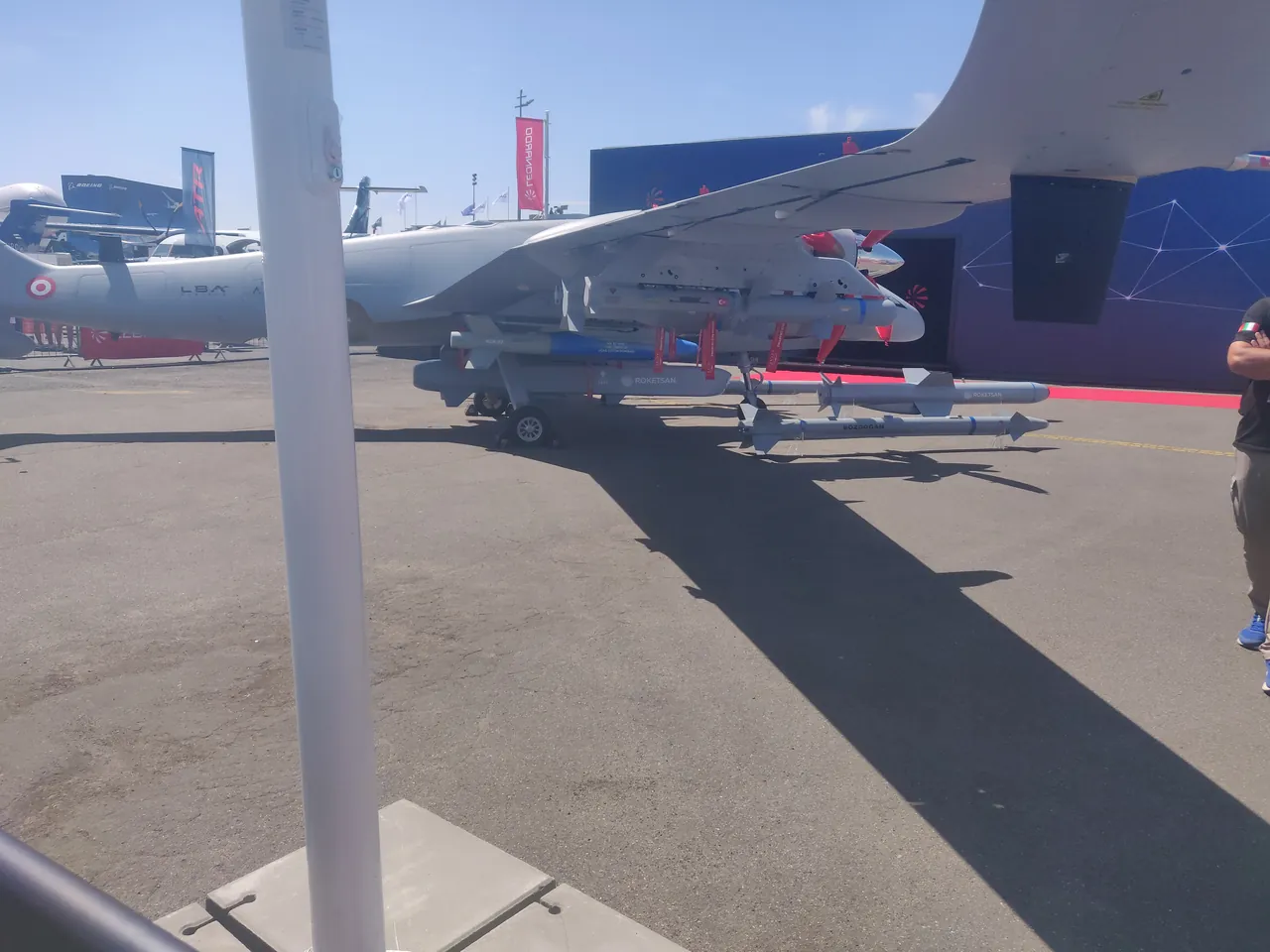
AKINCI on display at the 2025 Le Bourget (Paris) Air Show. Source: Wikimedia Commons (CC).
Latest and upcoming deliveries
Deliveries continue for both the Turkish military and export customers. Baykar consolidated its position as the global UCAV-export leader with around $1.8 billion in drone exports in 2024, with AKINCI a major component. New orders and capacity expansion are expected to accelerate output further.
Period
Target / development
Note
2021
Entered service
Turkish military
2023–2024
Export deliveries
Pakistan, UAE, Kenya, Morocco, etc.
2024
~$1.8B UAV exports
Baykar (global)
Jan 2026
110+ delivered
Turkish military + 13+ countries
End 2026
Target 120
~50/year production
Delivery and milestone timeline
Date
Event
Institution / country
Source
6 Dec 2019
First flight
Baykar
Baykar / Wikipedia
10 Jul 2021
13h 24m flight (1,360 kg payload)
Baykar (record)
Baykar
29 Aug 2021
Entered service / first delivery
Air Force / Turkish military
Janes / official source
Apr 2023
First export delivery
Pakistan
ICPS / Quwa
Jan 2024
Export delivery
UAE
Baykar
2024
Export deliveries
Kenya, Morocco, Pakistan
Baykar
Jan 2026
110+ delivered
Turkish military + 13+ countries
Army Recognition
Technical specifications
Feature
Value
Class
HALE unmanned combat aerial vehicle (UCAV)
Wingspan
20 m
Length
≈12.2 m
Max take-off weight
≈6,000 kg
Payload
1,350 kg (≈450 kg internal + 900 kg external)
Engine
2 × turboprop (450 / 750 / 850 hp by variant)
Engine source
Imported (e.g. Ivchenko AI-450T) — localization under way
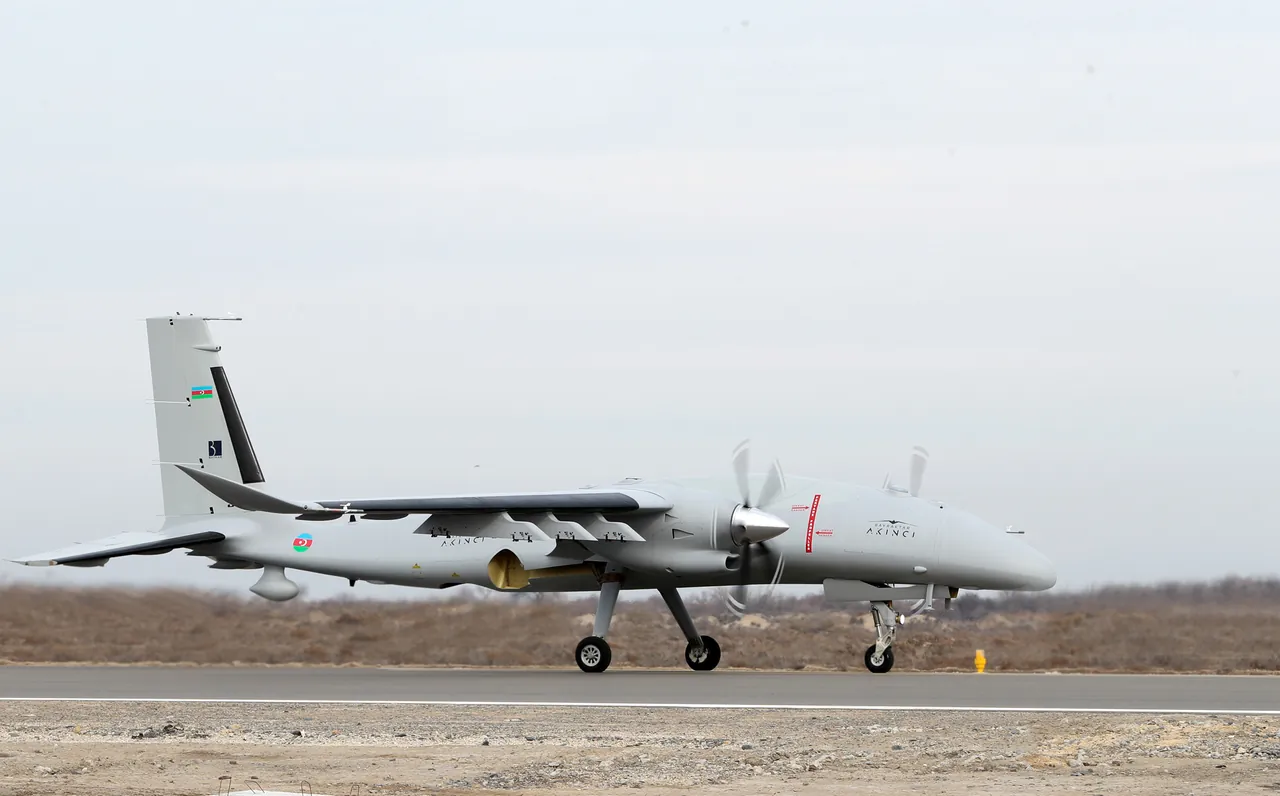
AKINCI in Azerbaijani Air Force service — one of the export operators. Source: Wikimedia Commons (CC).
Engine: from imported turboprops toward localization
AKINCI variants use two turboprop engines of 450, 750 or 850 hp depending on the mission. These engines are currently imported (e.g. the Ukrainian Ivchenko AI-450T). Note: AKINCI’s engine should not be confused with the indigenous PD-170 used on ANKA and TB3 — PD-170 is a different class. Türkiye continues engine-localization work, but AKINCI currently flies with imported turboprops.
Munitions, subsystems and manufacturer
The prime contractor is Baykar (Istanbul), responsible for the airframe, flight control and autonomy software.
Munitions: MAM-L / MAM-T / MAM-C smart munitions, SOM cruise missile, Gökdoğan and Bozdoğan air-to-air missiles, guided bombs
Mission systems: ASELSAN electro-optical and radar systems (AESA radar on some variants)
AKINCI is one of the platforms putting Türkiye at the forefront of the heavy-class UCAV market. Its strong export volume brings revenue and raises the global visibility of the Turkish defense industry, while integration with indigenous munitions and mission systems builds a self-reliant ecosystem.
Frequently Asked Questions
When was the Bayraktar AKINCI first delivered?
AKINCI entered Turkish Armed Forces service on 29 August 2021.
How many AKINCI have been delivered?
Per Baykar, more than 110 have been delivered at home and abroad, with a 2026 year-end target of 120.
Which countries operate the AKINCI?
Besides the Turkish military, operators include Azerbaijan, Pakistan, the UAE, Saudi Arabia, Kenya and Morocco — 13+ countries in total.
Is AKINCI’s engine indigenous?
No. AKINCI uses 450/750/850 hp turboprops that are currently imported (e.g. AI-450T). It should not be confused with the indigenous PD-170.
How much can AKINCI carry and how long can it stay aloft?
About 1,350 kg of payload, above 40,000 ft, with endurance up to 24 hours.
How many AKINCI are produced per year?
Baykar’s stated capacity is roughly 50 AKINCI per year.