Bayraktar TB3: 10 Reasons Japan Should Turn to Turkey’s Carrier-Capable Drone — Despite the Alternatives

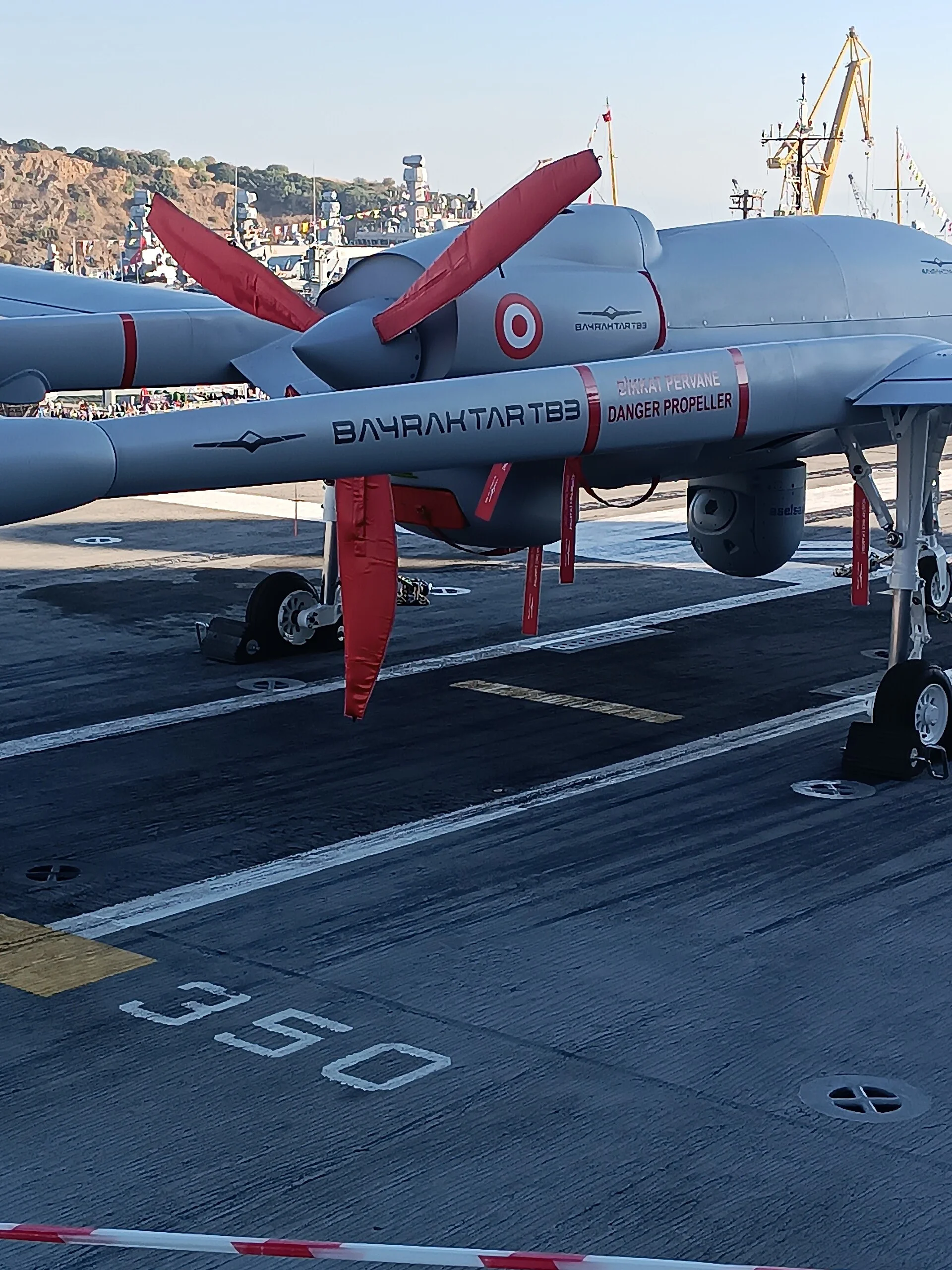
Image: Wikimedia Commons
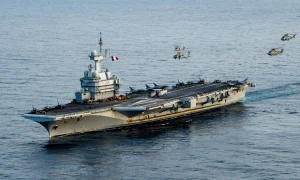
The first drone to take off from and land on the short-deck TCG Anadolu, the Bayraktar TB3 broke new ground in unmanned naval aviation. As Japan converts its Izumo-class flat-decks into carriers, why could the TB3 — rather than a full bet on the costly F-35B — be a rational way to add an unmanned air arm to the fleet? A 10-point analysis built on open sources.
| Class / role | Navalized MALE armed UAV — short-deck take-off/landing |
| Max endurance | ~24+ hours |
| Payload | ~280 kg |
| Ceiling | ~30,000+ ft |
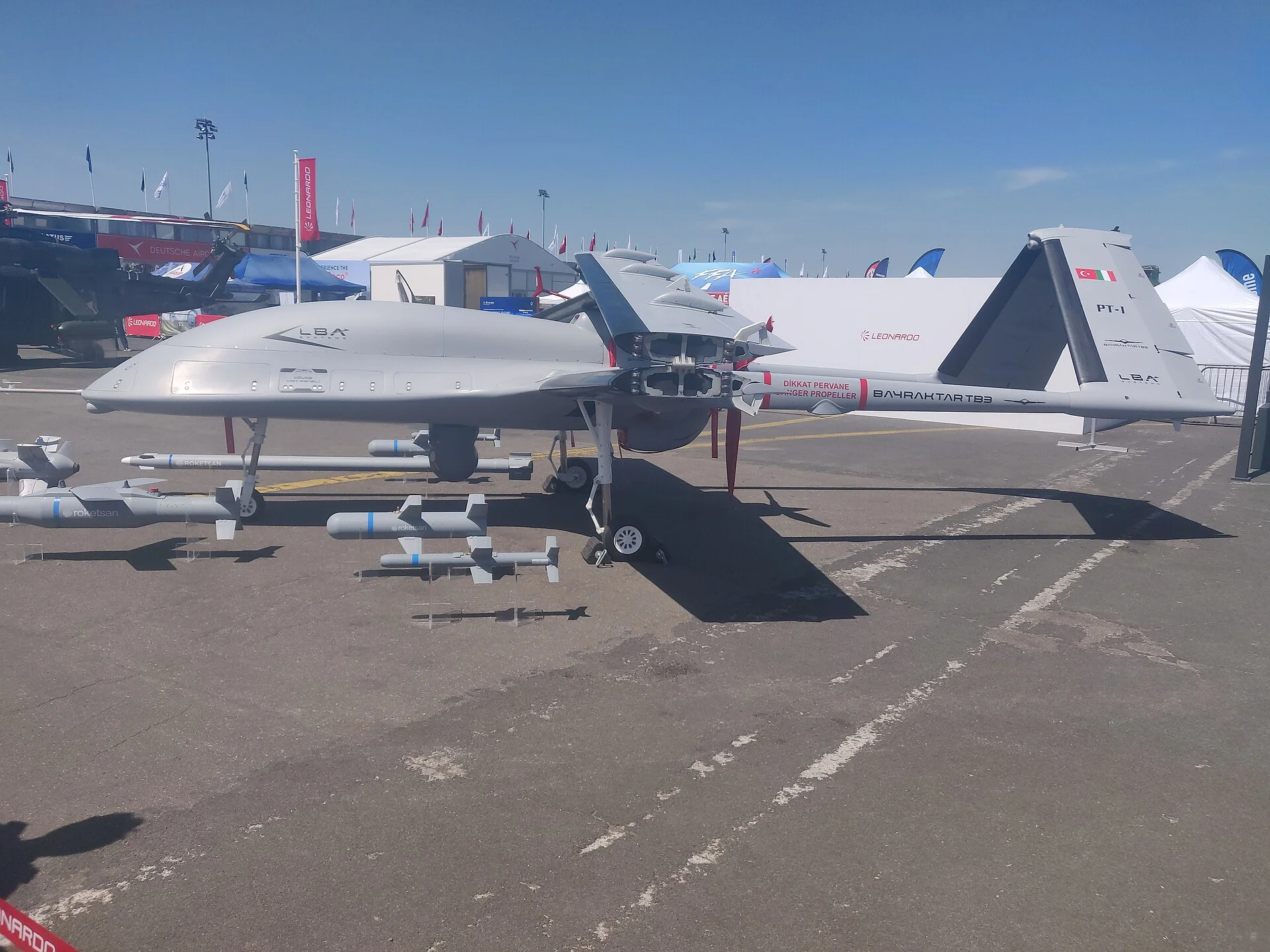
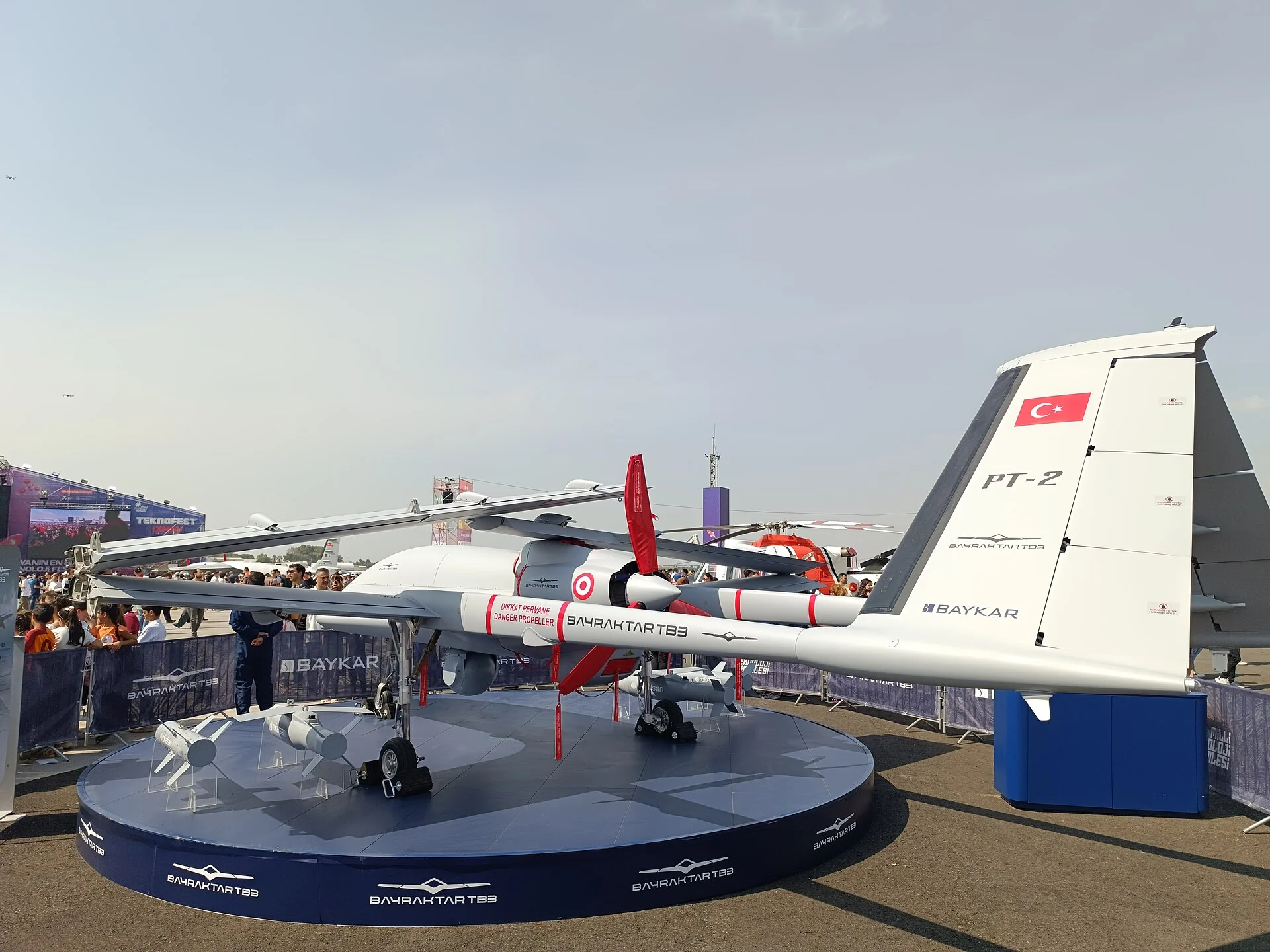
| Key feature | Folding wings (ship hangar/elevator fit) |
| Engine | TEI-PD170 turbo-diesel |
| Munitions | MAM family + a growing heavier menu |
| Maker | Baykar (Turkey) |
Why Should Japan Turn to the TB3? 10 Reasons
A rare drone that flies off ships
The TB3 became the first armed drone to successfully take off from and land on the short-deck TCG Anadolu. For Japan’s Izumo/Kaga flat-decks, that is a directly transferable, proven capability.
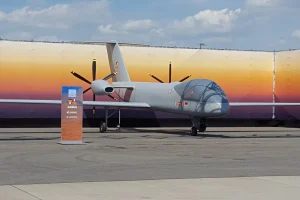
Folding wings: hangar and elevator fit
The TB3’s folding wings allow dense storage in limited ship hangars and aircraft elevators. The number of unmanned aircraft a ship can carry multiplies — making ‘mass’ possible in naval aviation.
Unmanned naval aviation far below F-35B cost
An F-35B’s purchase and sustainment costs are enormous and its numbers limited. The TB3 lets dozens of cheap unmanned aircraft fly recce, surveillance and strike from the same decks, freeing pricey crewed jets for critical missions.
Extends the fleet’s eyes beyond the horizon
Launched from ships, the TB3 provides ISR, targeting and strike far beyond the task group’s radar horizon. Japan’s navy could detect and hit enemy ships and missile launchers much earlier and farther out.
No ITAR: unconditional, fast procurement
The TB3 sits outside the US ITAR/MTCR chain. Rather than waiting years in the F-35B queue, Japan could stand up an operational unmanned naval air arm quickly.
Ideal for distributed maritime operations
As flat-deck ships move along the island line, the TB3 keeps shifting its sea base, breaking the enemy’s targeting cycle — a flexible air power alternative to fixed land bases.
Precision munitions and a growing heavy menu
The TB3 carries MAM-family precision munitions and is growing to carry heavier, longer-range weapons, with potential anti-ship capability against maritime targets.
TB2 heritage: proven and de-risked
The TB3 inherits the technology, ground-control and operational heritage of the TB2, the world’s most-used armed drone. Japan buys a matured, de-risked platform derived from a proven family, not a clean-sheet program.
Co-production with Japanese naval and aerospace industry
Baykar is open to overseas co-production. Local assembly, maintenance and munitions integration with Japanese naval/aerospace giants such as Mitsubishi Heavy Industries, Kawasaki and IHI is feasible.
Supply diversification and first-mover in naval drones
Reducing single-supplier dependence is strategically sound. The TB3 turns Japan into an early mover in ship-launched unmanned aircraft and extends the Turkey-Japan defense axis into the maritime domain.
How It Compares to Rivals
| Attribute | Bayraktar TB3 (TR) | MQ-9B STOL (US) | GA Mojave (US) |
|---|---|---|---|
| Class | Navalized MALE UAV | MALE (short strip) | STOL strike UAV |
| Ship operations | Proven (TCG Anadolu) | In development | Test/demo |
| Folding wings | Yes | Limited | No |
| Endurance | ~24+ hours | ~30+ hours | ~20 hours |
| Export terms | No ITAR, unconditional | ITAR + MTCR | ITAR |
| Approx. unit cost | Low | High | Medium-high |
Figures are open-source estimates; ship-operations maturity varies by platform.
Gallery
Frequently Asked Questions
Can the TB3 really fly off ships?
Is the TB3 suited to Japan’s Izumo ships?
What is the TB3’s edge over the F-35B?
What munitions does the TB3 carry?
Would Baykar offer Japan co-production?
The TB3 is a rare, ship-operations-proven platform that could arm Japan’s flat-decks with unmanned air power without a full bet on the costly F-35B. Where rivals are pricier, more restricted or still in testing, the TB3 offers Tokyo a concrete, early opportunity in naval unmanned aviation.
Sources
- Bayraktar TB3 — Wikipedia
- Bayraktar TB3 — Baykar official
- TB3’s first flight from TCG Anadolu — Naval News
- Japan converts Izumo class into carrier — USNI
- Japan to replace attack helos with drones — Defense News
- MQ-9B SeaGuardian STOL — GA-ASI
- F-35B unit cost — Wikipedia