Aksungur: 10 Reasons Japan Should Turn to Turkey’s MALE Drone — Despite the Alternatives
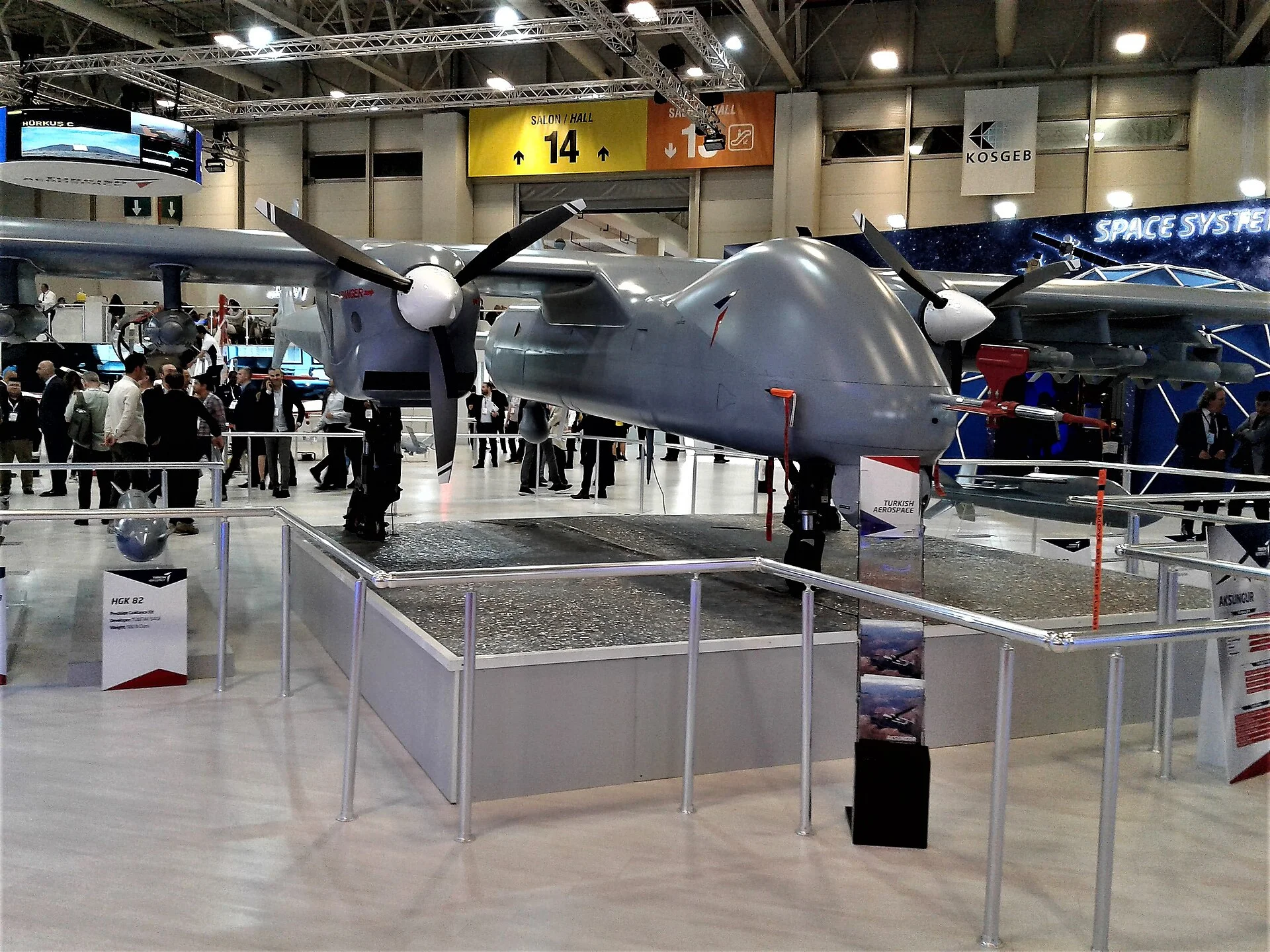
Image: Wikimedia Commons
Japan is in the middle of its deepest defense overhaul since the Cold War: retiring helicopter fleets in favor of unmanned systems, facing mounting maritime threats and reconsidering single-source dependence in procurement. In that equation, why could Turkey’s Aksungur — despite the MQ-9 and other alternatives — be a rational pick for Tokyo? A 10-point analysis built on open sources.
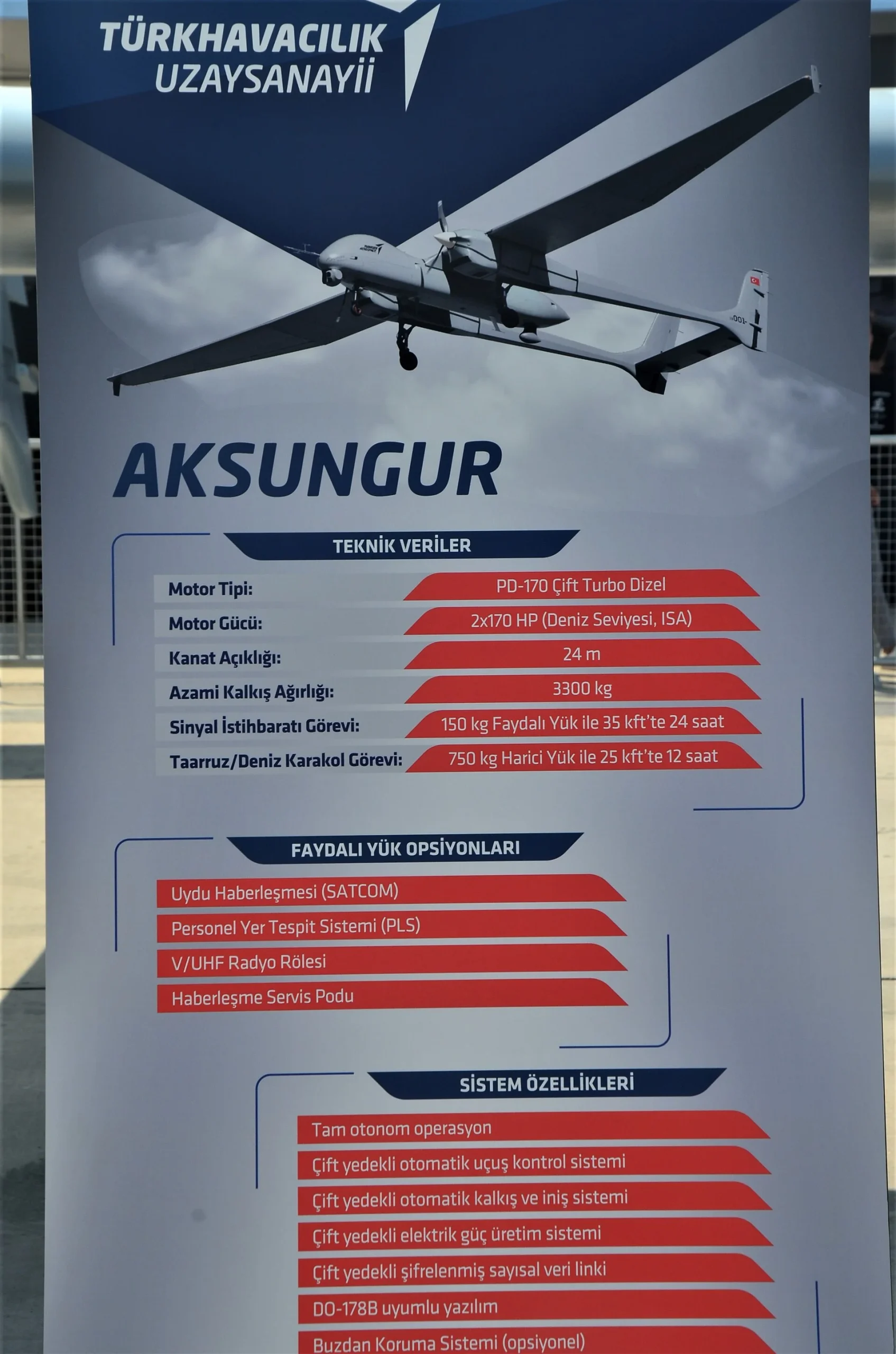
| Class / role | MALE UAV — twin-engine, twin-boom; ISR + maritime patrol + ASW + strike |
| Max endurance | 50 hours (~12 h at 25,000 ft with 750 kg) |
| Payload | 750 kg |
| Ceiling / cruise | 25,000 ft (750 kg) – 35,000 ft (150 kg) / 180 km/h |
| Dimensions | Wingspan 24.2 m · length 12.5 m · MTOW 3,300 kg |
| Engines | 2 × TEI-PD170 turbo-diesel |
| Maker | Turkish Aerospace Industries (TUSAS) |
Why Should Japan Turn to Aksungur? 10 Reasons
A submarine hunter off the shelf
With a sonobuoy pod, a magnetic anomaly detector (MAD) boom and a light torpedo in development, Aksungur offers an unmanned, low-cost, long-loitering answer to Japan’s number-one threat priority: hostile submarines. As China’s and Russia’s quiet boats crowd the East China Sea approaches, an unmanned ASW layer that complements crewed P-1 patrol aircraft becomes essential.
Endurance built for Pacific distances
Up to 50 hours aloft means persistent watch over Japan’s vast maritime area of responsibility — the Senkaku/Diaoyu, the Nansei island chain and the EEZ. Covering that space continuously with a handful of airframes is far cheaper than relying on multi-engine crewed patrol aircraft alone.
ISR, SIGINT, EW and maritime patrol in one airframe
Carrying SAR/GMTI-ISAR radar, AIS maritime identification, electronic-warfare and signals-intelligence suites at once, Aksungur folds missions that normally need separate aircraft into a single platform. For a personnel-short Japan, that is both a budget and a manpower saving.
Twin-engine confidence over open ocean
Two TEI-PD170 turbo-diesels give a return-home margin if one engine fails far out at sea — unlike the single-engine MQ-9. On long over-water profiles, redundancy lowers the risk of losing the airframe, and diesel fuel fits ship and base logistics.
No ITAR: unconditional export, faster delivery
US MQ-9 exports are bound by MTCR Category-I limits, congressional approval and arming restrictions — for years only Britain was cleared to fly armed Reapers. Turkish platforms sit outside that chain: faster delivery, fewer political strings and greater operational freedom.
Far more tails for the same budget
An MQ-9 runs roughly $30–33 million per aircraft, about $56 million for a four-ship system. Turkish MALE platforms cost a fraction of that, letting Japan field many more than five tails and buy ‘mass’ — the sustainable patrol density that an attritable fleet provides.
Co-production, not a black box
Turkey has been open to local-industry integration and licensed co-production. Domestic manufacture, maintenance and software tailoring with Japanese aerospace primes such as SUBARU, Fuji and Mitsubishi is feasible — a sovereignty-friendly model against a supplier-locked, black-box approach.
A broad, independent weapons menu
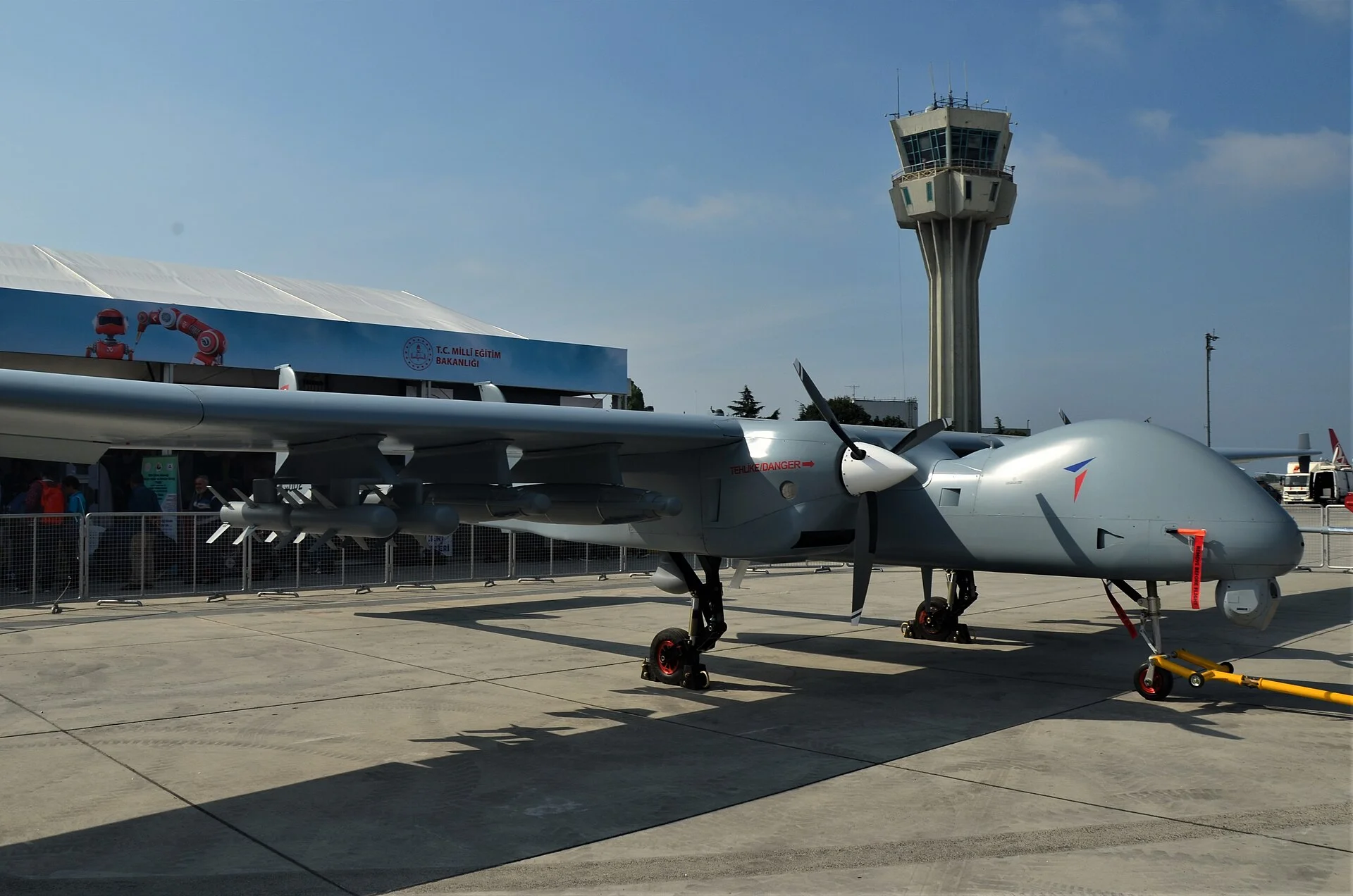
Roketsan’s MAM-L/MAM-C smart munitions, L-UMTAS, Cirit, TEBER-81/82 laser-guidance kits, HGK and small-diameter bombs are integrated on Aksungur. Japan gains a wide air-to-ground menu without locking into a single supplier — and could integrate indigenous munitions if desired.
Operationally mature, not a mock-up
Aksungur is in active service with the Turkish Naval Forces in the maritime-patrol/ASW role, and the Turkish MALE/HALE family carries real combat experience. Japan would buy a production-line, matured platform — not a model or a prototype.
A new defense axis in the Indo-Pacific
Reducing single-supplier dependence is strategically sound for supply-chain resilience and bargaining power. A Turkey-Japan defense-industrial convergence opens a fresh technology-and-industry axis between two producer-nations across the Indo-Pacific.
How It Compares to Rivals
| Attribute | Aksungur (TUSAS) | MQ-9B SeaGuardian (US) | Heron TP (Israel) |
|---|---|---|---|
| Class | MALE UAV, twin-engine | MALE UAV, single-engine | MALE UAV, single-engine |
| Endurance | ~50 hours | ~30+ hours | ~30 hours |
| Payload | 750 kg | ~2,150 kg (total) | ~2,700 kg |
| Factory ASW fit | Yes (sonobuoy + MAD) | Optional/limited | Limited |
| Export terms | No ITAR, unconditional | ITAR + MTCR + Congress | Israeli export approval |
| Approx. unit cost | Much lower | ~$30–33 million | High |
Cost and endurance figures are open-source estimates and vary by configuration.
Gallery
Frequently Asked Questions
Can Aksungur hunt submarines?
Does Japan’s constitution allow armed drones?
What is Aksungur’s edge over the MQ-9?
Would Turkey offer co-production?
What weapons does Aksungur carry?
Aksungur maps directly onto Japan’s sea-heavy threat picture — above all submarine hunting and wide-area maritime surveillance — while being available unconditionally and open to co-production. Where rivals are pricier, more restricted or single-role, Aksungur stands out as a rational cost-capability choice for Tokyo.
Sources
- TAI Aksungur — Wikipedia
- Aksungur MALE UAV — Naval Technology
- Aksungur ASW drone — Jamestown Foundation
- Aksungur torpedo integration — Naval News
- Japan to replace attack helos with drones — Defense News
- Japan to procure 23 MQ-9B SeaGuardians — Janes
- MQ-9 Reaper (unit cost / export) — Wikipedia