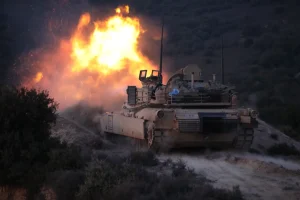
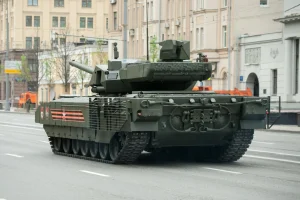
Israel or Türkiye: Which Military Is Stronger? (2026 Comparison)

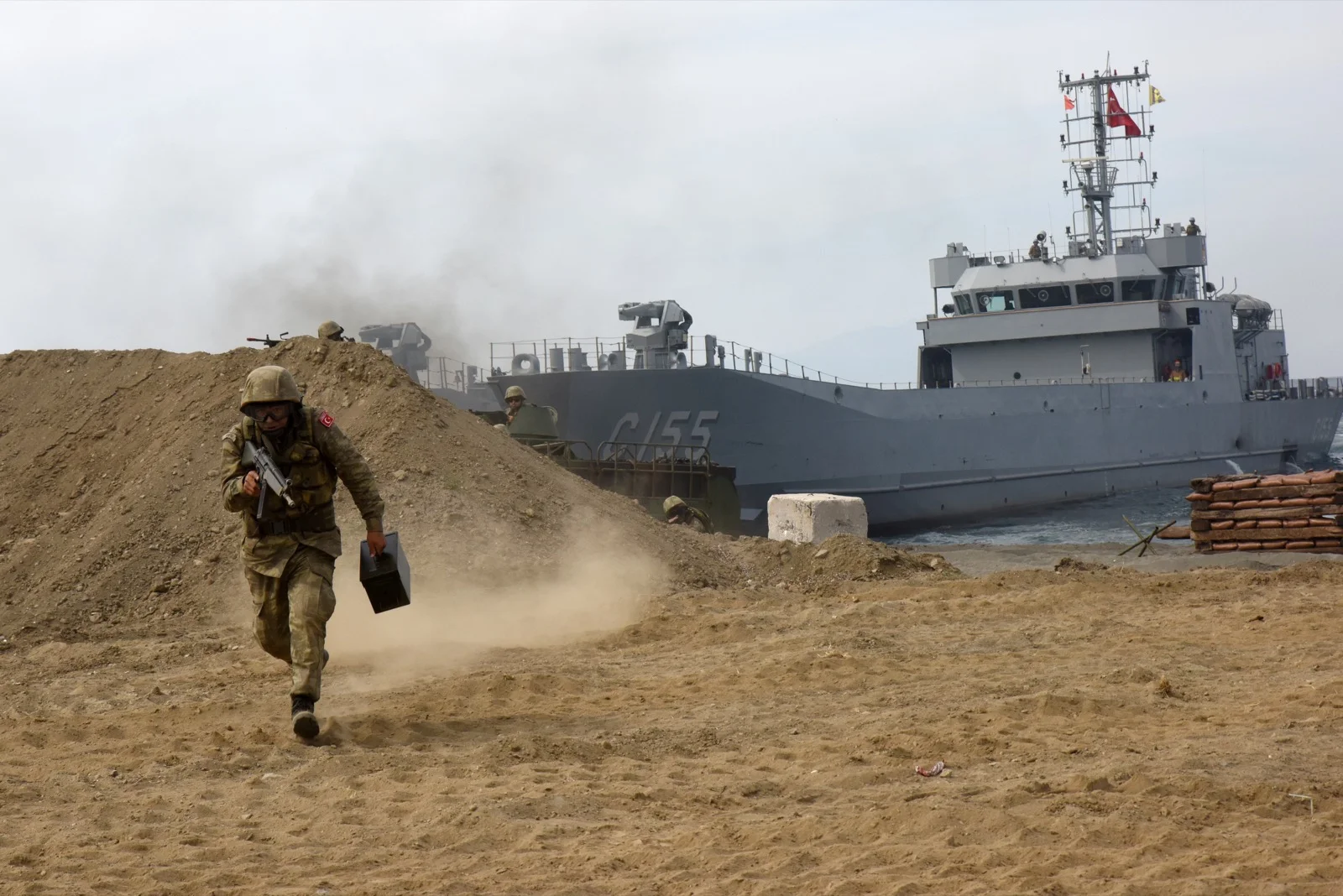
Tanks, aircraft, submarines, manpower, budget and defence industry — Israel and Türkiye compared line by line on 2026 figures. Nine categories, and the answer is not the one either side usually claims.
Two militaries in the eastern Mediterranean generate more argument than any other pairing: Türkiye and Israel. One runs NATO’s second-largest army; the other operates the most advanced missile defence architecture in the world. So what do the 2026 numbers actually say?
This gallery compares them category by category — defence budget, active personnel, tanks, aircraft, helicopters, naval assets, submarines, missile defence and defence industry — with the reasoning behind each result rather than just the figure.
We move from the most contested category to the most decisive one. The overall verdict and the full comparison table sit at the end, because the answer is not in any single line — it is in the sum of all nine.
Defence Budget
In absolute terms Türkiye leads, $51.4 billion to $34.6 billion — but the two budgets behave very differently. Israeli defence spending is supplemented by annual US military assistance, much of which is tied to purchases from American manufacturers; a meaningful slice of the budget therefore flows to US industry rather than Israeli. What Israel does buy heavily is research: measured against GDP it is among the highest R&D spenders anywhere, and that produces sharp point advantages in missile defence, sensors and cyber. Türkiye’s budget has to feed a far larger structure — 481,000 active personnel, simultaneous modernisation across three services, and a long list of major platform programmes all drawing on the same pool. Its advantage is that the overwhelming majority of that money stays inside the national industrial base, and that record defence exports now partly finance the cycle.
Benchmark: Türkiye outspends Israel by roughly 49 percent — but Israel’s budget covers a far smaller force structure.
| Power Element | Figure |
|---|---|
| 🇹🇷 Türkiye | $51.4bn (12th worldwide) |
| 🇮🇱 Israel | $34.6bn (18th worldwide) |
So how much soldier does that money actually buy?
Active Personnel
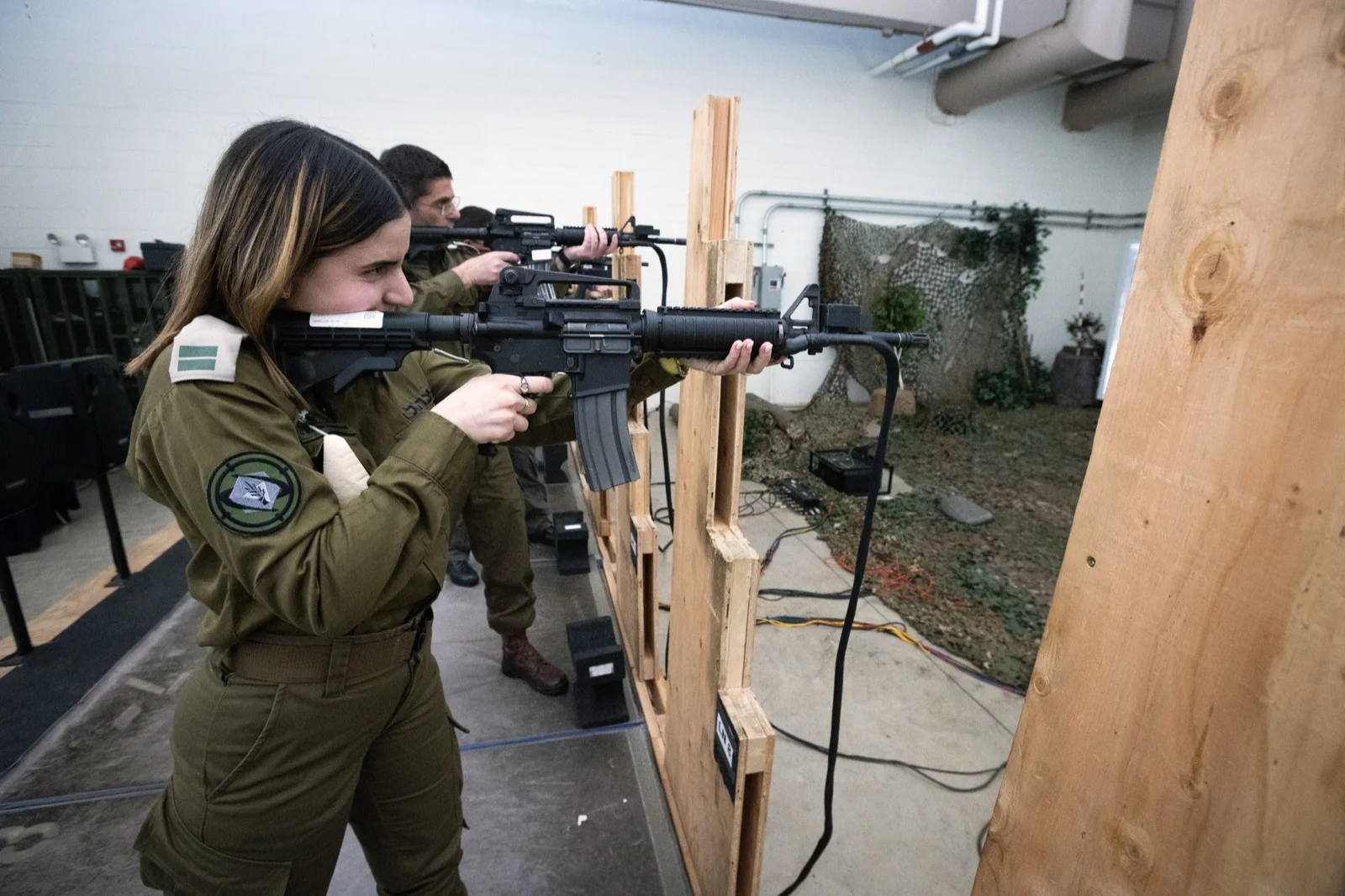
The manpower gap is stark: Türkiye fields the world’s tenth-largest active force at 481,000, while Israel ranks 34th with 169,500. Reading that number alone would be misleading. The Israeli model rests on a small standing core and an unusually deep reserve — hundreds of thousands can be mobilised within days, and that mobilisation capacity is the cornerstone of Israeli defence doctrine rather than an afterthought. Conscription applies to men and women alike, and reserve liability runs long, keeping much of society inside the military system. Türkiye is moving toward professionalisation while still operating a large standing establishment; the contracted soldier system and a rising share of specialist personnel are shifting the force from quantity to quality. The two countries also carry very different burdens: Türkiye borders eight states and three seas, while Israel concentrates on a far more compact theatre.
Benchmark: Türkiye’s active force is about 2.8 times Israel’s — a gap Israeli reserve mobilisation narrows quickly in a crisis.
| Power Element | Figure |
|---|---|
| 🇹🇷 Türkiye | 481,000 active personnel |
| 🇮🇱 Israel | 169,500 active personnel |
In the next category the gap widens again.
Tanks and Armour
Türkiye fields roughly 1.8 times Israel’s tank inventory and ranks ninth worldwide against Israel’s seventeenth. The Turkish fleet mixes the M60T Sabra, Leopard 2A4 and upgraded M60s, while the ALTAY main battle tank has entered serial production with work continuing on a national powerpack. Israel’s fleet is the opposite: single-type and entirely indigenous. The Merkava family, particularly the Mk.4 Barak with its sensor fusion and AI-assisted target acquisition, ranks among the most advanced main battle tanks in service anywhere. The Trophy active protection system is combat-proven against anti-tank guided missiles and has since been bought by several armies including the US. Türkiye’s answer is ASELSAN’s AKKOR active protection system and PULAT, with ALTAY’s serial production steadily moving the fleet toward a single national design. Türkiye leads on numbers; Israel leads on individual platform maturity.
Benchmark: Türkiye holds 984 more tanks — while Israel’s entire fleet is a single indigenous design.
| Power Element | Figure |
|---|---|
| 🇹🇷 Türkiye | 2,284 tanks (9th worldwide) |
| 🇮🇱 Israel | 1,300 tanks (17th worldwide) |
The air comparison is where the argument really starts.
Air Forces
Türkiye leads clearly on numbers, 1,101 aircraft to 597 — but air power is the category where quality outweighs quantity, and here the balance shifts. Israel operates the F-35I Adir and is the only customer permitted to integrate its own electronic warfare systems into the aircraft; its F-15I Ra’am and F-16I Sufa fleets are configured specifically for long-range operations. Türkiye’s combat backbone remains the F-16 alongside the F-4E 2020, and the interruption of the F-35 process delayed its fifth-generation transition. Ankara is closing that gap on two tracks: ASELSAN’s ÖZGÜR package, which fits national avionics and the GÖKDOĞAN and BOZDOĞAN missiles to the F-16 fleet, and KAAN, which aims at building the fifth-generation aircraft outright. In tankers and airlift Türkiye is deeper, with A400M and KC-135R fleets providing genuine reach. Israel’s strength is not mass but precision strike and electronic warfare dominance.
Benchmark: Türkiye fields roughly 1.8 times Israel’s airframes — but Israel already flies fifth generation, while Türkiye plans to enter it with KAAN.
| Power Element | Figure |
|---|---|
| 🇹🇷 Türkiye | 1,101 total aircraft |
| 🇮🇱 Israel | 597 total aircraft |
In rotary aviation the ratio doubles again.
Helicopter Fleets
Rotary aviation shows the widest numerical gap of the whole comparison: 509 to 127. Türkiye’s advantage comes from geography. Border security in mountainous terrain, counter-terrorism operations, search and rescue and disaster response all demand a large, continuously available helicopter fleet. The inventory spans the S-70 Black Hawk, AS532 Cougar, CH-47F Chinook and UH-1 families, while the T129 ATAK is a fully national attack helicopter that has been exported to the Philippines. The heavier ATAK-2 and the GÖKBEY utility helicopter continue that nationalisation. Israel’s fleet is smaller and sharply mission-focused: AH-64 Apache attack helicopters and CH-53 heavy lift optimised for special operations and deep raids. In Israeli doctrine the helicopter is an instrument of precise action, not of mass manoeuvre.
Benchmark: Türkiye operates more than four times Israel’s helicopter fleet — and the T129 ATAK is the only indigenous attack helicopter between the two.
| Power Element | Figure |
|---|---|
| 🇹🇷 Türkiye | 509 helicopters (7th worldwide) |
| 🇮🇱 Israel | 127 helicopters (33rd worldwide) |
At sea, the comparison stops being a comparison.
Navies
The sea is the most asymmetric category here. Türkiye operates a regional navy of 192 naval assets with 17 frigates and nine corvettes; Israel’s 82 vessels include no frigates at all. The Israeli Navy’s backbone is the German-built Sa’ar 6 corvette, an extremely modern platform armed with Barak and C-Dome missiles — but its mission set is bounded: protecting a narrow coastline and the gas platforms in the exclusive economic zone. Türkiye’s fleet is structured for simultaneous presence in the Aegean, the Mediterranean and the Black Sea. The MİLGEM programme produced an indigenous family running from the Ada-class corvette to the İstanbul-class frigate, and TCG Anadolu entered service as the world’s first drone carrier. In amphibious capability, blue-water logistics and shipyard capacity there is simply no comparable equation between the two.
Benchmark: Türkiye fields 17 frigates to Israel’s none, and 192 naval assets to 82.
| Power Element | Figure |
|---|---|
| 🇹🇷 Türkiye | 192 vessels · 17 frigates · 9 corvettes |
| 🇮🇱 Israel | 82 vessels · 0 frigates · 7 corvettes |
Does the same hold beneath the surface?
Submarine Forces
Türkiye leads 14 to six and operates the largest conventional submarine force in Europe outside Russia. The inventory covers Preveze and Gür-class (Type 209) boats plus the new AIP-equipped Reis class (Type 214TN), with the MİLDEN project aiming at a wholly national design. Israel’s six Dolphin-class boats serve an entirely different purpose. Built in Germany, they are widely assessed to carry the second-strike element of a nuclear deterrent Israel has never officially confirmed. For Israel, in other words, the submarine is not an instrument of sea control but a strategic insurance policy. That is why the two submarine doctrines are not really comparable: Türkiye uses its boats to close sea areas and threaten navigation, while Israel hides deterrence in deep water.
Benchmark: Türkiye operates more than twice Israel’s submarine count — but the Dolphin class occupies a strategic deterrence role of its own.
| Power Element | Figure |
|---|---|
| 🇹🇷 Türkiye | 14 submarines (9th worldwide) |
| 🇮🇱 Israel | 6 submarines (20th worldwide) |
Now to the most contested part of the comparison: technology and industry.
Missile Defence and Technology
This is where Israel’s lead is beyond dispute. Iron Dome against short-range rockets, David’s Sling against medium-range missiles and Arrow 2 and Arrow 3 against ballistic threats form a layered architecture that has been tested under sustained real-world attack for years. Arrow 3 is one of very few systems capable of exo-atmospheric intercept. Layer on cyber capability, satellite intelligence and depth in electronic warfare, and the technological edge is real. Türkiye’s answer has matured rapidly over the past decade: the KORKUT self-propelled air defence system, HİSAR-A and HİSAR-O covering the low and medium tiers, the long-range SİPER system now entering service, and the STEEL DOME (ÇELİK KUBBE) programme binding all of it under a single command-and-control architecture. Türkiye is, in effect, building in far less time what Israel assembled over twenty years — and doing it with wholly national components. The gap still favours Israel, but it is closing.
Benchmark: Israel leads the world in layered missile defence; Türkiye is the country closest to replicating that architecture entirely from national components.
| Power Element | Figure |
|---|---|
| 🇮🇱 Israel | Iron Dome · David’s Sling · Arrow 3 |
| 🇹🇷 Türkiye | KORKUT · HİSAR-A/O · SİPER · STEEL DOME |
And the final category decides the long game.
Defence Industry and Exports
This is the category that decides the rest. Israel’s defence industry is genuinely world class: Rafael, IAI and Elbit are global players in missiles, radar, electro-optics and unmanned systems, and the country ranks near the top worldwide in defence exports per capita. But Israeli industry is built on selective depth. It is formidable in missile defence, electronic warfare, sensors and munitions — and it buys its major platforms abroad. The F-35I is American; the Dolphin submarines and Sa’ar 6 corvettes are German. Türkiye is going the other way, building the platforms themselves: the ALTAY tank, the KAAN fighter, the İstanbul-class frigate, the MİLDEN submarine project, the KIZILELMA unmanned combat aircraft and the ATAK-2 helicopter are all in development concurrently. In unmanned aircraft Türkiye is already one of the largest players in the global market, with defence exports at record levels. The difference is strategic: Israel is deep in subsystems, Türkiye is independent in platforms.
Benchmark: Israel leads globally in missiles and sensors; Türkiye is one of very few countries developing a tank, a fighter, a frigate, a submarine and a helicopter at the same time.
| Power Element | Figure |
|---|---|
| 🇹🇷 Türkiye | ASELSAN · TUSAŞ · ROKETSAN · Baykar · STM · BMC |
| 🇮🇱 Israel | IAI · Rafael · Elbit |
The Verdict
Türkiye leads in seven of the nine categories: defence budget, active personnel, tanks, total aircraft, helicopters, naval assets and submarines. Israel leads clearly in two: layered missile defence and the maturity of its subsystem technology. But reading that as a seven-two scoreline misses the point, because the two forces were built for entirely different missions.
Israel’s structure is designed for a compact theatre, extremely short reaction times and permanent threat. A small standing core, a very deep reserve, precise intelligence and a near-instant decision cycle are all parts of that model. The corresponding limit is geographic: Israel can strike at long range, but it does not have the mass to sustain a long, broad-front, multi-sea war. It also buys its major platforms abroad — the F-35I from the United States, the submarines and corvettes from Germany.
Türkiye’s structure follows the opposite logic. Eight land neighbours, three seas and responsibility on NATO’s southern flank require simultaneous presence in more than one theatre. The 481,000 active personnel, 2,284 tanks, 1,101 aircraft, 509 helicopters and 192 vessels are the consequence of that requirement. Operational experience running from Syria and Libya to Azerbaijan and Somalia, plus a network of overseas bases, is what turns that mass into something usable.
The decisive category over the long run is industry. Israel is world class in missile defence, electronic warfare, sensors and munitions, and Rafael, IAI and Elbit compete globally. But Israel does not build its own fighter, submarine or major surface combatant. Türkiye is moving to build the platforms themselves — from the ALTAY tank and the KAAN fighter to the İstanbul-class frigate and the MİLDEN submarine. That is an advantage that matters less in a shooting scenario than in an embargo scenario, and it explains precisely why Ankara has prioritised it over the past decade.
The missile defence gap, meanwhile, is narrowing. Israel’s layered architecture of Iron Dome, David’s Sling and the Arrow family is the product of twenty years and has been tested under real fire. Türkiye brought KORKUT, HİSAR-A, HİSAR-O and SİPER into service in a far shorter window, and the STEEL DOME programme is now integrating them under one command-and-control layer. The lead still belongs to Israel, but Türkiye is building its version from national components, which is a different kind of advantage — the sustainable kind.
The conclusion, then: on conventional measures Türkiye leads decisively in mass and platform breadth, while Israel leads in point technology and readiness speed. The variables that could change the picture by the 2030s are identifiable — KAAN reaching serial production, STEEL DOME achieving full integration, and the MİLDEN and TF-2000 schedules holding. If those programmes deliver, one of the two categories where Israel currently leads will have closed as well.
Full Comparison Table
| Category | 🇹🇷 Türkiye | 🇮🇱 Israel | Leader |
|---|---|---|---|
| Defence budget | $51.4bn | $34.6bn | Türkiye |
| Active personnel | 481,000 | 169,500 | Türkiye |
| Tanks | 2,284 | 1,300 | Türkiye |
| Total aircraft | 1,101 | 597 | Türkiye |
| Helicopters | 509 | 127 | Türkiye |
| Total naval assets | 192 | 82 | Türkiye |
| Frigates | 17 | 0 | Türkiye |
| Submarines | 14 | 6 | Türkiye |
| 5th-generation fighter | KAAN (in development) | F-35I Adir (in service) | Israel |
| Layered missile defence | STEEL DOME (building) | Iron Dome · Arrow 3 (in service) | Israel |
| Major platform production | Tank, fighter, ship, submarine | Tank and subsystems | Türkiye |
A new ranking gallery tomorrow
Coming next: the strongest armies of the Organization of Turkic States, and Europe’s strongest air forces.
Frequently Asked Questions
Is Israel or Türkiye stronger?
On 2026 figures Türkiye leads in seven categories: budget, personnel, tanks, aircraft, helicopters, naval assets and submarines. Israel leads in layered missile defence and in fielding a fifth-generation fighter.
What is Türkiye’s biggest advantage over Israel?
Mass and platform independence. Türkiye is one of very few countries developing a tank, fighter, frigate, submarine and helicopter concurrently; Israel sources those platforms from the US and Germany.
What is Israel’s biggest advantage over Türkiye?
Its layered missile defence architecture — Iron Dome, David’s Sling and Arrow 2/3 — and its operational F-35I Adir fifth-generation fleet.
Where does Turkish air defence stand?
KORKUT, HİSAR-A and HİSAR-O are in service and the long-range SİPER system has begun deliveries. The STEEL DOME programme integrates every layer under a single command-and-control architecture.
How do the two submarine forces compare?
Türkiye operates 14 boats to Israel’s six. But Israel’s Dolphin class is widely assessed to carry a strategic deterrence role, so the two fleets serve different purposes.
Where does this data come from?
Numerical data is drawn from Global Firepower’s 2026 military strength ranking; doctrinal, industrial and programme analysis is envantermedya’s editorial assessment.
Sources
- Global Firepower 2026 — Türkiye and Israel country profiles
- SIPRI Military Expenditure and Arms Transfers databases
- IISS The Military Balance
- Turkish Ministry of National Defence and Presidency of Defence Industries releases
- Official product information from ASELSAN, ROKETSAN, TUSAŞ, Baykar and STM
- Source: https://www.globalfirepower.com/ (2026 Military Strength Ranking)