NorAr Para-Aramid Fiber: A Material Class Comparison

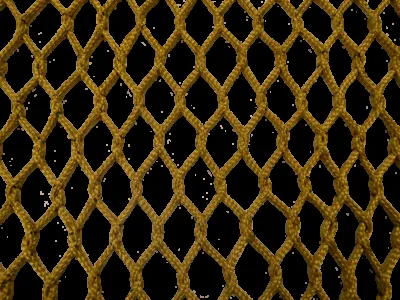
Quick answer: Norm Technologies’ NorAr para-aramid fiber belongs to the same chemical family as one of the two dominant material classes used worldwide in ballistic textiles: para-aramid fibers. Rather than comparing NorAr against one specific foreign brand, this article sets the manufacturer’s own stated properties alongside the general, publicly known characteristics of the two internationally recognized ballistic-textile material classes — para-aramid and UHMWPE. The goal is not to judge “which is better,” but to make clear which data points are independently verifiable and which are manufacturer claims.
Material classes: para-aramid and UHMWPE
The two most widely used fiber families in ballistic protection textiles worldwide are para-aramid (the chemical class known through commercial brands such as Kevlar and Twaron) and ultra-high-molecular-weight polyethylene, or UHMWPE (the class known through brands such as Dyneema and Spectra). According to publicly available materials-engineering literature, para-aramid fibers are known for high-temperature resistance and good energy absorption, while UHMWPE fibers generally have lower density — and therefore a lighter finished package — but are more sensitive to heat than para-aramid. NorAr is positioned by its manufacturer within the para-aramid class; the closest comparison point is therefore Kevlar/Twaron-type fibers, not UHMWPE-type fibers.
| Property | NorAr (Norm Technologies claim) | Para-aramid class (general knowledge) | UHMWPE class (general knowledge) |
|---|---|---|---|
| Manufacturer / origin | Norm Technologies, Turkey | Varies (many manufacturers) | Varies (many manufacturers) |
| Material class | Para-aramid | Para-aramid | UHMWPE (polyethylene) |
| Flexibility / strength claim | “35% more flexible, 45% stronger than comparable products” (manufacturer claim, not independently verified) | High tensile strength, per general literature | High tensile strength and low density, per general literature |
| Temperature resistance | “High-temperature resistance” (manufacturer claim) | Generally good (higher degradation temperature rather than a melting point) | Generally lower melting point (more heat-sensitive than aramid) |
| Independent test/certification report | Not publicly disclosed | Varies by product | Varies by product |
| Price | Not officially disclosed | Not officially disclosed | Not officially disclosed |
Flame-resistance test
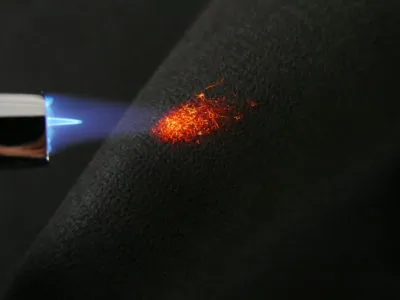
One of the company’s product promotion images shows a flame being applied directly to activated-carbon fabric; the fabric surface shows only limited reddening rather than flame spread. While this image visually supports the manufacturer’s flame-resistance claim, the numeric result of a standardized flame-spread test (such as ISO 15025 or an equivalent) is not publicly available; this article therefore describes the fabric as “shown, in the image, to resist flame” rather than claiming it is flame-proof.
Conclusion: what is known and what is not
Which independent laboratory tested NorAr, and to what standard, is not publicly disclosed. On the other hand, the standard references behind the suits and vests (NATO AEP-38, NIJ 0101.06, NIJ 0117.01, MIL-STD-662F, STANAG 2920) are clearly stated on the official product pages — which at least shows the products were designed with reference to international standards. The full technical breakdown of the ballistic products is in the ballistic vest and NorAr fabric file, and the same materials approach for the CBRN suit family is covered in the CBRN suit file. The company’s overall product range is listed in the products guide.
Frequently asked questions
Is NorAr the same as Kevlar?
No. Kevlar is a registered trademark of a specific manufacturer (DuPont). NorAr is a separate para-aramid fiber that Norm Technologies states it developed itself; both belong to the same chemical class (para-aramid) but are different products.
Is there an independent test result for NorAr?
No publicly available, independent laboratory test report could be found; the manufacturer’s own comparative figures are marked in this article as manufacturer claims.
Is para-aramid or UHMWPE lighter?
According to general materials-science literature, UHMWPE fibers generally have lower density than para-aramid; however, the final product weight depends on fabric construction, layer count and design.
What standard is NorAr manufactured to?
Vests made from NorAr reference the NIJ 0101.06 (Level IIIA) standard, and the bomb-disposal suit references NIJ 0117.01/MIL-STD-662F/STANAG 2920.
Which foreign companies does this comparison cover?
This article does not target a specific foreign company; it compares the general, publicly known properties of the para-aramid and UHMWPE material classes.
Sources and verification note
- Norm Technologies, NorAr ballistic fabric page — https://www.normltd.com/norar-balistik-kumas/index.htm
- Norm Technologies, Level IIIA ballistic vest page — https://www.normltd.com/balistik-koruyucu-yelek-seviye-iiia-koruma/index.htm
- Norm Technologies, Bomb-disposal suit page — https://www.normltd.com/bomba-imha-elbisesi/index.htm
The material-class comparison (para-aramid / UHMWPE) is based on generally accepted, publicly available knowledge in textile engineering; no unverified superiority claim was made against any specific foreign brand. The manufacturer’s comparative percentage figures are marked as manufacturer claims. Accessed: August 25, 2026.