Anduril and HD Hyundai Launch 600-Ton Autonomous Warship for US Navy’s Distributed Fleet

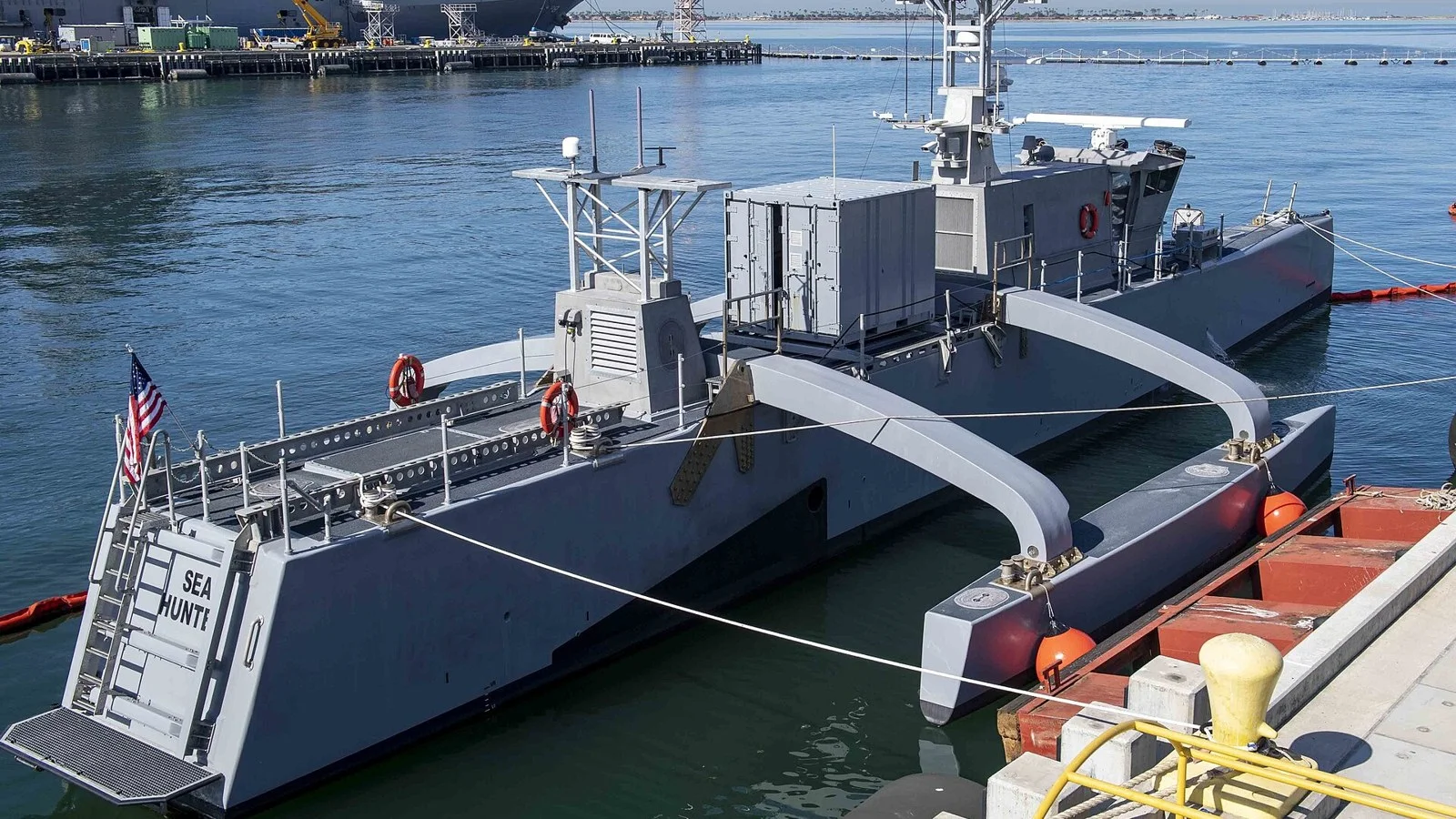
South Korea’s HD Hyundai and US firm Anduril launched a 600-ton unmanned surface vessel in Ulsan, pointing toward the US Navy’s distributed, largely autonomous fleet concept.
South Korea’s HD Hyundai Heavy Industries and US defense technology firm Anduril Industries launched a new 600-ton unmanned surface vessel (USV) at a ceremony in Ulsan on November 12, 2026, South Korea’s The Chosun Daily reported on November 15. The vessel, temporarily designated AL001 and also referred to as ASV Alpha, is a privately funded prototype built for reconnaissance and surveillance missions. No US Navy procurement order has been placed for it yet.
The partnership divides responsibilities along software lines. HD Hyundai supplies the hull, propulsion and machinery management through its VAone autonomous navigation system, developed by HD Korea Shipbuilding & Offshore Engineering; VAone follows planned routes, avoids obstacles and flags faults in engines and generators. Anduril contributes Lattice, its mission-autonomy software, which coordinates sensors, surveillance payloads and any weapons carried aboard. According to an HD Hyundai representative cited by The Chosun Daily, any missile launch would require human authorization.
The ship’s deck carries a roughly 12-meter containerized module designed to swap between surveillance packages and armaments. Detailed dimensions, speed, range and specific sensor or weapon fits have not been disclosed.
Notably, HD Hyundai ordered long-lead items such as the electric propulsion system before finalizing the hull design, then adapted the design around that equipment — a sequence that accelerated procurement at the cost of added design risk.
AL001 is now expected to undergo roughly three months of sea trials off Ulsan before shipping to the United States for testing in early 2027. If orders materialize, a prospective HD Hyundai–Kiewit arrangement could shift production to the US.
The project sits alongside, but separate from, the US Navy’s Modular Attack Surface Craft (MASC) program, which envisions a distributed, largely autonomous fleet. On September 29, 2026, the Navy awarded production Other Transaction Authority agreements to Galliano Marine Services, HII and Saronic Technologies, each covering 10 medium unmanned surface vessels at an average cost of about $40 million per hull, with initial deliveries expected before the end of fiscal 2027 — a separate track from the Anduril-HD Hyundai effort. In October 2026, Yonhap reported a related but distinct autonomous-navigation demonstration involving a smaller, 368-ton test vessel off Long Beach, California.
None of the performance claims — endurance, machinery reliability or mission effectiveness — have been independently verified, and the vessel’s sensor and weapons fit remains undisclosed.
The launch adds to a broader allied push toward uncrewed surface combatants as navies look to expand distributed firepower without growing crewed hulls. Similar efforts are underway among NATO members and partners, including Türkiye’s armed unmanned surface vessels such as ARES Shipyard’s ULAQ and HAVELSAN’s SANCAR, part of the same global race toward autonomous naval platforms.
Sources
- Army Recognition, “South Korea’s HD Hyundai and Anduril Launch New Unmanned Vessel Developed for U.S. Navy Market” (November 15, 2026) — armyrecognition.com — primary source for event details and specifications.
- The Chosun Daily (November 15, 2026), cited by Army Recognition as the original report.