KIZILELMA and the Unmanned Combat Aircraft Projects: The One That Left the Demonstrator Graveyard

The 2010s were the decade of the unmanned combat aircraft demonstrator. Europe flew the nEUROn, Britain the Taranis, the US Navy the X-47B. All three got airborne, all three were impressive, all three stopped. This file asks a simple question: if none of those same-era projects became a product, why does KIZILELMA trace a different curve?
A reminder of the frame built across this series. The sixth file broke the transformation of a defence system into an export product into six thresholds; the seventh moved that frame up to the heavy class and showed that an open channel shortens the thresholds without removing them. We are now one class higher again, and the channel effect helps less than expected: in the unmanned combat aircraft class the first threshold returns to the front.
The argument
The difference between a demonstrator and a product is not in the first flight but in what follows it. A demonstrator is built to validate a technology; once that is done the programme has met its goal and stops. A product must then run weapons integration, operational testing, serial production and entry into service. What separates KIZILELMA from the 2010s demonstrator generation is not technical superiority but that the first flight was treated as a beginning, not an end.
How a demonstrator differs from a product
The distinction is not technical but one of purpose, and it needs stating plainly. A demonstrator programme is, by definition, set up without an inventory target: the aim is to validate a technology line such as low observability, autonomy or airframe-engine integration. When the validation is done the programme ends successfully. The X-47B’s closure in 2015 was not a failure but a designed outcome.
So “the demonstrator stopped” is a classification here, not a verdict. The real question is: which programme was set up with an inventory target and moved towards it?
Excluded from this file
- Performance and range claims with no official record.
- Production quantities not published by the manufacturer or programme authority.
- Platforms of different classes compared in a single technical table.
- Unverifiable fleet-size inferences drawn from prototype numbering.
The 2010s demonstrator generation
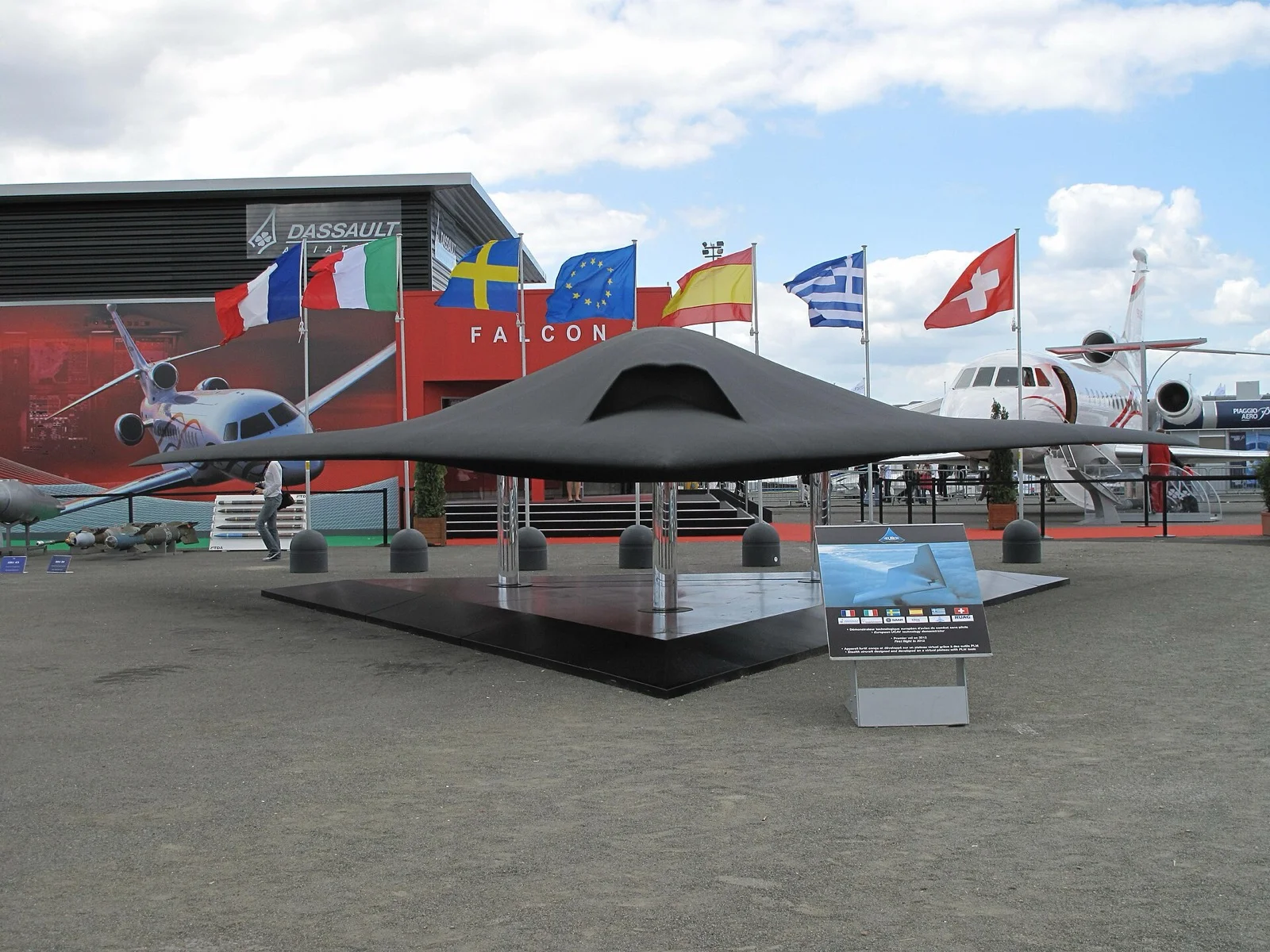
The table below shows the public record of programmes that have flown in the unmanned combat aircraft class. The columns compare where the programme got to, not capability.
| Programme | Country | First flight | Where the programme got to |
|---|---|---|---|
| X-47B | USA | 4 February 2011 | Carrier arrested landing 10 July 2013; main test programme completed May 2015, programme ended |
| nEUROn | Europe (multinational) | 1 December 2012 | Over 170 test flights between 2012 and 2022; remained a demonstrator |
| Taranis | United Kingdom | 10 August 2013 | Airlifted back to the UK on 8 December 2015 after that year’s test round |
| S-70 Okhotnik | Russia | August 2019 | Did not reach serial production |
| Bayraktar KIZILELMA | Türkiye | 14 December 2022 | Weapons integration, air-to-air shot, autonomous formation, serial production |
Bar length is not a measure of success; a long test period is normal in a demonstrator programme. What matters is whether the bar is dashed or solid.
One pattern stands out: the first flight was not a problem for any of them. All five flew. The divergence lies in the steps after. Three Western programmes reached their validation goal and closed; Russia’s Okhotnik programme flew but did not reach serial production. The items in KIZILELMA’s row — weapons integration, air-to-air shot, autonomous formation, serial production — appear in none of the others.
When did they start?
Given the series title, the real yardstick is not the first flight but the start. The table shows each programme’s traceable starting point and the time to first flight. In some cases the start cannot be pinned to a single day, and a period is given instead.
| Programme | Start | First flight | Elapsed |
|---|---|---|---|
| X-47B | early 2000s (UCAS-D line) | 4 February 2011 | about ten years |
| nEUROn | mid-2000s | 1 December 2012 | about seven years |
| Taranis | 2006 contract | 10 August 2013 | seven years |
| S-70 Okhotnik | 2011 | August 2019 | eight years |
| Bayraktar KIZILELMA | 2021 (line set up) | 14 December 2022 | about one year |
The last row is striking but easy to misread. KIZILELMA’s short span does not mean the programme was built from nothing in a year; it means the airframe, flight-control and test infrastructure accumulated with TB2 and AKINCI was inherited. A manufacturer starting from zero and one with two products already in service do not begin at the same point — this is the channel effect defined in the seventh file, in this class.
The KIZILELMA timeline
What distinguishes this chart is the density of the rows after the first flight. In demonstrator programmes that section is empty.
The moment that shifts the threshold: the air-to-air shot
In a test off Sinop on 30 November 2025, KIZILELMA struck a jet-powered target aircraft with TÜBİTAK SAGE’s GÖKDOĞAN beyond-visual-range air-to-air missile. In the manufacturer’s words this was the first time an unmanned combat aircraft had destroyed a jet-powered aerial target with a BVR air-to-air missile.
To see why that is a threshold, return to the class definitions. Armed unmanned aircraft work air-to-ground; the heavy class widens that mission set but the axis stays the same. An air-to-air mission is a class-changing capability: it takes the platform out of the supporting role and into air combat itself. None of the demonstrators took that step — because it was not their purpose.
| Step | X-47B | nEUROn | Taranis | KIZILELMA |
|---|---|---|---|---|
| Carrier / deck landing | Yes (2013) | — | — | Central to the concept |
| Weapons integration | — | — | — | Yes |
| Air-to-air shot | — | — | — | Yes (30 November 2025) |
| Autonomous formation flight | — | — | — | Yes (27 December 2025) |
| Serial production | — | — | — | Begun |
| Inventory target | None | None | None | 2026 |
The second threshold: autonomy moves from aircraft to fleet
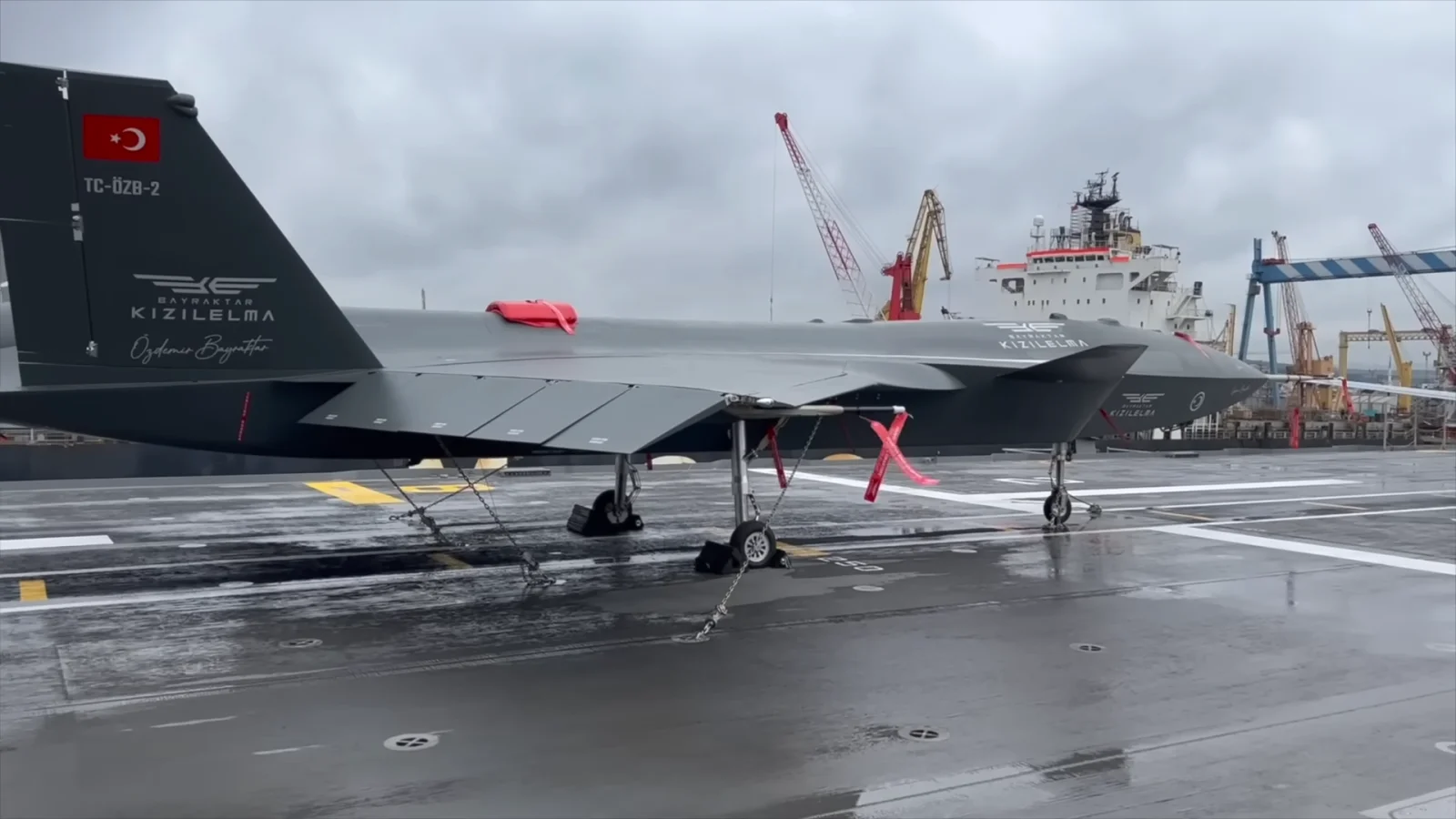
On 27 December 2025 KIZILELMA’s third and fifth prototypes performed an autonomous close formation flight; the manufacturer announced it as the first time two unmanned combat aircraft had done so. Technically this is the moment autonomy moves from the single platform level to the fleet level.
The difference matters. A single unmanned aircraft flying autonomously is a flight-control and navigation problem. Two aircraft flying autonomously in close formation requires continuous position sharing, collision avoidance and a shared mission logic. That is the precondition for the “loyal wingman” concept of working alongside a manned aircraft.
Why we treat “first” claims carefully
“World first” claims are frequent in aviation and usually definition-dependent. Two claims in this file — the BVR air-to-air shot and the autonomous close formation of two unmanned combat aircraft — are reported as the manufacturer’s statements. No independent body certifies records of this kind, so the claim is given with its source.
Loyal wingman: what is an unmanned combat aircraft for?
The class is not conceived in isolation. At the centre of the concept is a platform working with a manned fighter: the unmanned element enters the risky area first and the manned aircraft stays back. That is why autonomous formation flight is a requirement rather than a display.
| Concept | What it does | Critical requirement |
|---|---|---|
| Independent strike | Goes to the target with its own mission package | Autonomous navigation, weapons integration |
| Loyal wingman | Works in formation with a manned aircraft | Fleet-level autonomy, data link |
| Deck element | Takes off from and lands on a ship | Short-deck performance, robust landing gear |
The three are not mutually exclusive but impose different design constraints. Deck operation, for instance, forces wing folding, landing-gear strength and low-speed control — problems an aircraft flying from a runway never faces. That KIZILELMA was designed around short-deck operation shows which question the programme architecture set out to solve.
The cost axis: expensive or expendable?
There is a second division inside the class, and it may prove decisive for export: is the platform reusable or expendable? That is not a technology choice but a cost and doctrine choice.
| Metric | Reusable platform | Expendable platform |
|---|---|---|
| Unit cost | High | Low |
| Fleet size | Limited | Large |
| Loss tolerance | Low | Part of the mission logic |
| Sensor and weapon load | Broad | Narrow |
| Maintenance infrastructure | Extensive | Limited |
No unit-cost figure appears here: neither for KIZILELMA nor for the compared programmes has a verifiable unit price been published by a manufacturer or a state. The rule set in the sixth file applies — an undisclosed cost claim is not written into a table.
Why did the demonstrators stop?
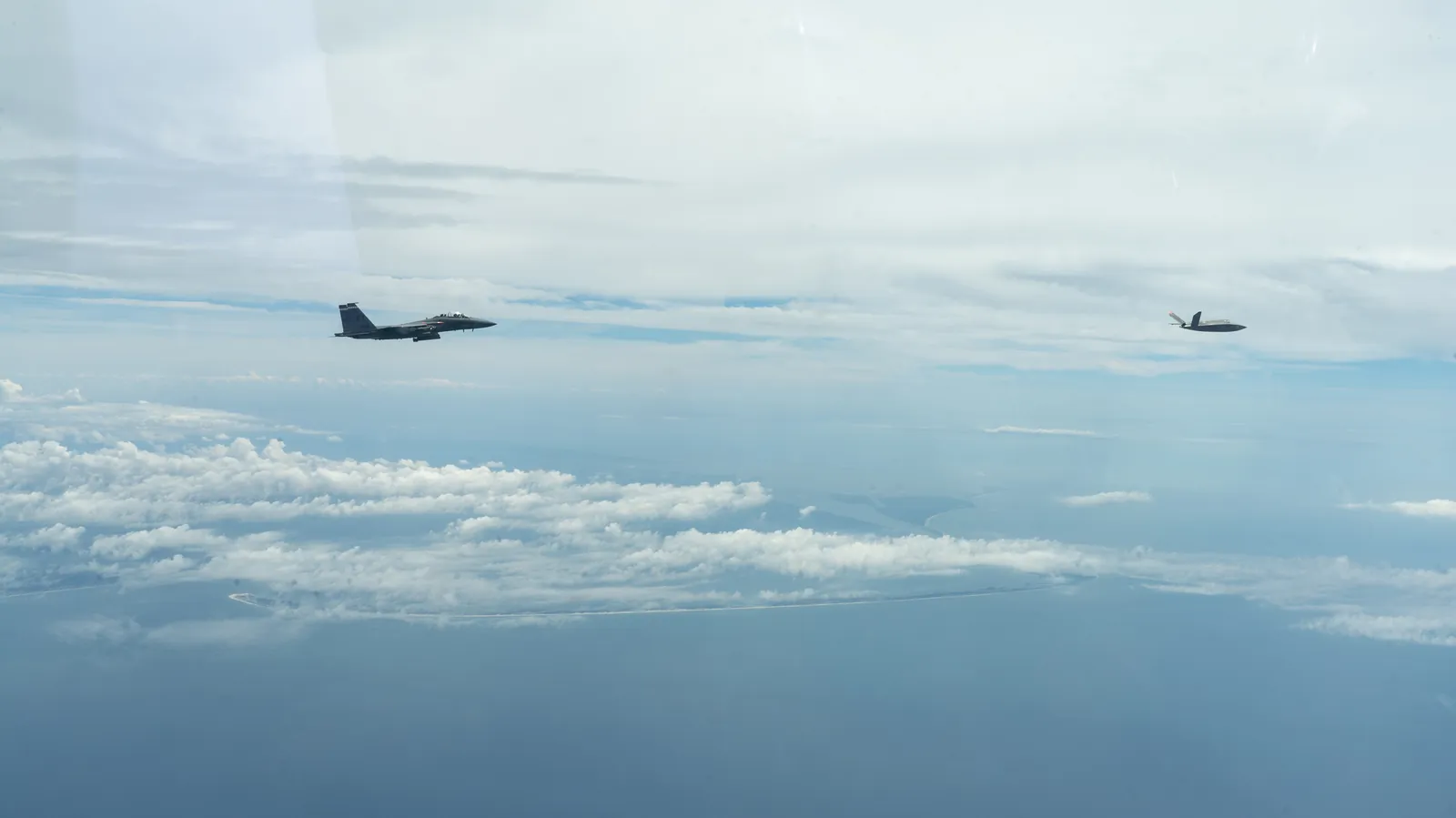
The closure of the three Western programmes cannot be reduced to one cause, but they share a structural feature: none was set up with an inventory target. When the programme document is written around technology validation, continuing after validation requires a new and separate decision — new budget and a new requirement definition. In most cases it is not taken.
| Metric | Demonstrator programme | Product programme |
|---|---|---|
| Purpose at inception | Technology validation | Entry into service |
| Definition of success | Flying the targeted technology | Delivery to a user |
| After the first flight | The programme has met its goal | It is at the start |
| Weapons integration | Usually out of scope | A mandatory stage |
| Serial production | Not planned | The purpose of the programme |
| Continuation decision | Requires a new, separate decision | Defined from the outset |
This is another form of the pattern seen in Europe’s MALE programmes. There too the problem was not technical shortfall but programme architecture. When a technology is validated what remains is not a product but knowledge; converting knowledge into a product takes a separate will and a separate industrial line.
What was different on the Turkish side
KIZILELMA’s difference cannot be reduced to a single decision, but four elements stand out, and all four have appeared earlier in this series.
First, the channel effect. The mechanism shown for AKINCI in the seventh file works here too: training infrastructure, test processes and munition-integration experience are inherited from earlier products.
Second, the munitions side was ready. The GÖKDOĞAN BVR air-to-air missile was developed by TÜBİTAK SAGE; the JET-230 supersonic missile is domestic too. Having the munition ready when the platform is ready is a concrete result of a deepened supplier base, visible across the wider Turkish aerospace product range. Without it the air-to-air test could have waited years.
Third, the inventory target was defined from the start. The programme was set up not as a demonstrator but as a system to be delivered to a user. That means the question “shall we continue?” is never asked after the first flight — the answer was given at the outset.
Fourth, the number of prototypes. The manufacturer’s announcements show different prototypes such as PT3 and PT5 flying in the same period; the 27 December 2025 formation test itself used two separate aircraft. A parallel prototype fleet lets the test schedule advance simultaneously rather than in sequence. Most demonstrator programmes ran on one or two airframes, which also explains why their test periods could stretch across a decade.
Why is entry into service still a threshold?
KIZILELMA has entered serial production and a 2026 inventory target has been announced. But the distinction kept throughout this series holds here too: reaching serial production and being in service are not the same thing. What closes the gap is not technology but acceptance processes.
| Step | What it requires |
|---|---|
| Acceptance testing | Demonstrating contracted performance in front of the user |
| Pilot and operator training | Training ground crews and mission planners |
| Maintenance and spares chain | Base-level support infrastructure |
| Munition stock | Procuring integrated weapons in operational quantities |
| Doctrine and mission definition | Writing where and with what the platform works |
None of these appear in a demonstrator programme, because none is needed. In a product programme each can stretch the calendar. As the ANKA and TAPAS comparison showed, the distance between a programme being technically ready and being delivered to a user can run to years.
KIZILELMA’s story is therefore not finished. The file’s argument is that the programme was built as a product and is separated from the demonstrator generation on that count; whether the entry-into-service step actually happens is a record to be tracked separately.
EM-PDI assessment
The Envanter Medya Programme Development Index (EM-PDI) is used across this series to score programmes against common criteria. It is an editorial assessment, not an official ranking; the weightings are set out in the first file. The demonstrators’ low scores are not a measure of failure but a consequence of the index weighting operational service and serial production.
KIZILELMA’s score is not absolute either. Because serial production has only just begun and entry into service has not yet happened, the production-scale and user-diversity items stay low. Those lines rise only if the targeted 2026 inventory step actually occurs.
The limits of this comparison
This file compares programme architectures; it does not rank the platforms’ technical merit. The limits need stating:
- The demonstrators were technically advanced. The X-47B’s autonomous carrier landing in 2013 was a capability no other programme had reached at the time and remains a reference point.
- Low observability. The nEUROn and Taranis concentrated on radar cross-section with flying-wing designs; that is a specialist field treated as a separate class in the first file.
- Closure is not failure. A demonstrator programme ends when it meets its goal; the X-47B’s completion in 2015 was a designed outcome.
- KIZILELMA is not yet in service. The 2026 target is an announced plan; its realisation must be tracked separately.
Conclusion: the first flight is a beginning, not an end
The 2010s demonstrator generation proved that the unmanned combat aircraft was technically possible. The proof was sufficient; it was not a product. Closing that distance took not a new technology but a programme architecture set up with an inventory target from the outset, a munitions line already in place and infrastructure inherited from earlier products.
It is this series’ central argument confirmed once more. As in the divergence of ANKA and TAPAS, the difference appears not in the first flight but in the eight to ten years after it.
Next in the series
File 9 — ANKA III and the low-observable UCAV programmes. A flying wing, weapons on internal stations and a low radar cross-section: there is a line continuing from where the nEUROn and Taranis left off. Where does ANKA III stand on it? The full series sits on the Türkiye and World Defence Programmes page.
Frequently asked questions
When did the Bayraktar KIZILELMA first fly?
The aircraft rolled off the production line on 14 November 2022 and made its maiden flight on 14 December 2022. The manufacturer highlights that a month separated rollout from first flight.
Why does the air-to-air shot matter?
In a test off Sinop on 30 November 2025, KIZILELMA struck a jet-powered target aircraft with TÜBİTAK SAGE’s GÖKDOĞAN beyond-visual-range air-to-air missile. In the manufacturer’s words, it was the first time an unmanned combat aircraft destroyed a jet-powered aerial target with a BVR air-to-air missile.
When was the autonomous formation flight of two unmanned combat aircraft?
On 27 December 2025, KIZILELMA’s third and fifth prototypes performed an autonomous close formation flight. The manufacturer announced it as the first time two unmanned combat aircraft had carried out the manoeuvre.
Has KIZILELMA entered serial production?
Serial production has begun and the platform is targeted to enter the inventory in 2026. In July 2026 the serial-production aircraft with tail number S2 hit its target with a JET-230 supersonic missile from over 120 kilometres.
What happened to nEUROn, Taranis and the X-47B?
All three flew and all three remained demonstrators. The nEUROn first flew on 1 December 2012 and made over 170 test flights between 2012 and 2022. Taranis flew on 10 August 2013 at Woomera and was airlifted back to the UK on 8 December 2015 after that year’s test round. The X-47B flew for 29 minutes at Edwards on 4 February 2011 and made a carrier arrested landing on 10 July 2013; its main test programme was completed in May 2015 and the programme ended that year.
What is the core difference between KIZILELMA and the demonstrators?
Not the first flight but what followed it. Demonstrators are built to validate technology and stop once that purpose is served. In KIZILELMA’s case the first flight was followed by weapons integration, an air-to-air shot, autonomous formation flight and serial production. In this series’ terms: a demonstrator does not aim at the first threshold — entry into the home force’s inventory.
Can KIZILELMA operate from a ship?
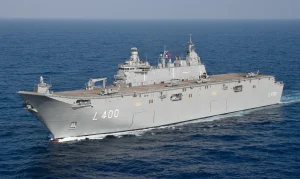
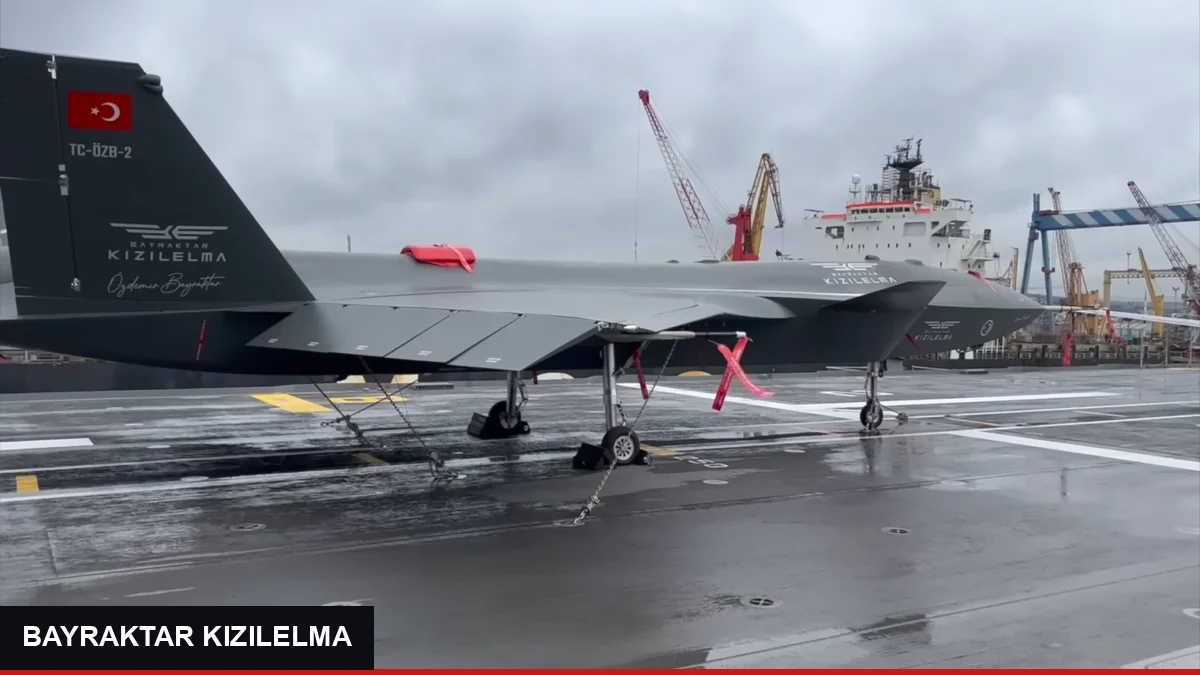
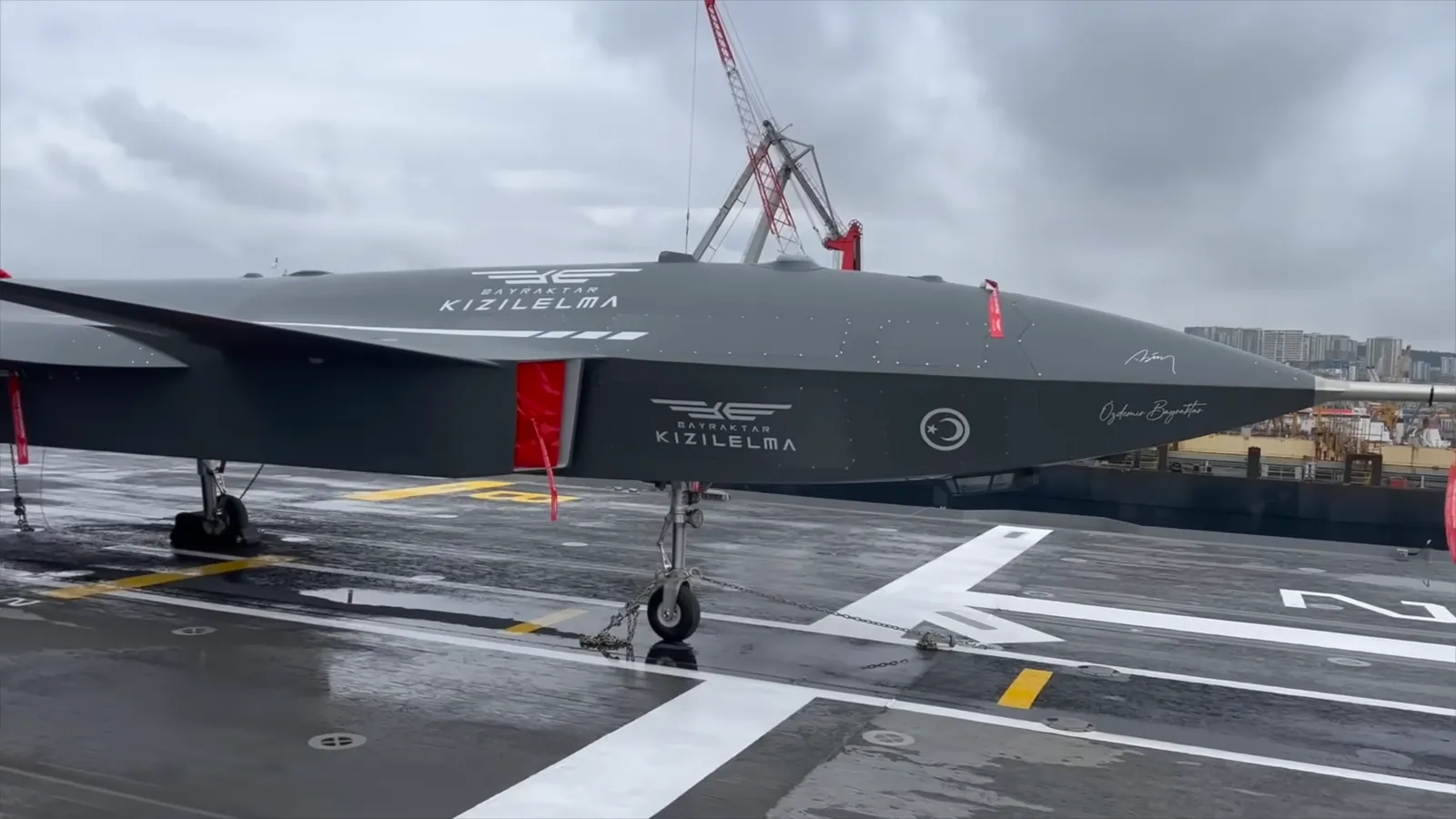
The platform was designed for short-deck operation and the TCG Anadolu’s deck sits at the centre of that concept. This file relies only on the steps published by the manufacturer and the relevant institutions.