FREYJA Clears Two Separate Milestones: Ukraine’s FP-7.x Finishes Testing, Denmark Completes Radar

Ukrainian defence firm Fire Point says its FP-7.x ballistic interceptor rocket has completed testing and is ready for use within FREYJA, the European missile-defence architecture under development. On the same day, Denmark announced it had completed one of the project’s radar components. The two milestones, however, are advancing on separate tracks, and no integrated system test has been carried out yet.
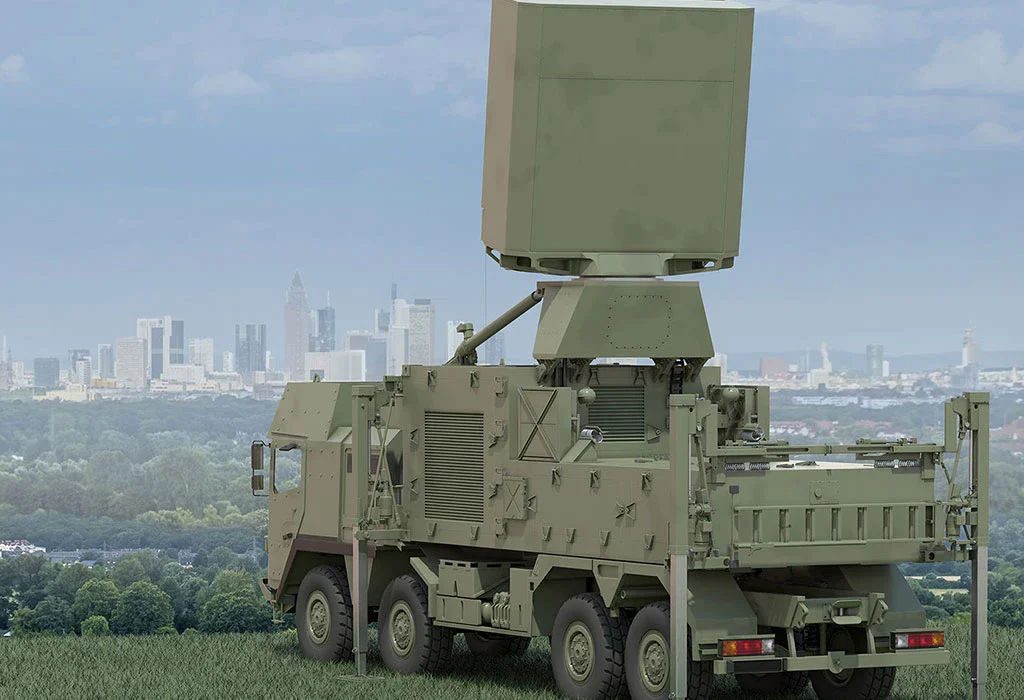
FREYJA is Ukraine’s attempt to build a lower-cost layer of defence against Russia’s continuing barrage of ballistic and cruise missiles. The architecture combines Fire Point’s mobile launcher and FP-7.x interceptor, Germany’s Hensoldt TRML-4D radar, additional sensors contributed by Denmark and Sweden, and a command-and-control backbone built around Norway’s Kongsberg. The result is meant to be a multinational industrial effort rather than a single-country programme.
Fire Point says its test firings of the FP-7.x were successful and that the rocket is now “fully ready.” A company co-owner used the announcement to press European allies to accelerate FREYJA’s rollout. Ukrainian President Volodymyr Zelensky has separately said he is pushing European partners to speed up the project, a statement relayed through Interfax-Ukraine.
On the Danish side, the completed component is a new radar station that Zelensky was expected to inspect on 11 November. The radar is meant to form part of the sensor network that would give FREYJA early warning against incoming ballistic threats. Work on this track follows a memorandum signed with Germany’s Hensoldt in June, under which the TRML-4D is envisioned as the system’s central sensor.
The key qualifier is that these two announcements have not yet been linked. Fire Point’s interceptor test and Denmark’s radar component have not been run together in a joint field trial. Ukrainian officials describe FREYJA as still at the stage of integrating its components into a single system and conducting tests, which means the timeline for full operational readiness remains open.
Fire Point’s commercial pitch rests on cost. The company is targeting a unit price below €1 million per FREYJA interceptor, compared with an estimated $4-6 million for each Patriot interceptor fielded by the United States. The firm says it aims to carry out a live intercept against a ballistic target by mid-2027, though some reporting places that milestone closer to the end of 2027.
The coalition behind the project keeps growing. Reports say 11 countries have agreed to back FREYJA, and Denmark plans to open a dedicated coordination office for it. That shift turns FREYJA from a purely Ukrainian development effort into a multinational industrial undertaking spanning several NATO members’ defence sectors.
The broader context is Europe’s persistent shortage of air-defence interceptors. Patriot production lines are constrained, and demand from Ukraine competes with requirements from NATO’s eastern-flank states. That bottleneck is pushing European governments toward suppliers like Fire Point that promise faster, cheaper output, which is largely why FREYJA has drawn this level of political backing despite its unfinished integration.
Taken together, FREYJA cleared two separate thresholds within days of each other: the interceptor finished testing, and one radar component became ready for delivery. The project’s real test will come when these pieces are fired together against an incoming target, a milestone current schedules place sometime in 2027.
Sources:
Army Recognition, “Ukraine New FREYJA Anti-Ballistic Missile Is Ready as Denmark Completes Missile Defense Radar,” 15 November 2026, armyrecognition.com — used for the core framing of the dual announcement.
UNN.ua, “Fire Point: FP-7.x missile has passed testing and is fully ready,” 2026, unn.ua — used to confirm Fire Point’s test-completion claim.
United24 Media, “Ukraine to open FREYJA missile defense office in Denmark as 11 countries join project,” united24media.com — used for the coalition size and the Danish office plan.