Türkiye and Europe’s MALE Drone Programmes: Why Europe Started Over Three Times

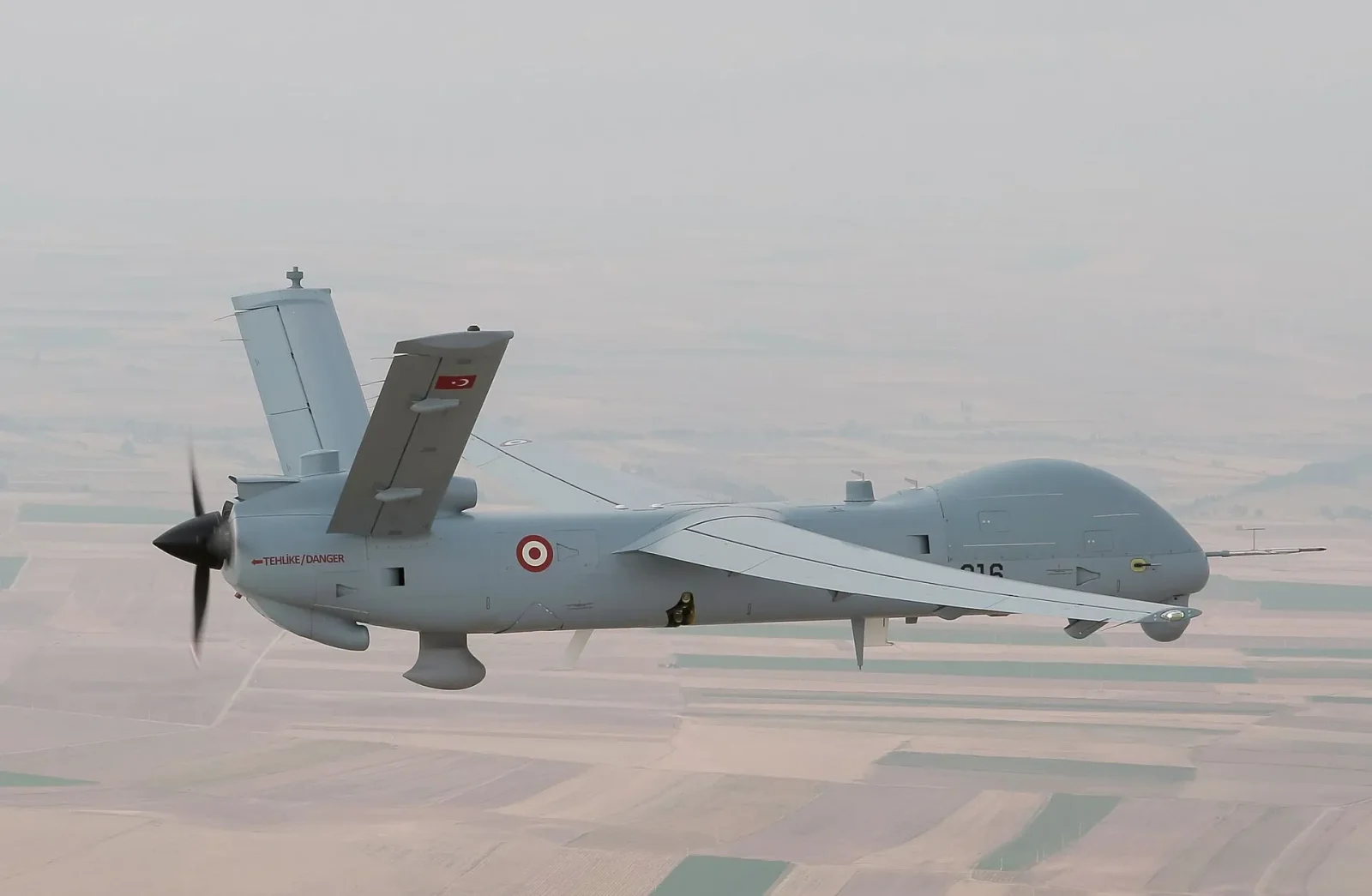
Since 2007 Europe has launched three separate programmes to build a medium-altitude long-endurance unmanned aircraft. Two were cancelled; the third had still not flown by mid-2026. Over the same nineteen years Türkiye ran a single unbroken line, armed it, and put it under contract with 36 countries. The difference is not engineering. It is programme architecture.
The short answer
Europe’s MALE problem was never a shortage of technical capability. It was that the partnership had to be rebuilt from scratch each time and that purchase commitments arrived too late. In December 2007 France, Germany and Spain launched Talarion; when the founding nations gave no commitment to buy, it was closed in February 2012. Almost simultaneously Britain and France were running Telemos, abandoned in July 2012. The third attempt, Eurodrone, reached a €7.1 billion contract in 2022, but its first flight is planned for January 2027 and in 2026 France removed its own procurement funding from the budget until 2035.
On the Turkish side the architecture did not change over the same period; it deepened. ANKA in 2004, TB2 from 2007, AKINCI at the end of the 2010s, then TB3, ANKA-3 and KIZILELMA. Each new platform was built on the flight hours and supply chain of the one before it. Europe started from zero three times; Türkiye started once and kept adding.
How this comparison was built
Unlike the opening file in this series, which covers eight countries, this file looks only at the Türkiye–Europe axis. On both sides the programme start is taken as the formal development decision or contract date; concept work and feasibility studies do not count as a start. That choice favours Europe: European MALE thinking goes back to the early 2000s, and using the contract date is the fairer basis.
Class boundaries are held. nEUROn and Taranis are unmanned combat air vehicle demonstrators, not MALE aircraft, and they do not appear in the tables here; they are mentioned only where they explain how Europe’s unmanned effort was divided across different classes.
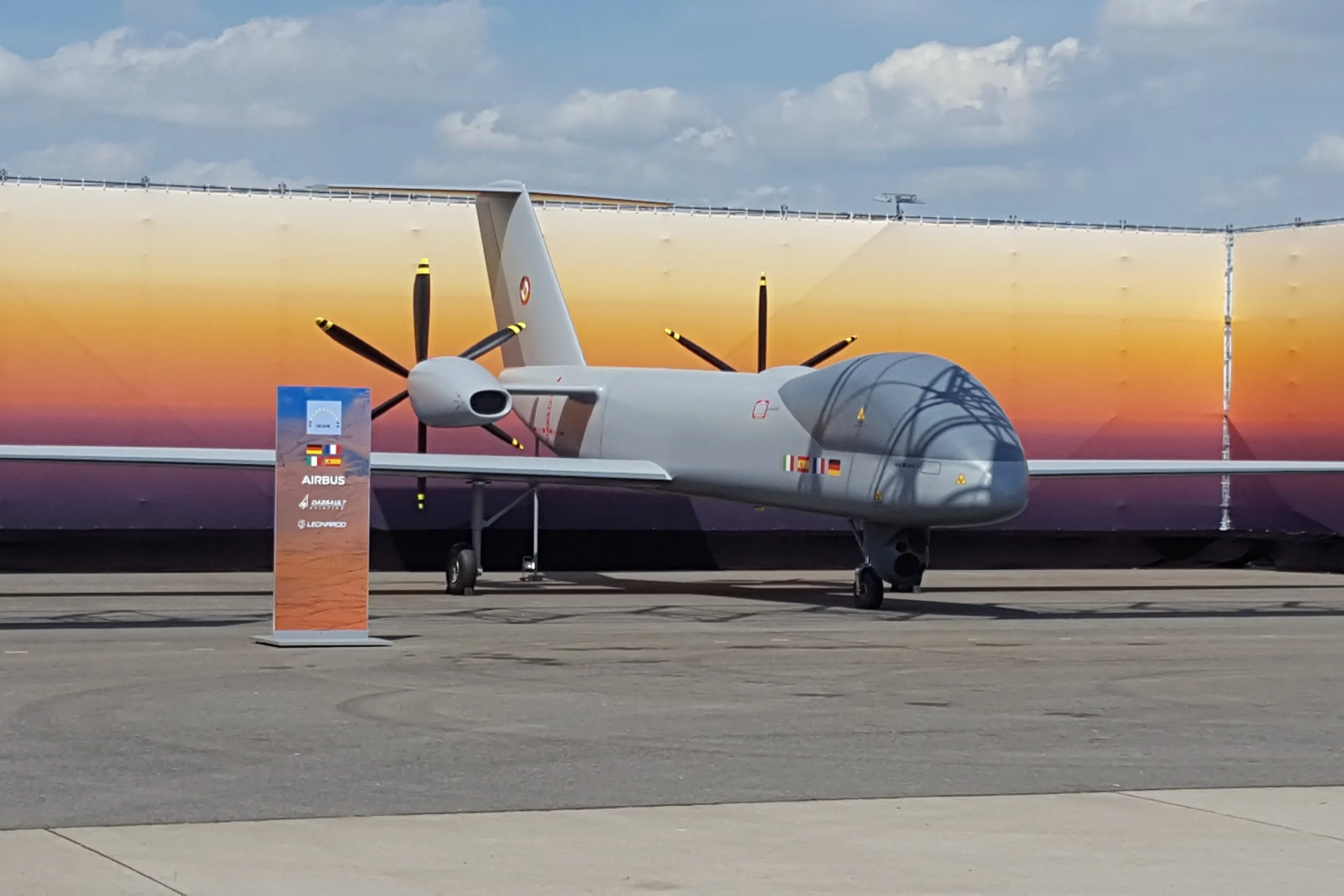
Europe’s three attempts
Attempt one: Talarion (2007–2012)
In December 2007 the defence ministries of France, Germany and Spain contracted EADS’s military air systems division for Talarion. The programme aimed to end Europe’s dependence on American and Israeli platforms. French parliamentary assessments put the total projected programme cost at around €2.9 billion, with a scope of 12 to 15 systems of three aircraft each.
It did not stop for technical reasons. In 2010 EADS complained openly that the founding nations — France, Germany, Spain and the United Kingdom — had given no purchase commitment. In February 2012 Cassidian announced it was closing the programme because it could not secure financial backing from future customers. Talarion never entered operational service.
Attempt two: Telemos (2010–2012)
While Talarion was still running, Britain and France opened a separate line: Telemos, developed jointly by BAE Systems and Dassault Aviation. The Anglo-French programme was abandoned in July 2012; the incoming French government instead considered cooperating with other European partners on Talarion. The result was stark — both of Europe’s MALE programmes closed within five months of each other in 2012, leaving the continent with no running programme for the same requirement.
After Telemos, France and Britain shifted their cooperation to the unmanned combat side, working on a joint future combat air system study through France’s nEUROn and Britain’s Taranis. Taranis first flew on 10 August 2013 at the Woomera test range in Australia. That is proof the engineering capability existed; what was missing was a procurement decision capable of turning it into a serial product. The industrial depth behind those programmes is visible in the wider force structures of France and the United Kingdom.
Attempt three: Eurodrone (2016–)
The European MALE RPAS — Eurodrone — began with a definition study in 2016 and was, under that plan, to enter service in 2025. In February 2022 the European procurement agency OCCAR signed a contract worth roughly €7.1 billion on behalf of Germany, France, Italy and Spain: 20 systems, 60 aircraft and 40 ground control stations.
As of mid-2026 the prototype’s first flight is planned for January 2027, with some assessments pointing to mid-2027. The delay cause verifiable in open sources is work-share and coordination between prime contractor Airbus Defence and Space and Dassault. In 2026 France removed Eurodrone procurement from its budget until 2035, citing the emergence of cheaper alternatives better suited to high-intensity warfare. Airbus states that France remains committed to the programme. Dassault’s own delivery record on the manned side — 12 Rafales in the first half of 2026 against a backlog of 208 — shows this is not a company short of production capability.
What filled the gap: Germany’s lease
Europe’s largest economy met its requirement by importing while its own programme ran. In July 2016 the German defence ministry announced its intention to lease five Heron TP systems from Israel’s IAI for approximately €580 million; the contract was signed in June 2018. Under the original contract the platforms were configured for unarmed reconnaissance only.
The decision to arm them came only on 6 April 2022, when the German defence committee approved the purchase of 140 missiles — 60 of them for training — for roughly €152.6 million. Their use was tied to explicit Bundestag approval and to the “legitimate target” test under international humanitarian law.
The contrast is instructive. In Türkiye the TB2 entered the inventory in 2014 and was armed one year later. In Germany, arming a leased platform was settled six years after the lease intent was announced. That is not a capability gap; it is a difference in decision process, and the German process is the product of transparent democratic debate. Its effect on the procurement timetable is nonetheless measurable. Germany’s broader force posture is set out in our review of German military strength.
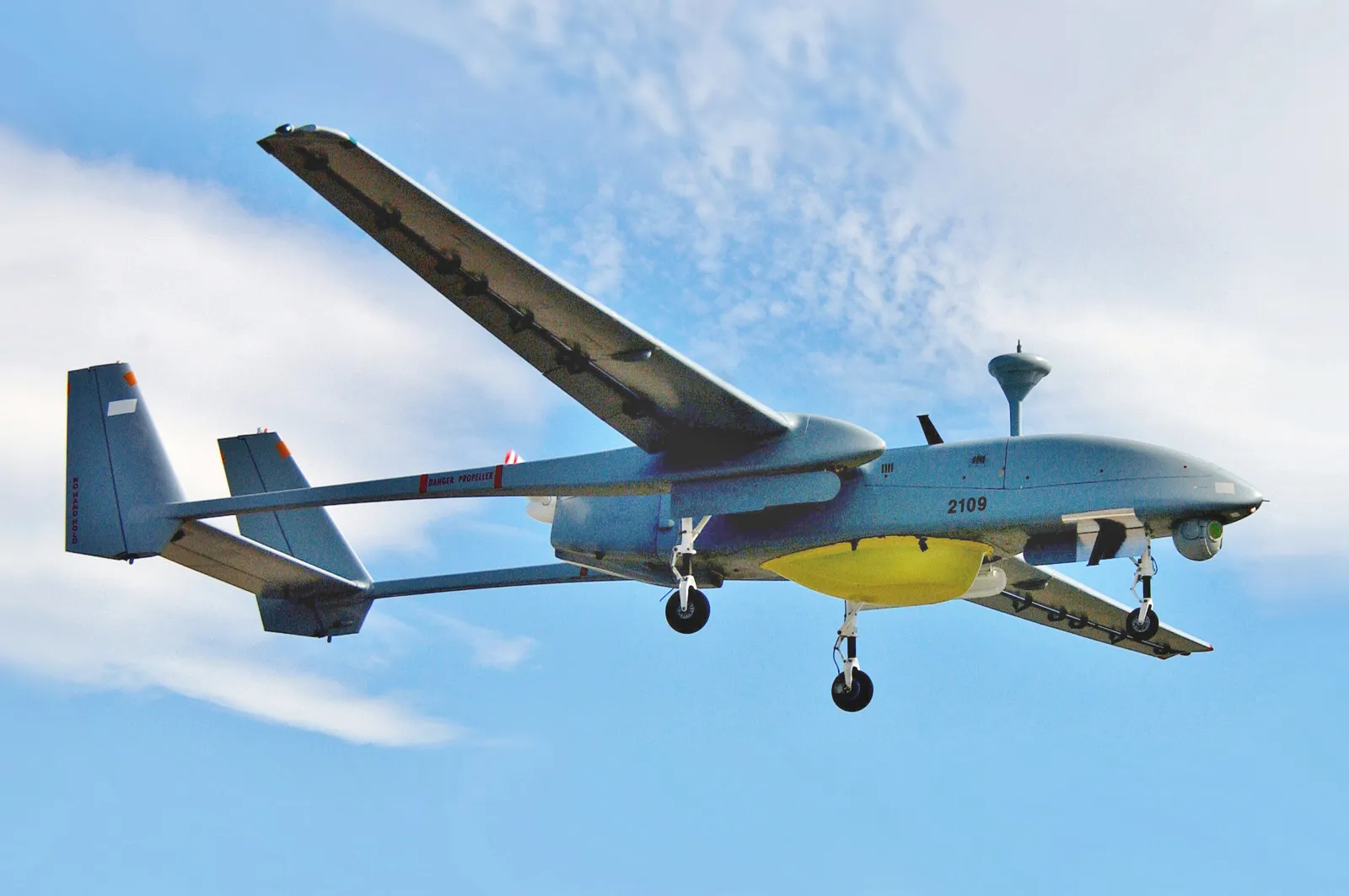
The same nineteen years in Türkiye
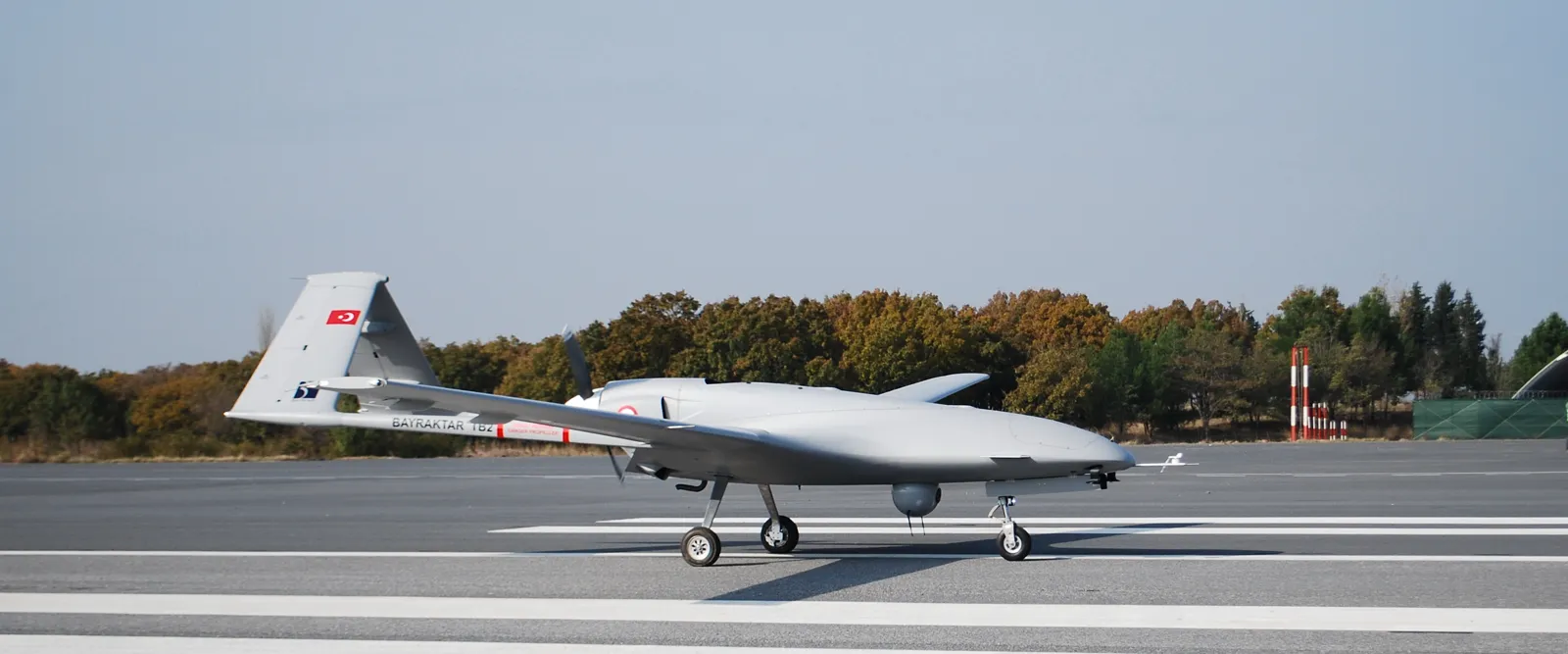
While Europe restarted three times, the Turkish programme architecture did not change. ANKA was placed under contract in December 2004; the aircraft was rolled out on 16 July 2010 and first flew on 30 December 2010. The serial production contract for ten ANKA-S aircraft was signed on 25 October 2013 and the first delivery was made in February 2018. TUSAŞ reports that ANKA fleets have passed 400,000 flight hours. The company’s wider product range now spans jets, unmanned aircraft and satellites.
On the private-sector line, Baykar had started production of the Bayraktar Mini UAV in 2006 and made its first delivery in 2007. Tactical-class UAV research began that same year. The TB2 made its first serial delivery and entered the inventory in 2014, fired its first munition in 2015, and was first exported in 2018 to Qatar and Ukraine. The fleet passed one million flight hours on 10 December 2024.
The critical point is that none of these programmes cancelled another. AKINCI first flew in 2019, deliveries began in 2021 and it passed 100,000 flight hours in 2025 — with recent deliveries to Mali among its export shipments. TB3 flew in 2023, landed on a short-deck vessel in 2024 and completed its first armed firing in 2025. ANKA-3 flew on 28 December 2023. KIZILELMA first flew in 2022 and in 2025 carried out a beyond-visual-range air-to-air shot, a world first. Each new platform was built on the flight hours and supply chain of the one before it. The AKSUNGUR line added maritime patrol coverage the ANKA family alone could not provide — see our account of AKSUNGUR deliveries.
The structural difference: partnership architecture
It is no coincidence that all three attempts stopped at the same threshold. In a multinational defence programme every partner nation wants to secure the work share that will fall to its own industry. That demand is legitimate, but it rarely coincides with the technically most efficient division of labour. Design decisions end up shaped by work-share balance rather than engineering logic, and every change requires renegotiation.
The second structural problem is the order of commitment. In the European model the development contract and the purchase contract are separate: development is funded first and the buying decision is left until later. That gives nations flexibility, but it denies the manufacturer the assurance needed to invest in serial production. Talarion died precisely in that gap. The same mechanism reappeared with Eurodrone in 2026, when France’s removal of procurement funding showed how fragile the buying side remains while development continues.
The third is parallelism. Between 2010 and 2012 Europe ran two separate programmes for the same requirement. Both were competing for the same limited customer pool and neither could reach scale on its own. France’s change of preference in 2012 ended Telemos; the absence of a purchase commitment ended Talarion. The continent lost both programmes in the same year.
| Programme | Partner nations | Purchase commitment | Outcome |
|---|---|---|---|
| Talarion | 3 (DE, FR, ES) | Not given during development | Closed in year 5 |
| Telemos | 2 (UK, FR) | Not given | Abandoned in year 2 |
| Eurodrone | 4 (DE, FR, IT, ES) | Given in 2022; one partner withdrew funding in 2026 | First flight due 2027 |
| Turkish MALE line | 1 (national) | Tied in through serial production contracts | Three platforms operational |
The table does not claim a linear relationship between the number of partners and the schedule; two-nation Telemos closed earlier than three-nation Talarion. The claim is narrower: the more partners there are, the more decision-making bodies exist that can stop the programme. In the Turkish model that number is one.
Starting conditions were not identical
In 2007 Türkiye, Germany, France and the United Kingdom did not share the same industrial base. The table below makes that difference visible. It is context, not an excuse for any outcome on either side.
| Area | Türkiye | Germany / France / United Kingdom |
|---|---|---|
| GDP scale | ~$0.7 trillion | ~$2.6–3.4 trillion each |
| Original aircraft design history | Limited; licence production and maintenance | Full spectrum; Rafale, Typhoon and Airbus lines |
| Aero engines | No original design | Original turbofan and turboprop production |
| Electronics and sensor industry | Developing | Mature; depth in radar, EO/IR and data links |
| Prior UAV experience | Operating imported systems (Gnat, Heron) | Reconnaissance UAV operations and joint projects |
| Access to foreign technology | Restricted; permission problems on key subsystems | Broad; free flow within NATO and the EU |
| Number of decision-making bodies | One national authority | Two to four partner nations per programme |
The highlighted final row is this file’s central finding. In each European attempt the number of partner nations — and therefore the work-share negotiation — was rebuilt from scratch: Talarion had three, Telemos two, Eurodrone four. In the Turkish model the time that negotiation would have consumed went into engineering instead. Engines, certification and large-platform experience, by contrast, are Europe’s strongest columns in this comparison.
User feedback as a measurable source of speed
The second source of the schedule difference is the distance between user and manufacturer. In the Turkish model the platform was handed to the armed forces without waiting for full maturity, and development continued on feedback from the field. The TB2 entering service in 2014, being armed in 2015, exported from 2018 and passing one million flight hours in 2024 is the output of that loop. Flight hours here are not a boast; they are a measure of how much data was collected. Every hour produces failure statistics, maintenance data and operational requirements.
On the European side that loop has not yet been established, because there is no European MALE platform in field use. Germany’s leased Heron TP does generate operational data, but that data does not directly serve the improvement of a European design; the platform is Israeli-built. When Eurodrone enters service, Europe will begin building this loop from scratch.
This is an advantage for Türkiye, but it is also a risk warning. The early-fielding model transfers the operational burden of an immature system to the user. Europe’s preferred route of long certification is slower but carries a different risk profile. The choice between the two models is a doctrinal one, not an engineering one.
A shared timeline
The chart below puts both sides on one axis. The “attempt one, two, three” markers on the European rows show how often the continent started over for the same requirement.
Turkish and European MALE programmes on one axis
Red markers are Turkish programmes; grey markers are the European side.
Sources: Baykar and TUSAŞ chronologies, OCCAR, German defence ministry and parliamentary records, manufacturer statements.
From contract to product: how many years?
The chart below measures each programme’s own critical transition. The measures are not identical — for the TB2 it runs from the start of R&D to entry into the inventory, for ANKA from contract to delivery, for Talarion and Telemos from start to closure. The bars are therefore not raced directly against one another; each shows how long that programme took to reach its own threshold, or that it did not reach it.
Critical transition times
Red dashed outline: the programme was cancelled, or has not yet reached the target threshold.
The measure for each row is stated in its label. Envanter Medya compilation.
Serial production, scale and exports
Serial production is the threshold the European MALE line has never crossed. Talarion and Telemos closed before even reaching prototype stage; Eurodrone’s serial production cannot arise before its first flight. On the Turkish side that threshold was passed by two different routes: TB2 production scale grew alongside export orders, while ANKA’s serial production began directly with a state order and exports followed.
| Stage | Türkiye (TB2 / ANKA / AKINCI) | Europe (Talarion / Telemos / Eurodrone) |
|---|---|---|
| Prototype | Achieved in all three | Not reached by Talarion or Telemos; in progress for Eurodrone |
| First flight | 2014 / 2010 / 2019 | None · None · planned January 2027 |
| Serial production | In all three | In none |
| Operational service | All three in force inventories | In none |
| Munition integration | TB2 in 2015, AKINCI on delivery | A design goal for Eurodrone; no implementation |
| Flight hours | TB2 1 million+, ANKA 400,000+, AKINCI 100,000+ | No comparable data |
| Exports | TB2 with 36 countries, AKINCI with 16 | None; the Eurodrone order belongs to the four founding nations |
One distinction must be preserved in the export row: Eurodrone’s order for 20 systems belongs to the founding nations and is by definition not an export. Equally, “country with a signed contract” and “country that has received deliveries” are not the same thing, and this series does not report one as the other. On the Turkish side the volume of activity is visible in the delivery record — Turkish platforms reach customers through direct sale and through licensed production abroad.
Turkish platforms inside the European market
The least expected finding in this file is this: while Europe’s own MALE programme has produced nothing, Turkish platforms have moved into Europe. According to Baykar’s November 2024 statement, its users include six NATO members and four European Union members. The first exports, in 2018, went to Qatar and Ukraine.
The relationship now runs deeper than sales. Italy’s Leonardo and Baykar have formed a joint venture, LBA Systems, which has begun aircraft integration work in Italy. A European prime contractor buying into a Turkish unmanned platform is a reasonable measure of how this market has shifted since 2007. Where that leaves the Turkish industry globally is examined in our review of Turkish Aerospace’s world ranking, and the surrounding alliance context in our ranking of NATO’s strongest militaries.
This also shows the two sides are not mutually exclusive. European nations continue their joint programmes while meeting urgent requirements with proven off-the-shelf platforms; Germany leasing from Israel and other European states procuring Turkish platforms are two faces of the same logic. Eurodrone’s delay increases the chance that these interim solutions become permanent.
Cost: large budgets, late products
Costs cover different scopes and cannot be compared directly. Even so, three verifiable figures make the picture legible: the projected total programme cost for Talarion was around €2.9 billion; the Eurodrone contract is roughly €7.1 billion for 20 systems; Germany’s lease of five Heron TP systems was about €580 million, with arming them costing a further €152.6 million. On the Turkish side, the October 2013 contract for ten ANKA-S aircraft and twelve ground control stations was approximately $290 million.
The conclusion is not that Europe wasted money; scopes, certification targets and labour costs all differ. The conclusion is this: in Europe the bottleneck was never the budget at any stage. It was the decision. Talarion closed for want of commitment, not for want of funds.
Verifiable causes of delay
| Programme | Primary cause | Secondary factors |
|---|---|---|
| Talarion | No purchase commitment from the founding nations | Budget constraint; increased competition in the market |
| Telemos | Change of partnership preference after a change of government in France | Two parallel European programmes chasing the same requirement |
| Eurodrone | Work-share and coordination issues between Airbus and Dassault | France removing procurement funding from the budget until 2035 |
| German Heron TP | Arming decision held in political debate | Use conditioned on Bundestag approval |
In none of the four rows is the primary cause engineering. There is not sufficient open-source data to show that Eurodrone’s delay originates in its engine, aerodynamics or software; the verifiable cause is the division of labour between industrial partners.
Where Europe leads
The categories this file resolves in Türkiye’s favour are schedule and conversion into a product. In two areas Europe is clearly ahead, and those areas are part of why Eurodrone’s schedule is long in the first place.
Europe’s strongest columns
- Engines and propulsion. Europe’s accumulated capability in original turbofan and turboprop design is the deepest industrial base in this comparison.
- Civil airspace certification. Eurodrone aims to be certified to fly in non-segregated civil airspace. For a military platform that is an extremely demanding and costly requirement. If Eurodrone reaches that goal, Europe will hold a capability no other programme in this comparison currently carries.
- Sensor and payload depth. The European industrial base in radar and electro-optical/infrared subsystems is broader.
- UCAV demonstrator experience. Europe’s nEUROn and Taranis demonstrator work reaches back to the early 2010s.
The limits of this comparison
Programme development speed is one measure among several and is not the same thing as capability. A slow programme can produce a more capable aircraft than a fast one. This file measures how reliably an intention became a delivered product — a procurement question rather than a technical one. Certification depth, sensor performance and engine technology are not scored here at all, and Europe would rank differently if they were.
The EM-PDI index
The 100-point index is calculated with these weights: reaching operational service 20, serial production 15, exports 15, production scale 10, technological independence 10, subsystem integration 10, schedule performance 10, modernisation potential 5, user diversity 5.
EM-PDI: Turkish and European MALE programmes
The index measures how far a programme became a product in a user’s hands, not engineering quality.
Envanter Medya editorial assessment. Where data could not be found, scores were not filled in by estimate.
What the scores do not mean
EM-PDI is not an official index. Eurodrone’s 20 points do not indicate a badly designed programme; they indicate that it has not yet matured enough to score on operational service, serial production and exports. The scores for the cancelled programmes come only from technological readiness and subsystem accumulation. German Heron TP’s 41 reflects a specific situation: the platform is operational and armed, but it is Israeli-built rather than German, so it scores nothing for technological independence or exports.
Category-by-category verdict
| Category | Ahead | Basis |
|---|---|---|
| Schedule performance | Türkiye | Seven years from start of R&D to inventory (TB2) |
| Programme continuity | Türkiye | Europe restarted three times; no Turkish main line was cancelled |
| Operational scale | Türkiye | 1 million+ flight hours on TB2, 400,000+ on ANKA |
| Munition integration | Türkiye | One year from entry into service to first firing |
| Exports | Türkiye | The European MALE line has no export column yet |
| Engines and propulsion | Europe | Original turbofan and turboprop experience |
| Civil airspace certification | Europe | Eurodrone’s design goal |
| Sensor and payload base | Europe | Broader industrial base |
| UCAV demonstrator experience | Europe | nEUROn and Taranis flew in the early 2010s |
Reduced to a sentence: Türkiye leads on getting a product into the field and spreading it, Europe on engineering depth and certification. What Europe lacks is not capability but a partnership architecture able to convert capability into a single procurement decision.
Where things stand, and the next five years
In mid-2026 Türkiye’s MALE and heavier platforms are operational, exported and expanding into jet-powered derivatives. Europe’s Eurodrone is waiting for its first flight, and one founding partner’s procurement timetable has become uncertain. Germany continues to meet its requirement with leased Israeli platforms.
Three thresholds will decide the next five years. First, whether Eurodrone holds its January 2027 first flight; if it slips, Europe’s MALE gap carries into the 2030s and the possibility of a fourth restart enters the conversation. Second, whether the French procurement deferred to 2035 returns; if it does not, the unit cost rises for the remaining three partners. Third, whether Türkiye can extend its domestic engine line across all classes — the single development that would remove the one externally dependent item in the table above.
Frequently asked questions
Why has Europe taken so long to build a MALE drone?
The verifiable reason in open sources is institutional rather than technical. Talarion was closed in February 2012 because the founding nations gave no purchase commitment. Telemos was abandoned in July 2012 when a change of government in France altered its partnership preference. For Eurodrone, the reported cause of delay is work-share and coordination between Airbus and Dassault.
When will Eurodrone fly?
As of mid-2026 the prototype’s first flight is planned for January 2027, with some assessments pointing to mid-2027. Under the original 2016 planning the aircraft was to have entered service in 2025.
What were Talarion and Telemos?
Both were European MALE attempts. Talarion began with a December 2007 contract from France, Germany and Spain to EADS and was closed in February 2012. Telemos was a joint British-French programme run by BAE Systems and Dassault Aviation, abandoned in July 2012. Both ended within the same year, five months apart.
Why did Germany not wait for a European aircraft?
In July 2016 the German defence ministry announced its intention to lease five Heron TP systems from Israel’s IAI for roughly €580 million; the contract was signed in June 2018. The original contract configured the aircraft for unarmed reconnaissance only. Arming them was approved on 6 April 2022, when the Bundestag defence committee cleared the purchase of 140 missiles — 60 of them for training — for about €152.6 million.
Is there a single winner in this comparison?
No. On schedule, programme continuity, operational scale, munition integration and exports, the Turkish line leads. On engine and propulsion technology, civil airspace certification, sensor industrial base and UCAV demonstrator experience, Europe is stronger.
Why are nEUROn and Taranis excluded?
Because both are unmanned combat air vehicle demonstrators, not MALE aircraft. Mixing classes breaks the comparison. Taranis first flew on 10 August 2013 at the Woomera range in Australia and demonstrates European engineering capability clearly enough — it simply never became a serially produced product.
Has Europe spent more than Türkiye on MALE programmes?
The scopes differ too much for a direct comparison, but the order of magnitude is clear. The projected cost of Talarion was around €2.9 billion and the Eurodrone contract is worth roughly €7.1 billion — well above the budgets allocated to comparable Turkish programmes. What determined the outcome was not the size of the budget but the speed of conversion into a product.
Sources and method
Dates and figures are compiled from manufacturer chronologies, procurement authorities and parliamentary records. The source hierarchy gives precedence to defence ministries, procurement agencies, manufacturers and official programme pages.
- OCCAR — MALE RPAS (Eurodrone) programme page and contract announcements
- Airbus Defence and Space — Eurodrone programme statements
- German defence ministry and Bundeswehr — Heron TP lease, type certification and arming
- German Bundestag defence committee records — munition approval of 6 April 2022
- French parliamentary defence budget assessments — Talarion programme cost
- Cassidian / EADS press statements — termination of the Talarion programme
- BAE Systems and Dassault Aviation — Telemos and joint UCAS study statements
- Baykar Teknoloji — corporate chronology and press statements
- TUSAŞ (Turkish Aerospace) — ANKA, ANKA-S and ANKA-3 product pages
Method note: the programme start is taken as the formal development decision or contract date. MALE and UCAV programmes are treated as separate classes, and nEUROn and Taranis are excluded from the tables. No unverifiable figure has been used for production quantity, exports or cost. Delay causes are written only to the extent they are verifiable in open sources. EM-PDI is Envanter Medya’s editorial assessment and is not an official index.
Started in the Same Era
This is the second file in the series. The first sets out the eight-country picture: drone programmes that started in the same era. The full index is on the series hub page.
Also available in Turkish.