ASELFLIR 600: The Eye That Turns Turkish Drones Into Precision Hunters

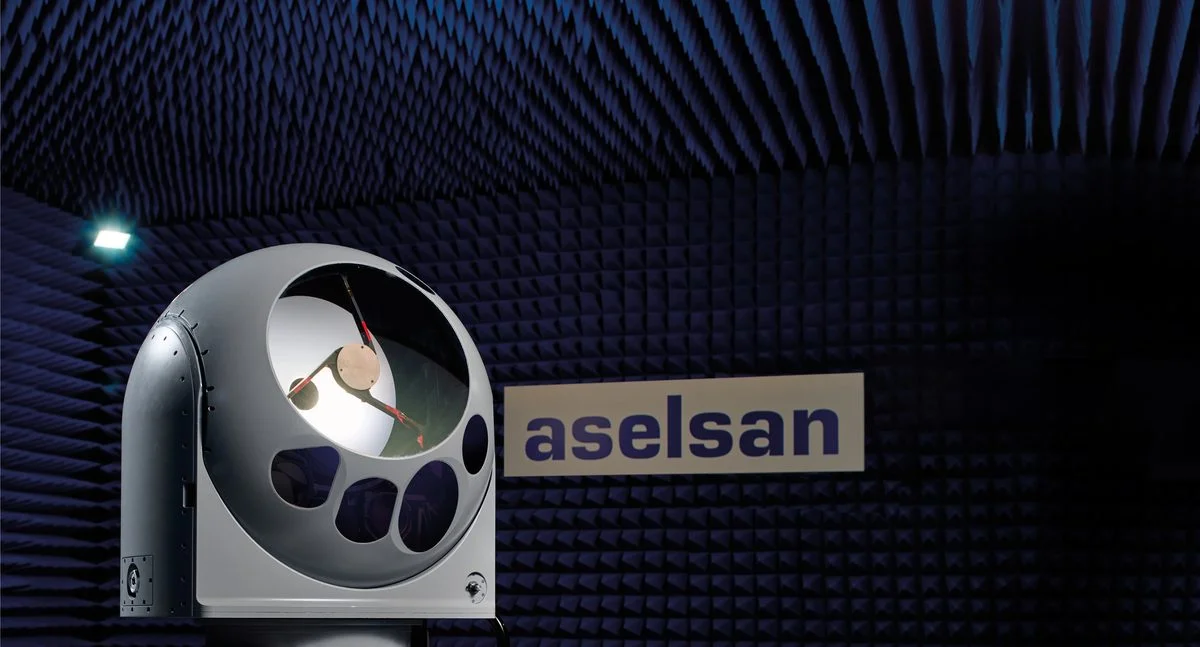
A combat drone is only as lethal as its sensors. The Bayraktar AKINCI can carry tonnes of smart munitions, but someone — or something — has to find the target, identify it and paint it with a laser first. That something is increasingly the ASELFLIR 600, ASELSAN’s flagship electro-optical targeting system and arguably the most consequential “camera” in the Turkish defence industry.
The ASELFLIR 600 is a 25-inch class electro-optical reconnaissance, surveillance and targeting system designed for high-altitude, long-endurance (HALE) fixed-wing platforms. Inside its precision-stabilised gimbal sit high-definition infrared and daylight cameras, a laser designator and a suite of laser instruments, all sharing one oversized 325 mm optical aperture. In electro-optics, aperture is destiny: the larger the optics, the longer the stand-off range — and stand-off range is what keeps a drone outside the engagement envelope of enemy air defences while it watches.
Three cameras, one window
The system fuses three sensor channels through its common aperture: a high-definition mid-wave infrared (MWIR) thermal camera that sees heat signatures day or night, a true Full HD (1920×1080) daylight TV camera, and an HD short-wave infrared (SWIR) camera that cuts through haze, dust and fog where conventional optics fail. Real-time target tracking runs across all three channels simultaneously, backed by automatic target recognition (ATR) and algorithms that compute a moving target’s course and speed.
Key specifications
| Class | 25-inch gimbal, common 325 mm optical aperture |
| Sensors | HD MWIR thermal, Full HD (1080p) day TV, HD SWIR |
| Laser suite | Designator, dual-wavelength range finder, pointer/illuminator, laser spot tracker |
| Stabilisation | 4-axis mechanical + 2-axis optical |
| Processing | All-digital video pipeline, ATR, multi-target tracking, precise geo-location |
| Environment | Operation in very low temperatures at high altitudes |
From observation to strike
What separates a targeting system from a surveillance camera is the laser suite, and here the ASELFLIR 600 is fully equipped. Its laser designator guides laser-homing munitions onto targets; a dual-wavelength laser range finder feeds precise distance data; a laser pointer and illuminator support cooperation with night-vision-equipped friendly forces; and a laser spot tracker lets the system lock onto targets designated by other platforms. Combined with an inertial measurement unit that enables accurate target geo-location, the sensor closes the entire kill chain from detection to guided impact — in seconds, from a single gimbal.
Engineered for the thin, cold air
HALE platforms operate where conditions are brutal: temperatures far below freezing, for flights lasting a day or more. The ASELFLIR 600 was designed for exactly this regime, with reinforced mechanical components, improved thermal management, an internal sensor alignment unit and automatic alignment with the host platform. The four-axis mechanical plus two-axis optical stabilisation keeps the image steady enough for laser designation at long range even as the aircraft manoeuvres.
Why it matters
Türkiye built its drone revolution on airframes; the second act is about what those airframes carry. By fielding a domestic, top-tier electro-optical targeting system, ASELSAN removed one of the last imported bottlenecks in the Turkish UAV ecosystem — the class of sensor that export restrictions have historically choked. The ASELFLIR 600 means a Turkish drone, with a Turkish radar, a Turkish datalink and Turkish munitions, now also sees through Turkish eyes.