ALP 300-G: The Mobile Eye Watching Turkish Skies for Stealth Threats

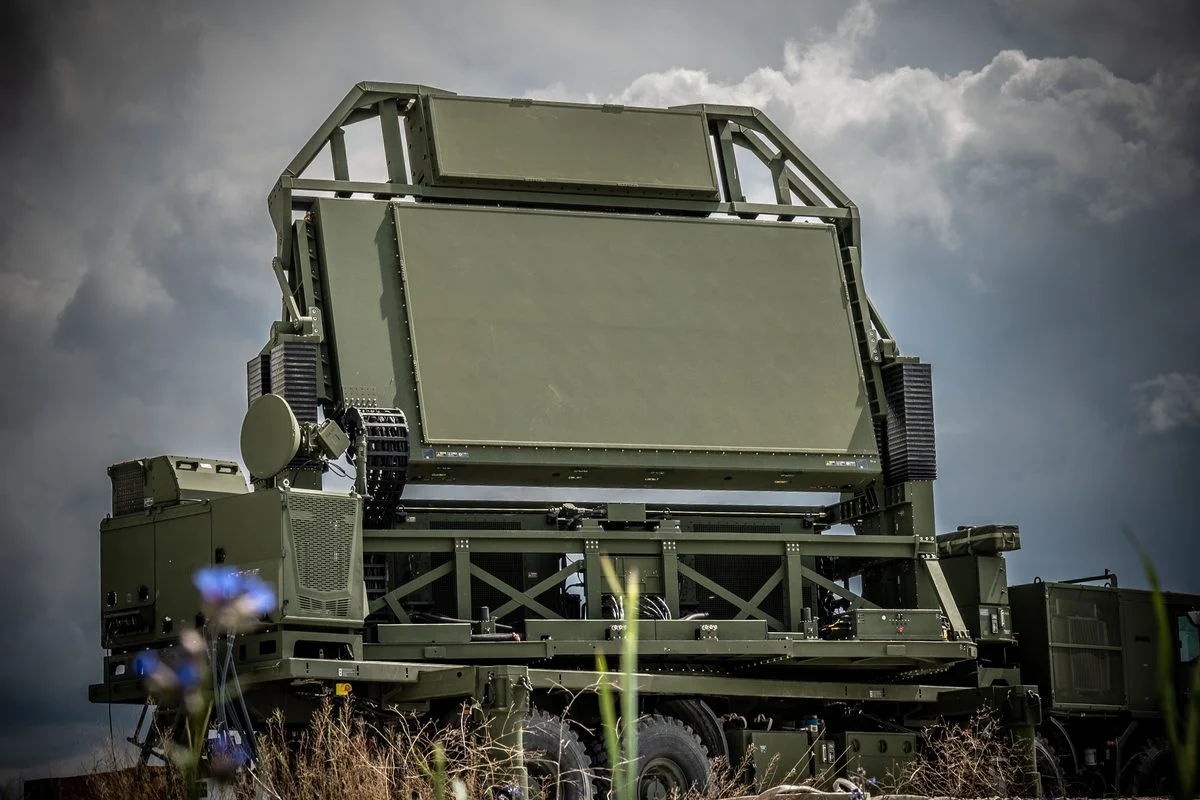
Fixed radar sites are the first casualties of any modern air campaign — Ukraine proved it, and every air force took notes. ASELSAN’s answer is a long-range early warning radar that lives on trucks, sets up in half an hour, and claims the ability to track stealth aircraft from very long range. Meet the ALP 300-G, one of the cornerstone sensors of Türkiye’s layered “Steel Dome” air defence architecture.
The ALP 300-G is a new-generation S-Band radar built around an active electronically scanned array (AESA) with full digital beamforming. In plain terms, the antenna steers its beams electronically rather than mechanically, and its multi-channel receiver architecture lets it form several beams in space at the same instant. That translates into genuine multi-mission capability: the radar can search long-range airspace, track dozens of targets and classify them, all simultaneously.
Built for the hardest targets
Any decent radar can see an airliner. The ALP 300-G was designed for the problems that keep air defence planners awake: stealth and low radar cross-section (RCS) targets, and anti-radiation missiles — the weapons built specifically to home in on radars and destroy them. ASELSAN states the system can detect and track both categories at very long ranges, and pairs that with dedicated counter-measures against anti-radiation missiles plus a thick stack of electronic counter-counter-measures: frequency and time agility, low side-lobe levels, jammer strobe and nulling, and side-lobe blanking among them.
The radar even ingests weather data to optimise its detection and tracking performance, and carries advanced algorithms to mitigate wind-farm clutter — an increasingly real headache for radar operators across Europe.
Key specifications
| Band / architecture | S-Band AESA, digital beamforming, electronic scanning in azimuth and elevation |
| IFF | Long-range Mode 5/S interrogator, NATO STANAG-4193 compliant |
| Deployment | 30 minutes to deploy or march-order, no mounting/demounting operations |
| Mobility | 10-ton class tactical wheeled vehicles; C-130 and A400M transportable |
| Reliability | 3,000 hours MTBCF, 99.9% availability, 30-minute MTTR |
| Integration | National C2 systems, NATO ACCS, air and missile defence networks |
Shoot-and-scoot, radar edition
Everything about the ALP 300-G’s physical design serves survivability. The radar, command-control/communications and power subsystems ride permanently on tactical trucks, so there is nothing to assemble at the deployment site. Thirty minutes after arriving, the system is radiating; thirty minutes after the order to move, it is gone. For an adversary trying to build a targeting picture, a radar that relocates faster than a strike package can be planned is a fundamentally different problem from a fixed site.
A node, not an island
The ALP 300-G is designed to fight as part of a network. Multiple units exchange a fused 3D air picture among themselves and with air force command centres over radios, radio links and the army backbone, performing data fusion and track handover between systems. It plugs into national command-and-control systems, NATO’s Air Command and Control System (ACCS) and air and missile defence networks — which is precisely the role it plays in the Steel Dome concept, feeding early warning data to interceptors like SİPER further down the kill chain.
Why it matters
Türkiye’s air defence build-up has been one of the fastest-moving stories in European defence, and sensors are its least glamorous but most critical layer. An interceptor is only as good as its earliest warning. With the ALP 300-G, ASELSAN has produced a domestic answer to a capability that very few countries build themselves: a mobile, networked, stealth-hunting early warning radar — and judging by the export momentum of Turkish radar systems, Ankara does not intend to keep it to itself.