LBA Systems Begins Aircraft Integration in Italy

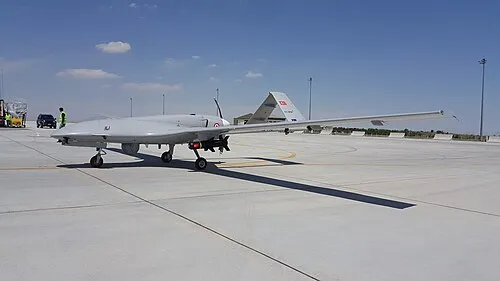
LBA Systems, the joint venture between Italy’s Leonardo and Turkey’s Baykar, has begun aircraft integration work at Leonardo’s facility in Italy, the company’s CEO said this week. Leonardo CEO Lorenzo Mariani confirmed that the venture is targeting first customer deliveries before the end of 2026.
At a Glance
- LBA Systems is a 50/50 joint venture between Leonardo and Baykar, headquartered in Italy
- The company became fully operational around July 21-22, 2026, and began producing its first “Astore Levante” drones
- As of mid-August 2026, aircraft integration is underway at Leonardo’s Ronchi dei Legionari facility
- First customer deliveries are targeted before the end of 2026, to a yet-unidentified customer in Italy
- Regulatory approvals for the venture have been completed at both the Italian national and European Union levels
- The initial product portfolio spans six configurations: Kalkan, two versions of the TB2, Astore Levante, Akinci and Kizilelma
Background
LBA Systems brings together two established names in their respective markets: Leonardo, one of Europe’s largest defense and aerospace manufacturers, and Baykar, the Turkish company behind the Bayraktar TB2, one of the world’s most widely exported and combat-proven unmanned combat aerial systems. The venture is structured as an equal 50/50 partnership and is based in Italy. Its core strategy is to combine Baykar’s Turkish-designed unmanned aircraft platforms with Leonardo’s European-made payloads, sensors and avionics, with particular emphasis on artificial intelligence, cyber resilience and interoperability across military domains.
The company reached full operational status in the final week of July 2026, when it began producing the first units of the Astore Levante, the Italian-market variant of a Baykar-derived platform manufactured under the joint venture. By mid-August, the partnership had progressed to aircraft integration work at Leonardo’s Ronchi dei Legionari site. Mariani described the milestone as marking “the move from establishing the partnership towards initial industrial execution.” Company representatives also indicated that demonstrations for prospective customers are planned in both Italy and international markets in the period ahead.
What This Means for Turkey
The transition of LBA Systems from a formal partnership into an active production and integration line represents a notable milestone for Turkey’s unmanned aircraft industry. Baykar’s design and engineering expertise is now embedded directly within a European Union and NATO industrial base, positioning Turkish-origin platforms not simply as exported products but as systems locally produced and integrated on European soil.
The arrangement also expands Baykar’s international reach: platforms such as the TB2, Akinci and Kizilelma are now being offered to European and international markets through an Italy-based structure, broadening the global visibility of Turkish defense products. At the same time, access to Leonardo’s European certification processes, avionics and sensor technologies gives Turkish engineering teams a deeper technical alignment with NATO allies. Taken together, these developments are viewed as a tangible and durable gain for Turkey’s standing in the international defense industry.
FAQ
When did LBA Systems become operational?
The joint venture became fully operational around July 21-22, 2026, when it began producing its first Astore Levante drones.
When will first deliveries take place?
Leonardo has said it is targeting first customer deliveries before the end of 2026, to a customer in Italy that has not yet been named.
What platforms are included in the initial portfolio?
The portfolio includes six configurations: Kalkan, two versions of the TB2, Astore Levante, Akinci and Kizilelma.
Sources
Defence Industry Europe, Il Sole 24 Ore, Turkish Minute, TRT World, UASweekly