



Türkiye and China’s Drone Export Models: Two Roads Into the Same Vacuum

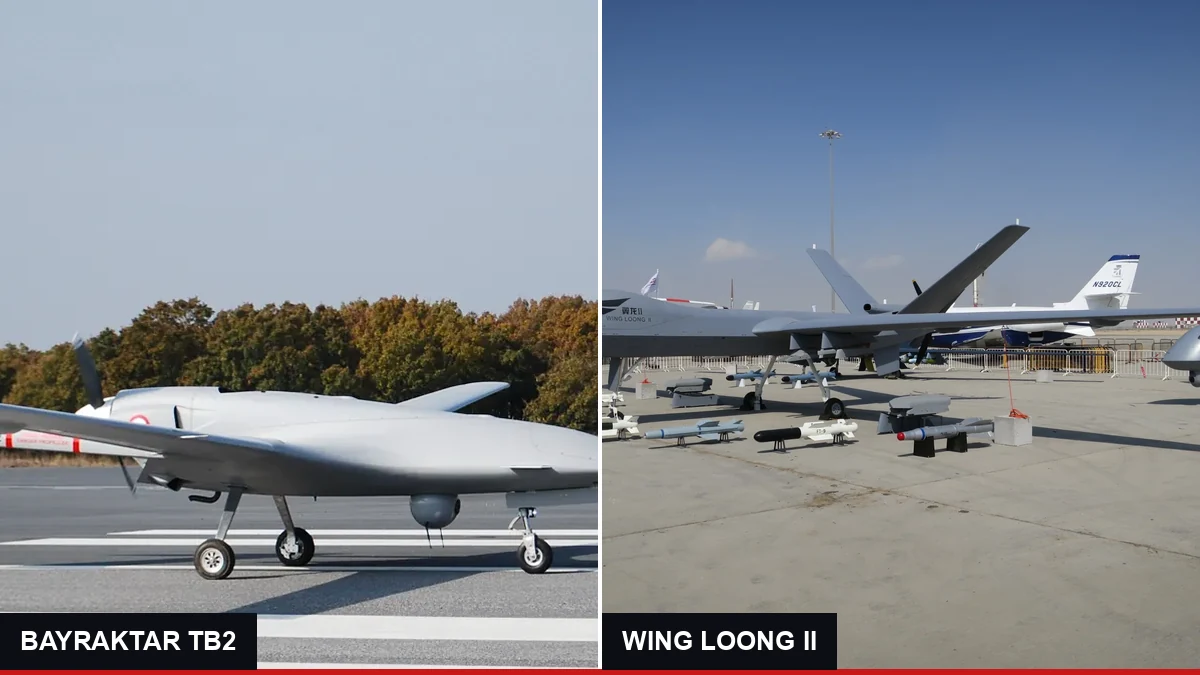
Between 2004 and 2007, two countries walked into the same empty room. The number of states exporting armed medium-altitude unmanned aircraft could be counted on one hand, and most of the firms capable of building them had no intention of selling. China launched the Wing Loong programme in May 2005; in Türkiye the ANKA contract had been signed in 2004 and tactical-class work began in 2007. Two decades on, both define this market. But they arrived by opposite routes — and the route shows up in their customer lists.
This file takes the framework built in the first file of the series and turns it towards exports. The earlier files measured how fast programmes turned into products: why Europe restarted three times, how ANKA and TAPAS diverged, and why a mature Russian aviation industry still arrived late. The question here is different: once the product existed, who was allowed to buy it, under which rules, and through what industrial arrangement?
The argument
Türkiye and China filled the same vacuum from opposite regime positions. China exports from outside the Missile Technology Control Regime; Türkiye exports from inside it. That single structural difference separates the two models’ buyer profiles, their co-production patterns and the diversity of their user base. China sold deep into a small group of high-budget customers; Türkiye spread wide across a larger set of countries and reached NATO and EU members along the way.
How this comparison was built
The two sides are not documented to the same standard, and the honest move is to build that asymmetry into the method rather than paper over it. Turkish manufacturers publish contracted-country counts, flight hours and export revenue on a regular basis. There is no comparable manufacturer-level disclosure on the Chinese side, so Chinese activity is tracked largely through the SIPRI arms transfers database. The two data sets are never merged into a single table: recipient shares for China, contracted-country counts for Türkiye.
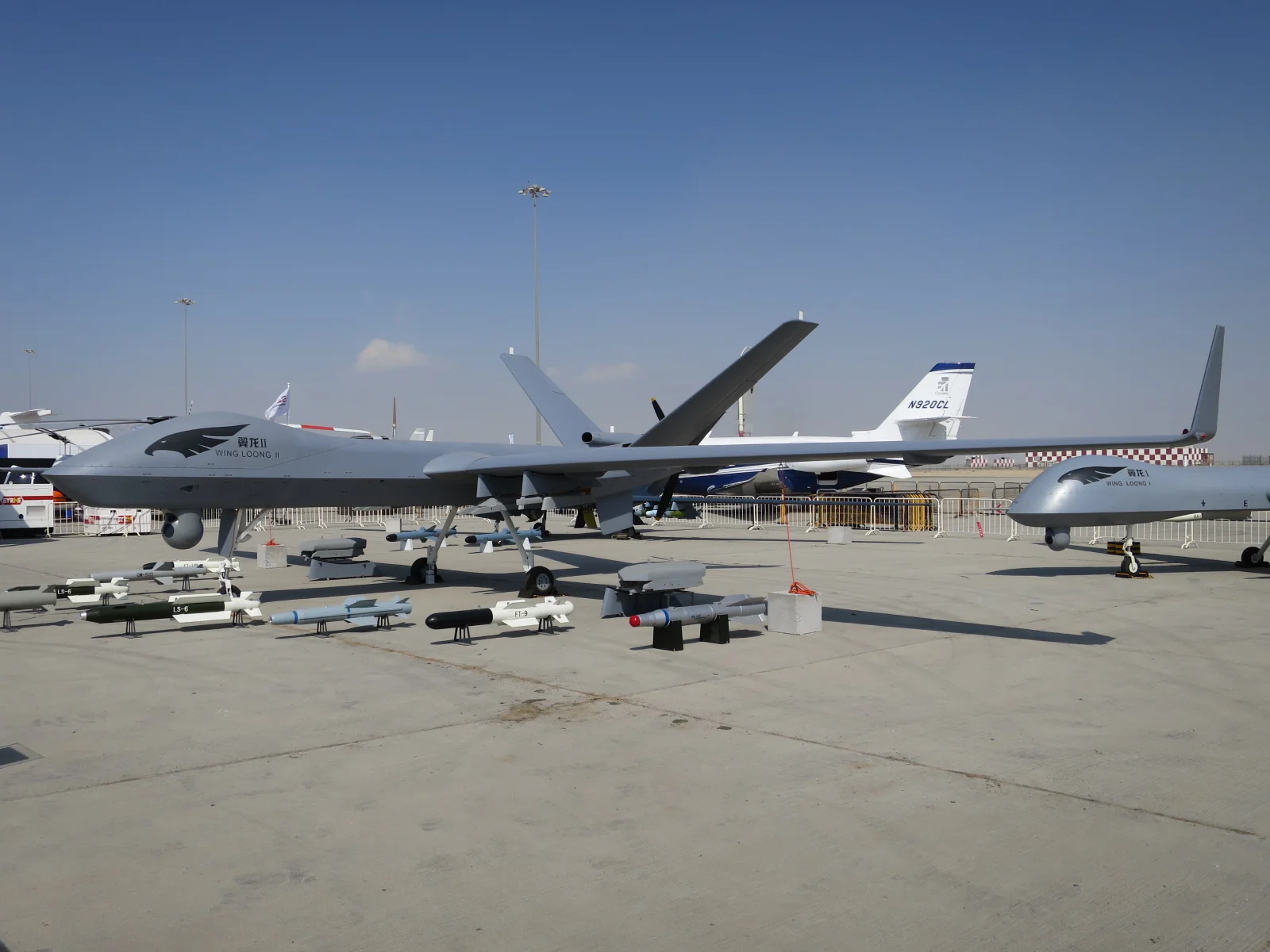
Class boundaries are held just as firmly. Wing Loong I and II belong to the MALE class, closer in size and mission profile to ANKA and AKSUNGUR; TB2 sits in the tactical class. Loitering munitions form a separate class again and appear nowhere in the comparison tables.
Deliberately excluded
- Country names that circulate in the press without an official record.
- Unverified order counts, delivery dates and unit costs.
- Secondary sources that use “order”, “delivery”, “talks” and “user” interchangeably.
- Loitering munitions — a separate class, absent from the MALE and tactical tables.
Why the market was empty
By the late 2000s few countries could build an armed MALE system, and fewer still wanted to sell one. The reason was regulatory rather than technical. The Missile Technology Control Regime treats unmanned systems capable of carrying a 500-kilogram payload to 300 kilometres as Category I, and asks member states to apply a strong presumption of denial to their transfer. That is not a ban; it makes an export the exception rather than the rule.
On the demand side the effect was a queue of unmet requirements. A country that wanted an armed unmanned aircraft and could not obtain an American one had two options: wait, or buy from outside the regime. The way Turkish and Chinese platforms now meet in the Sahel is the downstream consequence of that decade.
| Measure | Türkiye | China |
|---|---|---|
| MTCR membership | Member since 1997 | Not a member; 2004 application not accepted |
| Category I commitment | Bound by regime commitment | States it observes the guidelines; no membership commitment |
| Licensing | National export permit regime, assessed customer by customer | No detailed public licensing framework |
| NATO / EU customers | Six NATO and four EU members among users (November 2024) | No verifiable record |
| Buyer concentration | Spread across a wide base of countries | Top four recipients take roughly 70% of deliveries |
The last two rows carry the finding. Exporting from outside the regime is fast; exporting from inside it is wide. China reached its first deliveries earlier, and its customer list stayed inside a defined group. Türkiye started later and now appears on allied procurement lists.
In July 2020 the United States announced it would reinterpret its application of Category I for systems flying below 800 km/h, in order to speed up its own sales. By then Turkish and Chinese platforms were already established. Setting AKINCI against the MQ-9B shows what that delay cost in competitive terms.
Where the two programmes began
Published programme histories attribute the acceleration of Chinese work to what armed unmanned systems demonstrated in the Iraq war that began in 2003. A team at the Chengdu Aircraft Industry Group started on a prototype; the Wing Loong programme formally began in May 2005 and the first version flew in October 2007. A refined Wing Loong I flew in 2009, appeared at the Zhuhai air show in 2010 and entered service in 2011. In People’s Liberation Army Air Force service it carries the designation GJ-1.
Türkiye arrived on two tracks. The state line ran through the TİHA contract signed in December 2004, which produced ANKA. The second line was the tactical-class R&D that began in 2007: fully autonomous flight in 2009, first serial delivery and entry into inventory in 2014, first strike with a loitering munition in 2015. Running both tracks at once gave Türkiye parallel lines in two different classes.
The symmetry is worth noticing. Both countries started inside the same five-year window and both took six or seven years to reach service. The divergence came after development, at the point where export decisions are made — a different shape of the same pattern identified in the ANKA and TAPAS file: the gap does not open at first flight, it opens afterwards.
A shared timeline
Turkish milestones run down the left, Chinese programme and context events down the right.
Türkiye and China: programme and export milestones
Envanter Medya compilation.
Critical transition times
Both programmes were quick; China was a year quicker. Wing Loong I went from programme start to service in six years, TB2 to inventory in seven. That is the clearest line in China’s favour in this file, and it belongs in the record as it stands.
The divergence is in the export column. TB2 took eleven years from programme start to first export; ANKA took sixteen years to reach its first export user. Those are the natural cost of exporting from inside a control regime. Against that, AKINCI went from first flight to first delivery in two years — the sharpest evidence of how steep the learning curve became in Türkiye’s second-generation programmes.
Buyer profile: depth or breadth?
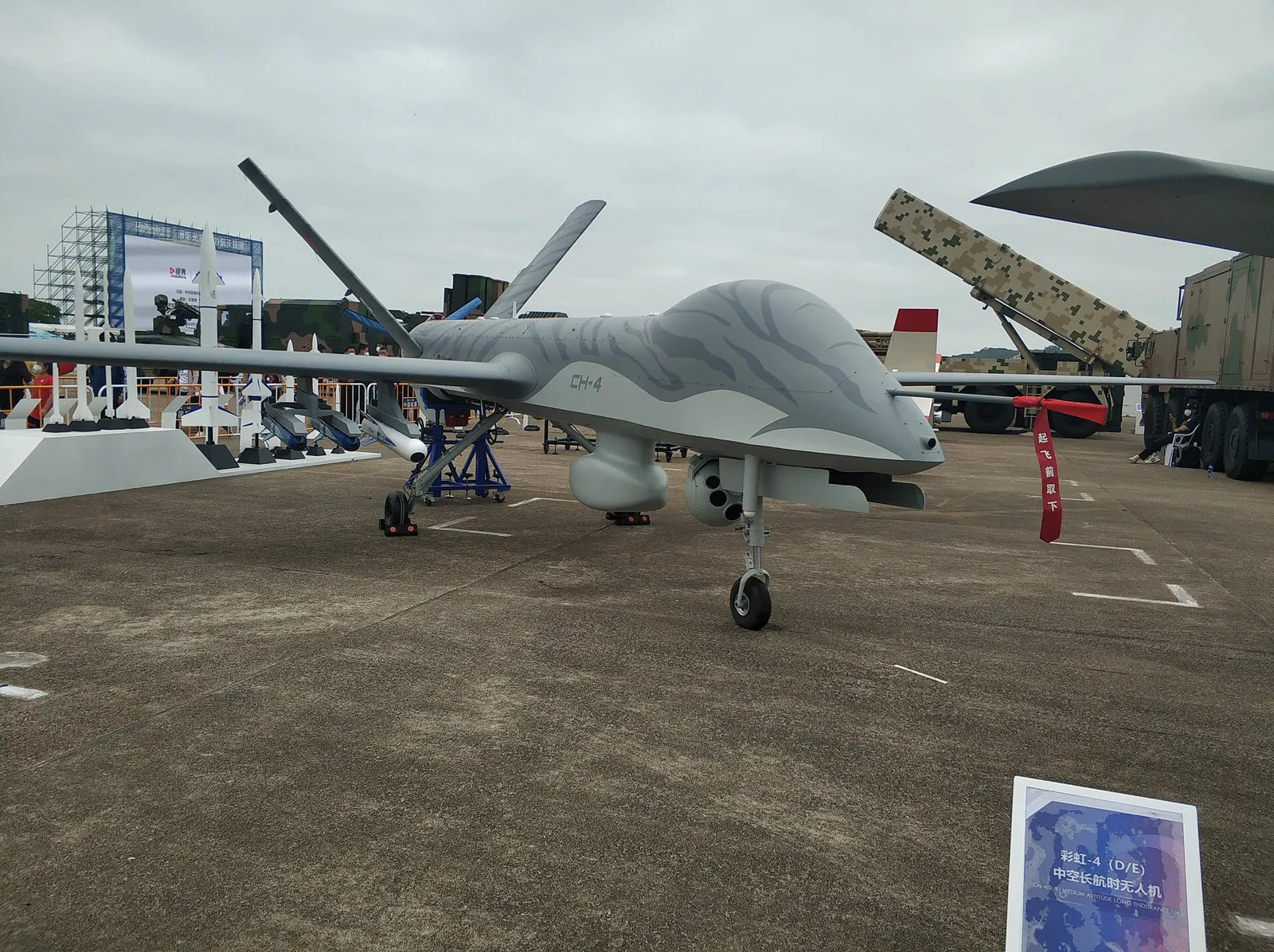
SIPRI data covering 2013 to 2023 records more than 200 combat unmanned aircraft delivered to 17 countries by China. The distribution inside that total is unusually concentrated: the top four recipients account for roughly seventy per cent. The most widely delivered single model is the Wing Loong I. The industrial base behind that volume is profiled in our review of Chinese military inventory.
| Recipient | Share of deliveries | Note |
|---|---|---|
| United Arab Emirates | 22% | Largest single recipient of the period |
| Saudi Arabia | 19% | First CH-4 batch in 2014, Wing Loong II later |
| Egypt | 15% | Predominantly Wing Loong family |
| Pakistan | 14% | Five CH-4s in January 2021 |
| Other 13 countries | 30% | All remaining deliveries |
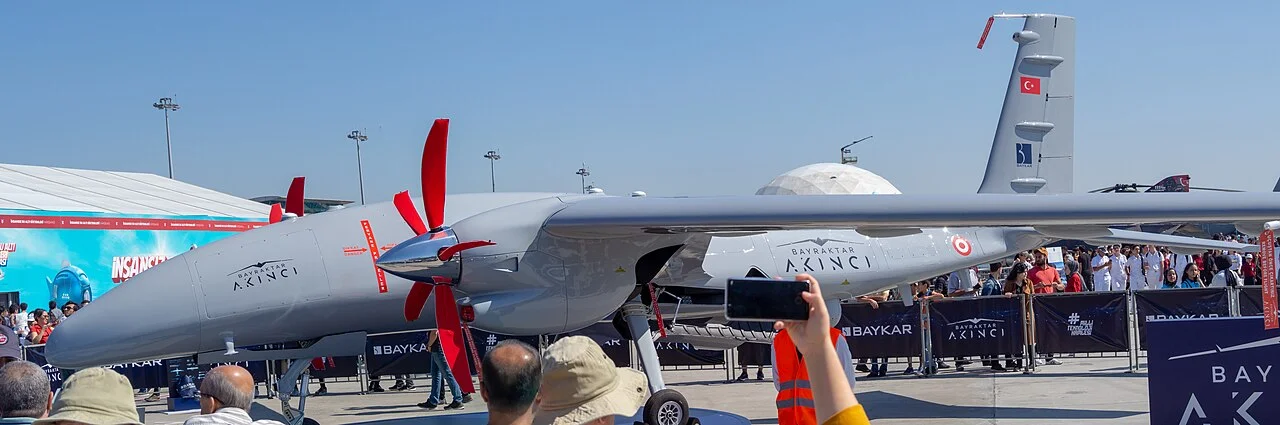
The Turkish table is structurally different. Baykar states that as of 2026 it has signed export agreements with thirty-nine countries — thirty-six for TB2 and sixteen for AKINCI. The user breakdown published in November 2024 is what distinguishes the model: six NATO and four EU members are among the operators. Poland’s decision to buy TB2 was the first and most visible case in that group, and the African operator list shows the same breadth on a different continent.
Turkish Aerospace exports on a smaller scale but follow the same pattern. ANKA’s first export user was Tunisia in 2020; on 27 November 2021 a contract covering three ANKAs, two ground stations and a logistics package was signed with Kazakhstan, and Chad is among the users. In unit terms that is far below China’s Gulf deliveries — but it is not concentrated in one region.
| Measure | Turkish model | Chinese model |
|---|---|---|
| Customer count | 39 countries at contract level (TB2 36, AKINCI 16) | 17 countries in 2013–2023 deliveries |
| Concentration | Spread across a wide base | Top four ≈70% of deliveries |
| Access to allied markets | 6 NATO + 4 EU members (November 2024) | No verifiable record |
| Product focus | Widening from tactical into heavy and jet classes | Deepening within the MALE class |
| Combat visibility | Widely documented in user countries | Limited disclosure by user countries |
| Disclosed export revenue | Baykar 2025: $2.2 billion | Not disclosed at manufacturer level |
Three waves of the market
Armed unmanned aircraft exports have not followed one continuous curve. The public record separates into three distinct waves.
| Period | Defining feature | Public indicators |
|---|---|---|
| 2013–2017 | China’s uncontested window | Deliveries begin in SIPRI records; Iraq takes four CH-4s in 2014; Saudi Arabia’s first CH-4 batch |
| 2018–2020 | Türkiye enters the market | TB2’s first export (2018); ANKA’s first export user (2020); Wing Loong II spreads in its export configuration |
| 2020–present | Regime reinterpretation and a three-way contest | US Category I reinterpretation (July 2020); AKINCI under contract with sixteen countries; Wing Loong-3 unveiled (2022) |
In the first wave there was no serious alternative, and a buyer could not apply much beyond price and delivery time as a criterion. The second wave is the real break, because it gave buyers a choice: once two sources existed in the same class, after-sales support, training packages and munitions integration became comparable items. In the third wave American systems re-entered the equation — but this time against two incumbents.
Those waves also explain the central difference. The Chinese model matured under first-wave conditions: few customers, large budgets, no alternative. The Turkish model was shaped in the second wave, by buyers who compared, asked for references and often wanted their own industry inside the programme. Much of the gap between the two models is the gap between the markets they were born into.
Co-production and technology transfer
Both models moved past straight platform sales, in different directions. The clearest verifiable Chinese case was signed in March 2017: an agreement between the King Abdulaziz City for Science and Technology and CASC to establish a CH-4 assembly facility in Saudi Arabia — a step designed to leave production capability inside the customer country.
The Turkish counterpart is the memorandum between Turkish Aerospace and Kazakhstan Engineering, covering joint production and technology transfer and targeting the first ANKA production base outside Türkiye. The same pattern recurs elsewhere in the sector: the Saudi co-production framework and licensed production of the Karayel-SU abroad are extensions of the same logic into different product groups.
| Party | Customer country | Content | Date |
|---|---|---|---|
| CASC (China) | Saudi Arabia | CH-4 assembly facility agreement | March 2017 |
| Turkish Aerospace | Kazakhstan | Joint production and technology transfer memorandum; first ANKA production base outside Türkiye | 2021 |
| Turkish Aerospace | Kazakhstan | Contract for 3 ANKAs, 2 ground stations and a logistics package | 27 November 2021 |
The difference is one of direction rather than quantity. In the Chinese case an assembly line was set up for a single high-budget customer. In the Turkish case co-production took shape as an answer to a customer’s demand to be inside the programme with its own industry.
Combat visibility and the feedback loop
One of the strongest determinants of how fast a weapon system matures is the volume and speed of feedback returning from the field. Here the two models differ structurally — and the difference is about disclosure, not engineering.
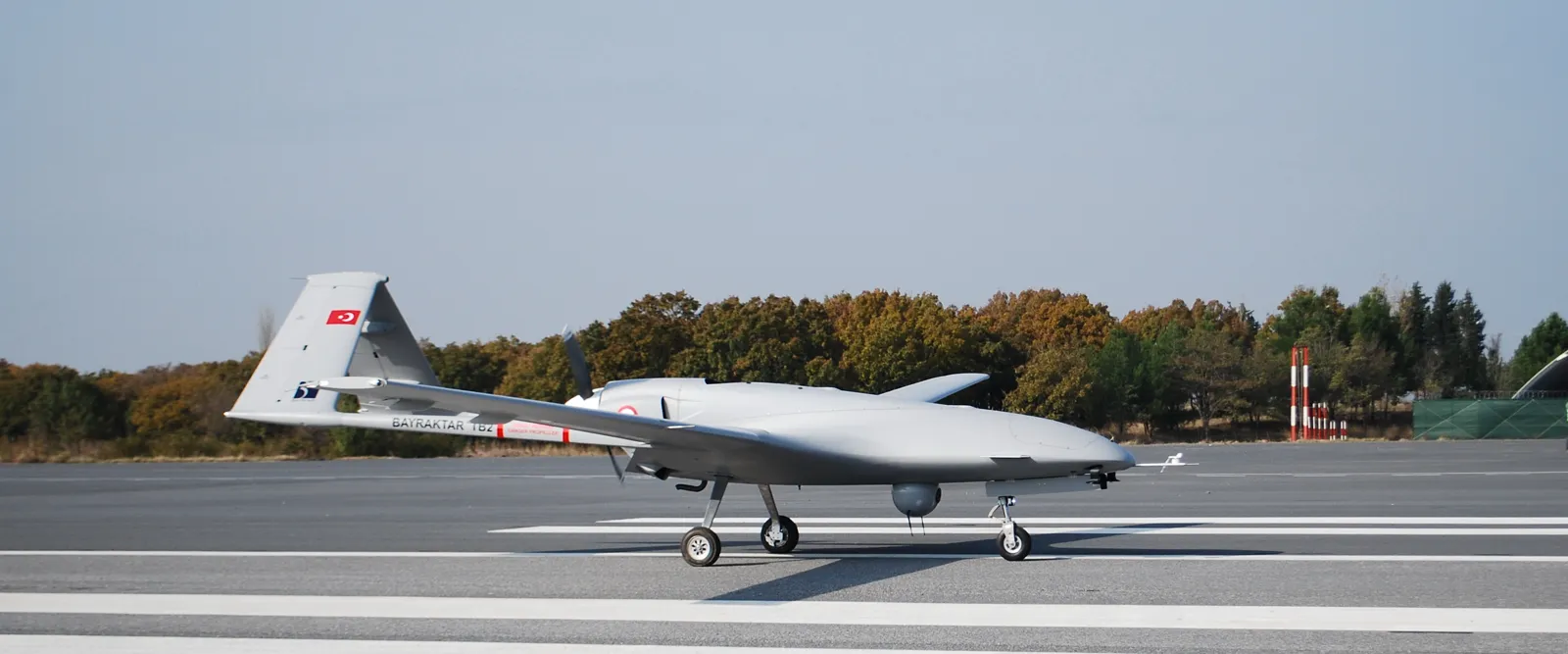
The Turkish usage record is largely public. Baykar announced that TB2 passed one million flight hours on 10 December 2024, and the figure published in 2026 is above 1.25 million. AKINCI reached 50,000 hours in 2024 and 100,000 in 2025. Turkish Aerospace reports more than 400,000 hours for the ANKA family. Those numbers are not only promotional: each one defines the data pool that maintenance intervals, software updates and subsystem improvements rest on. The documented TB2 combat record is part of the same pool.
No comparable flight-hour or usage record is published at manufacturer level on the Chinese side, and user-country disclosure is limited. That does not mean the platforms have underperformed in the field — only that no externally observable feedback record exists. This file keeps that distinction and does not convert missing data into an adverse judgement.
Where China leads
A balanced comparison has to name the lines where the other side is stronger. The Chinese model leads clearly at three points:
Three advantages
- Speed to service. Wing Loong I went from programme start to service in six years — the shortest interval in this file.
- Depth in a single market. Delivering more than a fifth of a total programme output to one customer creates a strong position in support and entrenchment.
- Breadth of the industrial base. The Wing Loong family was developed at CAIG and the CH family at CASC. Running two parallel manufacturer lines in the same class is a clear advantage of scale.
The unveiling of Wing Loong-3 in 2022 — the largest member of the family and the first announced with an air-to-air capability — shows that line has not stopped.
Limits of the comparison
What this file does not measure
- Not technical superiority. Range, payload and sensor performance are not the subject here; the structure of the export model is.
- The data is asymmetric. Manufacturer statements on one side, third-party transfer records on the other. The two source types carry different precision and the tables keep them apart.
- User lists may be incomplete. Undisclosed contracts are normal on both sides; only the public record is used.
- A contract is not a delivery. “Countries under contract” and “share of deliveries” are different concepts and are never substituted for one another.
What sets the Turkish model apart
Four distinguishing features
- Exporting from inside the regime. An MTCR member selling systems near the Category I threshold to a broad customer base is the most striking finding in this file. The route is slower; it keeps the allied market open.
- Customer diversity. Thirty-nine countries at contract level, with NATO and EU members among the users, reduces dependence on any one region.
- Widening the product range upwards. A line running from the tactical class through AKINCI in the heavy class to KIZILELMA in the jet class. The Turkish Aerospace product range shows the same movement on the state side.
- Exports feeding the line. Baykar’s disclosed export revenue rose from $664 million in 2021 to $2.2 billion in 2025, funding the production line independently of domestic demand.
The pattern matches the sector as a whole: Turkish defence and aerospace exports reached $4.6657 billion in the first half of 2026, up 22.5 per cent year on year. The global ranking of Turkish Aerospace has moved on the same curve.
EM-PDI comparison
The Envanter Medya Programme Development Index scores, out of 100, how far a programme has turned into a product with users. It does not measure technical superiority. Weights: operational service 20, serial production 15, exports 15, production scale 10, technological independence 10, subsystem integration 10, schedule performance 10, modernisation continuity 5, user diversity 5.
EM-PDI: Turkish and Chinese unmanned aircraft programmes
Scores are consistent with earlier files in the series: TB2 94, Wing Loong I 89, ANKA 79 and AKINCI 76 are unchanged.
Envanter Medya editorial assessment.
The Chinese scores cluster in a strikingly narrow band. Wing Loong I takes 89 on the strength of exports, production scale and operational service, losing ground on user diversity because of concentration. Wing Loong II’s 86 is the same distribution one step back: newer in service, narrower user base. CH-4’s 82 reflects verifiable delivery records covering fewer countries. Wing Loong-3’s 58 is the profile of an early-stage programme: unveiled, with limited verifiable serial delivery so far.
Category-by-category conclusion
| Category | Ahead | Reason |
|---|---|---|
| Speed to service | China | Wing Loong I six years, TB2 seven |
| Depth in a single market | China | Top four recipients ≈70% of deliveries |
| Parallel lines in one class | China | CAIG and CASC families |
| Early export deliveries | China | Consistent records from 2013–2014 |
| Number of customer countries | Türkiye | 39 countries at contract level |
| Access to allied markets | Türkiye | 6 NATO + 4 EU members among users |
| Class breadth of the range | Türkiye | Tactical, heavy and jet lines |
| Data transparency | Türkiye | Regular manufacturer-level disclosure |
| Export-regime alignment | Türkiye | Exporting as an MTCR member |
The table sets two definitions of success side by side. China leads on speed and depth, Türkiye on breadth and accessibility. Which matters more depends on the yardstick: depth for market share, breadth for long-term sustainability and integration with allied procurement.
Today and the next five years
The open question on the Chinese side is whether Wing Loong-3 and the newer CH family members can move beyond the existing customer group. Concentration is a source of strength and a fragility at once: with few buyers, a policy change in one market moves the whole volume.
On the Turkish side the question is scale. What numbers will AKINCI reach in the heavy class, KIZILELMA in the jet class and AKSUNGUR in the long-endurance class; and can the co-production model be carried beyond the Kazakh case. The balance between deepening with existing users and spreading into new markets is the agenda for the next five years.
The next file in the series looks at how the Bayraktar TB2 became a global export product at the scale of a single platform: price, logistics, the training package and after-sales support.
Frequently asked questions
Do Türkiye and China compete in the same market?
Partly. Both filled the armed MALE export vacuum of the 2010s, but their buyer profiles differ. China’s verifiable deliveries concentrate in a handful of high-budget Gulf and South Asian customers; the user list for Turkish platforms is broader and includes NATO and EU members. In some markets — the Gulf and North Africa in particular — they meet head on.
Why could China move early on armed drone exports?
The decisive factor is regime position rather than technology. China is not a member of the Missile Technology Control Regime; it applied in 2004 and the application was not accepted. It has stated it would observe the regime’s guidelines, but the strong presumption of denial that members apply to Category I systems is not a binding commitment for Beijing. With the United States and Europe reluctant to export armed MALE aircraft in the same years, that left an open field.
How can Türkiye export while inside the MTCR?
Türkiye has been a member since 1997. The regime does not ban exports: it applies a strong presumption of denial to Category I systems and leaves the licensing decision to the exporting state. Türkiye runs its exports through a national permit process assessed customer by customer. That is slower than the Chinese route, but it is the route that keeps NATO and EU buyers available.
Are Wing Loong and TB2 in the same class?
No. Wing Loong I and II sit in the MALE class, closer to ANKA and AKSUNGUR in size and mission profile. TB2 is a tactical-class system: smaller, cheaper and fielded in higher numbers. This file keeps the class distinction intact and does not mix classes inside its comparison tables.
Why are China’s export figures given as percentages?
Unit-level data on Chinese transfers is tracked mainly through the SIPRI arms transfers database; there is no manufacturer-level disclosure comparable to what Turkish companies publish. So the Chinese side is expressed as recipient shares and the Turkish side as the number of countries under contract. The two data sets are never combined in one table.
Does co-production feature in both models?
Yes, in different forms. On the Chinese side the clearest verifiable case is the March 2017 agreement between KACST and CASC to establish a CH-4 assembly facility in Saudi Arabia. On the Turkish side, the memorandum between Turkish Aerospace and Kazakhstan Engineering covers joint production and technology transfer, and targets the first ANKA production base outside Türkiye.
What did this file deliberately leave out?
Unverified order counts, delivery dates and unit costs. Country names that circulate in the press without an official record were not used for either side’s user list. Loitering munitions were excluded from the MALE and tactical-class comparison tables as a separate class.
Sources and methodology note
Dates, counts and contract data in this file are compiled from manufacturer statements, procurement authority announcements, arms transfer database records and the public documents of the export control regime. Unverified production, export and cost claims are excluded. Where no manufacturer-level figure is published on the Chinese side, the text says so explicitly.
- Baykar and Turkish Aerospace official statements — TB2, AKINCI and ANKA milestones, flight hours, contracted-country counts and export revenue.
- SIPRI arms transfers database — recipient distribution of Chinese combat UAV deliveries in 2013–2023 and model-level concentration.
- MTCR public documents and membership records — the Category I definition, the strong presumption of denial, Türkiye’s 1997 membership and the outcome of China’s 2004 application.
- Programme and air show records — Wing Loong programme start, first flight, Zhuhai appearance, Wing Loong II first flight and the unveiling of Wing Loong-3.
- Turkish defence and aerospace export figures — first-half 2026 performance and year-on-year change.
- Envanter Medya archive — series file 1, file 2, file 3, file 4, the Turkish original of this file.
Editorial note: the distinction between “order”, “delivery”, “talks” and “user” is preserved throughout, as is the class distinction: tactical class, MALE class, unmanned combat aircraft and loitering munitions are separate categories and are not mixed inside the comparison tables. No Chinese programme is described as a failure; where the public record is thin, the file says so.
Started in the Same Era
This is the fifth file in the series. The full list and publication schedule are on the series hub page.
Earlier files: 1 — Drone programmes that started in the same era · 2 — Türkiye and Europe’s MALE programmes · 3 — ANKA and TAPAS · 4 — Türkiye and Russia’s drone programmes
Related: TB2 versus Wing Loong II · Turkish and Chinese drones in the Sahel