Beyond Arms Sales: The Mecca Pact’s Real Prize for Turkish Industry Is a Factory in Riyadh

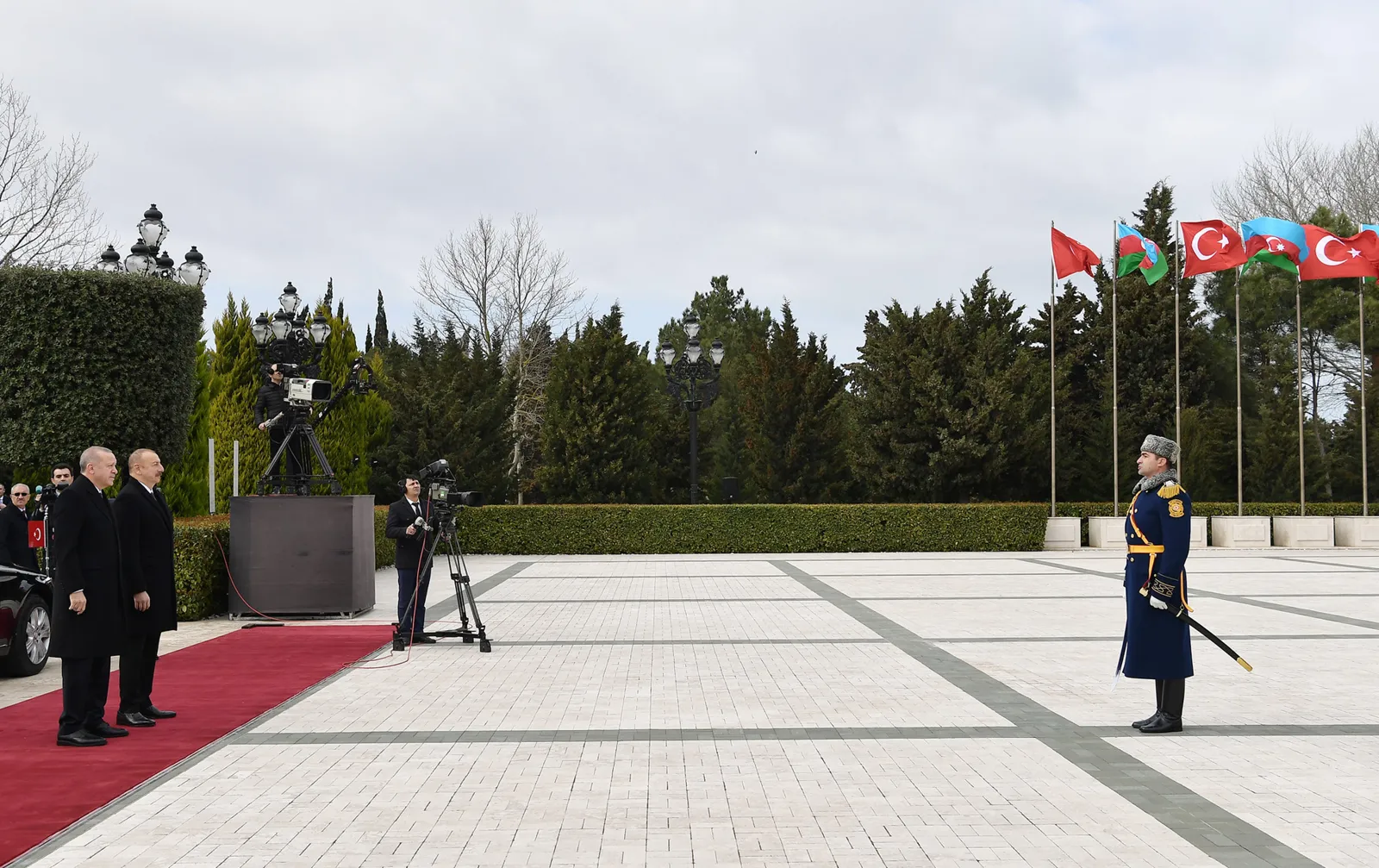
When Saudi Arabia, Turkey and Pakistan signed the Mecca Pact on Aug. 7, the headlines fixed on one clause: an armed attack on any one of the three would be treated as an attack on all three. Defence analysts watching the region argue the sentence that will matter longer is the one nobody quoted.
That clause commits the three states to deepen defence cooperation “in all its aspects.” In practice, analysts told Breaking Defense, it hands Ankara and Riyadh a political framework for something Turkish firms have chased for years without much to show for it: joint production inside the Kingdom.
At a Glance
- What happened: The industrial dimension of the Aug. 7 trilateral pact between Saudi Arabia, Turkey and Pakistan is coming into focus.
- Who is talking: Ali Bakir (Qatar University), Serhat Süha Çubukçuoğlu (TRENDS Research & Advisory), Albert Vidal (IISS) and Gokhan Tekin (FNSS).
- The core claim: The pact covers joint investment, technology transfer, local production, R&D and training — not just exports.
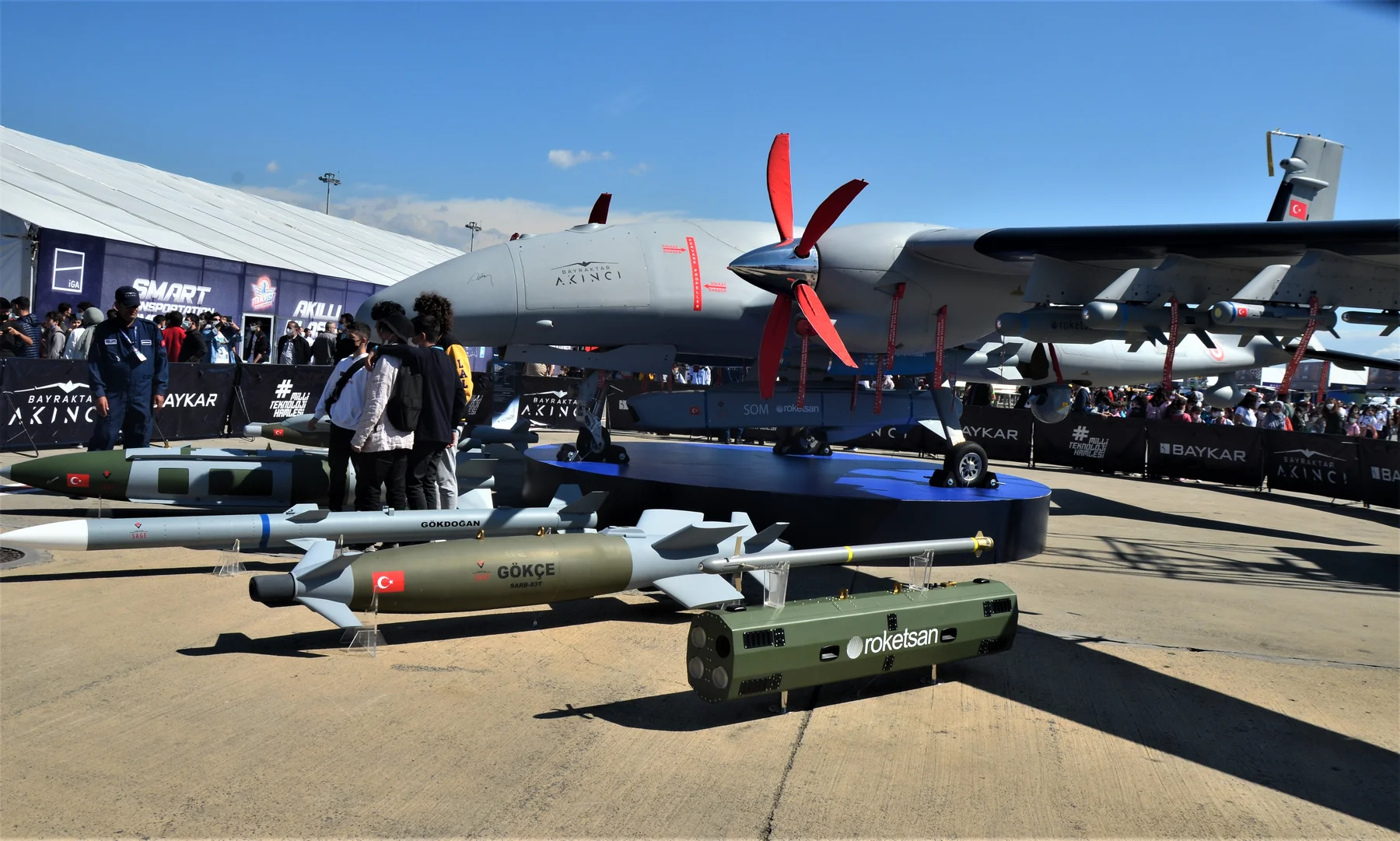
- Why Turkey cares: Turkish firms have won little in Saudi Arabia beyond Baykar’s 2023 Akinci contract. The pact supplies the political cover that was missing.
- Systems in play: The KAAN fighter, HİSAR-O medium-range air defence, KORKUT and GÜRZ short-range and counter-UAS systems, and FNSS armoured vehicles.
- Next step: Turkey’s parliament must ratify the accord. Analysts do not expect it to be blocked.
The Clause Nobody Quoted
The Mecca Pact arrived with a line built for headlines. Signed on Aug. 7, 2026, it states that an armed attack against any one of the three signatories “shall be regarded as an attack against them all” and is meant “to strengthen collective deterrence against any act of aggression.” Comparisons to NATO’s Article V followed within hours.
Those comparisons may yet be tested. Saudi Arabia has spent recent months in Iran’s crosshairs, and the collective-defence provision could be forced off the page and into practice sooner than anyone in Riyadh would like. But analysts who spoke to Breaking Defense make a different argument about where the pact leaves its mark.
The text also provides for “the enhancement of all aspects of defence cooperation among the three states.” It reads like boilerplate. It is not. Mutual-defence clauses stay theoretical until a crisis validates them; industrial clauses start producing consequences the moment working groups convene. Production lines, trained engineers and transferred data packages survive changes in political weather that treaty language does not.
That asymmetry is why the analysts’ attention has drifted from the deterrence paragraph to the one underneath it — and why the pact’s most consequential effects are likely to land on Ankara and Riyadh rather than on any battlefield.
‘Not Simply an Arms-Export Agreement’
Ali Bakir, a defence analyst and assistant professor at Qatar University, pushes back directly on the narrow reading. “The Mecca Pact should not be viewed simply as an arms-export agreement. It is much broader,” he said. The accord, he added, aims to facilitate “joint investment in defense industries, major defense projects, technology transfer, local production, research and development, training, and the integration of complementary capabilities.”
His conclusion is the part worth underlining: “Over time, this could transform the relationship from a buyer-seller model into a genuine defense-industrial partnership.”
The distance between those two models is larger than any contract figure suggests. In a buyer-seller relationship, the exporter delivers hardware and lives off spares and sustainment; every follow-on order has to be won again from scratch, against the same competitors. In an industrial partnership, the customer’s manufacturing base is wired into the supplier’s ecosystem — tooling, workforce training, quality systems, supply chain. Once that wiring is in place, switching suppliers costs far more than choosing one did.
Serhat Süha Çubukçuoğlu, who directs the Turkey programme at TRENDS Research & Advisory, describes what Riyadh is actually shopping for. “Saudi Arabia does not simply want to import finished platforms,” he said. “Rather, it wants to build domestic manufacturing, maintenance, and engineering capacity under Vision 2030.”
Albert Vidal, a research analyst at the London-based International Institute for Strategic Studies, is more measured. The pact, he said, “could provide a nudge for companies trying to penetrate the Saudi market.” Then the caveat: “Turkish firms have been working on this for several years but with few major successes beyond the Akinci deal.”
Riyadh Wants the Plant, Not the Platform
Vision 2030 is the label for Saudi Arabia’s effort to build an economy that does not run on oil. Its defence chapter carries a blunt objective: raise the share of military spending that stays inside the Kingdom. Riyadh has built a dedicated institutional architecture around that goal, and its regulatory and prime-contractor arms have become the counterparties for international partnerships.
This is the most ambitious Gulf version of a shift visible across the arms market. Large-budget customers increasingly evaluate a procurement not by unit count but by residue — how many engineers get trained, which subsystem gets built locally, how much sustainment dependency on a third country disappears. The metric is not what the contract costs. It is what the contract leaves behind.
Measured that way, traditional Western suppliers struggle. The obstacle is usually legal rather than technical. Export-control regimes restrict the transfer of technical data packages for critical subsystems; end-user agreements govern how and against whom a system may be employed. For the supplier these are defensible security policies. For the customer chasing a localisation target, they are the binding constraint.
Çubukçuoğlu puts Turkey in precisely that gap. Ankara is “particularly well placed to support that goal,” he said, “because it can offer capable, combat-tested systems with fewer political restrictions and more flexible localization arrangements than many traditional Western suppliers (especially the United States).”
What ‘Fewer Political Restrictions’ Actually Means
Each element of that sentence maps onto an argument Turkish industry has spent a decade assembling. Combat-tested comes first: a large share of Turkish systems were used operationally by Turkey’s own armed forces before they went on the export market. It is the thing no brochure can claim and the first thing a visiting technical delegation asks about.
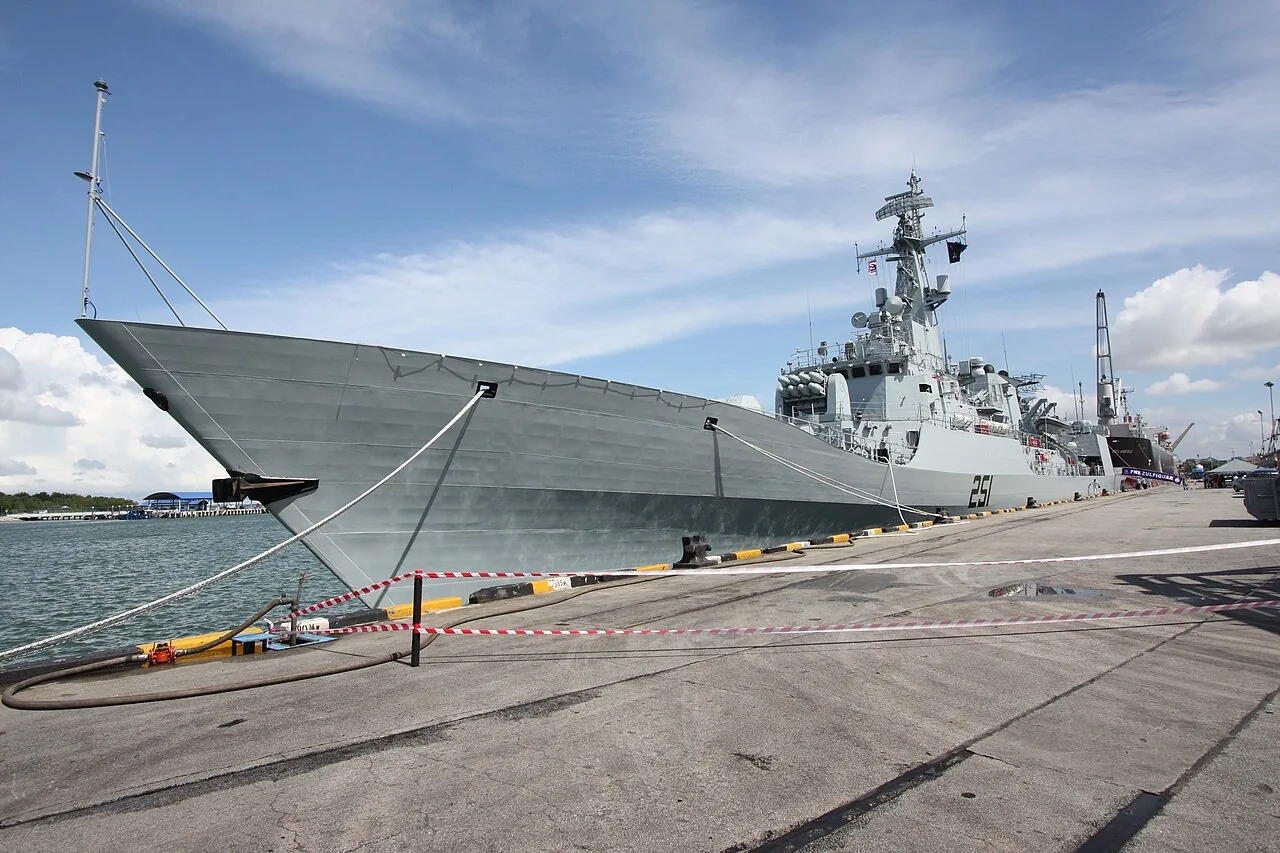
Flexible localisation comes second. The model Turkish firms have run in Pakistan, Indonesia and Malaysia moves a share of production into the customer’s country. Two of the four corvettes built for the Pakistan Navy under the MILGEM programme were assembled at Karachi Shipyard — the deal transferred a slice of shipbuilding capability, not just ships.
The third element needs care. “Fewer political restrictions” does not mean Turkey exports without control; Ankara runs its own licensing regime and requires end-user documentation. The difference is where the decision sits and how fast it moves. Turkey’s approval chain is short and centralised. With larger Western suppliers, a sale can be cleared while subsystem-level technology transfer proceeds through separate reviews that stretch across years.
Together those three factors match what Riyadh says it wants. But as Vidal notes, alignment does not generate contracts on its own. Turkish companies have been working the Saudi market for years and have little at scale to show beyond 2023, when Baykar signed what it called its “largest contract” to export Akinci unmanned combat aerial vehicles to the Saudi navy and air force. What the pact adds is a political ceiling over that effort.
KAAN Is the Real Test
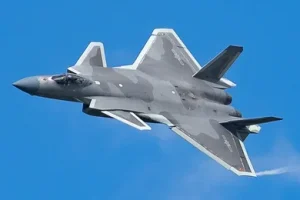
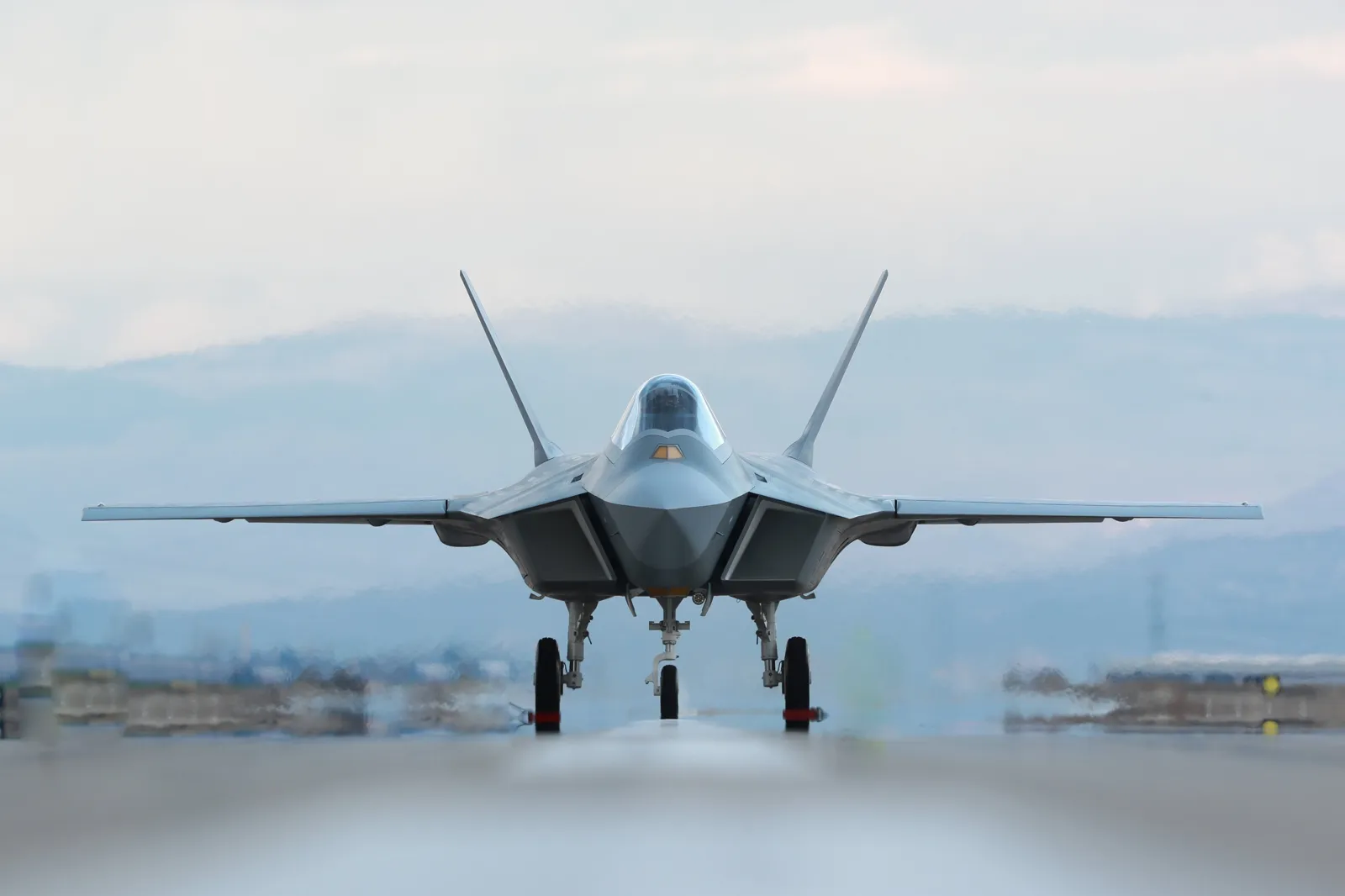
The clearest measure of whether the industrial clause means anything will probably be the KAAN file. Turkish Aerospace said in February it was in the “final stages of reaching an agreement” for exporting the fifth-generation fighter to Saudi Arabia. Bakir suggested the pact could push that deal closer to the finish line.
KAAN matters beyond airframe counts. Joining a fifth-generation fighter programme is not a purchase; it is a multi-decade industrial commitment. A programme partner takes on work share, engineering participation, test infrastructure and life-cycle support. The bond it creates is structurally different from a platform sale.
Reporting suggests the talks are not locked to a single model. Options reportedly range from direct procurement through joint production to full industrial partnership, and the scale under discussion has been described anywhere from a modest squadron to shared manufacturing. That the negotiations run government-to-government through Turkey’s defence procurement authority signals the file is being handled as strategy, not commerce.
There is an external dimension too. Saudi interest in KAAN has generated friction in Washington, where officials have questioned why Riyadh would pursue a Turkish jet when American alternatives are available. That reaction is itself the argument for why the pact’s industrial clause carries weight: supplier diversification by a customer of Saudi Arabia’s size is a geopolitical signal, not just a procurement choice. The export licence for the engine powering KAAN’s current configuration remains a separate variable in the file.
Air Defence: Filling the Lower and Middle Layers
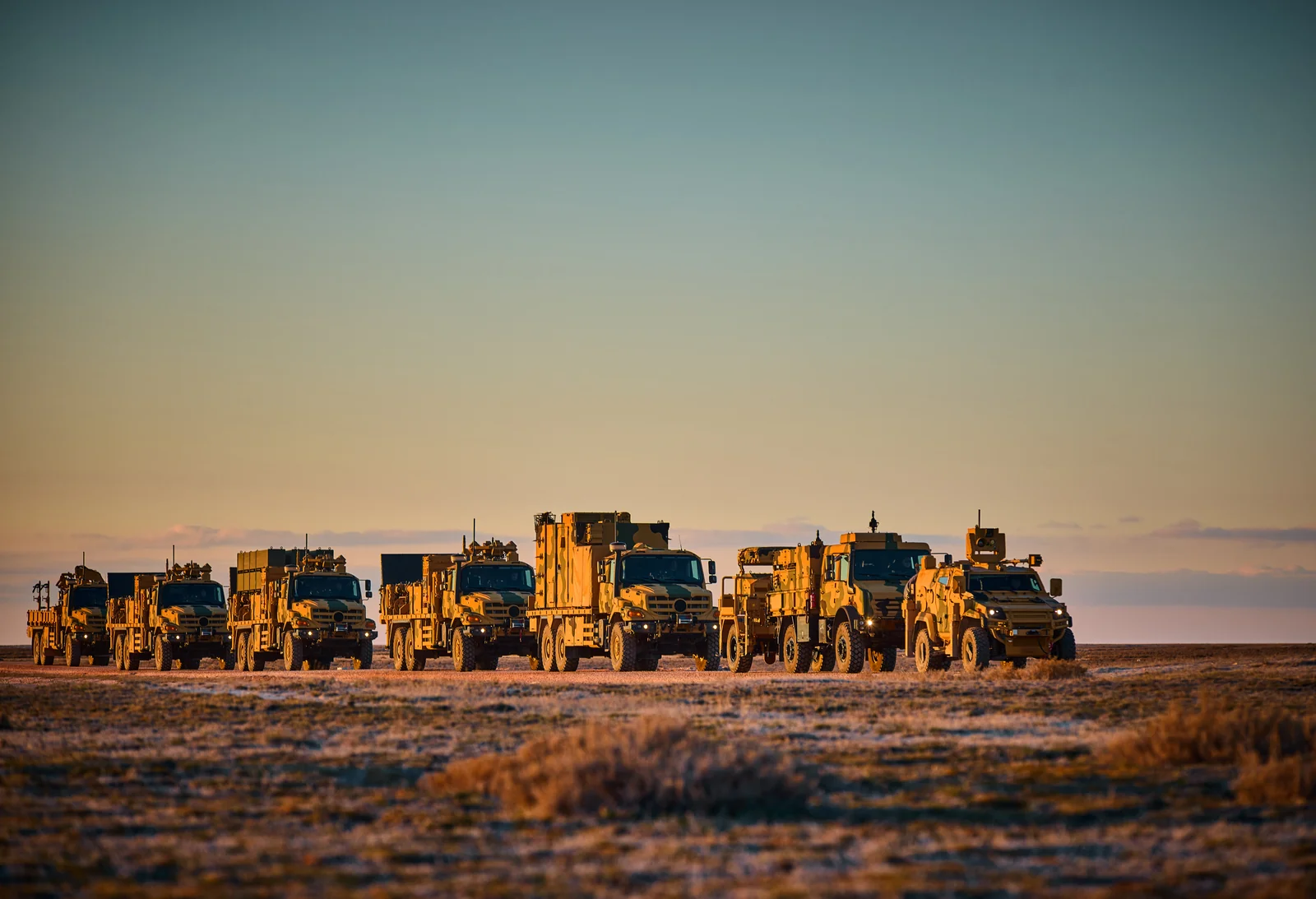
The second concrete opening is air defence. Saudi Arabia has absorbed missile and drone attacks directly in recent years, and that experience has pushed Riyadh to rethink its architecture. According to analyst Leonardo Jacopo Maria Mazzucco, the Kingdom is now focused on “diversifying its suppliers and building greater redundancy.”
Redundancy is the operative word. In air defence it means holding more than one independent way to accomplish the same task. A single-supplier architecture leaves an operational gap the moment interceptor deliveries slow for political reasons or sustainment support pauses. For a country that has been under sustained attack, that is not a hypothetical.
Turkish systems, Mazzucco said, could fill specific tiers: “HİSAR-O could provide a medium-range option, while systems such as KORKUT and GÜRZ could address short-range and counter-UAV requirements.” The description matches how Turkey’s air defence portfolio was deliberately built — the HİSAR family covering medium altitude, gun-based and hybrid systems covering low-altitude leakers.
Those lower tiers have gained importance in the drone era. Shooting cheap unmanned aircraft down with long-range interceptors is a cost exchange that runs against the defender. Guns and short-range effectors flip it back. That Saudi interest concentrates precisely there says as much about the economics of the threat as about the threat itself.
Standardisation on the Ground: FNSS Signals Joint Programmes
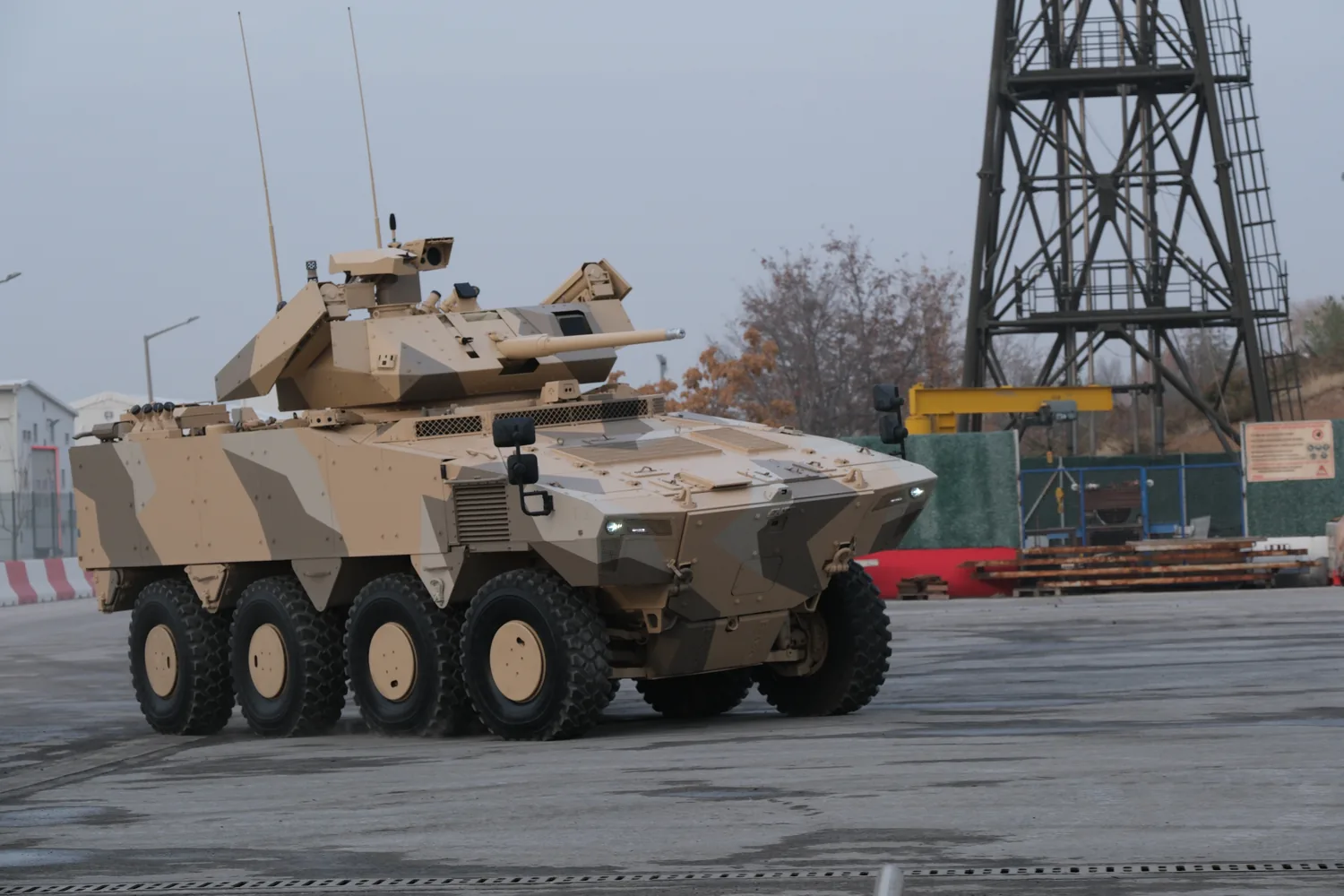
Industry’s own read points the same direction. Gokhan Tekin, international business development director at armoured vehicle maker FNSS, expects the pact to tighten institutional links. “Relations between governments and institutions will grow even closer, and joint working groups will be established,” he said. “Standardizing the systems used in military vehicles will also come onto the agenda.”
He goes further: “We can expect the formation of joint programs and coproduction of specified systems.” Standardisation is the least glamorous item in defence procurement and among the most durable. If three countries converge on common subsystems across their vehicle fleets — the same powerpack, the same fire-control family, the same communications architecture — they merge spare-parts pools, training syllabi and maintenance infrastructure.
The commercial consequence follows automatically. Once a standard settles, the supplier who set it enters every subsequent competition with structural advantage. A rival product can be technically superior and still lose to the cost of integrating it into an established ecosystem. NATO has spent decades on standardisation agreements for exactly this reason.
FNSS being the company willing to talk is not incidental. Its work in Malaysia, Indonesia, Oman and the UAE amounts to a track record in co-production and localisation. Several other Turkish defence firms declined to comment or did not respond by publication — the customary posture while large files are still under negotiation.
Pakistan: The Quiet Industrial Leg
The debate runs mostly along the Ankara-Riyadh axis, but the third signatory is not filler. Vidal notes that Pakistan brings “significant aerospace and manufacturing expertise” to the arrangement — a reference to decades of accumulated capability in aircraft production and maintenance, repair and overhaul.
Turkish-Pakistani defence industrial ties already rest on mature ground. The MILGEM programme run for the Pakistan Navy is regarded as Turkey’s largest single naval platform export, with two of four ADA-class corvettes built in Turkey and two at Karachi. Pakistan also operates Bayraktar TB2 and Akinci systems.
That history positions Pakistan as a production partner rather than merely a customer, and it lowers the risk for the Saudi side. The model being proposed is not theoretical — there is a working example with years behind it.
The counterweight is that trilateral structures move more slowly than bilateral ones. Three procurement codes, three security classification regimes and three budget calendars stretch the maturation time of any joint programme. Standing up working groups is the first step; producing results is a separate one.
Who Brings What to the Trilateral Ecosystem
| Country | Brings | Wants | Files in play |
|---|---|---|---|
| Turkey | Combat-tested platforms, flexible localisation model, short approval chain | Market depth, large-scale export contracts, programme partnership | KAAN, Akinci, HİSAR-O, KORKUT, GÜRZ, armoured vehicles |
| Saudi Arabia | Budget capacity, investment power, market size | Domestic manufacturing, maintenance and engineering capacity (Vision 2030), supplier diversity | Air defence, unmanned systems, fighter aircraft |
| Pakistan | Aerospace and manufacturing expertise, existing co-production experience | Technology access, industrial scale, work share | Aerospace production/MRO, naval platforms, UAVs |
Why This Is Still Hard
The obstacles belong in the same table. The first is legal: as Çubukçuoğlu notes, Turkey’s parliament must ratify the accord before Ankara formally joins the pact. He does not expect it to be blocked, but the calendar is a variable in its own right.
The second is competition. The Saudi market is among the most heavily contested on earth, and Turkey is not the only supplier offering localisation. South Korean, Chinese and several European manufacturers pitch comparable models. Political cover helps; it does not settle technical evaluations or price columns.
The third is Washington. Saudi Arabia has been one of the largest customers of the American defence industry for decades, and that relationship carries its own momentum. The pushback over the KAAN talks shows that each step toward supplier diversification can carry a diplomatic cost.
The fourth is time. Bakir’s qualifier — “over time” — is doing real work. Standing up joint production facilities, training workforces and harmonising quality systems takes years. Barely three weeks have passed since signature. The indicator to watch in the coming months is not announced contract values but the number of working groups convened and the character of the production lines that open.
The Turkish Read
For Turkish industry the stakes here exceed any single contract. Exports have grown quickly over the past decade, but much of that growth came from platform sales. Platform sales are valuable and volatile: every competition has to be won again, and the rival returns to the table each time.
An industrial partnership dampens that volatility. A production line inside the customer’s country, an engineering cadre trained there and a sustainment base that works make the relationship independent of any one tender. Bakir’s description of a shift “from a buyer-seller model into a genuine defense-industrial partnership” names exactly that transition — and Turkish firms already run the model in Pakistan, Indonesia and Malaysia. Saudi Arabia would be its largest-budget test.
Vidal’s warning deserves equal weight. That years of effort in the Kingdom produced little at scale reflects not product shortcomings but a market where decisions are as political as they are technical. Which is precisely what the pact changes: the technical case was already made; the political ceiling was what was missing.
Turkey’s strongest card is the one that does not appear in any catalogue — the experience of teaching a customer how to build the system, not just how to operate it. The corvettes assembled at Karachi are the proof. What Riyadh says it wants under Vision 2030 is the same thing, and it is the thing most traditional suppliers find hardest to offer. If the KAAN file closes, it becomes the highest-stakes test that experience has faced.
Sources
- Breaking Defense — “Saudi-Turkish-Pakistani defense pact to boost Turkish industry, entire trilateral ‘ecosystem’” (Agnes Helou, Aug. 25, 2026)
- Breaking Defense — “Turkish Aerospace in ‘final stages’ of talks over Saudis in KAAN fighter program: Exec” (February 2026)
- Ali Bakir, Qatar University — remarks to Breaking Defense
- Serhat Süha Çubukçuoğlu, TRENDS Research & Advisory — remarks to Breaking Defense
- Albert Vidal, International Institute for Strategic Studies — remarks to Breaking Defense
- Gokhan Tekin, FNSS — remarks to Breaking Defense
- ASFAT — Pakistan MILGEM programme information
- Baykar — Akinci export contract announcements (2023)