What is Bayraktar AKINCI? Technical Specifications, Weapon Systems, and Export of the UAV

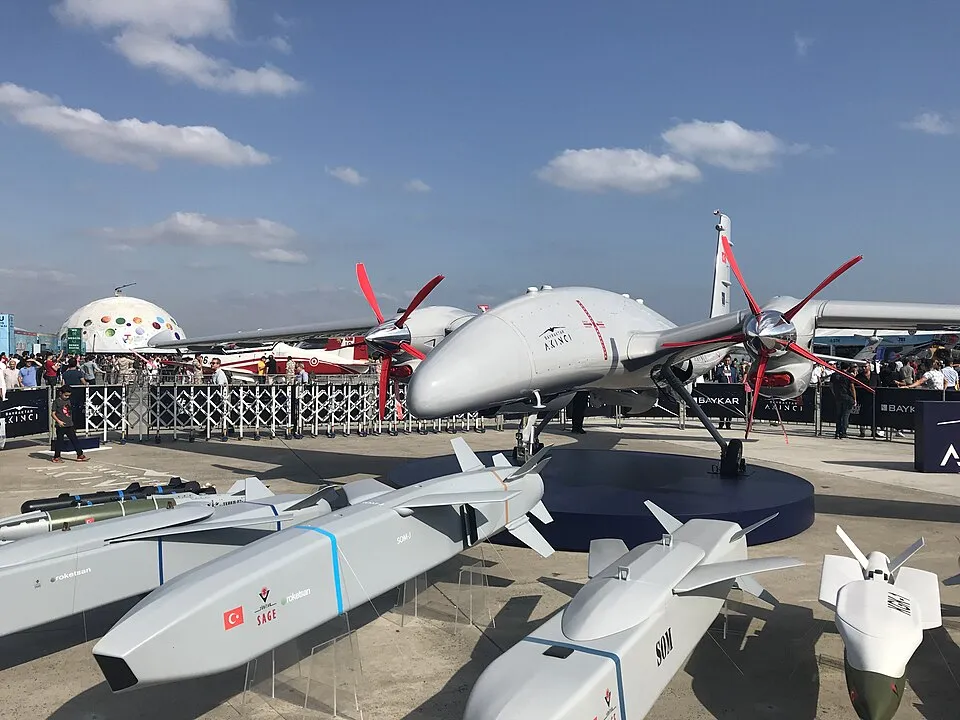
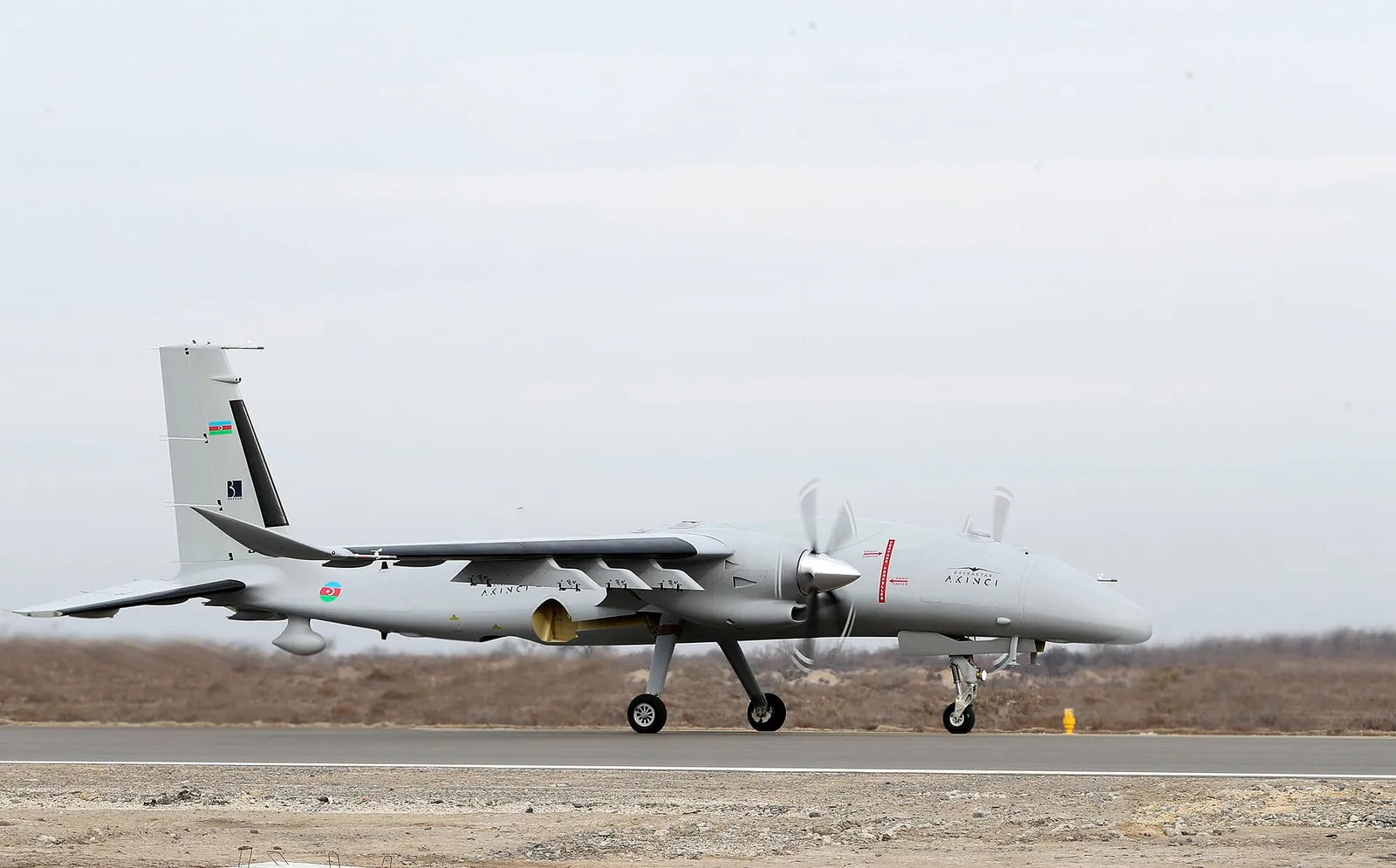
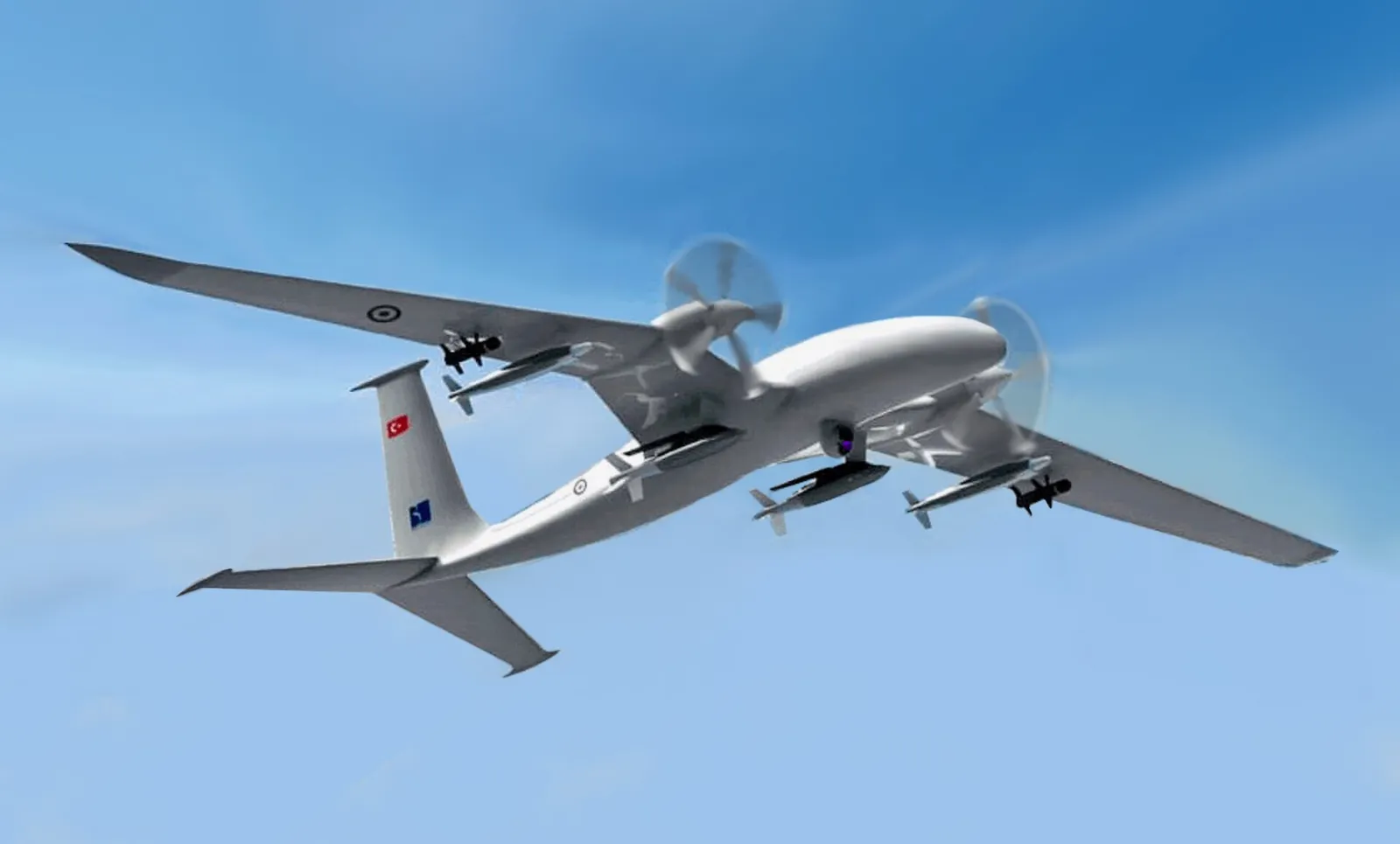
Bayraktar AKINCI is an attack unmanned aerial vehicle (UAV) class platform developed by Baykar Technology and is part of the inventory of the Turkish Armed Forces. Unlike the Bayraktar TB2, which the company previously produced and is positioned in the tactical MALE (Medium Altitude Long Endurance) segment, the AKINCI is categorized at a higher level in terms of takeoff weight, payload capacity, and avionic complexity. The project progressed as a development program carried out by Baykar using its own resources following the operational success of the TB2, and it made its first flight on December 6, 2019, with an automatic taxi and takeoff procedure.
Mass production began in February 2021, and the first mass-produced vehicle, AKINCI S-1, completed flight tests in a short time. On August 29, 2021, three AKINCI units were officially integrated into the inventory of the Turkish Armed Forces; this date is also recorded as the beginning of the era in which Turkey possesses a domestic and national platform in the attack UAV class.
AKINCI B Variant
The AKINCI B, which made its first flight on March 2, 2022, is an enhanced sub-version developed with a higher power engine configuration. In a test flight conducted on March 11, 2022, it reached an altitude of 41,170 feet (12,549 meters), setting the record for the highest altitude achieved by a national and original design aircraft up to that date. Some test data shared with the public indicate that this figure has been raised to 45,118 feet (13,752 meters). The AKINCI family is produced in different configurations with dual turboprop engine options of 450 hp, 750 hp, and 850 hp, depending on engine power.
Why ‘Attack’ Class
The key element that distinguishes the AKINCI from the TB2 is its design, which is planned for carrying heavy munitions and conducting air-to-air operations from the outset. With a payload capacity of up to 1,500 kilograms, the vehicle can carry a wide variety of munitions combinations aimed at both surface and air targets in the same sortie. This feature elevates the vehicle to a truly multi-role attack platform, distinguishing it from classic surveillance/reconnaissance-focused UAVs.
Industrial Context for Turkey
The AKINCI program is also regarded as a showcase project where the Turkish defense industry has achieved its localization goal in almost all critical subsystems except for the engine. Most of the components, such as radar (ASELSAN MURAD), munitions (Roketsan, TÜBİTAK SAGE), communication, and command-control software, have been developed by domestic companies. This structure has significantly reduced the vehicle’s dependence on external suppliers compared to previous generation platforms. However, foreign-sourced turboprop engines are still used on the engine side; domestic engine integration is being pursued as a separate development topic and is beyond the scope of this article. With the entry of the program into the inventory of the Turkish Armed Forces, Turkey has joined the ranks of a few countries that operationally use a domestically designed attack UAV.
Mission Profile
The mission profile of AKINCI starts with intelligence, surveillance, and reconnaissance (ISR) missions and encompasses a wide range of scenarios such as precision-guided munitions for striking point targets, convoy tracking, cross-border operation support, and electronic intelligence gathering. Thanks to its long endurance, it can provide persistent surveillance over an area, offering real-time intelligence flow to ground forces. The vehicle’s modular payload stations allow for the mounting of different combinations of sensors and munitions on the same platform according to the mission.
The physical and performance data of AKINCI are based on the official technical page of Baykar and the test results published in the Turkish defense press. The table below summarizes the basic parameters of the vehicle.
| Parameter | Value |
|---|---|
| Wingspan | 20 meters |
| Fuselage Length | 12.3 meters |
| Height | 4.1 meters |
| Maximum Takeoff Weight | 6,000 kg |
| Payload Capacity | 1,500 kg |
| Engine | 2 x turboprop (450 hp / 750 hp / 850 hp variants) |
| Service Ceiling | 40,000 feet |
| Tested Maximum Altitude | 41,170-45,118 feet (12,549-13,752 m) varies by source |
| Time in the Air | Over 24 hours (20 hours 23 minutes recorded in test flights) |
| Operational Range | 6,000 km (with SATCOM) |
| Cruise Speed | 150 KTAS (approximately 278 km/h) |
| Maximum Speed | 240 KTAS (approximately 444 km/h) |
Avionics and Communication Architecture
One of the most striking features of AKINCI is that its flight control largely relies on autonomous algorithms. The vehicle has the capability for automatic takeoff, navigation, and landing; this allows for the safe completion of missions even when the satellite connection is interrupted, reducing the operator’s workload. A triple redundant line of sight (LOS) system in the communication infrastructure works in conjunction with beyond line of sight (BLOS) SATCOM connectivity; thus, the vehicle can conduct operations even over intercontinental distances.
A significant milestone achieved by AKINCI in 2025 is the first flight and target locking tests conducted with the ASELSAN-produced MURAD AESA radar. The MURAD radar, which has an electronically scanned array (AESA) architecture, is capable of tracking multiple air and surface targets simultaneously, locking on from long distances, and providing targeting support for air-to-air operations. This radar is Turkey’s first national AESA system produced in this class and transforms AKINCI from merely a munition carrier into a platform capable of establishing its own target detection and engagement chain.
The load capacity of AKINCI, which can reach up to 1,500 kilograms, allows for the transportation of a wide range of munitions of the same type. The vehicle’s weapon integration list covers the vast majority of domestically produced munitions sourced from Roketsan and TÜBİTAK SAGE.
| Munition / System | Mission Type |
|---|---|
| MAM-L | Laser-guided smart micro munition |
| MAM-C | Small caliber precision-guided munition |
| MAM-T / Cirit | Medium-range guided rocket/munition |
| L-UMTAS / Bozok | Armor-piercing guided missile |
| KGK-82 / SARB | Winged guidance kit integrated bomb |
| Gökdoğan / Bozdoğan | Air-to-air missile (BVR/short range) |
Air-to-Air Engagement Capability
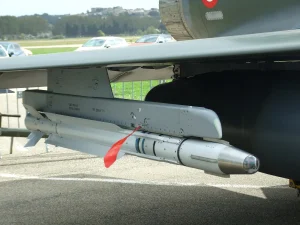
The integration of Gökdoğan and Bozdoğan air-to-air missiles with AKINCI’s MURAD AESA radar represents a rare capability in the attack UAV class. According to Turkish defense industry sources, approximately 300 missiles of this type have been delivered to date; the Gökdoğan’s reported beyond-visual-range capability is around 65 kilometers. Although this integration chain has been proven with live fire on Baykar’s advanced unmanned combat aircraft platform KIZILELMA, the transfer of the same radar-missile architecture to AKINCI demonstrates that it creates a capacity that could partially contribute to air defense and air superiority missions in Turkey’s UAV/UCAV inventory. This capability is still in the operational maturation process and is not said to replace combat jets. Expert assessments highlight the main value of this integration as providing an economical countermeasure against low-intensity air threats and reducing the necessity for expensive combat jets to be allocated for such secondary missions.
Electronic Warfare and Intelligence Package
AKINCI’s sensor architecture can be modularly configured to encompass SAR/GMTI radar, electro-optical/infrared surveillance towers, electronic warfare (EW), and signal intelligence (SIGINT) subsystems. This allows the platform to transform into a multifunctional platform capable of conducting both surveillance/reconnaissance and targeting and attack missions in a single sortie.
AI-Supported Target Detection
The domestic processor and software infrastructure in AKINCI’s command-control architecture is being developed to provide target classification and prioritization support by processing image and radar data from sensors in real-time. This AI-supported processing layer aims to shorten the operator’s decision-making time and reduce the workload in multiple target scenarios. However, the final engagement decision still relies on human operator approval; the vehicle does not autonomously decide to fire.
AKINCI has become an export product that carries the momentum created by TB2 in the international market. According to statements from Baykar General Manager Haluk Bayraktar in 2026, the company has reached a point where it exports the UCAV family, including TB2 and AKINCI, to a total of 40 different countries. Specifically for AKINCI, it has been reported that supply contracts have been signed with 9 countries.
Saudi Arabia Contract
The largest item in AKINCI’s exports is Saudi Arabia. According to publicly available information, Saudi Arabia is expected to procure a total of 60 AKINCI UCAVs; the total value of this contract is estimated to be at least 1-1.5 billion dollars, with some sources suggesting it may exceed this amount. As part of the contract, the establishment of a production facility in Riyadh has been discussed, and investment claims of around 5 billion dollars have been reported in the media. These figures are unofficial estimates and should be evaluated with caution.
Production Capacity
Baykar’s AKINCI production line has rapidly grown. Company officials have announced that the annual production capacity has increased to 50 units, up from 12 units the previous year. This increase indicates a capacity expansion aimed at simultaneously meeting both the Turkish Armed Forces’ inventory needs and the rising export demands.
Cost Assessment
Haluk Bayraktar has stated in public announcements that the AKINCI requires approximately 10 times more man-hours and is about 4 times more expensive compared to the TB2; however, he emphasized that this does not directly correlate with the final sales price. Independent defense analysts estimate that the unit cost could be over 10 million dollars, while export prices could exceed 30 million dollars. Baykar has not disclosed a clear, official unit sales price; therefore, the above figures are not definitive data but market estimates.
Payment and Contract Structure
In Baykar’s export contracts, elements such as the platform itself, ground station, training package, spare parts support, and in some cases technology transfer or local production partnership are typically bundled together. Therefore, making comparisons based on a single ‘unit price’ figure can be misleading; the total amount can vary significantly depending on the scope of the contract. The local production facility plan discussed in the case of Saudi Arabia is also an example of such expanded contract structures and shows that the figure is not solely comprised of the aircraft cost.
The most accurate way to position the AKINCI is to compare it with two similar weight class platforms: the US-produced General Atomics MQ-9 Reaper and the Chinese-produced CASC CH-5 Rainbow. The table below is based on publicly available technical data; since measurement conditions and test scenarios may vary among manufacturers, the figures should be considered approximate.
| Feature | Bayraktar AKINCI | MQ-9 Reaper (USA) | CH-5 Rainbow (China) |
|---|---|---|---|
| Wingspan | 20 m | 20 m | 21 m |
| Maximum Takeoff Weight | 6,000 kg | ~4,760 kg | ~3,300 kg |
| Payload | 1,500 kg | ~1,700 kg (external max) | ~1,000 kg |
| Service Ceiling | 40,000 ft (~12,192 m) | 50,000 ft (~15,240 m) | ~29,500 ft (9,000 m) |
| Endurance | Over 24 hours | 14 hours (fully armed) – 42 hours (ISR, unarmed) | Up to 60 hours (manufacturer’s claim) |
| Maximum Speed | 240 KTAS (~444 km/h) | ~260 kts (~480 km/h) | ~480 km/h |
| Main Sensor | National AESA (MURAD) + EO/IR + SAR/GMTI | Lynx SAR/GMTI radar + EO/IR | SAR + EO/IR (limited public data) |
| Air-to-Air Missile Capability | Yes (Gökdoğan/Bozdoğan, in testing phase) | Limited/experimental | Not reported |
| Estimated Unit Export Price | ~30 million dollars and above (estimated) | ~30-56 million dollars (depending on system package) | ~15-20 million dollars (estimated, manufacturer’s claim of ‘cheaper than Reaper’) |
Assessment
In terms of numbers, the MQ-9 Reaper surpasses AKINCI in service ceiling and endurance in unarmed configuration; this is due to the Reaper’s mature turboprop engine and avionics infrastructure, which has been operational for much longer. The standout feature of AKINCI is its high payload capacity relative to its takeoff weight and its ability to provide a national sensor-munitions chain for both surface and air targets on a single platform. Although the CH-5 Rainbow presents ambitious endurance figures on paper, it lacks the extensive combat record supported by independently verified operational performance data like the TB2/AKINCI family. The main difference for Turkey is that almost all subsystems of AKINCI (radar, munitions, communication, command-control software) are produced domestically, thus keeping the supply chain’s dependence on foreign sources low. Additionally, AKINCI, along with TB2 and KIZILELMA, forms a gradual family, enabling Turkey to establish a complementary UAV/UCAV ecosystem tailored to different mission profiles; this approach offers a range of capabilities extending from tactical to strategic levels instead of relying on a single platform.
Frequently Asked Questions
What is the main difference between Bayraktar AKINCI and Bayraktar TB2?
AKINCI has a significantly larger takeoff weight (6,000 kg compared to TB2’s ~700 kg), an approximate payload capacity of 1,500 kg, and advanced systems such as AESA radar and air-to-air missile integration. While TB2 is a tactical level MALE UAV, AKINCI is classified as an armed UAV (TİHA) platform capable of carrying heavier munitions and a more complex sensor package.
How many hours can AKINCI stay in the air?
According to manufacturer data, AKINCI can remain airborne for over 24 hours. A recorded endurance time of 20 hours and 23 minutes has been reported during test flights. This duration varies depending on the amount of payload carried and the engine configuration.
Does AKINCI have air-to-air missiles, is it really replacing a combat aircraft?
AKINCI is integrated with Gökdoğan and Bozdoğan air-to-air missiles via the MURAD AESA radar, and target locking tests have been conducted with these missiles. However, this capability should not be interpreted as a platform for air superiority that will replace combat jets (such as the F-16, KAAN); it should be regarded as a limited and supportive air-to-air engagement capability.
Which countries have purchased Bayraktar AKINCI?
According to publicly available information, procurement contracts have been signed with 9 countries for AKINCI; the largest customer is reported to be Saudi Arabia, which has ordered a total of 60 units. Baykar’s UAV family (including TB2) is exported to a total of 40 different countries, but this figure is not specific to AKINCI, it encompasses the company’s overall export portfolio.
What is the unit price of AKINCI?
Baykar has not disclosed a clear official sales price. The company management has mentioned a cost approximately 4 times higher compared to TB2, while independent analysts estimate that the export price could be 30 million dollars or more. These figures are not officially confirmed data but rather market assessments.
Has AKINCI experienced any losses so far?
Yes. In January 2025, an AKINCI crashed in Libya, and in March 2025, it was claimed that an AKINCI was shot down by PKK/HPG in the Kandil region of Iraq. These incidents indicate that the platform does not have complete immunity against enemy air defense and electronic warfare threats.
Conclusion
Bayraktar AKINCI is a turning point that elevates Turkey’s unmanned aerial vehicle program from tactical to offensive/strategic level. With a takeoff weight of 6,000 kilograms, a payload capacity of up to 1,500 kilograms, national MURAD AESA radar, and integration of Gökdoğan/Bozdoğan air-to-air missiles, it offers a competitive sensor-munitions architecture compared to its counterparts like the MQ-9 Reaper and CH-5 Rainbow. However, it falls short of the Reaper in terms of service ceiling and endurance in unarmed configuration, and the air-to-air missile integration is still in the maturation phase and should not be presented as a replacement for combat jets. On the export side, contracts signed with 9 countries, primarily Saudi Arabia, and an annual production capacity reaching 50 units have made AKINCI one of the significant items in Turkish defense industry exports; however, publicly available data regarding unit prices and contract values are not officially confirmed and are based on estimates. The loss incidents in Libya and Kandil serve as concrete examples reminding that the platform does not have absolute immunity under enemy air defense.
Related News
Sources
- https://baykartech.com/tr/uav/bayraktar-akinci/
- https://tr.wikipedia.org/wiki/Baykar_Bayraktar_Ak%C4%B1nc%C4%B1
- https://en.wikipedia.org/wiki/Baykar_Bayraktar_Akinci
- https://theaviationist.com/2025/03/07/turkeys-akinci-ucav-flies-with-murad-aesa-radar/
- https://www.armyrecognition.com/news/aerospace-news/2025/bayraktar-akinci-integrates-aselsans-murad-aesa-radar-expanding-strike-and-surveillance-capabilities
- https://www.ga-asi.com/remotely-piloted-aircraft/mq-9a
- https://en.wikipedia.org/wiki/General_Atomics_MQ-9_Reaper
- https://en.wikipedia.org/wiki/CASC_Rainbow
- https://baykartech.com/en/press/baykar-remains-global-ucav-export-leader-in-2025/
- https://baykartech.com/tr/press/haluk-bayraktar-para-kazanmaya-degil-teknolojide-en-iyi-olmaya-odakliyiz/
- https://www.aa.com.tr/tr/savunma-sanayisi/bayraktar-akinci-murad-aesa-radari-ile-ilk-ucusunu-gerceklestirdi/3497021