BAE Systems Completes LRASM Sensor Deliveries to Lockheed Martin as Production Set to Rise

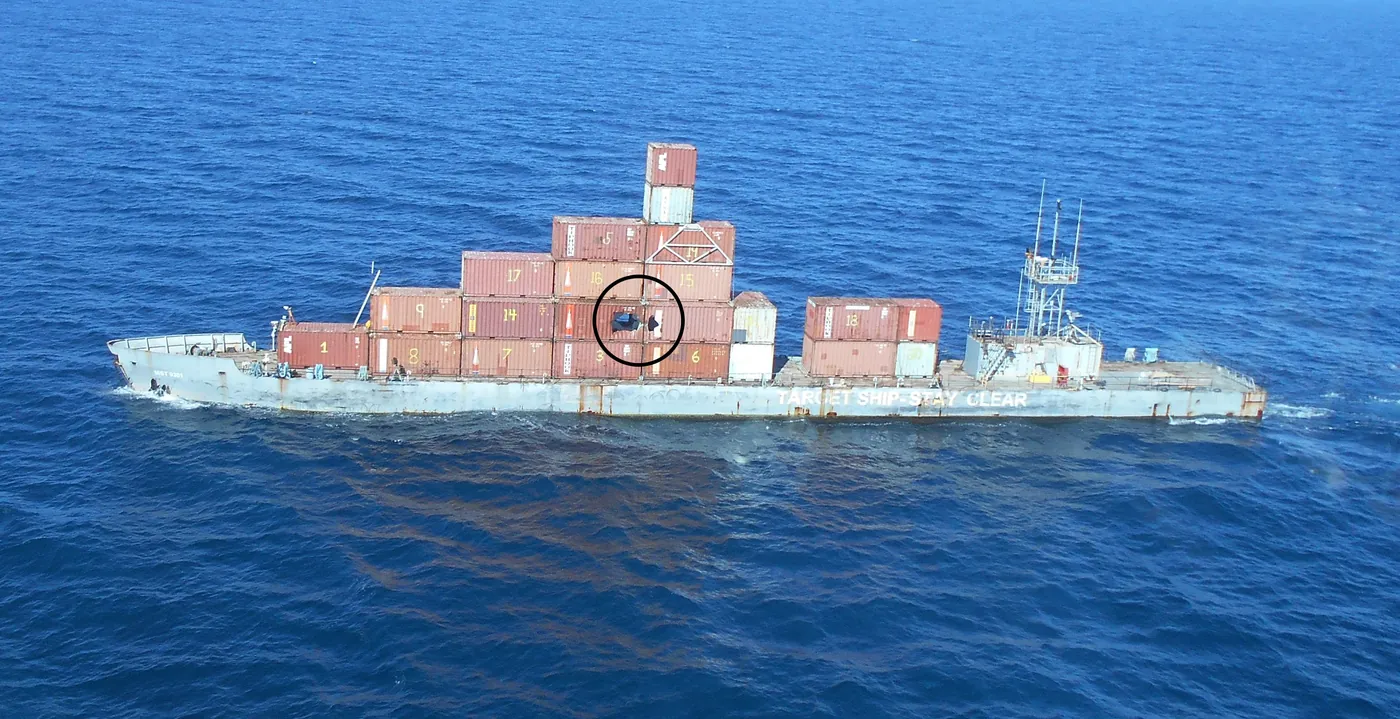
BAE Systems said on 10 November that it has completed delivery to Lockheed Martin of all the advanced radio-frequency (RF) sensor units required for Lot 8 production of the AGM-158C Long Range Anti-Ship Missile (LRASM). The company said it accelerated its supply schedule to meet an expected rise in LRASM production in the coming period.
BAE Systems did not disclose the number of sensors delivered or the financial value of this phase. The company holds a supply contract with Lockheed Martin running through 2028, and LRASM production is expected to increase significantly from 2026 onward.
The electronic-warfare work behind the RF sensor is spread across four BAE facilities in the United States: Austin, Texas; Greenlawn, New York; Nashua, New Hampshire; and Wayne, New Jersey. The company said it has invested in these sites to meet the accelerated delivery schedule.
The passive RF sensor helps detect and locate naval targets, particularly in environments where air defences, jamming or degraded navigation make an approach difficult. It works alongside an infrared imaging seeker used during the missile’s terminal phase. This architecture, according to the company, reduces the missile’s reliance on external intelligence, surveillance and reconnaissance platforms, communication links and GPS in electronic-warfare environments.
BAE Systems improved the RF equipment’s software and carried out verification testing, applying the changes digitally without any hardware modification. The company did not detail the new functions or performance gains, and said work continues on new software and hardware capabilities for the sensor.
Vanessa Varrati, LRASM programme director at BAE Systems, was paraphrased as saying the faster deliveries reflect collaboration with Lockheed Martin and the US Department of Defense, along with investments made to expand industrial capacity; no direct quote was provided.
LRASM, developed by Lockheed Martin, is based on the airframe of the AGM-158B JASSM-ER land-attack missile. It carries a penetrating, fragmentation warhead of roughly 454 kilograms, with jam-resistant navigation and a data link. The missile reached initial operational capability with the US Air Force’s B-1B Lancer in December 2018, and with the US Navy’s F/A-18E/F Super Hornet in November 2019. A further variant, the LRASM C-3, which adds software, data-link and survivability improvements, remains in development.
Sources:
Infodefensa, “El misil antibuque LRASM aumentará su producción en 2026 al completar BAE Systems la entrega de sensores”, 15 November 2026, by Ángel Luis de Santos — https://www.infodefensa.com/texto-diario/mostrar/6089168/misil-antibuque-lrasm-aumentara-produccion-2026-completar-bae-systems-entrega-sensores (primary source for this report).
BAE Systems announcement of 10 November 2026, as referenced in the Infodefensa report.