The Race for the British Army’s Intelligence Backbone: QinetiQ Assembles a 13-Firm Team for ZODIAC

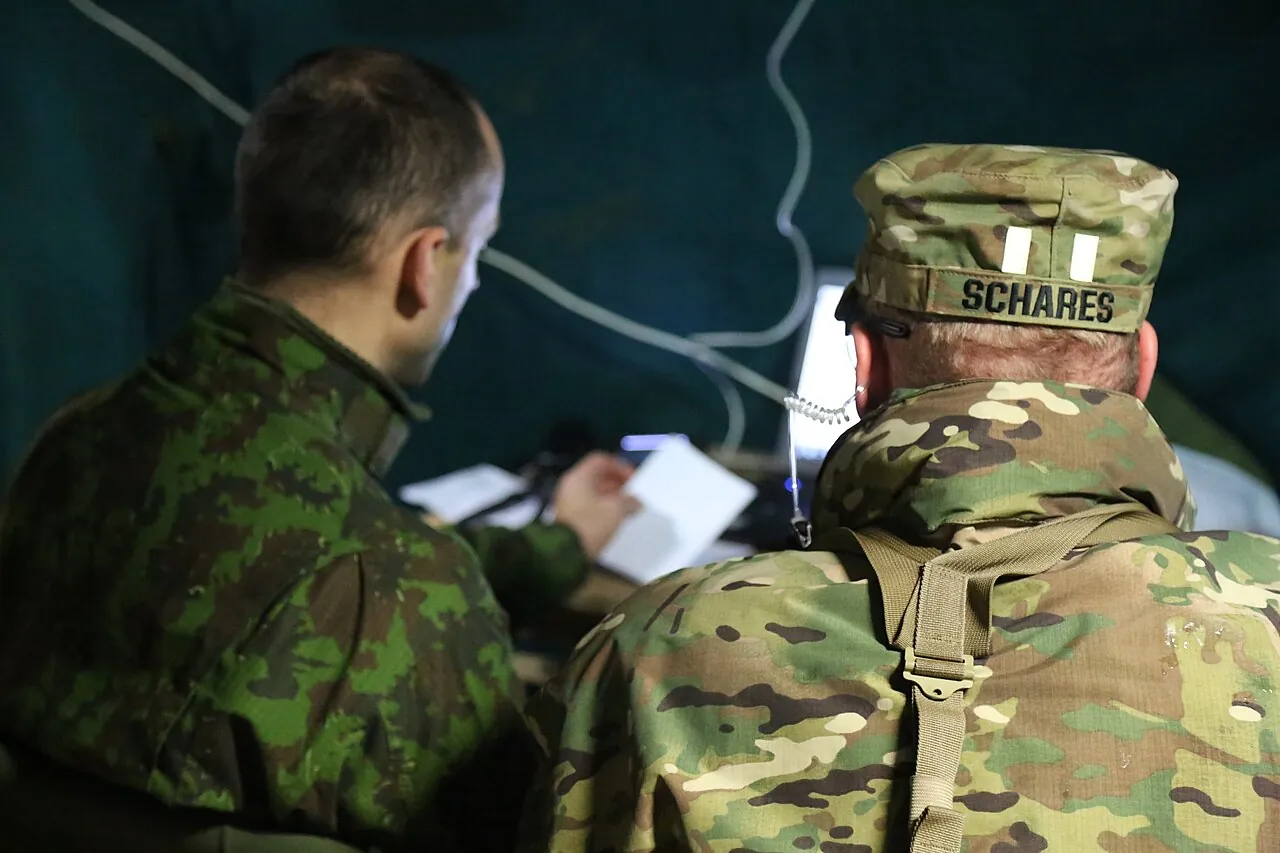
QinetiQ announced on 26 August that it will lead a thirteen-company consortium into the next contract phase of Project ZODIAC, the British Army’s land intelligence and targeting effort.
What ZODIAC is
ZODIAC sits within the British Army’s Land Intelligence and Targeting Programme. Its purpose is to improve how battlefield information is collected, processed and turned into usable intelligence — and, in the phrasing the Army itself uses, to compress the timeline from detection to action.
The programme aims to connect sensors, intelligence feeds, targeting tools and command systems inside an open, secure and adaptable digital ecosystem. In NATO terminology this capability set is ISTAR: intelligence, surveillance, target acquisition and reconnaissance.
Who is on the team
QinetiQ leads, with consultancy and technology firm Accenture and Northrop Grumman UK as principal partners. Ten specialist SMEs complete the line-up: Faculty, C3IA, Decho, Actica, Allan Webb, Naimuri, Inzpire, Vivace, Oxford Dynamics and Whitespace.
James Willis, QinetiQ’s chief executive for UK Intelligence, pointed to continuity as the team’s advantage, noting that the company has supported ZODIAC for seven years and brings a deep understanding of Army operational requirements. Accenture UKI defence lead Leo Geddes cited experience across more than twenty NATO countries, while Northrop Grumman UK chief executive Nick Chaffey referenced the company’s record on mission-critical digital capabilities.
Which phase
The bid targets the programme’s “Commissioning and Scaling” contract phase — the stage at which earlier development work is pushed out from limited trials to the wider force. No contract value, award timeline or competing bidders were disclosed.
Sensor to shooter
Engaging a target in land warfare requires detection, identification, geolocation, decision, fire mission and finally the round leaving the tube. In traditional structures each link runs on a different system operated by a different unit, and information changes format, channel and owner as it moves along the chain.
Most of the delay lives in those handoffs. Programmes like ZODIAC do not try to remove the intermediate layers so much as put them on a shared data standard. When imagery from an unmanned aircraft is automatically matched to coordinates, dropped into a target list and passed straight to an artillery fire control system, a process that took minutes takes seconds.
Ukraine made the point unavoidable. What decides land engagements is less the quality of individual platforms than the speed at which target information reaches firepower. The same battery becomes several times more effective when that interval collapses.
How Britain buys software now
The UK Ministry of Defence has moved away from awarding large digital programmes as single monolithic contracts. The sequence now runs through a limited discovery and prototyping phase, then capability validation, then force-wide rollout. Commissioning and Scaling is the last link in that chain.
The rationale comes from experience: several large British defence IT projects of the 2010s were overtaken by changing requirements during the contract period and arrived obsolete. Staged procurement allows scope to be reassessed at each gate.
The SME layer
The ten small firms are not there to satisfy a box on a form. Specialists in data science, cyber security, interface design and training simulation supply depth that large integrators cannot generate internally at speed. Equally, those firms cannot individually carry the risk and administrative load of an army-wide programme. The two-tier structure formalises that split at contract level.
Sources
- QinetiQ statement, 26 August 2026
- Statements by James Willis, chief executive, QinetiQ UK Intelligence
- Statements by Leo Geddes, Accenture UKI defence lead, and Nick Chaffey, chief executive, Northrop Grumman UK