Mongolia’s Military Strength: How Many Tanks, Jets and Missiles? (2026)

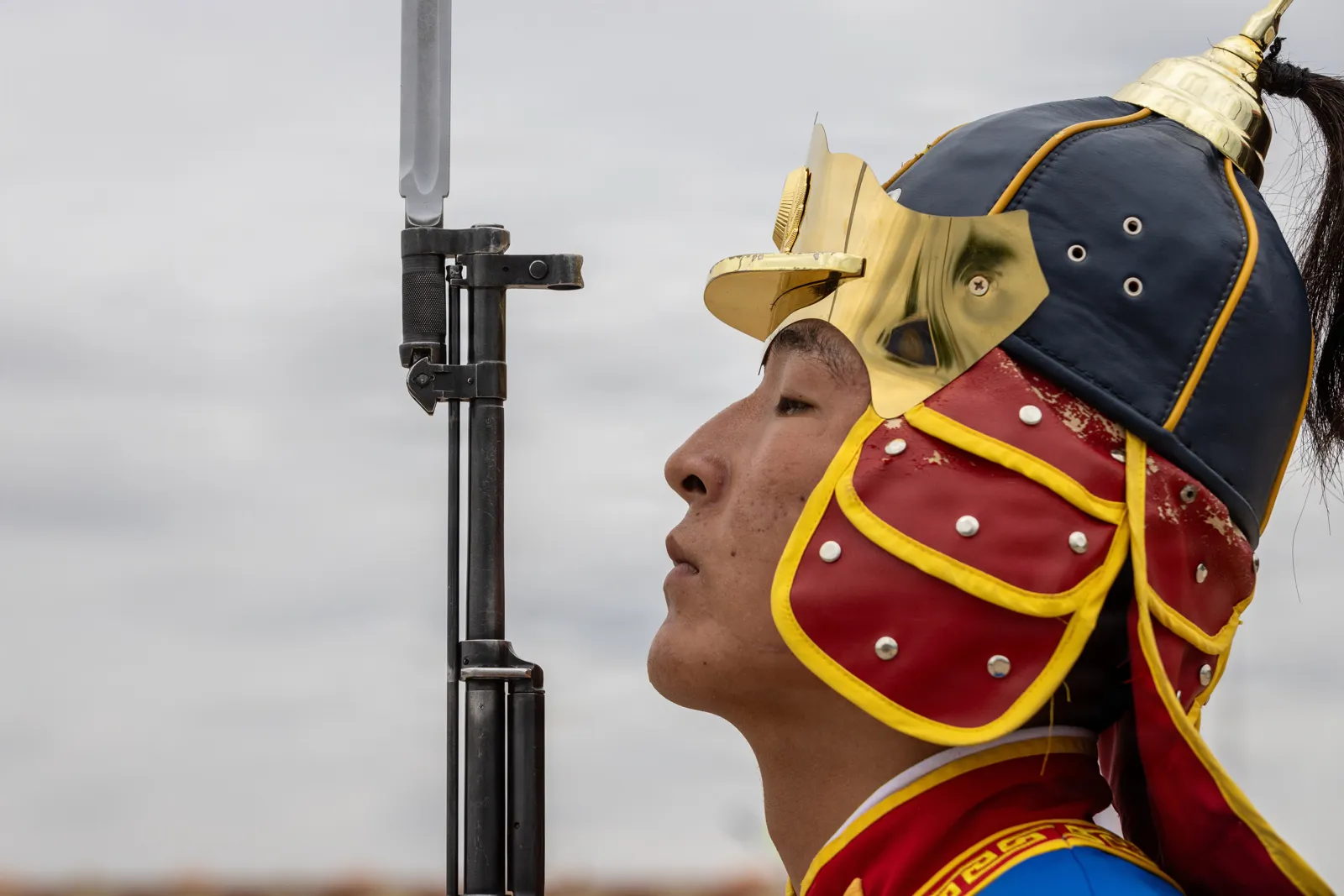
Mongolia’s military inventory is one of the most unusual files in this series. A country more than twice the size of Turkey with a population of about 3.5 million, it has only two neighbours — Russia to the north and China to the south — and both are nuclear powers. In that equation Ulaanbaatar does not even set a conventional military balance as its goal; it builds its inventory around internal security, border control and international peacekeeping instead of deterrence.
At a Glance
- Active personnel: ≈ 35,000 active troops, ≈ 230,000 reservists and ≈ 50,000 paramilitary
- Global ranking: 93rd of 145 countries in the 2026 Global Firepower list (power index 1.9987)
- Main battle tanks: ≈ 420 (mostly T-72A and T-55); zero self-propelled artillery
- Military aircraft: 8 aircraft in the GFP count; zero fighters and zero attack aircraft
- Air defence: Still built on Soviet-era S-75s and gun systems; no modern ranged missile layer
- Sea access: Landlocked — no coastline, no navy
Note: The inventory figures below are approximate values drawn from open sources such as Global Firepower, the IISS Military Balance and SIPRI.
About the Mongolia Armed Forces
At 1.56 million square kilometres Mongolia is the world’s 18th-largest country, yet its population is around 3.5 million. Borders running more than 3,500 kilometres with Russia and more than 4,600 kilometres with China cannot be held in any conventional sense by a 35,000-strong active force. That ratio is the first fact shaping the defence equation.
The force structure comprises the Ground Forces, the Air Defence Force, the Border Troops and the Internal Troops. Twelve months of conscription starting at 18 feeds a reserve pool of roughly 230,000. In the 2026 Global Firepower list the country ranks 93rd of 145 militaries with a power index of 1.9987.
The overwhelming bulk of the inventory is a Soviet inheritance. T-55 and T-72A tanks, BMP-1 infantry fighting vehicles, BTR-family armoured personnel carriers, D-30 towed howitzers and BM-21 Grad launchers acquired between the late 1960s and the early 1980s form its core. When the spare-parts and fuel chain broke with the end of the Cold War, much of this materiel was effectively moved into storage; how much of the 420 tanks on paper is serviceable today is not clear in open sources.
The picture in the air is starker still. The 2026 Global Firepower count puts the country’s total aircraft at 8, with zero fighters and zero attack aircraft. The MiG-21 fleet has been retired and, apart from two MiG-29s donated by Russia in 2019, there is no operational jet fighter capability. Air defence rests similarly on 1960s-vintage S-75 infrastructure plus ZU-23-2 and S-60 anti-aircraft guns; there is no modern ranged missile layer in the inventory.
The defence budget is a contested line. The 2026 Global Firepower list gives Mongolia a figure of roughly US$1.59 billion, whereas national budget data have historically run far lower — defence spending in 2019 was around US$210 million, about 1.5 per cent of gross domestic product. The gap comes from estimation methods and calls for caution when reading the inventory.
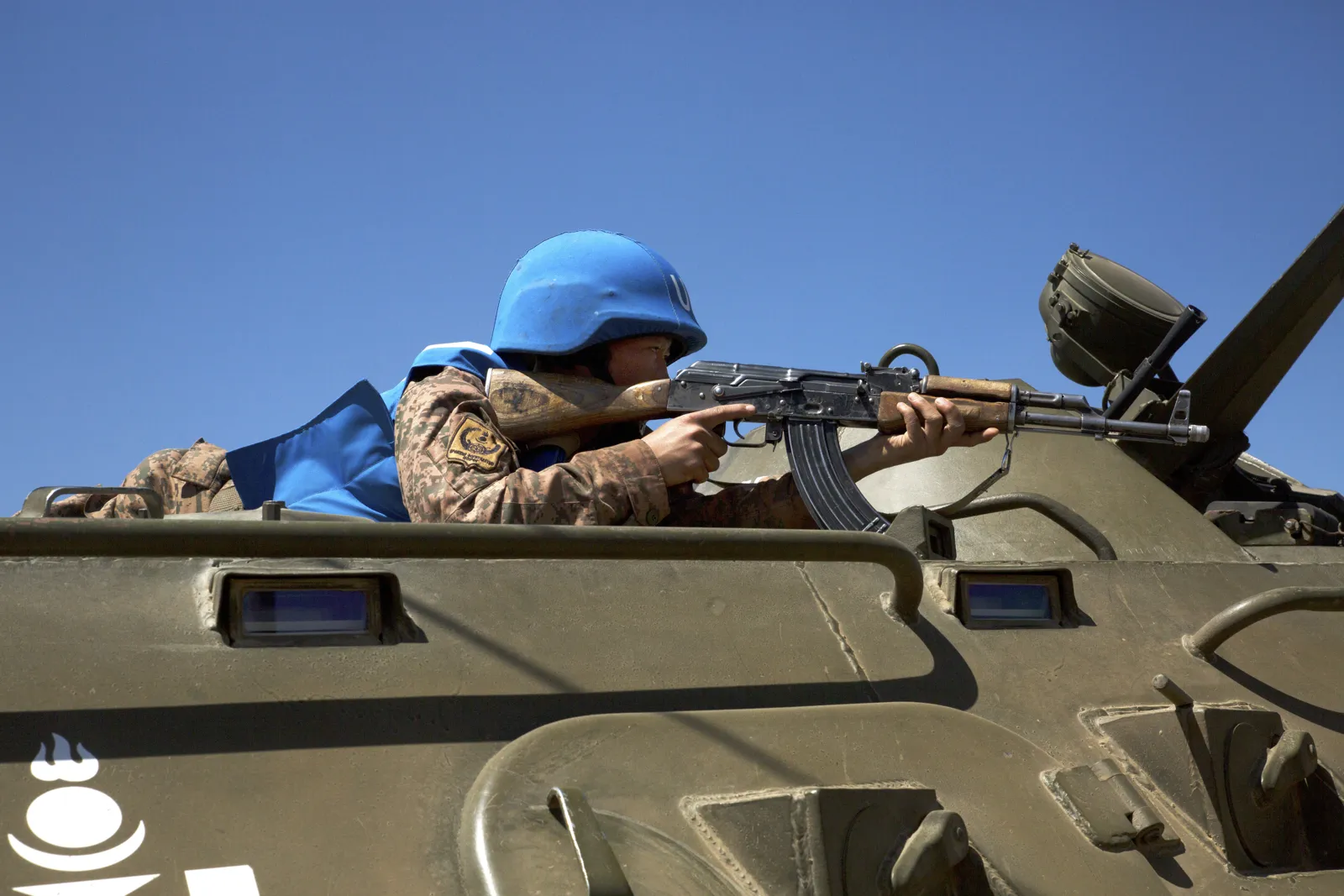
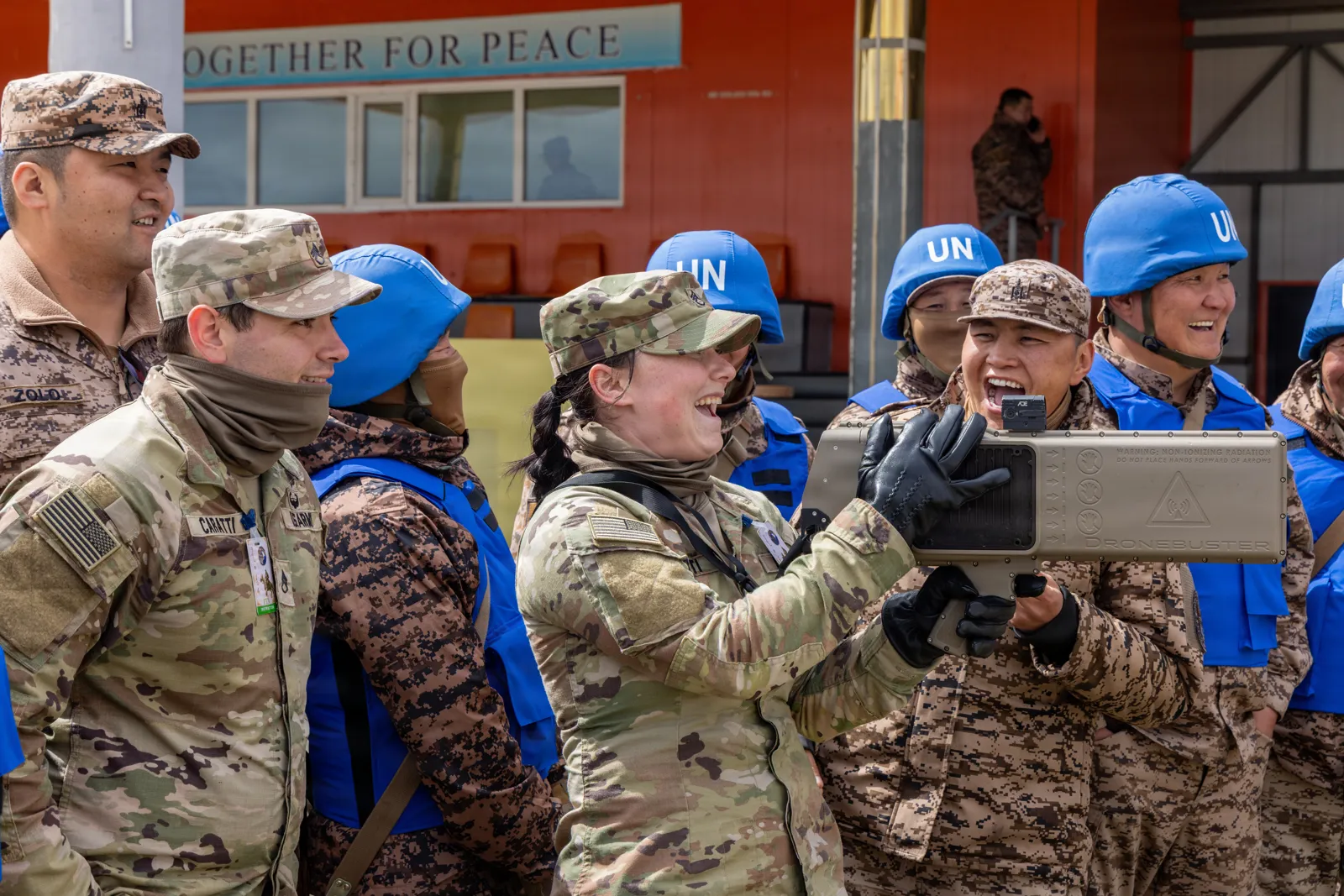
Mongolia’s international military visibility, by contrast, is inversely proportional to its inventory. Since building a peacekeeping capacity in 2002 the country has deployed some 19,000 personnel to UN missions and ranked 28th worldwide among contributors as of 2024. Khaan Quest, held since 2003, has become the Indo-Pacific’s largest peacekeeping exercise; the June-July 2026 edition included counter-improvised-explosive-device and counter-unmanned-aircraft training among its lanes.
Ulaanbaatar’s security doctrine matches that picture. Having abandoned any claim to a military balance with its two nuclear neighbours, it rests on the ‘third neighbour’ policy: creating strategic room for manoeuvre by deepening ties with the United States, Japan, South Korea, India, the European Union and Turkey. Mongolia has also declared itself a single-state nuclear-weapon-free zone and secured recognition of that status at the United Nations.
Land Forces Inventory
| System type | Est. quantity |
|---|---|
| Main battle tanks (T-72A, T-55) | ≈ 420, a large share of them in storage |
| Armoured vehicles (BMP-1, BTR-60/70/80 family) | GFP’s broad count shows ≈ 11,000; the combat-capable fleet is far smaller |
| Towed howitzers and guns (D-30, M-30, D-44) | ≈ 500; the self-propelled artillery column reads zero |
| MLRS (BM-21 Grad) | ≈ 130 |
Air Force Inventory
| Platform | Est. quantity |
|---|---|
| Total military aircraft | ≈ 8 (Global Firepower 2026) |
| Combat aircraft | Zero; the MiG-21 fleet was retired and, apart from 2 MiG-29s donated by Russia in 2019, there is no jet fighter capability |
| Helicopters (Mi-8/Mi-171, Mi-24) | ≈ 3 airworthy; the attack-helicopter column reads zero |
| Transport aircraft (An-24 / An-26) | A handful; strategic airlift relies largely on partner and chartered capacity |
Missile and Air-Defence Systems
| System | Type / Note |
|---|---|
| S-75 (SA-2) surface-to-air missile | A fixed Soviet-era system whose infrastructure dates to the 1960s |
| MANPADS (SA-7 family) | Short range; the most widespread missile layer in the inventory |
| Anti-aircraft guns (ZU-23-2, S-60) | The de facto backbone of air defence; hundreds of gun systems |
| Ballistic and cruise missiles | No operational systems reported in the inventory; the country has declared itself a single-state nuclear-weapon-free zone |
Naval Power
| Class / Type | Est. quantity |
|---|---|
| Naval force status | Landlocked — no coastline and no navy |
| The Lake Khövsgöl element | The tug Sukhbaatar and its crew of ≈ 7; today a largely civilian and tourism operation rather than a military one |
| Frigates / corvettes / submarines | None |
| The manoeuvre element that substitutes for naval power | UN peacekeeping units: ≈ 19,000 personnel deployed since 2002, ranking 28th worldwide among contributors |
The Turkey Angle: Turkish Defence Industry
Mongolia hosts one of the most concrete Inner Asian footholds the Turkish defence industry has established in recent years. The two countries raised their relationship to a strategic partnership during President Ukhnaagiin Khürelsükh’s visit to Ankara in January 2025.
The physical expression of that relationship is ammunition production. Under a contract signed in 2024 with Mongolia’s defence industry corporation, the Turkish state manufacturer MKE built the country’s first domestic ammunition factory. The line was opened during Minister of National Defence Yaşar Güler’s visit to Ulaanbaatar in October 2025, and in August 2026 the plant was announced to have formally entered production.
The chosen calibres are no accident: 9×18 mm, 7.62×39 mm and 7.62×54R mm. Together they cover the entire Makarov pistol, AK rifle, PK machine gun and SVD sniper rifle families in Mongolian service. Reported at an annual capacity of around 10 million rounds, the facility is MKE’s second overseas production line after Jordan. For a country to produce small-arms ammunition — the most basic sustainment item of all — on its own soil for the first time is more than symbolic in supply-dependence terms.
The institutional frame was completed on 23 June 2026, when Minister Yaşar Güler and Mongolian Defence Minister Batlut Damba signed a Military Training Cooperation Agreement in Ankara covering personnel training, exchange of experience and the development of training programmes.
Everything beyond that is potential rather than signed contract. The need to renew a Soviet-era air-defence layer, the counter-drone training that featured at Khaan Quest 2026 and the armoured-vehicle requirements of peacekeeping contingents all map directly onto areas where Turkish industry is strong. Yet no Turkish platform delivery to Mongolia has been confirmed in open sources to date, and this part of the file should be read as expectation, not fact.
There is a historical layer as well. The Orkhon inscriptions, the oldest known written monuments of the Turkic language, stand inside Mongolia, and Turkish institutions have sustained archaeological and restoration work there for years. That cultural ground lowers the political cost of defence cooperation — an advantage Turkey does not easily find with its other interlocutors in the region.
Frequently Asked Questions
How many tanks does Mongolia have? Open-source counts show roughly 420 main battle tanks, built around T-72As and T-55s. A significant share is held in storage and readiness levels are not clear in open sources.
Does Mongolia have combat aircraft? The 2026 Global Firepower list shows zero fighters. The MiG-21 fleet has been retired and, apart from two MiG-29s donated by Russia in 2019, there is no operational jet fighter force.
Does Mongolia have a navy? No. The country is landlocked with no coastline. The tug Sukhbaatar on Lake Khövsgöl and its crew of seven are often described in the press as ‘the world’s smallest navy’, but the vessel today serves largely civilian and tourism purposes.
What does Turkey’s ammunition plant in Mongolia produce? The MKE line produces 9×18 mm, 7.62×39 mm and 7.62×54R mm cartridges — calibres that match Mongolia’s Soviet-standard small-arms inventory exactly. Annual capacity has been reported at around 10 million rounds.
Bottom Line
Mongolia’s inventory is one of the clearest cases in this series where numbers alone do not describe military power. The 420 tanks and 500 towed guns on paper look like a respectable land force, but most of that materiel is half a century old and in storage, while the columns for combat aircraft, self-propelled artillery, modern surface-to-air missiles and naval vessels are entirely empty. This is not a list of deficiencies but the result of a deliberate choice: for a country wedged between two nuclear neighbours, a military balance was never a realistic goal, so Ulaanbaatar anchored its deterrence in neutrality, nuclear-weapon-free-zone status and ‘third neighbour’ diplomacy rather than in hardware. The army’s international standing has likewise been produced not by its inventory but by an unbroken peacekeeping record since 2002. What will define this inventory in the coming period is not a new tank or fighter, but which technology fills the empty air-defence layer and how far the domestic production chain now established in the most basic item of all — ammunition — is allowed to grow. That the MKE line is the first answer to that question makes it a notable opening for Turkey.