World’s Largest Naval Shipbuilders: Shipyards, Exports and Programs Compared (2026)

Ask about the world’s largest naval shipbuilders and the answer contains this series’ most striking Turkish finding yet. By revenue, America’s HII and General Dynamics dominate; by tonnage, China’s state giant CSSC is the undisputed world leader. But ask a different question — how many navies are you building warships for at once? — and the picture flips. Türkiye’s shipyard ecosystem is today building simultaneously for Pakistan, Ukraine, Malaysia, Portugal and Romania, NATO and EU members among them. Not one company but an ecosystem: STM, ASFAT, Dearsan, Sefine, Sedef, Anadolu Shipyard, ARES and Yonca carry that capacity together. This is file eight of Envanter Medya’s Global Defense Industry Research, following the world’s largest radar and EW manufacturers.
Editorial note: This ranking is an editorial research piece prepared by Envanter Medya using publicly available data; it is not an official international ranking. Sources and methodology are explained at the end.
The research at a glance
“Largest” by which measure?
In shipbuilding the “biggest” title goes to entirely different names on three rulers: US giants building nuclear carriers and submarines lead in revenue; CSSC and the Korean yards in tonnage; Fincantieri, TKMS, Damen and the Turkish yards in export customer diversity. One nuclear submarine costs as much as a corvette fleet, so revenue tables mislead on their own. This study measures revenue, active export programs, simultaneous project capacity and platform breadth separately — and, deliberately, treats the Turkish side as an ecosystem, not a single company.
By defense revenue: the US giants play their own league
Sources: SIPRI Top 100 (December 2025) and company reports; the GD figure covers the whole group. The Turkish ecosystem has no single consolidated revenue figure — marked “unknown”. CSSC’s military revenue is opaque.
Do not confuse revenue with production muscle: one Virginia-class submarine costs a whole corvette fleet. Giant US revenues come from few, very-high-value platforms; export diversity and simultaneous project capacity are different rulers entirely.
By active programs: the verified indicators
| Builder | Country | Key platforms | Verified indicator | Data type |
|---|---|---|---|---|
| Fincantieri | Italy | FREMM, PPA, Doha class | Programs for Italy, Qatar, Indonesia and the US (Constellation partner); one of Europe’s widest naval export portfolios | O |
| Turkish shipyards 🇹🇷 | Türkiye | MILGEM Ada/Istanbul, Hisar, LHD | Building for 5 navies at once: Pakistan 4 Ada corvettes (2 co-built in Karachi), Ukraine 2 Adas (2nd at Okean), Malaysia 3 corvettes (STM), Portugal 2 logistic support ships (STM), Romania a Hisar-class corvette; at home 7 Istanbul-class frigates plus the MUGEM carrier; 44 platforms across 11 yards under STM coordination | O |
| HD Hyundai HI | S. Korea | KDX series, Philippine corvettes | Corvette and OPV deliveries to the Philippines; among the world’s largest mixed commercial-naval capacities | O / E |
| TKMS | Germany | Type 212CD, Type 214 | The West’s submarine export leader; 212CD program (Germany+Norway) and a record backlog | O |
| HII | USA | Ford class, Virginia (joint) | America’s largest military shipbuilder (~$11.4bn revenue); the only Western yard building nuclear carriers | O |
| Naval Group | France | FDI, Scorpène, Barracuda | Greek FDI frigates, Dutch submarine program; broad Scorpène export base | O |
| Hanwha Ocean | S. Korea | KSS-III, KDX | Bought Philly Shipyard in the US, US Navy MRO contracts; a favorite in Poland’s submarine tender | O / E |
| GD Marine | USA | Columbia, Virginia, Arleigh Burke | Prime of the Columbia-class strategic submarine; no exports | O |
| Damen | Netherlands | Sigma family | Sigma corvettes/frigates with numerous navies; modular export model | O / E |
| Mitsubishi HI | Japan | Mogami | Australia chose MHI for 11 Mogami-class frigates under SEA 3000 — Japan’s first major warship export | O |
| CSSC | China | Type 055, 052D, 076 | The world’s largest shipbuilding group by tonnage, by far; military volumes and revenue split undisclosed | U |
Data type: O = official/company statement, E = credible industry estimate, U = unknown. Counts of different platform classes are never pooled.
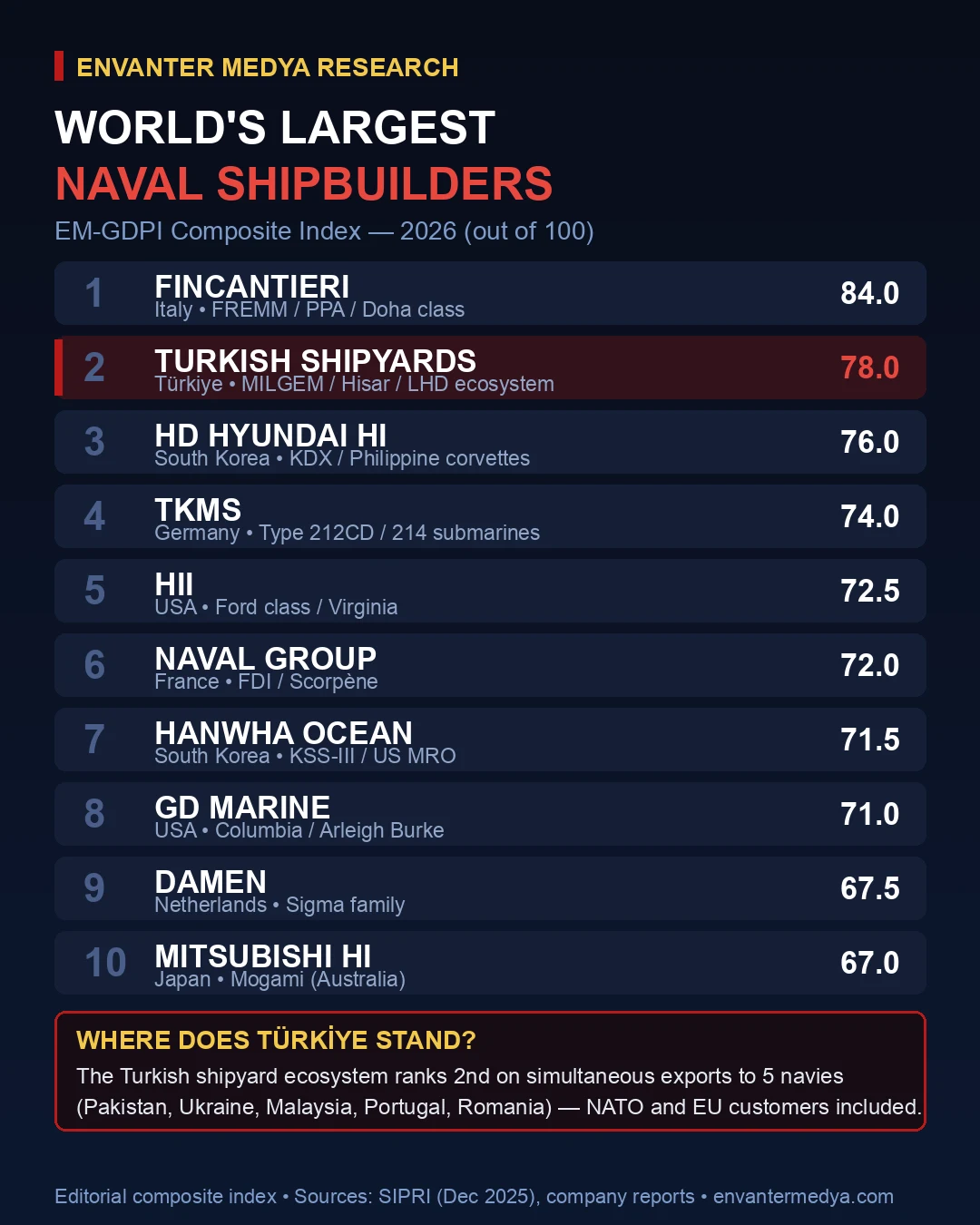
The Envanter Medya composite index: EM-GDPI
Editorial composite of nine weighted criteria; not an official ranking. CSSC and Russia’s USC unscored for lack of data. The Turkish side is scored as an ecosystem (STM+ASFAT+private yards), deliberately.
Fincantieri leads on its balance of revenue, exports and breadth. What lifts the Turkish yards to second: simultaneous exports to five navies (the group’s highest score on that criterion), platform breadth from corvettes to a carrier, and the capacity created by multi-yard parallelism. The US giants score full marks on technology but sink on export and customer diversity — nuclear platforms are not for sale. CSSC could not be scored; its tonnage leadership is acknowledged in the data, but without volume or revenue breakdowns it cannot enter the index.
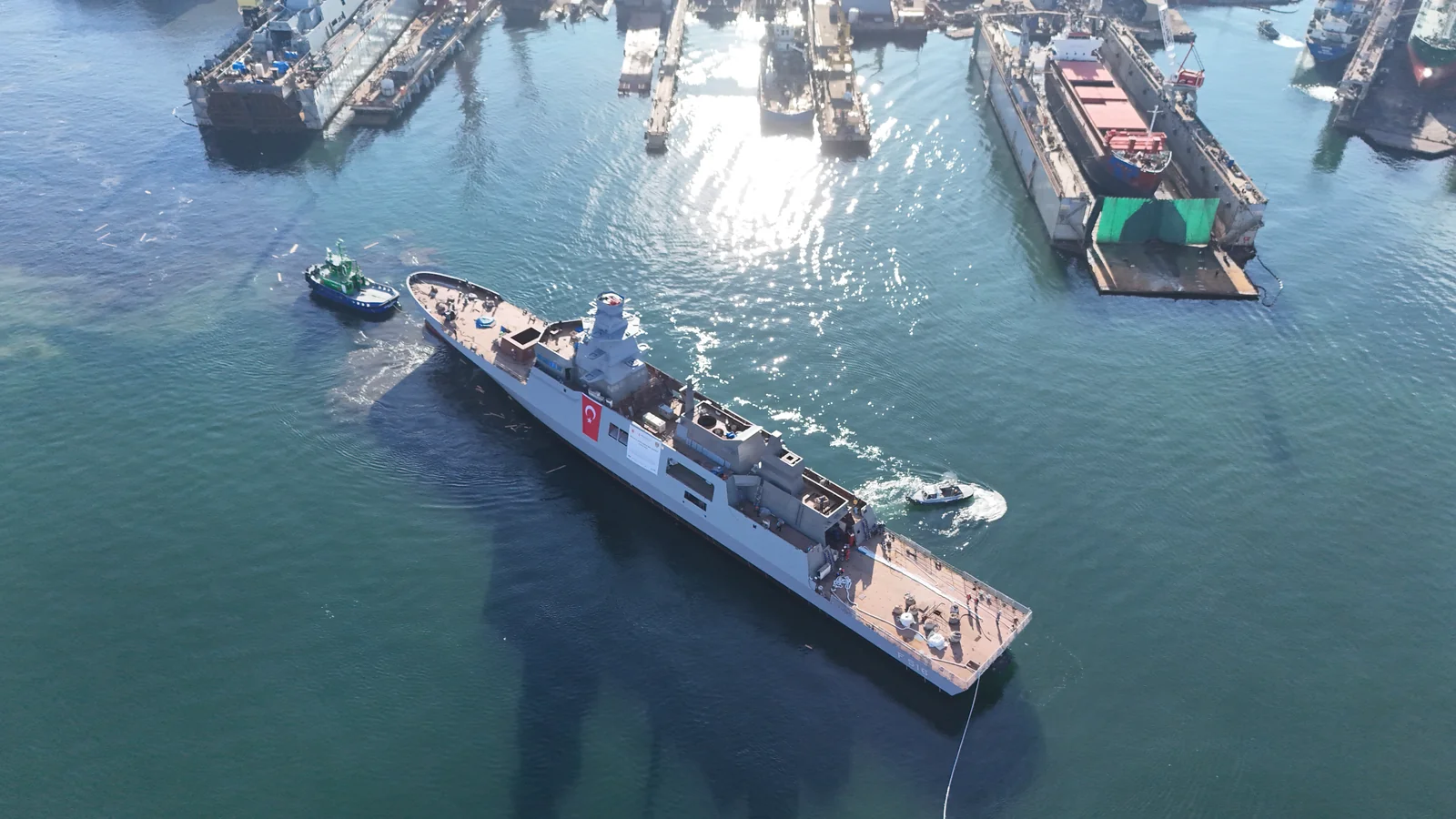
Where does Türkiye stand? The multi-yard model
Türkiye’s real strength at sea is not one giant yard but an ecosystem that runs many naval projects in parallel. The current simultaneous picture: two of Pakistan’s four Ada-class corvettes are being completed in Karachi under co-production; the first of Ukraine’s two corvettes has been launched in Türkiye; Malaysia’s three corvettes run under STM; two logistic support ships are being built for the Portuguese Navy — a Turkish naval export to an EU and NATO member; and Romania’s Hisar-class corvette was contracted in December 2025. At home, seven Istanbul-class frigates, the MUGEM national carrier and submarine programs proceed in parallel. A single ceremony delivering five platforms to three navies staged exactly that parallelism.
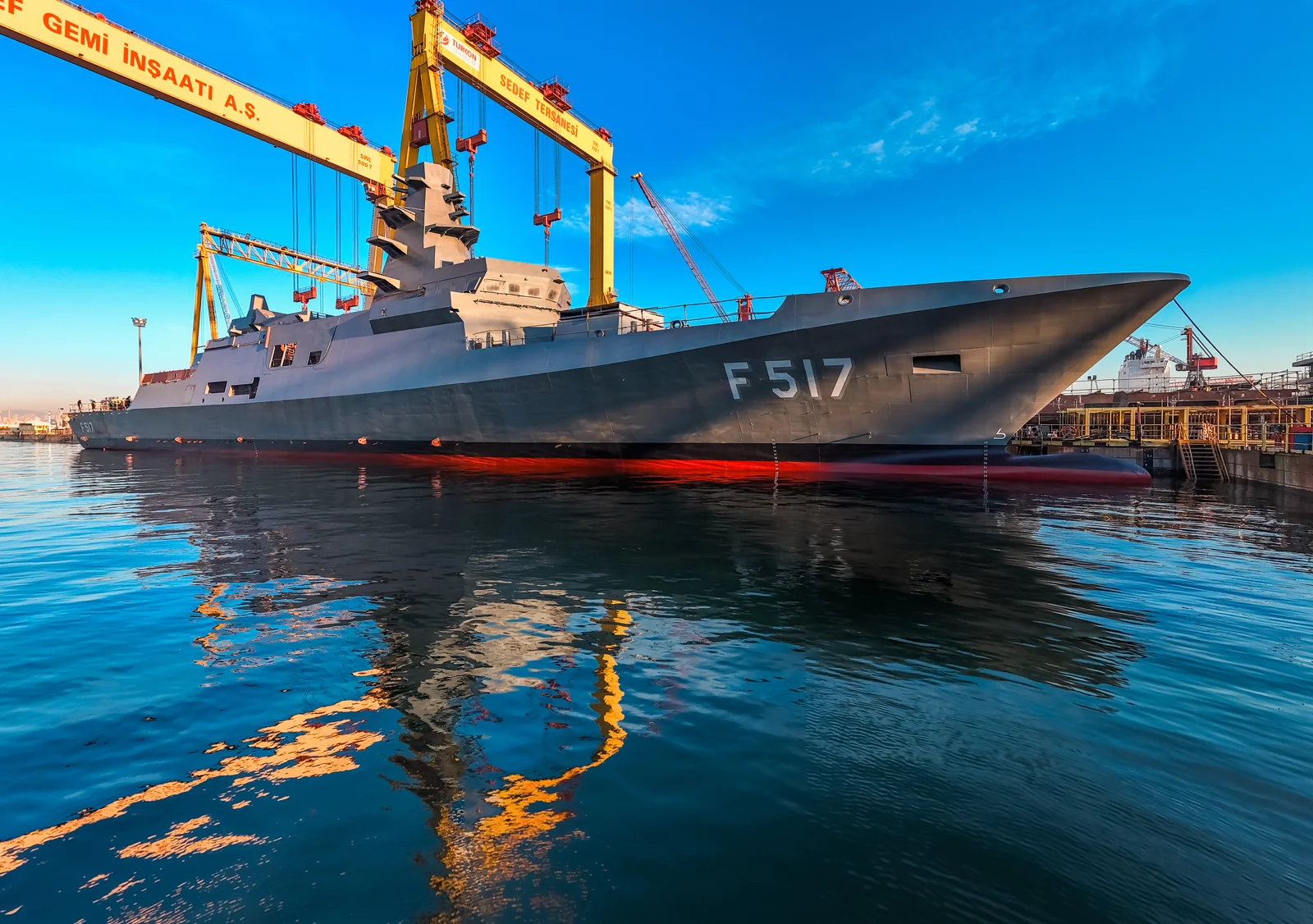
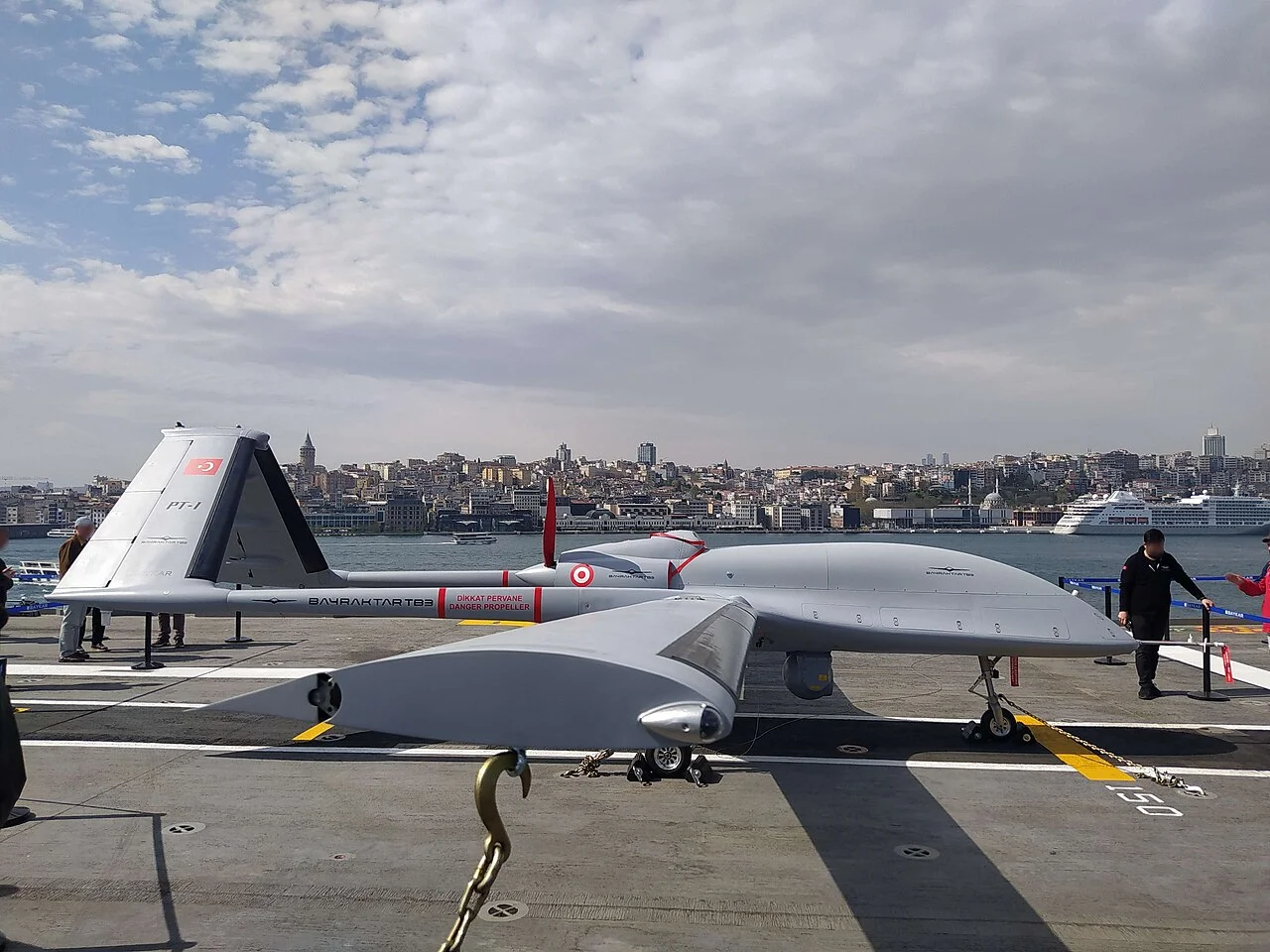
The ecosystem’s players have diversified: Dearsan in OPV and fast-attack exports, ARES among the world’s highest-volume military boat exporters, Yonca with MRTP craft in the Gulf, Sefine and Anadolu Shipyard in amphibious and logistics platforms. The ship-borne TB3 drone’s flights from TCG Anadolu gave Türkiye a unique shop window in ship-drone integration. The honest reverse view: Türkiye is outside the nuclear-submarine and catapult-carrier league (MUGEM will be conventional); the Reis-class submarines run on TKMS licenses while the national MİLDEN has only just begun; marine propulsion still depends on imports; and exports so far are corvette/OPV/logistics class — the first frigate export contract is still awaited, as is a consolidated ecosystem revenue figure.
How this research was prepared
Data year: revenues from SIPRI’s December 2025 release (2024) and company reports; program data from official announcements of January 2025 – August 2026. Scope: eleven naval shipbuilding groups; the Turkish side assessed as one ecosystem row. Currency: US dollars. Missing data: CSSC’s and USC’s military breakdowns and the Turkish ecosystem’s consolidated revenue are not public — marked “unknown”, not estimated. EM-GDPI: nine criteria scored 0-10, weighted; relative and editorial.
| Builder | Data reliability | Note |
|---|---|---|
| Fincantieri, TKMS, HII, GD, Naval Group, MHI | A | Public reports + official program announcements |
| Turkish yards, HD HHI, Hanwha Ocean, Damen | B | Strong program announcements; consolidated revenue limited |
| CSSC, USC | D | No reliable data; excluded from the index |
Frequently asked questions
Who is the world’s largest warship builder?
By revenue, the US giants; by tonnage, China’s CSSC; on the export-breadth balance, Fincantieri — first in Envanter Medya’s composite index, with the Turkish shipyard ecosystem second.
How many countries buy Turkish warships?
Construction is running simultaneously for five navies: Pakistan (4 corvettes), Ukraine (2), Malaysia (3), Portugal (2 logistic ships) and Romania (Hisar class) — Portugal and Romania being EU/NATO customers.
What is the MILGEM program?
Türkiye’s national ship program: it began with Ada-class corvettes and grew into the Istanbul-class frigate and export classes. TCG İstanbul is delivered; seven frigates are under construction.
How many warships is Türkiye building at once?
44 naval platforms across 11 shipyards under STM coordination — multi-yard parallelism is the Turkish model’s signature.
Which frigate did Australia choose?
Mitsubishi’s Mogami class under SEA 3000 — 11 ships, Japan’s first major warship export.
What is the world’s biggest shipbuilding group?
By tonnage, China’s CSSC by far; but with military volumes undisclosed it cannot be indexed — writing “unknown” beats inventing a number.
Why doesn’t HII export?
US nuclear carriers and submarines are not for sale; HII’s revenue is entirely domestic, which drags US giants down on the index’s export criterion.
Does Türkiye have an aircraft carrier program?
TCG Anadolu is in service and construction of the national carrier MUGEM has begun, with TB3 and KIZILELMA as its air wing.
Does Türkiye build submarines?
Reis-class boats (Type 214 license) are built at Gölcük, and the first national MİLDEN submarine has been laid down. Nuclear propulsion remains a six-country club Türkiye is not in. Browse platforms in the Defense Atlas.
Sources and methodology notes
Principal sources:
- SIPRI Top 100 Fact Sheet (December 2025)
- STM official statement — 11 shipyards / 44 platforms; Malaysia and Portugal programs
- Naval News (December 2025) — Hisar-class export to Romania
- Türkiye Today — five platforms to three navies in one ceremony
- ESD — the MILGEM program — Pakistan and Ukraine co-production structure
- Fincantieri, TKMS, HII, Naval Group and MHI official program announcements
Last updated: 15 August 2026. The ninth and final sector file of this series examines the world’s largest military engine manufacturers.