The World’s Largest Sonar Manufacturers

The world’s largest sonar manufacturers work the one front in defence that is neither seen nor heard. Radar does not function underwater; an electromagnetic wave dies within a few metres of seawater. That leaves a single sense: hearing. Submarine hunting, mine clearance, harbour security and seabed mapping all rest on one family of technology — acoustics. And advantage here does not come from the ship but from the precision of the array bolted to it and the signal processing behind it. Following our file on tactical radio manufacturers, Envanter Medya compared sonar and underwater acoustic system makers on installed base, exports, sensor depth and segment coverage.
Editorial note: This ranking is editorial research prepared by Envanter Medya using publicly available data. It is not an official international ranking. Sources and methodology are set out in the “How this research was done” section below.
The research at a glance
“Largest” by which measure?
Sonar is not one product but the collective name for seven quite different families. A hull-mounted sonar is built into the ship’s structure and listens continuously. A variable depth towed array is streamed kilometres astern and lowered beneath the ocean’s temperature layers to find what the hull sonar cannot. A dipping sonar is lowered into the water from a helicopter. A sonobuoy is a single-use listening float dropped from an aircraft. A mine hunting sonar produces imagery at high frequency. A submarine sonar suite combines bow, flank and towed arrays. And synthetic aperture sonar rides on unmanned underwater vehicles to produce centimetre-resolution seabed imagery. No company leads all seven — which is why this file took the question segment by segment.
Why is the towed array so decisive? Seawater is not a uniform medium; a transition layer where temperature falls sharply — the thermocline — bends sound downward. A submarine running beneath that layer is all but silent to a ship on the surface. A variable depth sonar exists precisely to solve this, by lowering the array below the layer. The most expensive and most decisive component of modern submarine hunting is therefore not the hull sonar but the towed array.
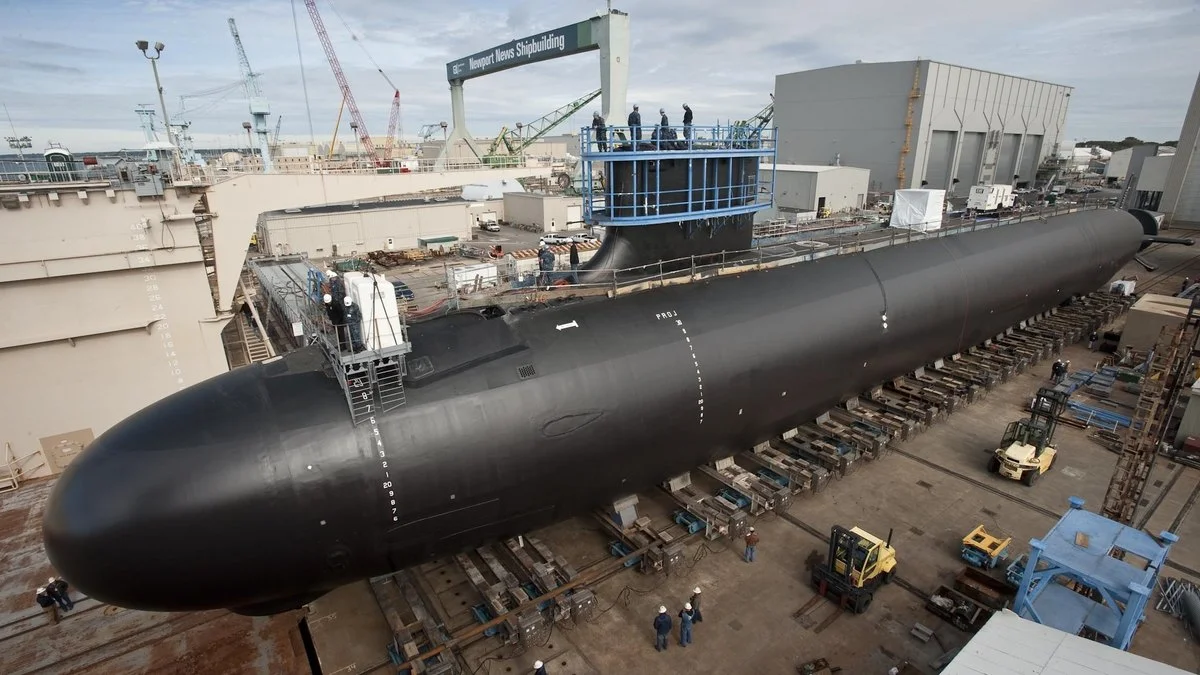
In towed arrays: Thales and the CAPTAS family
In the variable depth segment the leader is clear. More than 100 systems from Thales’s CAPTAS family have been ordered or entered service — one of the broadest installed bases any single product family has reached in this sector. The 2025-26 period brought the family’s two most notable moves. First, Thales delivered the first CAPTAS-4 sonar for the US Navy; a European towed array entering the American inventory is one of the rare cases where the usual flow of this segment runs backwards. Second, Thales’s integrated sonar suite was selected for the Spanish Navy’s five new multi-mission frigates, with anti-submarine capability built on the CAPTAS-4 Compact and BlueMaster sonars alongside the BlueScan digital acoustic system. The company also reported in its 2025 full-year results an order from a navy in the Americas for Sonar 2087, a member of the CAPTAS family, to equip destroyers.
Market research estimates put the top five at 58-62 per cent of total global sonar revenue, making this one of the most concentrated sub-segments in defence. Data type: R (reported).
In sonobuoys: America’s disposable ears
The least discussed but largest-volume item in submarine hunting is the sonobuoy. A maritime patrol aircraft drops dozens on a single sortie and recovers none of them. That demands a continuous, high-rate production line, and in the American market the work has long been concentrated in a single joint venture: ERAPSCO, formed by Ultra and Sparton. The venture received a $71.8 million US Navy contract for manufacture of AN/SSQ-125 sonobuoys, with production subcontracts of $101.7 million to Ultra and $102.9 million to Sparton. Ultra’s sonobuoy business was also selected as a qualified vendor on the Multiple Award Delivery Order Contract (MADOC) to supply the US Navy with next-generation sonobuoys over five years.
Figures come from the companies’ own announcements and belong to different years; this is not a cumulative total. Data type: S (contract record).
In submarine suites: Atlas Elektronik
A submarine’s own sonar suite is the most closed and most specialised branch of the sector. Here Germany’s Atlas Elektronik — today part of the TKMS group — is the principal supplier to the German, Portuguese and other navies. The company announced it will deliver six ACTAS sonar systems for the Indian Navy, and it provides the anti-submarine warfare equipment for Germany’s F126 frigates. Those two examples show a manufacturer working on both submarine and surface platforms — a combination few in the sector manage.
In unmanned systems: Kongsberg and synthetic aperture
This is sonar’s fastest-changing branch. Synthetic aperture sonar (SAS) uses the vehicle’s own motion to produce imagery as though it carried an array far longer than it physically has; the result is a centimetre-scale map of the seabed. Norway’s Kongsberg has reached the fourth generation of the technology with its HISAS family: HISAS2020, launched in 2026, operates in the 120-210 kHz band and delivers ultra-high-resolution imagery together with co-registered bathymetry in a single pass. More significantly, the system is no longer confined to the company’s own HUGIN unmanned underwater vehicles — it can now be fitted to any platform, including UUVs, USVs, remotely operated vehicles and towed assets. For mine hunting and seabed survey, that is a cost-lowering shift.
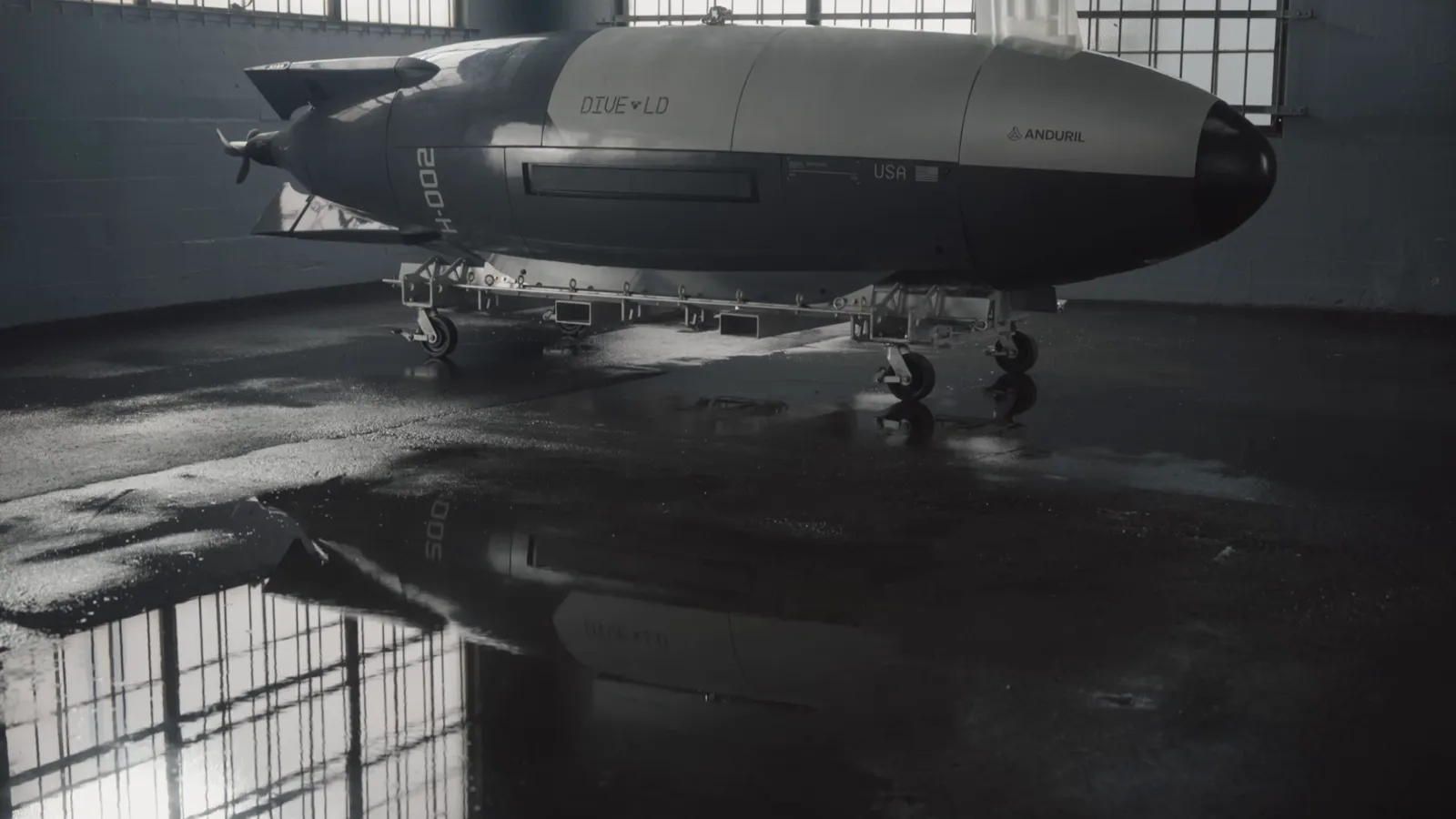
Verified manufacturer table
| Manufacturer | Country | Strongest segment | Verified headline data | Grade |
|---|---|---|---|---|
| Thales | France | Towed array, hull, integrated suite | 100+ CAPTAS systems; first CAPTAS-4 for the US Navy; Spanish F-110 five-frigate suite; Sonar 2087 order | A |
| Ultra Maritime | UK / USA | Sonobuoys, towed array hydrophones | ERAPSCO joint venture; $71.8m for AN/SSQ-125; MADOC qualified vendor | A |
| L3Harris Technologies | USA | Sonobuoys, sonar processing | AN/SSQ series sonobuoy manufacture and integrated ASW systems | B |
| Atlas Elektronik (TKMS) | Germany | Submarine suite, surface ASW | Six ACTAS systems for the Indian Navy; ASW equipment for German F126 frigates | A |
| Kongsberg | Norway | Synthetic aperture sonar, unmanned | Fourth-generation HISAS; HISAS2020 at 120-210 kHz; HUGIN family; HUGIN + HiPAP for Polish MCM vessels | A |
| Lockheed Martin | USA | Submarine sonar processing, integration | Among the prime contractors for US submarine sonar systems | B |
| Meteksan Defence 🇹🇷 | Türkiye | Hull sonar, flank array, submarine | YAKAMOS 2020 hull-mounted sonar; in MİLGEM corvettes since 2011; Flank Array Sonar; AYPAS intercept passive sonar; Acoustic Vector Sensor | A |
| ASELSAN 🇹🇷 | Türkiye | Torpedo countermeasures, towed active sonar, mines | HIZIR torpedo countermeasure system; HIZIR-LFAS low-frequency towed active sonar; SATS underwater acoustic detection; ZOKA acoustic decoys; ASIST submarine intercept; MATESS mine detection sonar | A |
| Leonardo | Italy | Dipping sonar, towed array | Acoustic product family for naval helicopters and surface platforms | B |
| Hensoldt | Germany | Submarine sensors | Submarine sensor and optronics portfolio | B |
| Elbit Systems | Israel | Underwater acoustics, unmanned | Underwater acoustic and unmanned maritime vehicle products | B |
| CSSC / Okeanpribor | China / Russia | Submarine and surface sonar | No verifiable production or export data | D — unscored |
Data reliability notes. A: published directly by the manufacturer or a government source, with a date and a figure. B: consistent across multiple open sources but not fixed by a single official figure. D: unverifiable due to insufficient transparency. Data types: R reported, T assessed, S contract record, D unverifiable. ASW: anti-submarine warfare. MCM: mine countermeasures.
EM-GDPI: how the composite index was built
The index was adapted to the sector again, and the adaptation is disclosed. The revenue criterion (15 points) was removed, because almost no company reports sonar revenue separately; in groups like Thales, Lockheed Martin and RTX the line sits inside far larger business units. In its place came “acoustic sensor and array manufacturing depth” (15 points): whether the company builds its own hydrophones, array structures and signal processing core. That is where the real distinction lies in sonar — a system assembled around a bought-in array does not stand where one whose sensor is designed in-house stands. The remaining criteria: installed base/production 25, exports 15, user navies 10, segment breadth 10, production capacity 10, order backlog 5, technology maturity 5, growth 5.
The index is editorial and its weightings were set by Envanter Medya. Chinese and Russian manufacturers are unscored for lack of verifiable data. Data type: T (assessed).
Where does Türkiye stand?
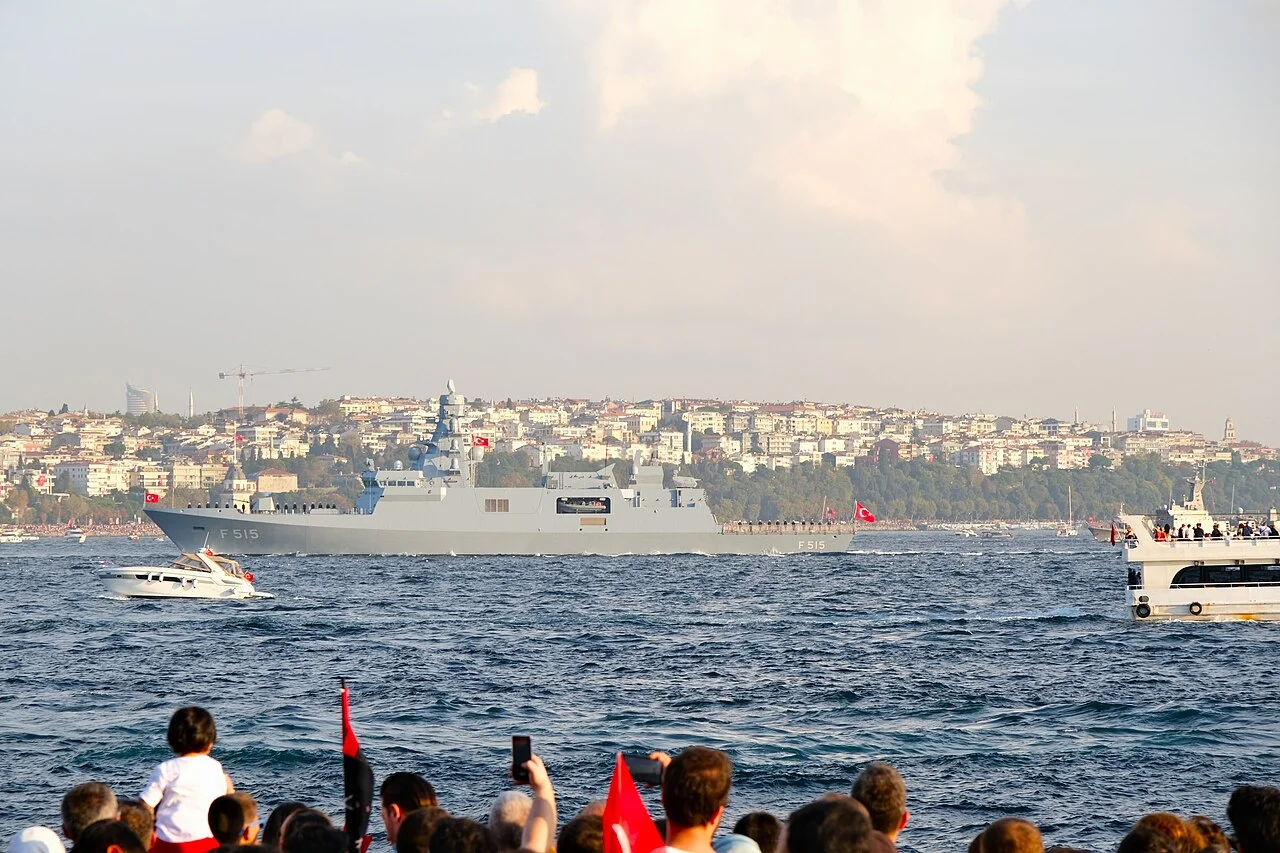
Türkiye appears in this file through two separate companies, and that alone is telling: underwater acoustics is a specialism narrow enough that most countries can sustain only one centre for it. Türkiye has two, and each is concentrated in different segments.
Meteksan Defence works the hull and submarine side. The company turned to underwater acoustics in 2009 and has become a system-level contractor. Its YAKAMOS hull-mounted sonar has been in service on MİLGEM corvettes since 2011; the newer YAKAMOS 2020 is a medium-frequency surface-ship anti-submarine warfare and obstacle-avoidance sonar that automatically detects and tracks submarines, submersibles, torpedoes and mine-like objects. The portfolio is not limited to surface work: a Flank Array Sonar, the AYPAS intercept passive sonar and an Acoustic Vector Sensor for submarines are developed under the same roof.
ASELSAN works the countermeasures and towed side. Its public underwater acoustics portfolio runs to six distinct products: HIZIR, a torpedo countermeasure system for surface ships that detects, classifies and localises threat torpedoes and advises the appropriate countermeasure tactic; HIZIR-LFAS, a low-frequency variable-depth active and passive towed array sonar built for long-range anti-submarine warfare; and the SATS underwater acoustic detection system, ZOKA acoustic torpedo countermeasure jammers and decoys, the ASIST submarine intercept sonar and the MATESS mine detection sonar.
Taken together, the two companies give Türkiye verifiable products in five of the seven segments — hull sonar, towed active sonar, submarine suite components, mine hunting and torpedo countermeasures. That is a breadth most sonar-producing countries do not reach.
Only systems named on the manufacturers’ own product pages were counted; sub-variants were not counted separately. Product count does not imply installed base or export success. Data type: T (assessed).
Where does Türkiye fall short?
The breadth is real. But sonar is a field where installed base speaks louder than product count, and Türkiye faces three concrete limits.
First, the scale of the installed base. Thales’s CAPTAS family is in service with dozens of navies across more than 100 systems; Türkiye’s systems are concentrated largely in the Turkish Navy and in export programmes. In sonar, installed base is not only a sales figure but a question of accumulated data: every new sea, every new salinity and temperature profile, is a data set that trains the signal processing. A system that has worked for years across dozens of navies holds a structural advantage in that accumulation.
Second, the sonobuoy line. Producing the disposable float — the largest-volume item in submarine hunting — requires a continuous, high-rate production line and a long-term naval contract behind it. In the United States that work sits in a single joint venture fed by multi-year framework contracts. Türkiye has no disclosed production programme at comparable scale in this segment.
Third, deep-water validation infrastructure. Sonar can only be proven in real deep-water conditions; laboratory and shallow-water testing does not suffice. The Mediterranean gives Türkiye deep-water access, but sustained data collection in different acoustic regimes — the Atlantic, the Arctic — remains with manufacturers working alongside navies permanently stationed in those waters.
Reading it in balance: These three limits do not mean Türkiye cannot build sonar — on the contrary, holding two indigenous system houses is something few countries manage, with verifiable products in five of seven segments. Competitors have their own constraints: Kongsberg leads in synthetic aperture but does not build submarine suites; Ultra Maritime is strong in sonobuoys but carries nothing like the same weight in hull sonar; Atlas Elektronik runs deep in submarines but trails Kongsberg in unmanned-vehicle sonar. In sonar, no manufacturer leads all seven segments.
Where is the market heading?
The sonar systems market is projected to reach $6.15 billion by 2030, growing at an average of 5.84 per cent a year. Three trends drive it: the worldwide expansion of submarine fleets, the emergence of undersea critical infrastructure protection — power cables and data lines — as a mission area in its own right, and the spread of unmanned underwater vehicles. The third is also reshaping the sector’s structure: sonar is no longer only a system bolted to a warship but a sensor network that can be distributed across dozens of small vehicles.
Segment coverage was counted from manufacturers’ public product pages. The Türkiye row combines two companies’ portfolios; it is not one company’s coverage. Presence in a segment does not imply leadership in it — Kongsberg appears in two segments yet leads the sector in synthetic aperture sonar. Data type: T (assessed).
How this research was done
This file was built by working through press releases, product pages and programme announcements published by manufacturers and government bodies themselves. Every figure was traced back to the source that first disclosed it. Data concerning Türkiye was drawn only from manufacturers’ official product pages and official institutional sources, with product names and descriptions given as the manufacturer defines them. Market share and market size figures belong to independent research firms and are estimates. Chinese and Russian manufacturers publish no verifiable production or export data and were graded D and left outside the index. Segment coverage counts are an editorial assessment based on manufacturers’ open catalogues; sub-variants were not counted separately.
Frequently asked questions
Who is the world’s largest sonar manufacturer?
Thales ranks first in this file’s composite index. But because sonar is not a single product it is worth reading segment by segment: Thales in towed arrays, Ultra Maritime and L3Harris in sonobuoys, Atlas Elektronik in submarine suites, and Kongsberg in synthetic aperture sonar.
Why is radar not used underwater?
Electromagnetic waves are absorbed extremely quickly in seawater and effectively disappear within a few metres. Sound travels much farther in water than in air, which makes acoustics the only practical method of underwater detection.
What is a towed array sonar and why is it needed?
It is a hydrophone array streamed kilometres behind a ship and lowered to a chosen depth. Because the ocean’s temperature transition layer bends sound, a submarine beneath that layer is nearly invisible to hull sonar; the towed array descends below the layer to solve exactly that problem.
What is a sonobuoy?
A single-use listening float dropped into the sea from a maritime patrol aircraft or helicopter. Because it is never recovered, it demands continuous high-rate production — which makes it the largest-volume item in the sector.
What does synthetic aperture sonar do?
It uses the vehicle’s own motion to produce imagery as though it carried a far longer array than it physically has. The result is a centimetre-scale map of the seabed, used in mine hunting and seabed survey.
Does Türkiye build sonar?
Yes, through two separate companies. Meteksan Defence produces hull sonar (YAKAMOS 2020), flank array sonar, the AYPAS intercept passive sonar and an acoustic vector sensor. ASELSAN works in torpedo countermeasures, towed active sonar and mine detection with HIZIR and HIZIR-LFAS, SATS, ZOKA, ASIST and MATESS.
Where is YAKAMOS used?
Meteksan Defence’s hull-mounted sonar has been in service on MİLGEM corvettes since 2011. The newer YAKAMOS 2020 is a medium-frequency anti-submarine warfare and obstacle-avoidance sonar that automatically detects and tracks submarines, submersibles, torpedoes and mine-like objects.
What is HIZIR-LFAS?
ASELSAN’s low-frequency variable-depth active and passive towed array sonar system, designed for surface combatants conducting long-range anti-submarine warfare and surveillance.
Why is the CAPTAS family so widespread?
More than 100 systems from Thales’s CAPTAS family have been ordered or entered service. In 2025-26 the first CAPTAS-4 was delivered for the US Navy, and an integrated suite based on CAPTAS-4 Compact and BlueMaster was selected for Spain’s five new multi-mission frigates.
How concentrated is the sonar market?
Market research estimates put the top five — Thales, RTX, Lockheed Martin, Kongsberg and L3Harris — at roughly 58-62 per cent of global sonar revenue, one of the most concentrated sub-segments in defence.
How are unmanned underwater vehicles changing sonar?
Now that synthetic aperture sonar can be fitted to any platform rather than one manufacturer’s own vehicles, sonar shifts from being a system tied to a single warship to a sensor network distributable across dozens of small vehicles — lowering the cost of mine hunting and seabed survey.
Does undersea cable security involve sonar?
Yes. Protecting power cables and data lines has become a distinct mission area in recent years, and it bears directly on systems that can scan the seabed at high resolution — particularly unmanned vehicles carrying synthetic aperture sonar.
Sources and methodology
- Thales — CAPTAS family — more than 100 systems ordered or in service
- Thales — delivery of the first CAPTAS-4 sonar for the US Navy
- Thales — integrated sonar suite for Spain’s five multi-mission frigates
- Ultra — $71.8m ERAPSCO contract for AN/SSQ-125 sonobuoys
- Ultra — MADOC next-generation sonobuoy contract
- Atlas Elektronik — six ACTAS sonar systems for the Indian Navy
- Atlas Elektronik — ASW technology for the German F126 frigate
- Kongsberg Discovery (2026) — HISAS2020 and fourth-generation synthetic aperture sonar
- Meteksan Defence — YAKAMOS 2020 — hull-mounted sonar system
- ASELSAN — Underwater Acoustics and Sonar Systems — SATS, ASIST, MATESS
- ASELSAN — HIZIR-LFAS — low-frequency towed active sonar system
Last updated: 19 September 2026. This page is living research and will be updated as new contracts and deliveries are announced. For the full series, see the 2026 Global Defence Industry Report.