The World’s Largest Tactical Radio Manufacturers

The world’s largest tactical radio manufacturers build the most widely used and least discussed weapon in a modern army: communication. It does not matter how many tanks, howitzers and drones sit in a brigade’s inventory — if they are not connected to each other, what you have is not an army but a collection of units operating blind. Ukraine and Gaza have made the point repeatedly over the past three years: in a spectrum squeezed by electronic warfare, a radio that keeps working can matter more than the most expensive platform on the field. Following our file on military transport aircraft manufacturers, Envanter Medya compared tactical radio and military communications producers on delivery volume, exports, waveform sovereignty and user base.
Editorial note: This ranking is editorial research prepared by Envanter Medya using publicly available data. It is not an official international ranking. Sources and methodology are set out in the “How this research was done” section below.
The research at a glance
“Largest” by which measure?
There is no single answer, because this sector competes along four separate axes. On the volume axis sits the ability to build tens of thousands of units a year. On the programme axis sit the programme-of-record contracts that move an entire army onto one architecture — the US Army’s HMS programme, or Germany’s D-LBO. On the sovereignty axis sits the question of whether a company owns its own waveform and its own cryptographic core; that decides both what it can export and what it can be trusted with. And on the ecosystem axis sits the standard a company belongs to. This file measured all four separately rather than crowning a single winner.
What is a software defined radio, and why did it change everything? In a classic radio, frequency, modulation and encryption are baked into the hardware; when the standard changes, the device changes. In a software defined radio those functions are defined in software, so the same device can move to a new waveform or a new crypto standard with an update. That turned the radio from a device into a platform — and moved the centre of competition from hardware to waveform ownership.
The programme axis: L3Harris and the US Army contracts
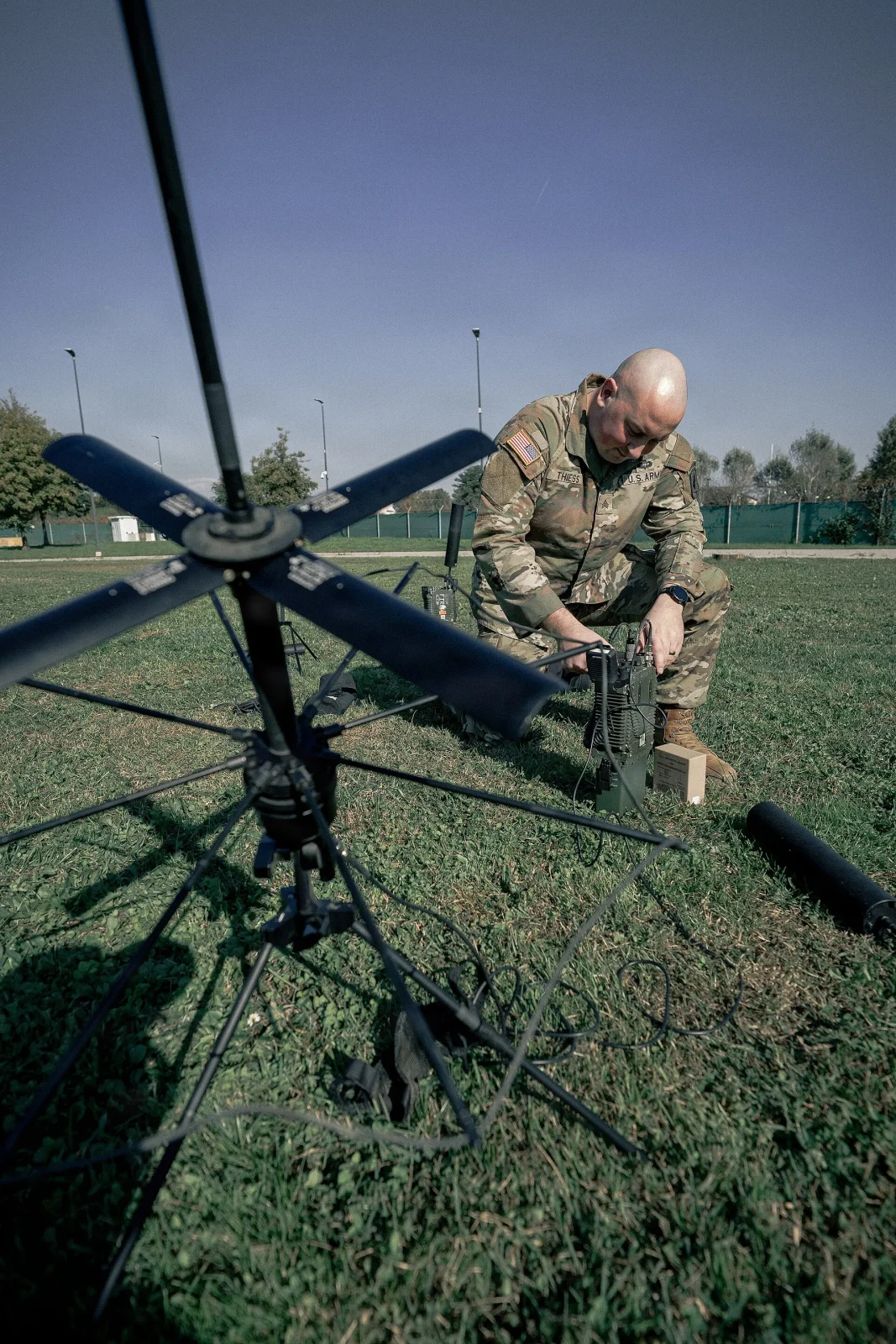
Measured by programme-of-record scale, the leader is not in doubt. L3Harris’s Falcon IV family forms the backbone of the US Army’s Handheld, Manpack & Small Form Fit (HMS) programme; in January 2025 full-rate production orders for the AN/PRC-158 manpack and AN/PRC-163 leader radios came to nearly $300 million. What distinguishes these radios is their ability to switch between Secure But Unclassified – Encrypted (SBU-E) and high-assurance encryption, so one device serves both coalition partners and the national classified network. The pace picked up in 2026: in June the company announced an $84 million order for AN/PRC-158C manpack systems under the Next Generation Command and Control (NGC2) programme — a second tranche after an initial $24 million order in October. The same month it received a $170 million Falcon IV order from an unnamed Central European nation.
Some of these contracts cover command-and-control software and battle management as well as radios, so the figures should not be read as pure radio pricing. Buyer countries are undisclosed in several cases. Data type: R (reported) — company press releases.
The volume axis: 600,000 radios, and 70,000 in a year
The most striking cumulative figure comes from Elbit Systems, which announced the delivery of its 600,000th operational tactical radio. That total spans decades and shows the E-LynX family has reached well beyond the Israel Defense Forces — the roughly $338 million contract from the Swiss Federal Department of Defense for an army-wide network, and the Spanish Army’s repeat selections of E-LynX, are the clearest evidence.
On annual production tempo, however, the highest disclosed figure comes from Türkiye. According to data presented by ASELSAN general manager Ahmet Akyol in January 2026, the company delivered 286,000 products to end users in a single year, more than 70,000 of them military radios. Over the same period it reported a 40 per cent capacity increase across its facilities, with domestic contracts up 50 per cent and export contracts up 171 per cent in the first nine months. The picture that emerges is of radios as a serial-production backbone rather than one product line among many.
286,000 products in total. These figures come from public statements by company management and have not been independently audited, so they are marked data type T (company disclosure). Because most competitors do not publish annual unit deliveries, this chart is not a direct ranking comparison.
The sovereignty axis: who owns the waveform?
This is the least discussed and most decisive measure in the file. The waveform inside a radio — how the signal is encoded, divided and hardened against jamming — belongs to someone, and whoever owns it sets the rules of the network. Europe produced a collective answer: the ESSOR (European Secure Software defined Radio) programme. Its industrial arm, the a4ESSOR consortium, is made up of six companies — Bittium (Finland), Indra (Spain), Leonardo (Italy), Radmor (Poland), Rohde & Schwarz (Germany) and Thales (France) — with Finland, France, Germany, Italy, Poland and Spain participating as nations.
The result was a turning point for the sector. NATO adopted the consortium’s ESSOR High Data Rate Waveform (HDRWF) as STANAG 5651, the interoperability standard for tactical radio communications. Operating in the 225-400 MHz UHF band and handling data rates up to one megabit per second, the waveform is now available to all NATO members. Europe, in other words, built a common standard through its own industry first and then made it an alliance standard — a textbook demonstration of how sovereignty is established in this market.
Verified manufacturer table
| Manufacturer | Country | Main product family | Verified headline data | Grade |
|---|---|---|---|---|
| L3Harris Technologies | USA | Falcon IV (AN/PRC-158, -163, -167, -160) | HMS full-rate production ~$300m; NGC2 $108m; Central Europe $170m | A |
| Elbit Systems | Israel | E-LynX | 600,000th operational radio delivered; Switzerland $338m; repeat Spanish selection | A |
| ASELSAN 🇹🇷 | Türkiye | 9651 handheld, 9661 vehicle/manpack, 5712 squad, 6680 intercom, ARTCom 9682 | 70,000+ radios in one year; comms exports to 30+ countries; 8 contracts / 8 shipments to Ukraine | A |
| Thales | France | SYNAPS / CONTACT | a4ESSOR partner; French CONTACT programme; Belgian and Malaysian contracts | A |
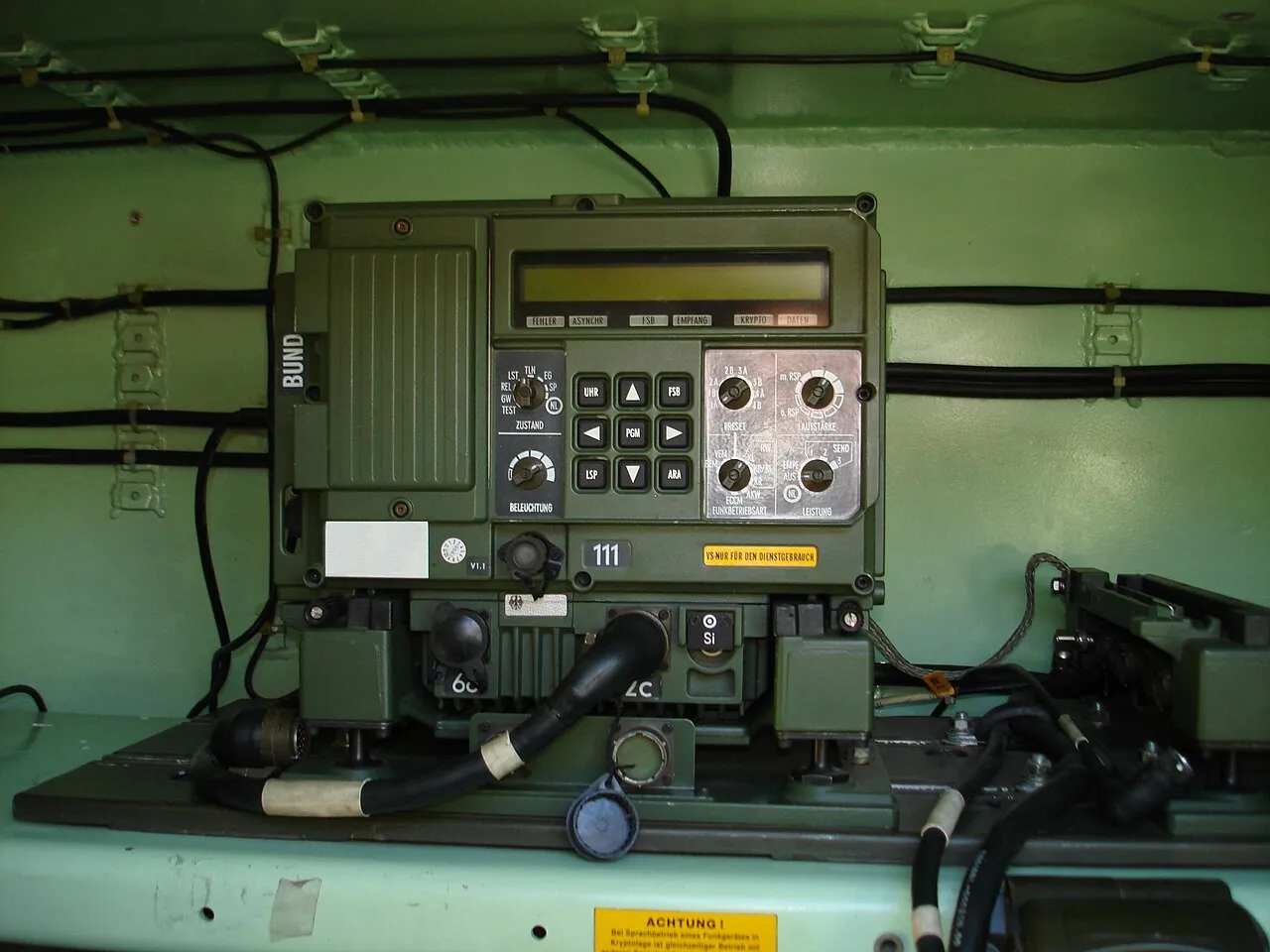
| Rohde & Schwarz | Germany | SOVERON (D, VR, HR) | Long-term D-LBO framework agreement signed end-2022; series deliveries under way | A |
| Leonardo | Italy | SWave family | a4ESSOR partner; completed ESSOR HDR interoperability qualification testing | B |
| Collins Aerospace (RTX) | USA | ARC-210, TruNet | Broad installed base in airborne radios; standard on US and allied aircraft | B |
| General Dynamics Mission Systems | USA | Tactical SDR and crypto | Supplier across US Army network modernisation programmes | B |
| Bittium | Finland | Tough SDR | a4ESSOR partner; Finnish and export customers | B |
| Indra | Spain | Tactical communications | a4ESSOR partner; Spanish programmes | B |
| Radmor | Poland | Tactical radio | a4ESSOR partner; supplier to Polish land forces | B |
| CETC / Ruselectronics | China / Russia | Military communications | No verifiable production or export data | D — unscored |
Data reliability notes. A: data published directly by the manufacturer or a government source, with a date and a figure. B: consistent across multiple open sources but not fixed by a single official figure. D: unverifiable due to insufficient transparency — these companies are excluded from the index. Data types: R reported, T company disclosure, S contract record, D unverifiable.
EM-GDPI: how the composite index was built
The Envanter Medya Global Defence Production Index (EM-GDPI) is the series’ shared measuring tool. Two adaptations were made for this file, and both are disclosed here. First, the revenue criterion (15 points) was removed, because almost no company in this sector reports tactical radio revenue separately; in groups like Thales, Leonardo and RTX the line disappears inside far larger business units. Second, it was replaced by a “waveform and crypto sovereignty” criterion (15 points) — whether a company produces its own waveform and encryption core is a sharper indicator of power here than revenue. The remaining criteria are unchanged from the series: production/delivery volume 25, exports 15, user countries 10, product breadth 10, serial production capacity 10, order backlog 5, technology maturity 5, growth 5.
The index is editorial and its weightings were set by Envanter Medya. Chinese and Russian manufacturers are unscored for lack of verifiable data — which does not mean they are small, only that they cannot be measured this way.
Where does Türkiye stand?
Türkiye sits higher in this file than in many others in the series, and the reason is not a single product but three capabilities present at the same time.
First, volume. ASELSAN’s disclosure that it delivered more than 70,000 military radios in a single year points to a serial-production tempo rarely seen in this sector. Because most competitors do not publish annual unit deliveries, no direct ranking can be built from it — but among disclosed figures it is the highest single-year unit count. The 40 per cent capacity increase reported across its facilities suggests this is a durable capacity investment rather than a passing order wave.
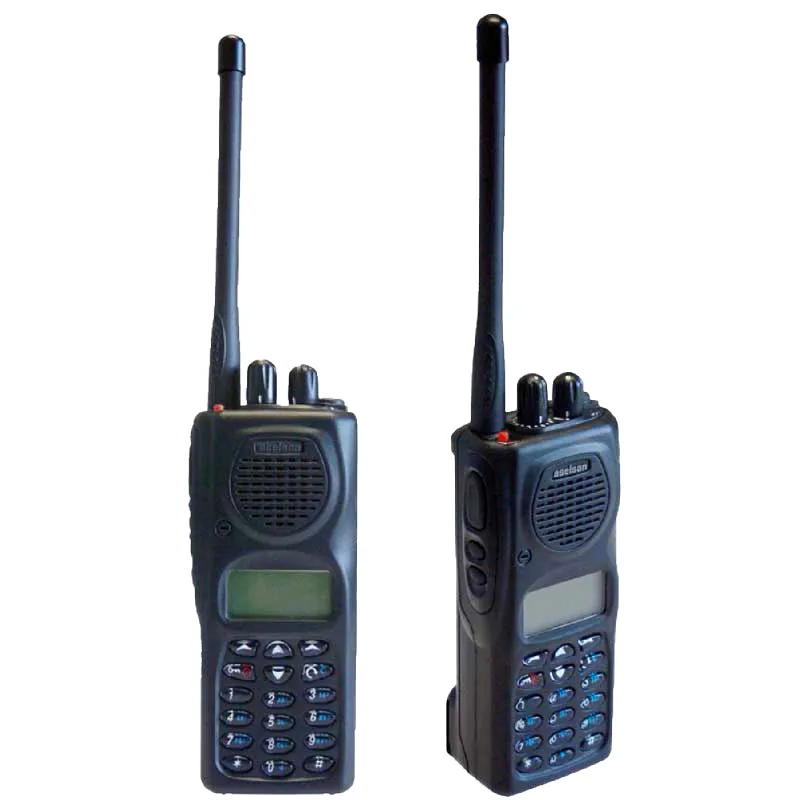
Second, breadth. Türkiye’s radio family is not concentrated in one segment: the 9651 software defined handheld, the 9661 V/UHF vehicle and manpack set, the 5712 squad radio, the 6680 intercom system and the ARTCom 9682 V/UHF radio for unmanned platforms together form an unbroken chain from the individual soldier to a brigade headquarters to a drone. The number of countries able to build that entire chain does not run past one hand.
Third, export depth. ASELSAN exports communications systems to more than 30 countries. Ukraine is the most mature example: since the first contract with Spets Techno Export in December 2016, eight shipments have been made under eight separate contracts, completing deliveries of 9661 vehicle and manpack radios, 9651 handhelds, 5712 squad radios and 6680 intercom systems. A memorandum was signed with Azerbaijan’s Ministry of Defence covering PUP 9661 and 3700 radios. And first delivery and acceptance of the ARTCom 9682 radio was completed for a drone platform exported to a Middle Eastern country — the first export of that radio.
Segment coverage was counted from public product catalogues; having a product in a segment does not imply leadership in it. Data type: T (assessed) / R (reported).
Where does Türkiye fall short?
The volume and portfolio picture is strong. For this file to stay honest, though, the other half of the picture has to be written too. Türkiye faces three concrete limits in tactical communications.
First, absence from the standard-setting table. The ESSOR High Data Rate Waveform that NATO adopted as its tactical interoperability standard was developed by the six-company a4ESSOR consortium. Türkiye is not a member. Because the standard is a NATO standard, Türkiye can build to it — but not sitting at the table where the standard is decided means, over the long run, selling the product rather than the rule. This is less a technical gap than a difference of position.
Second, component depth. At the heart of a software defined radio sit high-speed analogue-to-digital converters, RF front-end components and field-programmable gate arrays. World production of these is concentrated in a handful of American and European firms and subject to export controls. Türkiye commands the design, the software, the waveform and the crypto; at the bottom chip layer it remains dependent. This constraint is not Türkiye’s alone — nearly every manufacturer outside the United States, European ones included, draws on the same supply chain.
Third, high-assurance crypto accreditation. What sets L3Harris’s AN/PRC-158 and AN/PRC-163 apart is their ability to switch between unclassified-encrypted and high-assurance national classified modes, accredited by the United States. That accreditation chain is the gateway to the alliance’s most sensitive networks, and not an area an outside manufacturer enters quickly. Türkiye produces its own national crypto core, which is a sovereignty gain; but at the top layer of allied networks this remains a separate negotiation requiring mutual accreditation.
Reading it in balance: These three limits do not place Türkiye behind in the sector — ASELSAN ranks third in this file’s index. Competitors have their own limits: European manufacturers sit at the ESSOR table but none publishes an annual unit tempo approaching ASELSAN’s disclosed figure, and L3Harris’s strength rests largely on a single customer, the US Department of Defense. No manufacturer in this sector leads on all four axes.
Where is the market heading?
The military software defined radio market is projected to grow from $5.34 billion in 2026 to $10.88 billion in 2034, a compound annual growth rate of 9.3 per cent, with North America expected to hold roughly a 39 per cent share in 2026. Three forces sit behind that: land forces modernisation programmes across NATO, demand for waveforms that survive electronic warfare pressure, and a new class of radio created by the spread of unmanned platforms — a drone, an unmanned ground vehicle or a surface vessel now has to join the same tactical network as the soldier.
Compound annual growth rate 9.3 per cent. These are market research projections and carry no guarantee of realisation. Data type: R (reported).

How this research was done
This file was built by working through press releases, product catalogues and official programme pages published by manufacturers and government bodies themselves. Every figure was traced back to the source that first disclosed it; no second-hand data whose original source could not be located was used. Data concerning Türkiye was drawn only from official institutional and manufacturer sources. Figures resting on a company’s own statement — annual delivery counts, for instance — are marked explicitly as company disclosures, because they are not independently audited. Chinese and Russian manufacturers publish no verifiable production or export data and were graded D and left outside the index; the series applies a consistent “no data, no score” rule. EM-GDPI weightings were adapted for this sector and the adaptation is disclosed above. Market size projections belong to independent research firms and carry no commitment of realisation.
Frequently asked questions
Who is the world’s largest tactical radio manufacturer?
There is no single answer. On programme scale and US Army contracts, L3Harris leads; on cumulative units delivered, Elbit Systems stands out with 600,000 radios; on disclosed annual production tempo, ASELSAN’s figure of more than 70,000 is the highest. In this file’s composite index the order is L3Harris, Elbit Systems, ASELSAN.
What is the difference between a software defined radio and a classic radio?
In a classic radio, frequency, modulation and encryption are built into the hardware; when the standard changes, the device changes. In a software defined radio those functions are defined in software, so the same device can move to a new waveform or crypto standard with an update.
What is ESSOR and why does it matter?
ESSOR is Europe’s joint secure software defined radio programme. Its industrial arm, the a4ESSOR consortium, comprises Bittium, Indra, Leonardo, Radmor, Rohde & Schwarz and Thales. The High Data Rate Waveform it developed was adopted by NATO as the STANAG 5651 interoperability standard.
What does STANAG 5651 do?
It defines a broadband tactical waveform operating in the 225-400 MHz UHF band and handling data rates up to one megabit per second, with multi-hop push-to-talk, radio silence mode and spectrum sharing. It is available to all NATO members.
Which radios does ASELSAN produce?
Its public product family includes the 9651 software defined handheld, the 9661 V/UHF vehicle and manpack radio, the 5712 squad radio, the 6680 intercom system and the ARTCom 9682 V/UHF radio for unmanned platforms.
Does Türkiye export radios?
Yes. ASELSAN exports communications systems to more than 30 countries. Eight shipments have been made to Ukraine under eight separate contracts since December 2016, and a memorandum covering radio supply was signed with Azerbaijan’s Ministry of Defence.
Why does the ARTCom 9682 matter separately?
First delivery and acceptance of this V/UHF radio was completed for a drone platform exported to a Middle Eastern country — the product’s first export. Bringing unmanned platforms into the tactical network is the fastest-growing sub-segment in the sector.
What does Elbit’s 600,000 radios mean?
It is a cumulative total spanning decades rather than a single year. It shows the E-LynX family has reached a broad user base beyond the Israel Defense Forces, with the Swiss and Spanish contracts as the concrete examples.
Why are China and Russia missing from this list?
Manufacturers such as CETC and Ruselectronics publish no verifiable production, delivery or export data. Under the series’ consistent “no data, no score” rule they were graded D and excluded from the index. That does not mean they are small — only that they cannot be measured this way.
How large is the tactical radio market?
The military software defined radio market is projected at $5.34 billion in 2026, reaching $10.88 billion by 2034, with average annual growth of 9.3 per cent. North America is expected to hold about 39 per cent in 2026.
How does electronic warfare affect radios?
Under jamming and interception pressure, narrowband classic radios can become unusable quickly. New-generation systems therefore move to frequency-hopping, networked (MANET) and multi-hop architectures; the radio silence and spectrum sharing features of the ESSOR waveform grew out of the same need.
How long does it take an army to change its radio architecture?
An army-wide transition is a multi-year programme, not a single purchase. Germany’s D-LBO framework agreement was signed at the end of 2022 and series deliveries are proceeding in stages; the US HMS programme runs through successive full-rate production orders over years.
Sources and methodology
- L3Harris (January 2025) — HMS full-rate production orders, AN/PRC-158 and AN/PRC-163
- L3Harris (2026) — NGC2 manpack radio delivery orders
- L3Harris (June 2026) — $170 million Falcon IV order from a Central European nation
- Elbit Systems — delivery of the 600,000th operational tactical radio
- Elbit Systems — $338 million E-LynX contract for the Swiss Armed Forces
- Anadolu Agency (14 January 2026) — ASELSAN’s one-year delivery breakdown and capacity increase
- ASELSAN press room — radio product family and export announcements
- OCCAR — ESSOR programme — programme structure and participating nations
- Indra / a4ESSOR — NATO’s adoption of the ESSOR HDR waveform as STANAG 5651
- Rohde & Schwarz — SOVERON — D-LBO framework agreement and product family
- Thales — SYNAPS — CONTACT/SYNAPS family and user nations
Last updated: 18 September 2026. This page is living research and will be updated as new contracts and deliveries are announced. For the full series, see the 2026 Global Defence Industry Report.