





The World’s Largest Military Transport Aircraft Manufacturers


Airlift is the least glamorous link in the defence industry and the one that decides whether everything else matters. An army can buy tanks, missiles and fighters; if it cannot move them, its inventory exists on paper. Military transport aircraft carry the earthquake relief, the evacuation, the troop rotation and, increasingly, the air-to-air refuelling behind every operation — and being “the largest” in this business is measured less by a single aircraft than by the ability to keep a production line alive for decades. Lockheed Martin’s C-130J line, the most successful in the field, delivered just two aircraft in the whole of 2025 because of one troubled subsystem. Following our file on trainer aircraft manufacturers, Envanter Medya compared military airlifter builders by delivery volume, user base, line continuity and exports.
Editorial note: This ranking is editorial research prepared by Envanter Medya from publicly available data. It is not an official international ranking. Sources and method are set out in the “How this research was prepared” section.
The research at a glance
“Largest” by which measure?
The airlift market works on three tiers. Light tactical aircraft (C295, CN-235, C-27J) carry five to ten tonnes into short, unprepared strips. Medium tactical types (C-130J, KC-390) carry 20 to 26 tonnes and form the backbone of most modern air forces. Heavy strategic aircraft (A400M, C-17, Y-20, Il-76) cross continents with a main battle tank or a helicopter in the hold. Collapsing all three into one “biggest” list would mislead, so this research scored manufacturers on four measures — delivery volume, user countries, active line continuity and exports — and kept the segment comparisons in separate charts.
Why does line continuity matter so much? Airlifters are built in far smaller numbers than fighters and flown for far longer. Boeing closed the C-17 line in 2015; Leonardo keeps the C-27J alive at a trickle rate through special-mission variants; Antonov’s line has effectively stopped because of the war. Keeping a line open is harder than building the aircraft — which is why it is scored as a criterion of its own here.
By delivery volume: the C-130J’s 570 aircraft
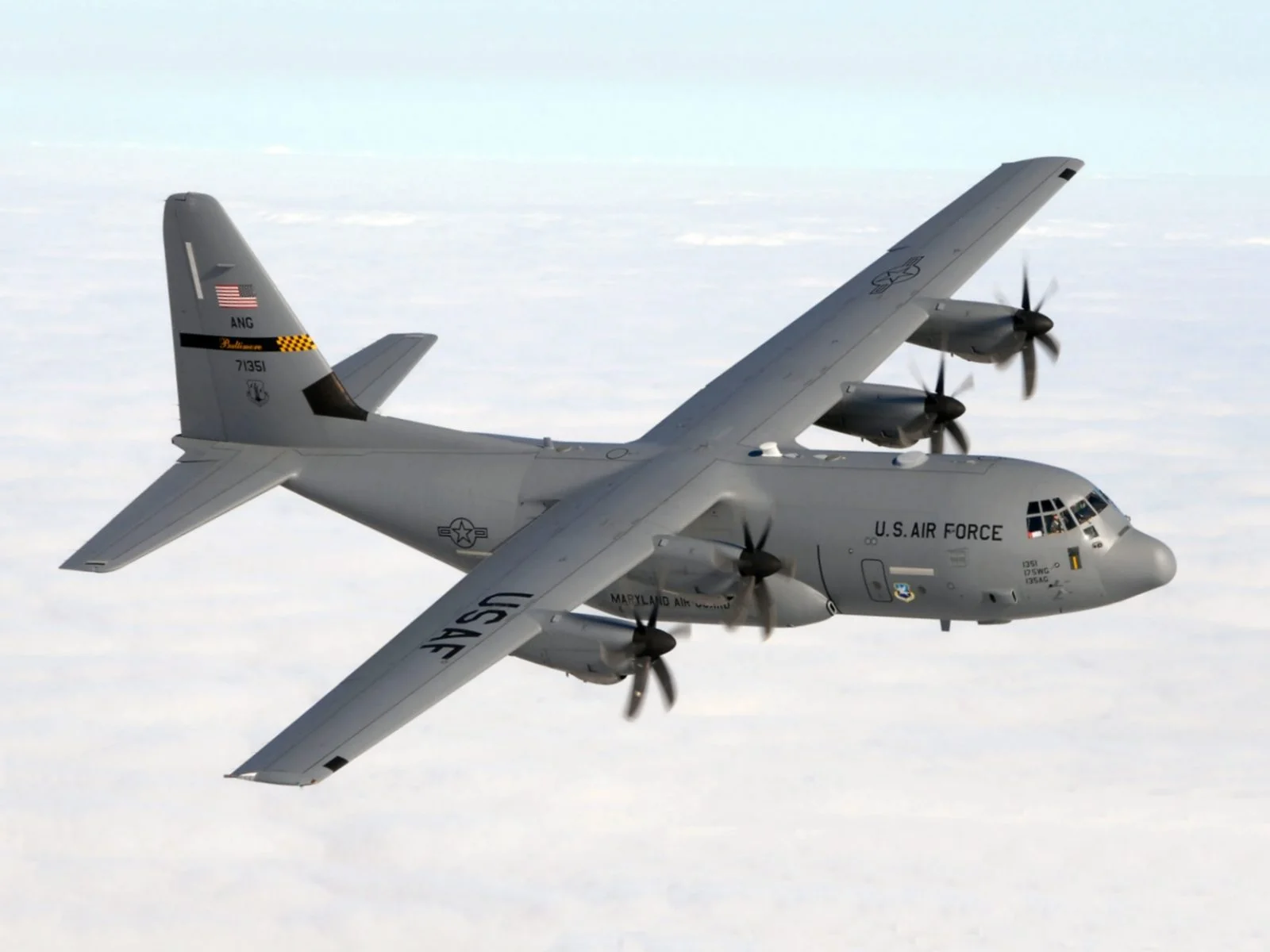
On raw numbers no one is close to Lockheed Martin. The company’s official programme fact sheet dated August 2026 puts C-130J Super Hercules deliveries at more than 570 aircraft, flown by 28 operators in 23 nations. That record took an unexpected knock in 2025: a technical problem with the new communications suite being integrated on the line meant only two aircraft were delivered all year, with none in the fourth quarter. Production itself did not stop — aircraft were built and stored until the issue was resolved. Lockheed Martin projects 16 to 24 deliveries in 2026 once certification is complete. The episode is instructive about where this industry is actually fragile: not in the airframe and not in demand, but in the supply and certification chain of a single subsystem.
Caution: this chart places aircraft of very different sizes on one axis. The C295 is light tactical, the C-130J and KC-390 medium tactical, the A400M and C-2 heavy — an A400M carries roughly five times the payload of a C295. A count is not a capability comparison. Data type: R (reported) / T (traced).
By user base: the C295’s 39 countries
On reach, the aircraft that stands out is Airbus’s C295. According to Airbus, it has taken 335 orders from 39 countries across four continents and is operated by 41 operators in 37 countries — 19 of whom have placed repeat orders, which may be the most honest measure of a platform’s maturity there is. Airbus reports a market share of roughly 85 per cent in the type’s segment. Orders kept coming through 2025-26: Spain ordered 18 aircraft in December 2025 (first batch 2026-2028, second 2030-2032) and both the Royal Thai Air Force and the Royal Thai Navy signed for two aircraft each in May 2026. The largest customer is India, where 16 of 56 aircraft were built in Seville and the remaining 40 are being assembled by Tata Advanced Systems at Vadodara, with the first “Make in India” C295 due in 2026.
The A400M row counts the seven partner nations together with export customers (Malaysia, Indonesia, Kazakhstan). The KC-390 row counts customers under effective contract; the Slovak and Lithuanian selections are excluded because those contracts are not yet in force. Data type: R.
The riser: Embraer’s KC-390
The fastest-growing airlift programme of the past five years came out of Brazil. Embraer’s C-390/KC-390 Millennium carried 32 firm orders as of the first quarter of 2026, from Brazil, Portugal, Hungary, the Netherlands, Austria, South Korea, the Czech Republic and Uzbekistan. The biggest move of 2026 came from the Gulf: the United Arab Emirates ordered 10 aircraft with options on 10 more — the largest single-country international order for the type and the programme’s entry into the Middle East. The effect shows directly on Embraer’s balance sheet, where the Defense and Security backlog reached US$6.1 billion, up 42 per cent year on year. Sweden is taking four aircraft, with the first arriving at the end of 2027. The KC-390’s competitive edge is its jet propulsion: higher cruise speed than turboprop rivals, and air-to-air refuelling from the same airframe.

Verified production and programmes
| Manufacturer | Country | Main platform(s) | Verified data (2025-26) | Data note |
|---|---|---|---|---|
| Airbus Defence and Space | Spain / Germany / France | A400M, C295 | A400M: 139 of 178 delivered, 39 in backlog (France 25, Spain 13, Kazakhstan 1); output raised to eight aircraft a year through 2029. C295: 335 orders from 39 countries, 41 operators in 37 countries | A — official statement |
| Lockheed Martin | United States | C-130J Super Hercules | 570+ delivered; 28 operators in 23 nations; only two deliveries in 2025 (communications suite issue), 16-24 projected for 2026 | A — company fact sheet |
| Embraer | Brazil | C-390 / KC-390 Millennium | 32 firm orders; UAE 10 aircraft plus 10 options (largest single-country export); Defense & Security backlog US$6.1bn (+42%) | A — company financials |
| Kawasaki Heavy Industries | Japan | C-2 | 15 aircraft built against 22 planned; no exports to date; cost-reduction work under way | B — programme records |
| Leonardo | Italy | C-27J Spartan / Next Generation | Low-rate production and special-mission variants (firefighting, maritime patrol); 2026-2028 logistics support contract for the Italian Air Force’s 12 aircraft | B — company announcement |
| Tata Advanced Systems | India | C295 (licence assembly) | 40 of India’s 56 aircraft assembled at Vadodara; first locally assembled aircraft due in 2026 | A — programme announcement |
| TUSAŞ 🇹🇷 | Türkiye | A400M structures, C-130 modernisation, CN-235 licence production | Design partner on A400M and producer of the forward-centre fuselage; ERCİYES programme modernising 19 C-130s with 3.5 million lines of national mission software; licence-built CN-235s give Türkiye the world’s largest CN-235 fleet at 52 aircraft | A — TUSAŞ and TSKGV records |
| Xi’an Aircraft / AVIC | China | Y-20 Kunpeng | Independent estimates suggest around 100 aircraft by 2026; no official production or delivery data published | D — not scored |
| UAC / Ilyushin | Russia | Il-76MD-90A | Production continues but annual delivery figures cannot be independently verified | D — not scored |
Data reliability note: A = official company or state statement, B = corroborated by industry reporting, C = single-source, D = unverifiable. Class D manufacturers were deliberately left unscored: with no official production data for the Chinese and Russian builders, assigning an estimated score would have undermined the entire ranking. No data, no score.
The Envanter Medya Composite Index: EM-GDPI (adapted)
The EM-GDPI used across this series was adapted at one point for this sector: the revenue criterion was removed and replaced with active line continuity (15 points). The reason is simple — no airlifter manufacturer discloses revenue for this line of business separately; Airbus’s A400M revenue sits inside Defence and Space, Lockheed’s C-130J revenue inside Aeronautics. Line continuity, by contrast, is both measurable and decisive here. The remaining criteria keep the series standard: production/delivery volume 25, exports 15, user base 10, product diversity 10, production capacity 10, order backlog 5, technology 5, growth 5.
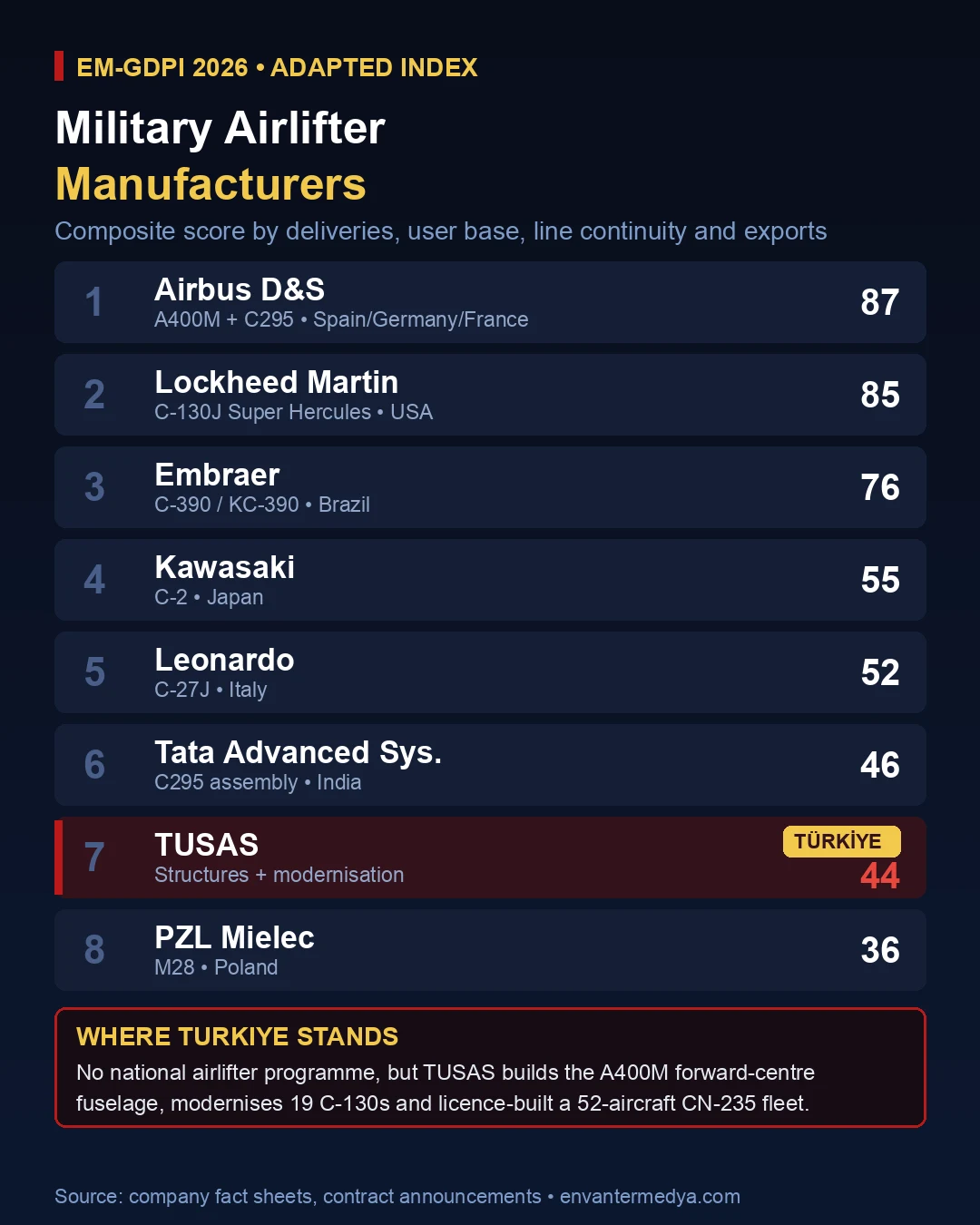
Scores are out of 100. Xi’an/AVIC, UAC/Ilyushin and Antonov are absent because no verifiable production data exists (class D) — which says nothing about their capability, only that it cannot be measured. The Turkish manufacturer is marked separately.
Where does Türkiye stand?
Türkiye enters this file from a different position than in most others in the series: there is no Turkish programme that designs and builds a complete military airlifter. That does not mean Turkish industry is absent from the sector — it has entered the business through three separate doors, and each is measurable.
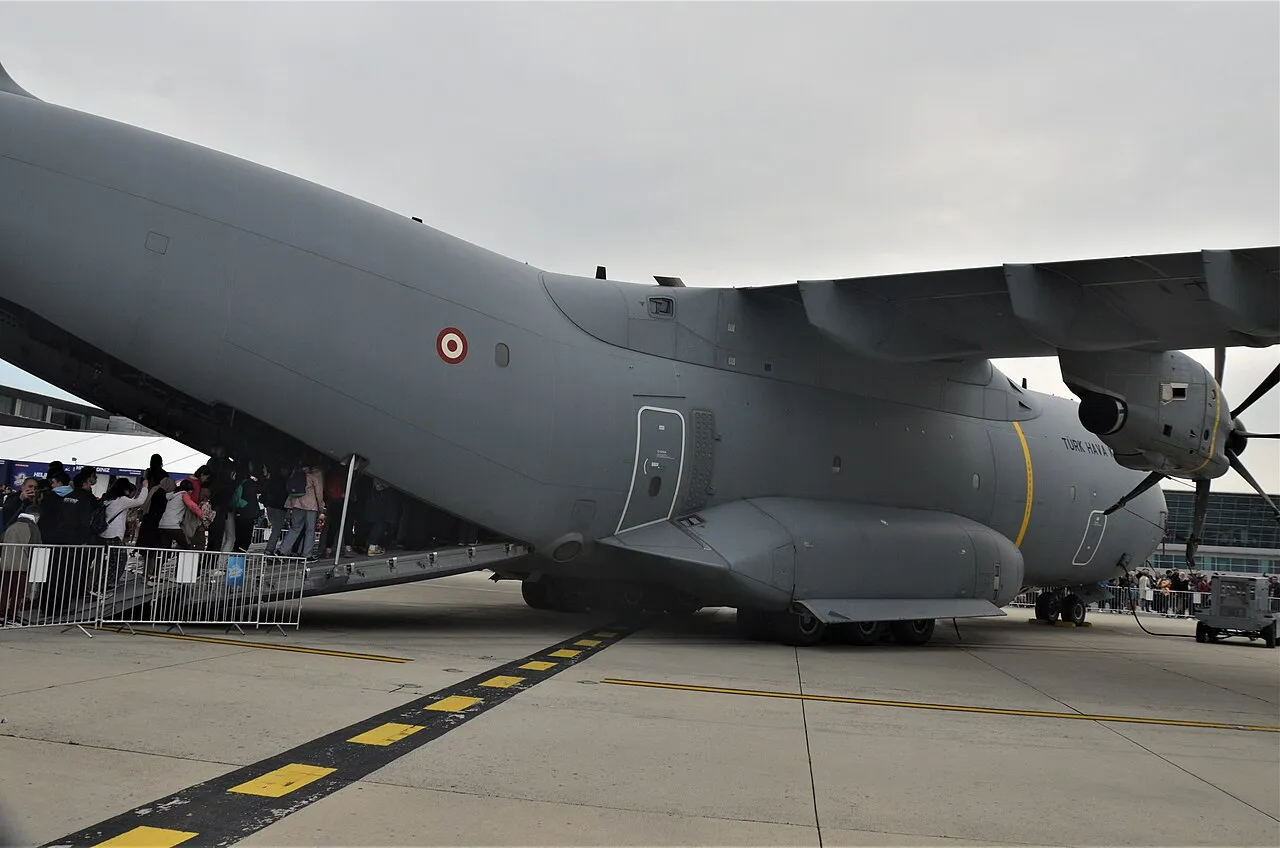
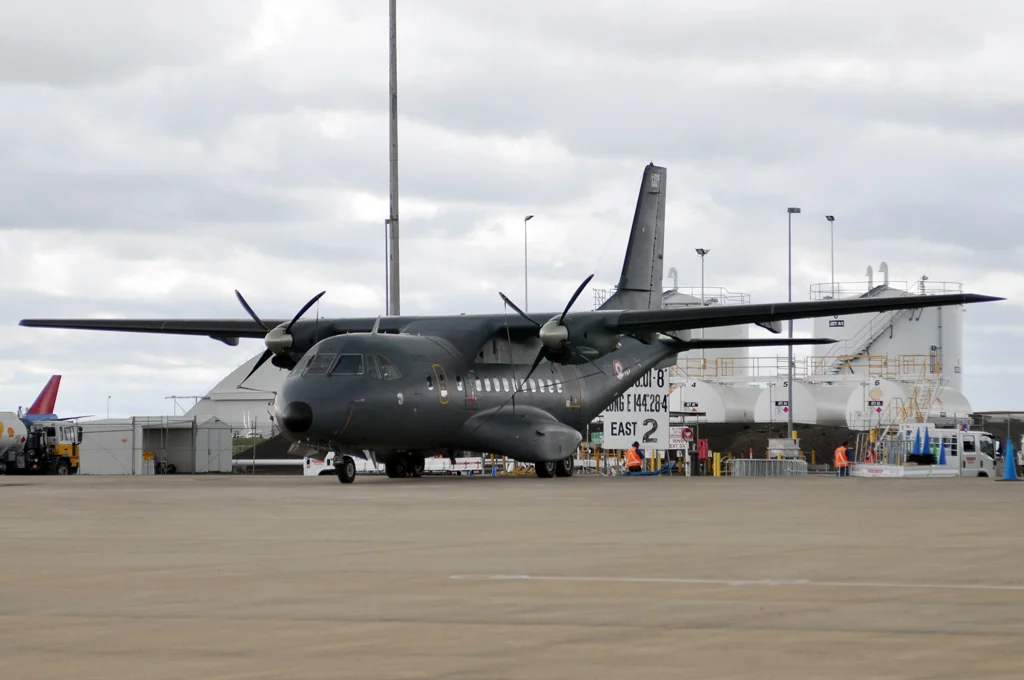
First, licence production. TUSAŞ built the CN-235 under licence from the 1990s for the Turkish Air Force, Navy and Coast Guard; with 52 aircraft, Türkiye today operates the world’s largest CN-235 fleet. That programme was the school in which Turkish aviation learned fuselage manufacture, assembly and certification. Second, joint production. The A400M was the first international programme in which TUSAŞ took part across design, development, manufacture and after-sales support; the company builds critical structures including the forward-centre fuselage and has integrated new system infrastructure onto the aircraft. Türkiye completed its ten-aircraft order and was the first nation in the consortium to complete its fleet. Third, modernisation. Under the ERCİYES programme TUSAŞ is renewing the avionics of 19 C-130s with 3.5 million lines of national mission software — replacing an airlifter’s brain, something only a handful of countries can do.
The chart shows capability distribution rather than production: the first three rows are platforms Türkiye operates and its industry works on, the fourth a programme that has not been opened. Data type: R / D (verified official record).
Where is Türkiye behind?
The honest picture: Türkiye has no airlifter of its own design, and that carries a cost. The C-130s that form the tactical backbone of the Turkish Air Force have been renewed in avionics but remain airframes from decades ago, and no national design programme has yet been launched to replace a platform in that class. In heavy lift Türkiye is limited to ten A400Ms, and that production line is not in Türkiye — the purchase decision is Ankara’s, but the schedule, configuration and cost follow the rhythm of a multinational consortium.
Reading that picture correctly needs one comparison. Airlift is among the hardest lines in defence to make money in. Boeing had to close the C-17 line; Kawasaki has built just 15 C-2s for its own air force; Leonardo keeps the C-27J alive only through special-mission variants. Small runs, long development and high certification costs leave the field to manufacturers with either a very large home market or a multinational partnership. Türkiye’s decision in the early 2000s to join the A400M consortium rather than develop its own aircraft was a deliberate answer to that economic reality, and it bought structural manufacturing, maintenance and logistics capability in return. Meanwhile Turkish industry has since proven full aircraft design competence with KAAN, HÜRJET and HÜRKUŞ; the airlifter is simply the field where that competence has not yet been applied. The sector itself is moving: the search for a C-130J successor has already begun in large markets such as India’s 60-aircraft medium transport tender, where the C-390, C-130J and A400M are all competing.
How this research was prepared
This file was built by comparing official programme fact sheets, contract announcements, company financial reports and defence industry publications. Each data point is tagged by source type: R = reported official data, T = traced/verified data, S = industry estimate, D = unverifiable. Reliability grades run from A to D, and class D manufacturers were left out of the index. Where counts span different segments, the difference is stated under the chart, and readers are reminded that placing aircraft of different payload classes on one axis can mislead. Price and unit cost data were not used as a comparison measure, because package contents vary too much between countries.
Frequently asked questions
Which military transport aircraft has been built in the largest numbers?
Among types in active production, the C-130 family: more than 570 C-130J Super Hercules have been delivered and the aircraft serves in 23 nations. Counting the whole family, the C-130 is one of the longest-produced military aircraft in aviation history.
How many A400Ms have been delivered?
As of spring 2026, 139 of 178 ordered. Of the remaining 39, 25 are for France, 13 for Spain and one for Kazakhstan. Airbus plans to hold output at eight aircraft a year through 2029.
How many military transport aircraft does Türkiye have?
The Turkish Air Force operates ten A400M Atlas aircraft; its C-130 fleet is being modernised under ERCİYES (19 aircraft in scope), and with the CN-235s built under licence by TUSAŞ, Türkiye is the world’s largest CN-235 operator with 52 aircraft.
Does Türkiye build its own transport aircraft?
There is no national airlifter design programme yet. But TUSAŞ builds the A400M’s forward-centre fuselage, produced the CN-235 under licence and is modernising the C-130 with national mission software — three separate links in the production chain.
What is the difference between the KC-390 and the C-130J?
The KC-390 is jet-powered, the C-130J turboprop. Jets give higher cruise speed and shorter mission times; turboprops are more flexible on short, unprepared strips. The KC-390 can also perform air-to-air refuelling from the same airframe.
Why did C-130J deliveries stall?
A component and certification problem with the new communications suite integrated onto the line in 2025 limited deliveries to two aircraft for the year. Production did not stop; aircraft were stored. Lockheed Martin projects 16 to 24 deliveries in 2026.
Why is the C295 used in so many countries?
Price, short-field performance and a long list of special-mission variants — maritime patrol, search and rescue, intelligence. Airbus reports about 85 per cent market share in the type’s segment, and 19 of its 41 operators have placed repeat orders.
How many Y-20s has China built?
Independent estimates suggest around 100 aircraft by 2026, but China publishes no official production or delivery data. This research did not score unverifiable figures; the Y-20 appears in the table as class D.
Why isn’t Boeing on this list?
Boeing’s heavy airlifter, the C-17 Globemaster III, ended production in 2015. The company runs no active airlift production line; the KC-46 tanker programme is outside the scope of this file.
What is the difference between the C295 and the CN-235?
The C295 is a stretched, uprated derivative of the CN-235, with a longer fuselage, more payload and more powerful engines.
Why is airlifter production so hard to make profitable?
Production runs are small, development cycles long and certification costs high. A fighter programme can sell hundreds of aircraft; the total market for a heavy airlifter is a few hundred. That is why lines close — as the C-17’s did.
Where can I find the rest of the series?
The hub page is the 2026 Global Defence Industry Report. For platform profiles, see the Defense Atlas.
Sources and methodology notes
This is editorial research prepared by Envanter Medya by comparing publicly available official company data, contract announcements and industry sources. Principal sources:
- Lockheed Martin C-130J Fast Facts (August 2026) — 570+ deliveries, 28 operators in 23 nations
- Air & Space Forces Magazine — communications suite issue and the 2026 delivery projection
- Airbus (December 2025) — Spain’s 18-aircraft C295 order and delivery schedule
- Airbus (May 2026) — Royal Thai Air Force order
- Embraer 2Q26 results — Defense & Security backlog of US$6.1 billion
- TUSAŞ — ERCİYES (C-130) — national mission software and modernisation scope
- TSKGV — A400M transport aircraft project — Türkiye’s ten-aircraft order and partnership structure
Last updated: 4 September 2026. This is a living research page and will be updated as deliveries and contracts are announced. This file opens the fourth wave of the series. For the full series see the 2026 Global Defence Industry Report.