What is Aegis BMD? The U.S. Navy’s Sea-Based Ballistic Missile Defense, Explained

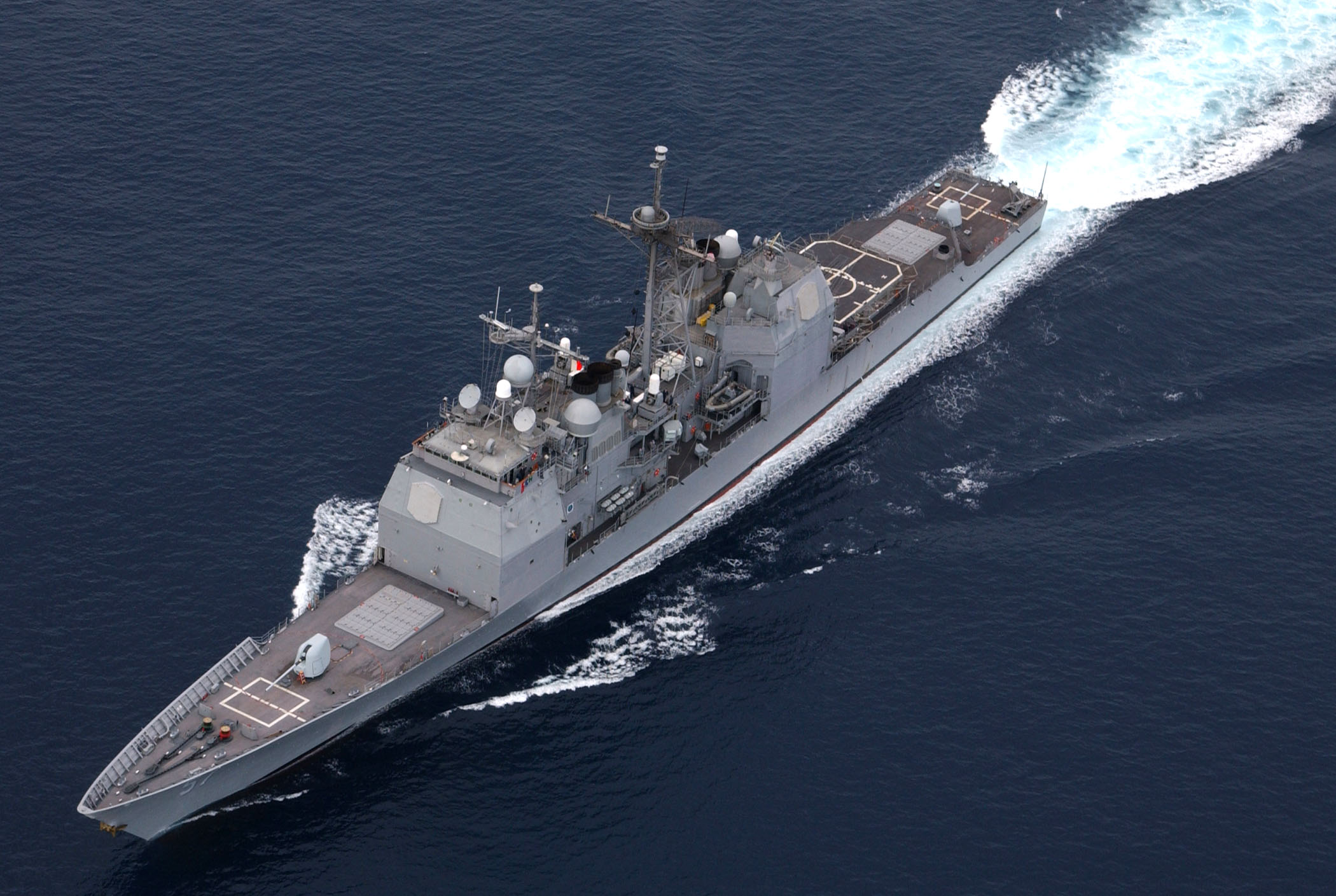
Aegis BMD – the Aegis Ballistic Missile Defense system – is the U.S. Navy’s sea-based contribution to global missile defense, built around the integration of the Aegis Combat System (designed by Lockheed Martin) with the Standard Missile-3 (SM-3) exo-atmospheric interceptor (Raytheon / Mitsubishi) and the newer Standard Missile-6 (SM-6) dual-role interceptor (Raytheon). Aegis BMD made its first operational interception in 2008 with the U.S. Navy’s destruction of the failed USA-193 satellite. Since then, it has been used in combat against ballistic missiles for the first time in April and October 2024, when U.S. Navy and Royal Navy Aegis ships in the Eastern Mediterranean intercepted Iranian ballistic missiles aimed at Israel – the first sustained sea-based BMD combat engagement in history.
Key facts at a glance
| Attribute | Value |
|---|---|
| Type | Sea-based integrated air and missile defense system |
| Manufacturer | Lockheed Martin (Aegis); Raytheon (Standard Missiles); Northrop Grumman (BMD sensor integration) |
| In service | 1983 (Aegis); 2004 (Aegis BMD baseline 3.0) |
| Host ships | Arleigh Burke-class destroyers, Ticonderoga-class cruisers, Maya-class (Japan), Sejong-class (Korea), Hobart-class (Australia) |
| Radar (legacy) | AN/SPY-1D(V) S-band passive electronically scanned array |
| Radar (current) | AN/SPY-6(V)1 SPY-6 AMDR – S-band AESA, 30x sensitivity of SPY-1D |
| Interceptors | SM-3 Block IB/IIA (exo-atmospheric); SM-6 (endo-atmospheric) |
| SM-3 IB range / altitude | 700 km / 500 km |
| SM-3 IIA range / altitude | 2,500 km / 1,500 km |
| SM-6 range | 240 km (air-defense); 460 km (anti-ship); 50 km (BMD endo) |
| Vertical launch cells (VLS) | Mk 41 96 cells (Arleigh Burke); 122 cells (Ticonderoga) |
| Operators | U.S., Japan, South Korea, Spain, Norway, Australia, Canada (planned) |
| Ashore variants | Aegis Ashore at Deveselu, Romania (2016) and Redzikowo, Poland (2024) |
The Standard Missile family
| Missile | Role | Range / altitude |
|---|---|---|
| SM-2 Block IIIB | Air-defense (legacy) | 167 km / 33 km |
| SM-3 Block IB | Exo-atmospheric BMD | 700 km / 500 km |
| SM-3 Block IIA | Exo-atmospheric BMD (IRBM / ICBM) | 2,500 km / 1,500 km |
| SM-6 Block I | Dual-role: air-defense + terminal BMD + anti-ship | 240 km |
| SM-6 Block IB (planned) | Extended-range with new motor | ~400 km |
Combat record
- 21 February 2008 – Operation Burnt Frost. USS Lake Erie destroyed the failed reconnaissance satellite USA-193 with an SM-3 – the first BMD interceptor used against a real space target.
- 2014-present – Mediterranean / Black Sea. Continuous Aegis BMD patrols by U.S. Navy destroyers.
- 2016 – Aegis Ashore Romania. First operational shore-based Aegis Ashore at Deveselu, Romania, providing 24/7 BMD coverage of southern Europe.
- 13 April 2024 – Iranian strike on Israel. U.S. Navy USS Carney and USS Arleigh Burke and the Royal Navy HMS Diamond, deployed to the Eastern Mediterranean, intercepted multiple Iranian ballistic missiles aimed at Israel using SM-3 and SM-2 rounds. This was the first sustained sea-based BMD combat use.
- 1 October 2024 – Iranian Operation True Promise II. Aegis ships again engaged Iranian ballistic missiles; combined with Israeli Arrow-3, David’s Sling and Patriot, the multilayer defense intercepted the majority of the 180-missile salvo.
- 2024 – Aegis Ashore Poland. Second operational shore site at Redzikowo declared operational.
The AN/SPY-6 transition
The U.S. Navy is replacing the venerable AN/SPY-1D(V) radar with the new AN/SPY-6(V)1 Air and Missile Defense Radar (AMDR) on Flight III Arleigh Burke-class destroyers from 2023 onward. SPY-6 provides approximately 30 times the sensitivity of SPY-1D, enabling detection and tracking of more, smaller and dimmer targets. SPY-6 is gallium-nitride based and modular, allowing direct adaptation to multiple ship classes. The integration of SPY-6 with the Aegis Baseline 10 combat system represents the largest single capability upgrade of the Aegis platform in 40 years.
Operators
| Country | Aegis-equipped ships |
|---|---|
| United States | 87 destroyers + 11 cruisers (BMD-capable subset) |
| Japan | 8 Aegis destroyers (Kongo, Atago, Maya classes); Aegis Ashore plan replaced by 2 dedicated BMD ships |
| South Korea | 3 Sejong the Great class destroyers |
| Spain | 5 Alvaro de Bazan class frigates |
| Norway | 4 Fridtjof Nansen class frigates (limited Aegis) |
| Australia | 3 Hobart class destroyers |
Aegis Ashore
The U.S. has deployed two land-based Aegis BMD sites:
- Aegis Ashore Romania at Deveselu, declared operational 2016. Defends southern Europe.
- Aegis Ashore Poland at Redzikowo, declared operational 2024. Defends northern and central Europe.
Both sites use Mk 41 VLS cells loaded with SM-3 Block IB rounds. Japan originally planned to add two Aegis Ashore sites at Yamaguchi and Akita but cancelled the plan in 2020, instead acquiring two new dedicated BMD ships.
Aegis BMD vs. its peers
| Aegis BMD (SM-3) | THAAD | Arrow-3 (Israel) | S-400 (Russia) | |
|---|---|---|---|---|
| Platform | Sea + Ashore | Land-based | Land-based | Land-based |
| Engagement mode | Exo-atmospheric midcourse | Exo-atmospheric terminal | Exo-atmospheric midcourse | Long-range AD + limited BMD |
| Maximum range | 2,500 km (SM-3 IIA) | 200 km | 2,400 km | 400 km |
| Engagement altitude | 1,500 km | 150 km | 100+ km | 30 km |
| Combat use | Yes (2024 Iran strikes) | Yes (2024 Iran strikes) | Yes (2023 Houthi) | Limited (Ukraine) |
Why Aegis BMD matters
Aegis BMD provides the U.S. and its allies with the only mobile, ship-based ballistic missile defense capability in the world. The April and October 2024 Iranian strikes validated nearly two decades of Aegis BMD development under real combat conditions. As SPY-6 enters fleet service and SM-3 Block IIA production scales, the Aegis architecture will be the centerpiece of U.S. and allied missile defense through the 2040s. The system’s flexibility – the same Mk 41 launcher can fire SM-3, SM-6, SM-2, Tomahawk, ASROC and the new Naval Strike Missile – makes Aegis the single most versatile weapon platform in the U.S. Navy’s surface fleet.