Boeing Wins $14.7B Deal to Triple PAC-3 MSE Seeker Output

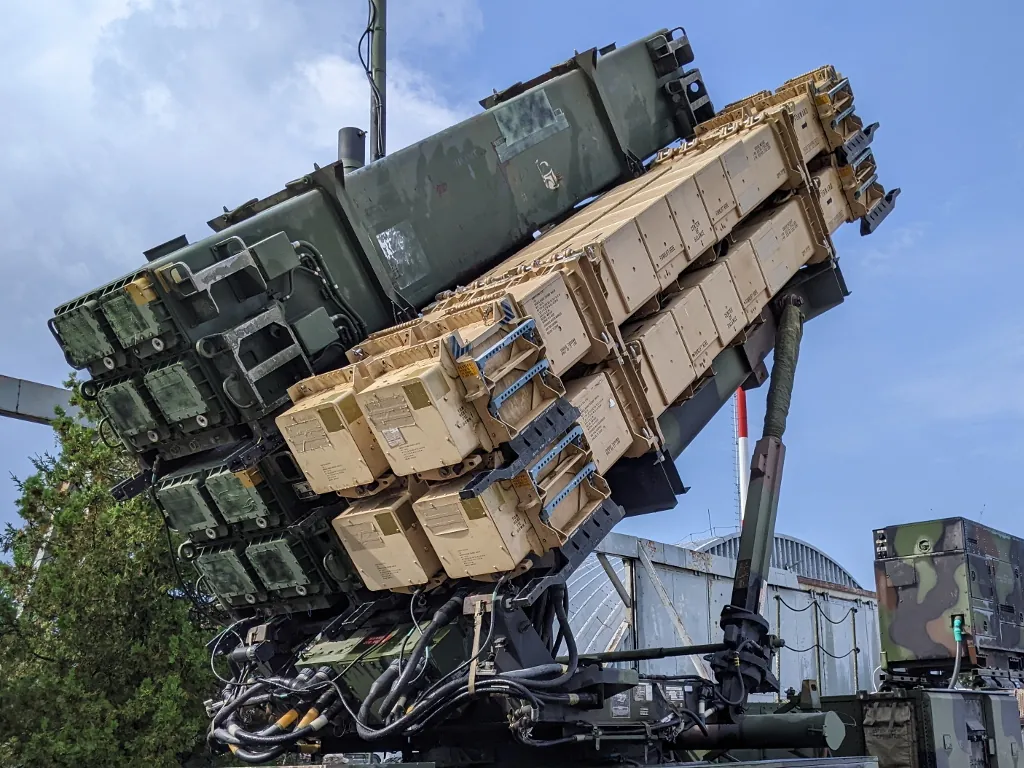
Lockheed Martin has handed Boeing production of the seeker section for the PAC-3 Missile Segment Enhancement (MSE) interceptor, the hit-to-kill missile at the core of the US Patriot air defense system. Announced on October 5, 2026, the seven-year framework award is valued at roughly $14.7 billion and is meant to triple Boeing’s annual seeker output.
According to Boeing’s own announcement, the contract falls under the Pentagon’s “Acquisition Transformation Strategy” and its “Arsenal of Freedom” push to accelerate munitions production. Boeing says it is expanding its seeker factory in Huntsville, Alabama, and has already stepped up hiring there ahead of the ramp-up.
An “undefinitized” deal, by design
Breaking Defense reported that the award was structured as an undefinitized contract action — a vehicle that lets production start before final pricing and quantities are locked in. Lockheed Martin’s own PAC-3 MSE interceptor contract used the same mechanism. Industry reporting notes that Congress has not yet passed the fiscal year 2027 defense budget, a gap executives say keeps large capital commitments cautious for now.
Closing a bottleneck in the supply chain
The Boeing award extends a chain of moves that began in January 2026, when Lockheed Martin signed a multi-year framework with the US Army to lift PAC-3 MSE output from about 600 to 2,000 interceptors a year. In July 2026, the Army followed with a multi-year production contract for Lockheed worth up to $58.6 billion. Boeing’s seeker line is widely seen as the piece that was holding that ramp-up back, since seeker availability has been one of the direct limits on how fast finished interceptors can leave the factory.
What is driving demand
The scale of the award reflects historically high global demand for air defense munitions. The continuing war in Ukraine, tensions across the Middle East, and NATO members restocking their own inventories have all pushed up demand for the Patriot missile family. PAC-3 MSE intercepts ballistic missiles, cruise missiles and aircraft using a direct hit-to-kill approach, with a longer range and more maneuverability than the older PAC-2 variant.
Why it matters for Patriot operators, including Turkey’s neighbourhood
Patriot batteries are fielded today by a long list of NATO members and allies, among them Germany, the Netherlands, Poland, Romania, Greece, Japan and South Korea. Easing the seeker bottleneck should feed directly into delivery schedules for pending PAC-3 MSE orders from these operators — a relief that matters especially for European allies trying to backfill stocks depleted by transfers to Ukraine.
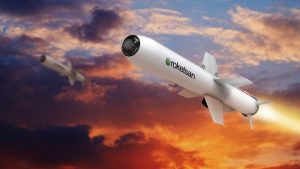
Turkey does not operate the Patriot system. Its layered air defense instead combines the Russian-made S-400 with the indigenous SİPER long-range system, developed by Roketsan and Aselsan, and the shorter-range HİSAR family. SİPER Ürün-1 entered Turkish Armed Forces inventory in 2024, with publicly cited intercept ranges of up to roughly 150 kilometers, while Ürün-2 remains in development and delivery. The seeker shortage exposed by the Boeing-Lockheed deal underlines a point Ankara has made for years: relying on a single foreign supplier for critical interceptor components carries real schedule risk, a risk domestic programs like SİPER and HİSAR are explicitly designed to reduce.
For Boeing, the award adds to a defense munitions portfolio that already includes precision-guided weapons such as the GBU-39 small diameter bomb and JDAM guidance kits, pulling the company deeper into the interceptor supply chain alongside its traditional missile rival Lockheed Martin. Analysts have noted that this kind of cross-supplier arrangement — splitting a single missile’s subcomponents between competing primes — is increasingly used across the US defense industrial base specifically to reduce single-vendor bottlenecks.
What comes next
Boeing’s Huntsville expansion should become more visible over the coming months as hiring continues under the new award. Final pricing and quantities are expected to firm up once the contract moves out of undefinitized status. How quickly Congress passes the fiscal year 2027 defense budget is widely seen as the key variable that will set the pace from here.
Sources
- Boeing, “Boeing receives seven-year contract to accelerate PAC-3 MSE seeker output,” October 5, 2026, boeing.mediaroom.com — used for the official contract value, scope and Huntsville expansion details.
- Breaking Defense, PAC-3 MSE seeker contract report, October 5, 2026, breakingdefense.com — used for the undefinitized contract action structure and budget context.
- Virginia Business, “Boeing-Lockheed $14.7B PAC-3 MSE contract,” October 5, 2026, virginiabusiness.com — used to corroborate the $14.7 billion contract value.