Yemen’s Military Power: How Many Tanks, Aircraft and Ships Are in the Inventory? (2026)

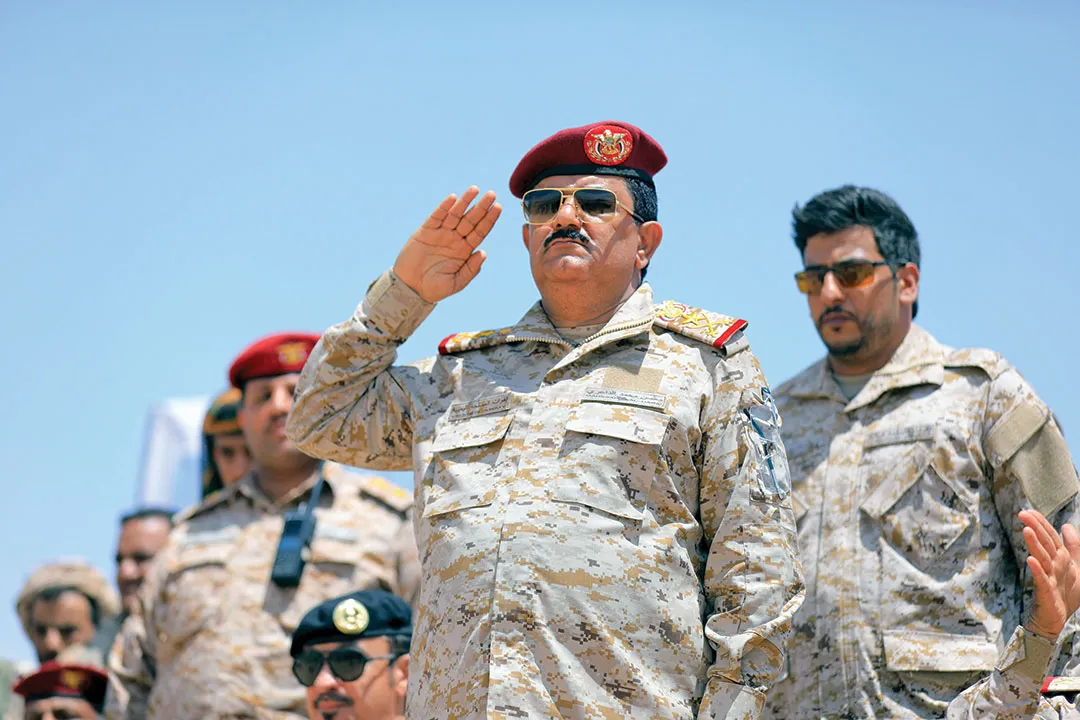
Yemen’s military inventory describes not a single state army but the sum of armed structures that have drifted apart since 2014. On one side are government forces tied to the internationally recognised Presidential Leadership Council, based in Riyadh; on the other are units under the Houthi (Ansar Allah) administration that holds Sanaa. Before the war Yemen had one of the largest armies on the Arabian Peninsula after Saudi Arabia; the air campaign after 2015 and years of ground fighting both thinned and scattered that inventory. This article reads Global Firepower, IISS, SIPRI and open-source data together, and states from the outset that the figures are uncertain because of wartime conditions.
At a Glance
- Active personnel: Global Firepower counts 33,350 active and 20,000 paramilitary personnel with no reserves; because the army has been split into two separate command structures since 2014, the figure should not be read as the strength of a single army
- Main battle tanks: GFP shows zero tanks; yet the pre-war inventory included T-55, T-72 and M60A1 tanks and some are in use on the fronts, so the GFP value should be read as an undercount
- Armoured vehicles: GFP counts 1,550 vehicles (including armoured personnel carriers, infantry fighting vehicles and logistics vehicles); the core is Soviet BMP-1/2 and BTR-60 plus US-made M113 and Humvee-type vehicles
- Artillery and rocket launchers: GFP counts 12 self-propelled guns, 60 towed guns and 30 multiple rocket launchers; the pre-war inventory held Soviet BM-21 Grad and many D-30 and M-46 guns
- Military aircraft: GFP counts 160 aircraft in total (68 fighters, 3 transports, 30 trainers and 59 helicopters including 14 attack helicopters); because of the air campaign after 2015 the ready number is widely assumed to be far below this figure
- Defence budget: GFP shows 405.2 million dollars; the budget is split between two rival administrations and a single official figure is hard to cite
Note: The inventory figures below are approximate values drawn from open sources such as Global Firepower, the IISS Military Balance and SIPRI.
About the Yemen Armed Forces
The Yemeni Armed Forces constitutionally consist of the Army, Navy and Air Force with Air Defence. In practice there are two structures: the Yemeni National Army under the recognised government (Presidential Leadership Council chairman Rashad al-Alimi) and forces under the Houthi-led Supreme Political Council (Mahdi al-Mashat, with Abdul-Malik al-Houthi as de facto leader). According to Wikipedia the Minister of Defence is Taher al-Aqili on the government side and Muhammad al-Atifi on the Houthi side. Because of this dual structure the phrase “Yemeni army” does not always describe the same force.
In the Global Firepower 2026 ranking Yemen is 98th of 145 with a PwrIndx of 2.1617. Population is about 32.1 million; GFP lists 33,350 active and 20,000 paramilitary personnel, with no reserves, roughly 53,350 in total. Before the war the army was estimated at 66,700 land, 7,000 naval and 5,000 air force personnel, so GFP figures may be an undercount. The defence budget is 405.2 million dollars in GFP; Wikipedia gives 1.4 billion dollars for 2019, about 8 percent of GDP. For a budget split between two rival administrations a single figure is hard to give.
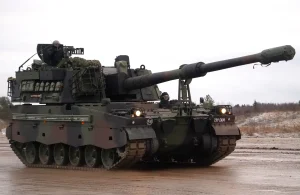
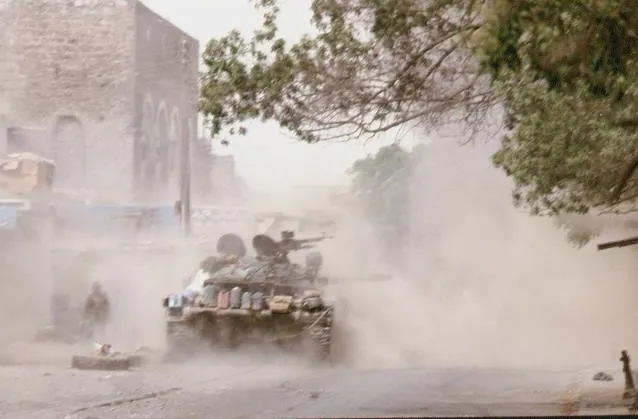
The land inventory rests on an old Soviet legacy. GFP shows zero tanks; yet the pre-war inventory included T-55, T-72 and M60A1 tanks and some are still seen on the fronts, so the GFP value should be read as an undercount. GFP counts 1,550 vehicles: BMP-1/2, BTR-60, M113 and Humvee-type vehicles, plus MRAPs and armour supplied by coalition countries. Artillery includes 12 self-propelled guns, 60 towed guns and 30 rocket launchers, with the D-30, M-46 and BM-21 Grad prominent.
Missile and drone capability is the main reason Yemen’s inventory entered the world agenda. The pre-war inventory held Scud-B and Tochka. For the long-range missiles and drones the Houthis have developed since 2015, the UN Panel of Experts and Western governments say they have identified Iran-linked technology and components; Tehran denies this. Attacks on commercial ships in the Red Sea and Bab-el-Mandeb since November 2023 turned the capability into a security problem for global maritime trade.
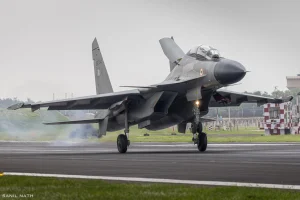
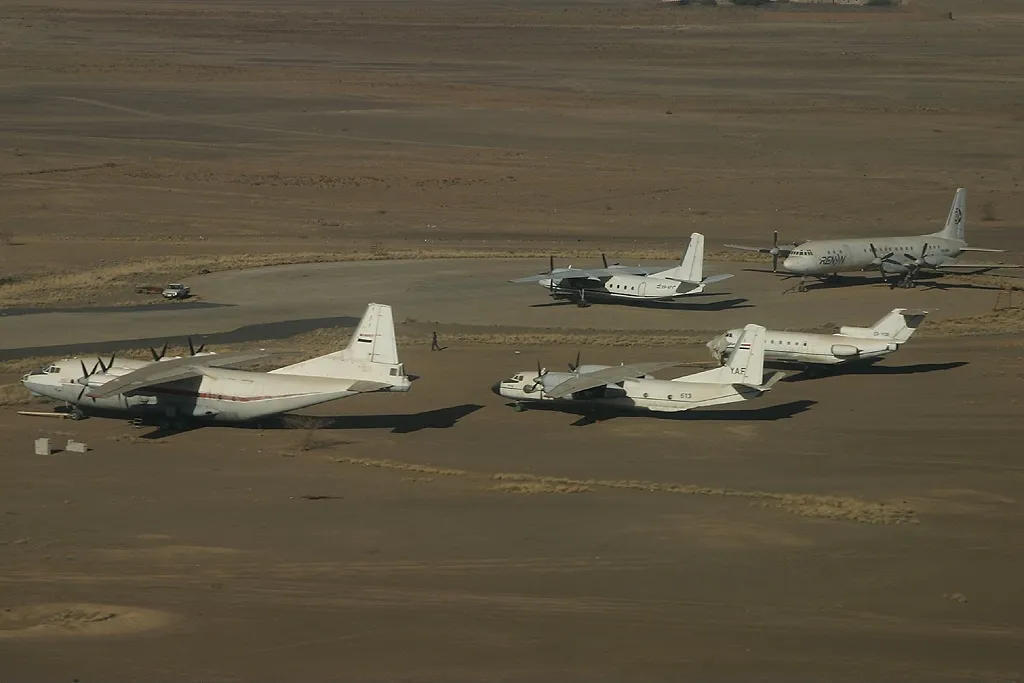
The Air Force operated MiG-29, Su-22 and F-5E aircraft before the war. GFP counts 160 aircraft in total (68 fighters, 3 transports, 30 trainers and 59 helicopters including 14 attack helicopters); but because of the air campaign after 2015 the ready number is widely assumed to be far below this. Real air power therefore lies less in inventory aircraft than in both sides’ drones and in outside air support.
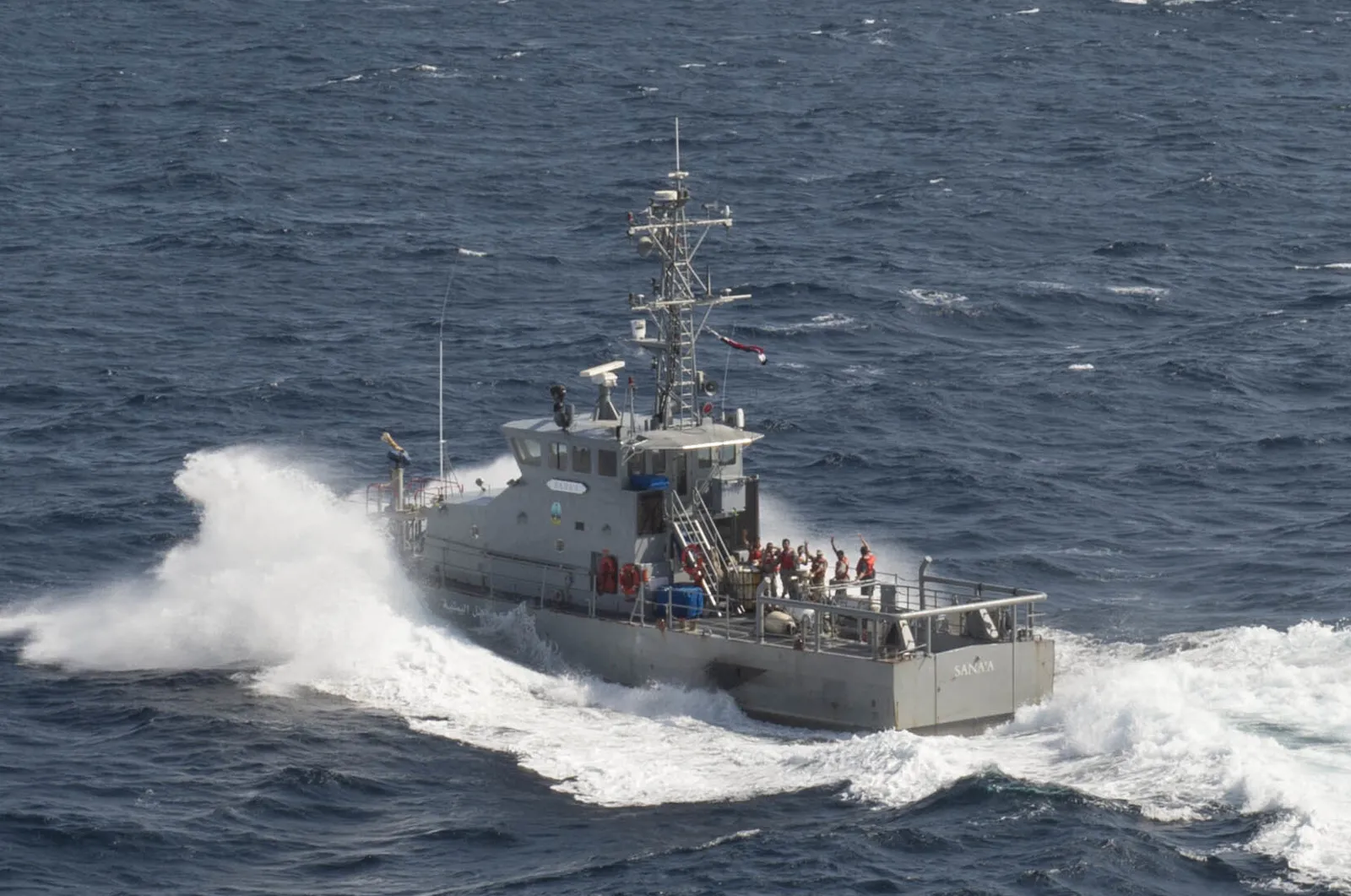
The Navy and Coast Guard try to cover 1,906 km of coastline along the Red Sea, Bab-el-Mandeb, the Gulf of Aden and Socotra. GFP counts 9 patrol craft and 1 corvette, with no frigates, destroyers or submarines. Damen Stan-design patrol boats such as Sana’a and Aden and boats transferred by the US in the 2000s stand out. The real maritime dynamic is the Houthis’ shore-launched anti-ship missiles, mines and unmanned boats.
Land Forces Inventory
| System type | Est. quantity |
|---|---|
| Main battle tanks | GFP says zero; the pre-war inventory held T-55, T-72 and M60A1 tanks. Old Soviet tanks still seen on the fronts are scattered between the two sides |
| Infantry fighting vehicles and armoured personnel carriers | Soviet BMP-1/2 and BTR-60, US-made M113 and Humvee-type vehicles. MRAPs and armoured vehicles supplied by coalition countries are also seen with government-aligned units |
| Artillery and rocket launchers | GFP counts 12 self-propelled guns, 60 towed guns and 30 rocket launchers. Open sources highlight D-30 and M-46 guns, BM-21 Grad rocket launchers and mortars |
| Anti-tank weapons | Soviet 9M14 Malyutka and 9M113 Konkurs guided missiles, RPG-7s and recoilless rifles; both sides have used anti-tank missiles heavily in the civil war |
Air Force Inventory
| Platform | Est. quantity |
|---|---|
| Total military aircraft | GFP counts 160 aircraft; the value reflects the pre-war inventory and most of it is assumed to have been destroyed or left unserviceable after 2015 |
| Fighter aircraft | GFP counts 68 fighters; the pre-war fleet included the MiG-29, Su-22 and F-5E. The number of fighters that can fly today is very low and is not officially confirmed |
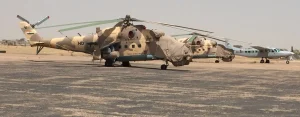
| Helicopters, trainers and transports | GFP counts 59 helicopters (14 attack), 30 trainers and 3 transports; the Mi-8/17 and Mi-24 families stand out. Reconnaissance and attack drones in Houthi hands form a separate threat class |
Missile and Air-Defence Systems
| System | Type / Note |
|---|---|
| Ballistic missiles | The pre-war inventory held Scud-B and Tochka (SS-21). The UN Panel of Experts and Western governments say Scud-derived long-range missiles in Houthi hands rely on Iran-linked technology; Tehran denies this |
| Anti-ship missiles | The Houthis have used C-802-type coastal anti-ship missiles since 2016; attacks on commercial ships in the Red Sea and Bab-el-Mandeb since November 2023 brought this capability onto the international agenda |
| Air defence | The pre-war inventory held SA-2, SA-3 and SA-6 systems and SA-7 man-portable missiles; most were neutralised in the 2015 air campaign. Today air defence on both sides is scattered and limited |
| Anti-aircraft guns | ZU-23-2 twin-barrel guns, S-60 57 mm and ZSU-23-4 self-propelled systems; mounting light anti-aircraft guns on pickups is common in the civil war |
Naval Power
| Class / Type | Est. quantity |
|---|---|
| Patrol vessels and corvette | GFP counts 9 patrol craft and 1 corvette; there are no frigates, destroyers or submarines. Coast Guard patrol boats such as Sana’a and Aden, built to a Damen Stan design, and boats transferred by the US in the 2000s stand out |
| Coastal defence and unmanned boats | The Houthis use shore-launched anti-ship missiles, mines and explosive-laden unmanned boats; on the government side coastal units are being rebuilt with coalition support along the Aden and Hadramawt coasts |
| Coastline and mission | According to GFP, 1,906 km of coastline covering the Red Sea, the Bab-el-Mandeb Strait, the Gulf of Aden and Socotra Island. Because it sits on one of the main arteries of global maritime trade, control of the Yemeni coast is a regional and global issue |
The Turkey Angle: Turkish Defence Industry
The defence link between Türkiye and Yemen is not at inventory level. There is no verified Turkish platform, official procurement contract or bilateral defence agreement in the Yemeni inventory; this article claims no contract or delivery. Türkiye appears in the supplier list on Wikipedia, but it could not be verified that this rests on a specific product or date.
Türkiye’s visible role in Yemen is political and humanitarian. Ankara recognises the internationally recognised government diplomatically, and TİKA, AFAD and the Turkish Red Crescent have carried out humanitarian activities in various years. The Turkish Navy has also taken part in counter-piracy missions in the Gulf of Aden since 2009, which gives an indirect closeness to the security environment off the Yemeni coast but does not mean a defence procurement link with Yemeni forces.
On the market side, a post-war reconstruction could overlap with areas where Turkish industry is strong: coast guard boats and coastal surveillance, mine clearance, tactical drones for border and coast, and air defence. These are potential areas; there is no announced contract or talks, and the present political division keeps such a market effectively closed.
The competitive picture should be read in the same frame: the main backers on the government side are coalition countries such as Saudi Arabia and the UAE, while on the Houthi side an Iran-linked supply chain stands out. For a supplier outside these two blocs to enter Yemen, a political settlement and a single counterpart structure must emerge first.
Frequently Asked Questions
How many tanks does Yemen have? Global Firepower shows zero; but the pre-war inventory held T-55, T-72 and M60A1 tanks and some are used on the fronts. The GFP value should therefore be read as an undercount.
Does Yemen have fighter jets? GFP counts 68 fighters; the pre-war fleet included the MiG-29, Su-22 and F-5E. Because of the air campaign after 2015 the ready number is assumed to be very low and is not officially confirmed.
What has Yemen bought from Türkiye? No verified Turkish platform is in the Yemeni inventory. Türkiye’s role in Yemen is political and humanitarian; no official defence procurement contract has been announced.
How large is Yemen’s defence budget? GFP shows 405.2 million dollars. Wikipedia gives 1.4 billion dollars for 2019; because the budget is split between two rival administrations a precise figure is hard to give.
How many ships does the Yemeni Navy have? GFP counts 9 patrol craft and 1 corvette; there are no frigates, destroyers or submarines. The main maritime threat is the Houthis’ anti-ship missiles and unmanned boats.
Bottom Line
The Yemeni inventory shows not a single state army but the pieces of a pre-war Soviet legacy divided between two rival structures: tanks of uncertain count, about 1,550 vehicles, a worn-down air fleet and 9 patrol craft. The real weight lies in the Houthis’ missile and drone capability. For Türkiye the picture is not inventory but a political and humanitarian base: there is no verified platform or contract. Areas such as coast guard, mine clearance and air defence should be watched as potential markets in post-war reconstruction, but that depends first on a political settlement.