Oman’s Military Strength: How Many Tanks, Fighter Jets and Missiles? (2026)

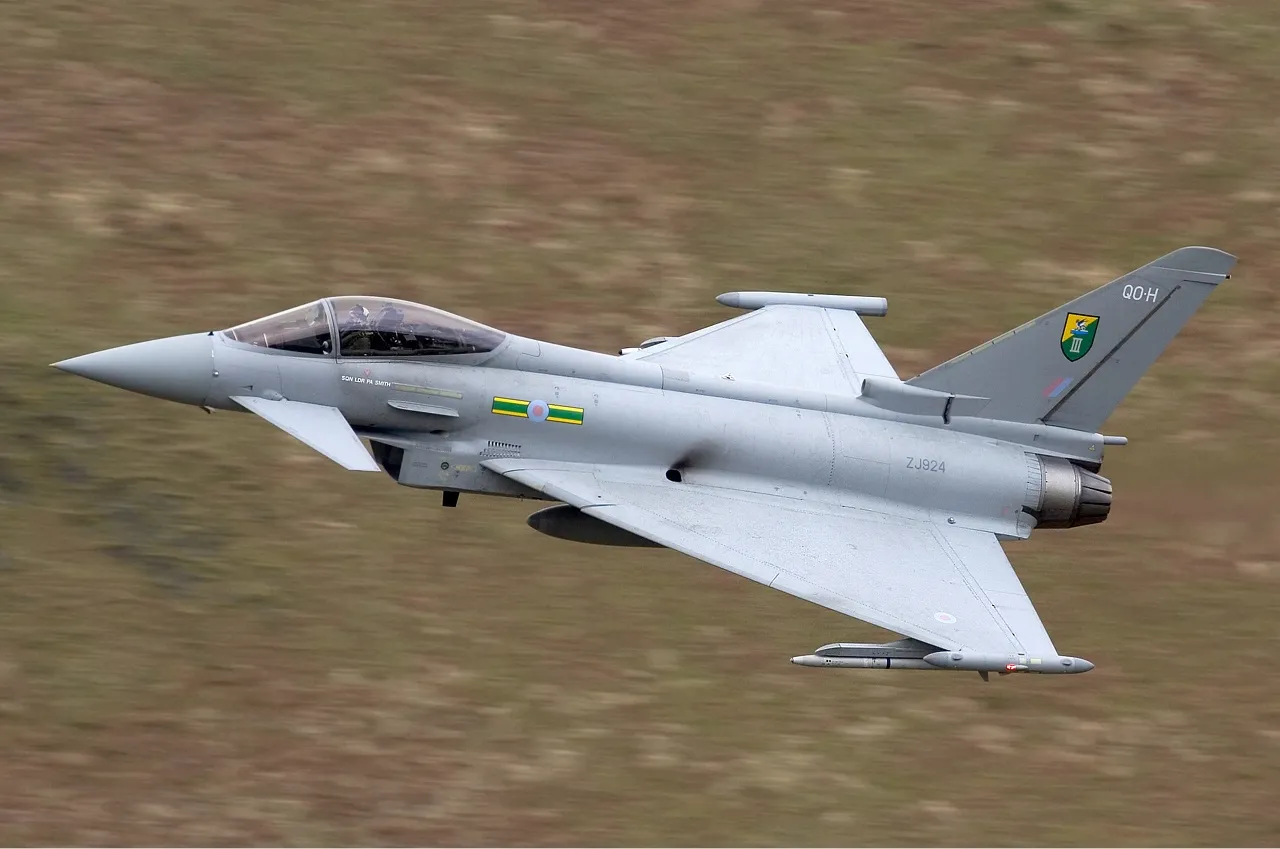
The military inventory of Oman belongs to a force that stands apart in the Gulf through choice rather than scale. With some 43,000 active personnel it is nowhere near the size of Saudi Arabia or the United Arab Emirates, yet it carries one of the heaviest defence burdens in the world relative to GDP. The key to reading the inventory is geography and foreign policy: the country holds the southern shore of the Strait of Hormuz and the Musandam Peninsula while pursuing a tradition of neutrality that keeps a channel open to almost every actor in the region. The result is a multi-source inventory in which British-legacy platforms, American air defence, French missiles and Turkish armoured vehicles sit side by side in the same force structure.
At a Glance
- Active personnel: ≈ 43,000 (Army 25,000, Air Force 5,000, Navy 4,200, Royal Household forces ≈ 6,400)
- Main battle tanks: ≈ 117 (38 Challenger 2 plus M60A3/M60A1)
- Military aircraft (total): ≈ 125 (about 35 combat aircraft)
- Key fighter aircraft: F-16C/D Block 50 and Eurofighter Typhoon
- Defence spending: Among the world’s heaviest defence burdens relative to GDP
- Submarines / aircraft carriers: None — the navy is built around corvettes and patrol vessels
Note: The inventory figures below are approximate values drawn from open sources such as Global Firepower, the IISS Military Balance and SIPRI.
About the Oman Armed Forces
The Sultan of Oman’s Armed Forces comprise army, air force and navy, to which the Royal Household forces reporting directly to the Sultan are added. That structure includes the Royal Guard Brigade, the Sultan’s Special Force and the royal air and naval squadrons. Active strength is about 43,000: the army is the largest component at around 25,000, the air force some 5,000 and the navy about 4,200. Service is entirely voluntary, and the limited population is the structural factor that pushes the inventory towards quality rather than mass.
Understanding the doctrine means looking at the map. The narrow channel of the Strait of Hormuz runs through Omani territorial waters, and the Musandam Peninsula, an exclave separated from the mainland, overlooks it. Beyond that lie more than 3,000 kilometres of Indian Ocean coastline and the port of Duqm, the strategic investment of recent years. Oman has chosen to exploit that position through neutrality and mediation rather than military weight: it stayed out of the coalition in Yemen, never closed its diplomatic channel with Iran and hosted contacts between Washington and Tehran. In parallel it maintains a military relationship with Britain that reaches back to the 1965-1975 Dhofar insurgency, allowed a British joint logistics base at Duqm in 2018 and operates a facilities access arrangement with the United States. In this doctrine deterrence is a product of that balance far more than of hardware.
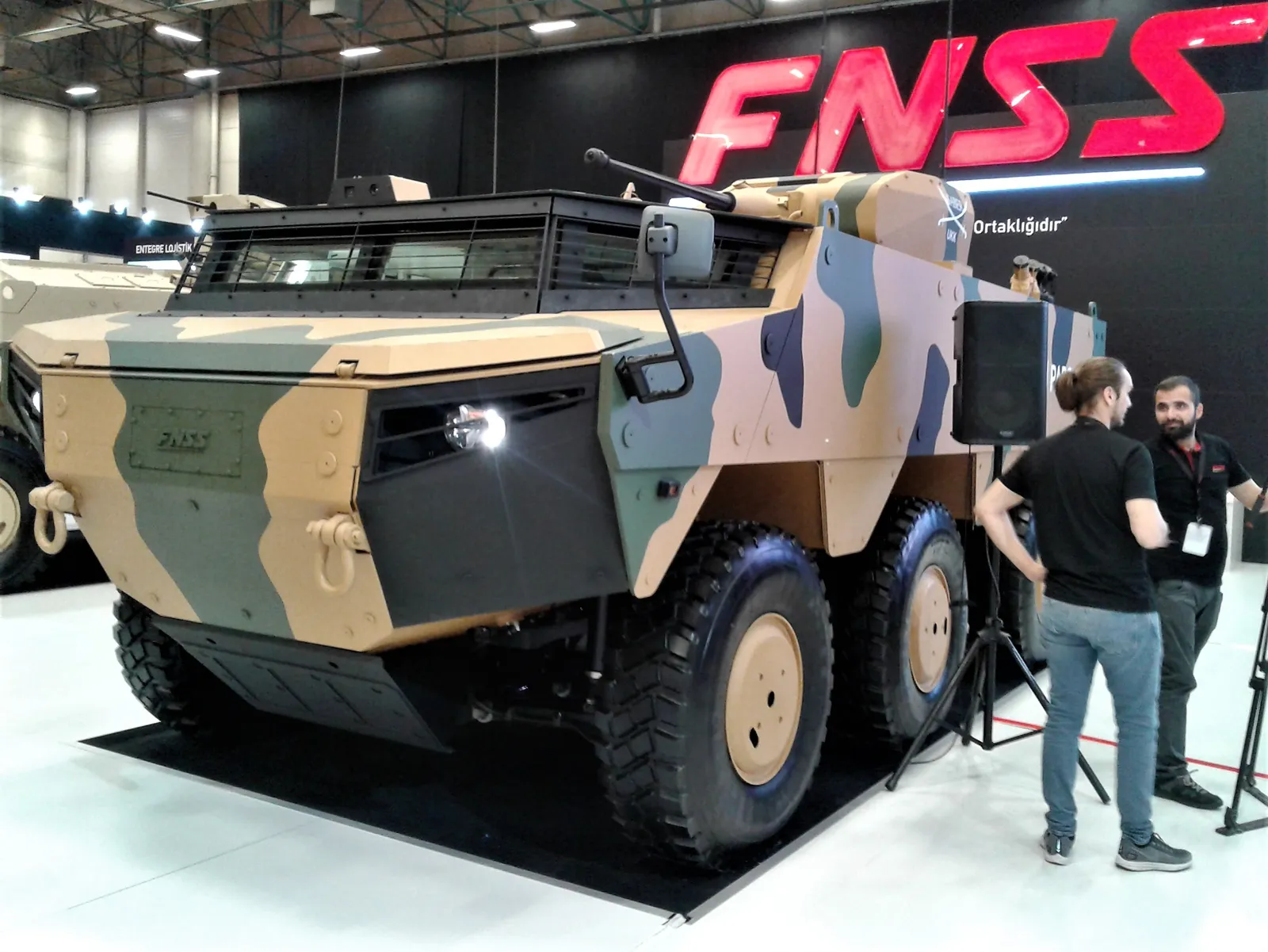
The procurement profile reflects the same balance directly. From Britain came Challenger 2 tanks, Eurofighter Typhoon fighters, Hawk trainers and the Khareef-class corvettes; from the United States the F-16 fleet, NASAMS batteries and C-130 transports; from France the Crotale and Mistral air-defence systems and MBDA missiles; from South Africa G6-45 howitzers; from Singapore the Al-Ofouq patrol vessels; and from Turkey 172 FNSS Pars III armoured vehicles. The domestic defence industry is not at the stage of building platforms; its capability is concentrated in maintenance, repair and sustainment. Oman’s ambition to turn Duqm into an industrial and logistics hub leaves an open door for joint production and MRO models in exactly that space.
Land Forces Inventory
| System type | Est. quantity |
|---|---|
| Main battle tanks (38 Challenger 2 — the only army in the Gulf operating this tank; the remainder are M60A3 and M60A1) | ≈ 117 |
| Armoured fighting vehicles (Turkish-built FNSS Pars III 8×8 and 6×6, Piranha II and III, VAB, Fahd, Scorpion light tanks) | ≈ 700 |
| Howitzers — self-propelled and towed (South African-built G6-45 155 mm, M109A2, towed FH-70 and 105 mm Light Gun) | ≈ 120 |
| Multiple rocket launchers | No significant line appears in open sources — artillery power rests on howitzer and mortar lines |
Air Force Inventory
| Platform | Est. quantity |
|---|---|
| Total military aircraft | ≈ 125 |
| Fighter and attack aircraft (F-16C/D Block 50 and 12 Eurofighter Typhoons; the Jaguars were retired in 2014) | ≈ 35 |
| Helicopters (NH90 transport, naval Super Lynx 300, Bell 205/206/214ST, AW139 — no dedicated attack helicopter) | ≈ 50 |
| Transport and training aircraft (C-130H and C-130J-30, C-295, Hawk Mk203 and Mk166, Super King Air 350ER surveillance) | ≈ 40 |
Missile and Air-Defence Systems
| System | Type / Note |
|---|---|
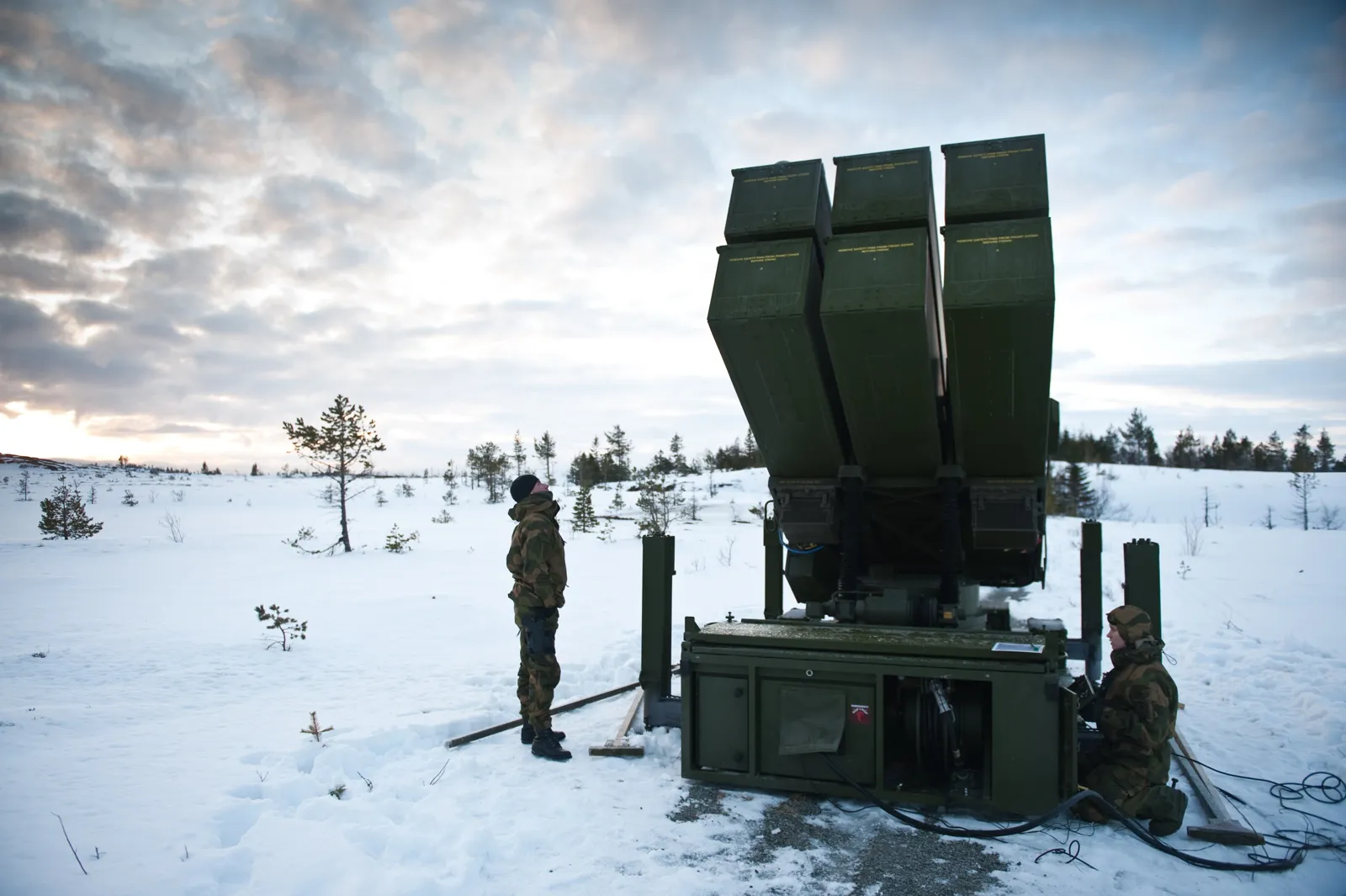
| NASAMS (AMRAAM-armed medium-range air defence) | The backbone of air defence, acquired under a contract worth about USD 1.28 billion signed in January 2014 |
| Rapier and Crotale short-range air-defence systems | The point-defence layer; part of the Rapier batteries were transferred from Qatar’s inventory |
| Mistral, Blowpipe and Javelin man-portable air-defence missiles | The very-short-range layer, widely used by land units and in facility defence |
| Ballistic missiles and long-range air defence | None — there is no Patriot-class upper tier or ballistic missile line; at sea, the Khareef corvettes carry VL MICA and MM40 Exocet Block 3 missiles |
Naval Power
| Class / Type | Est. quantity |
|---|---|
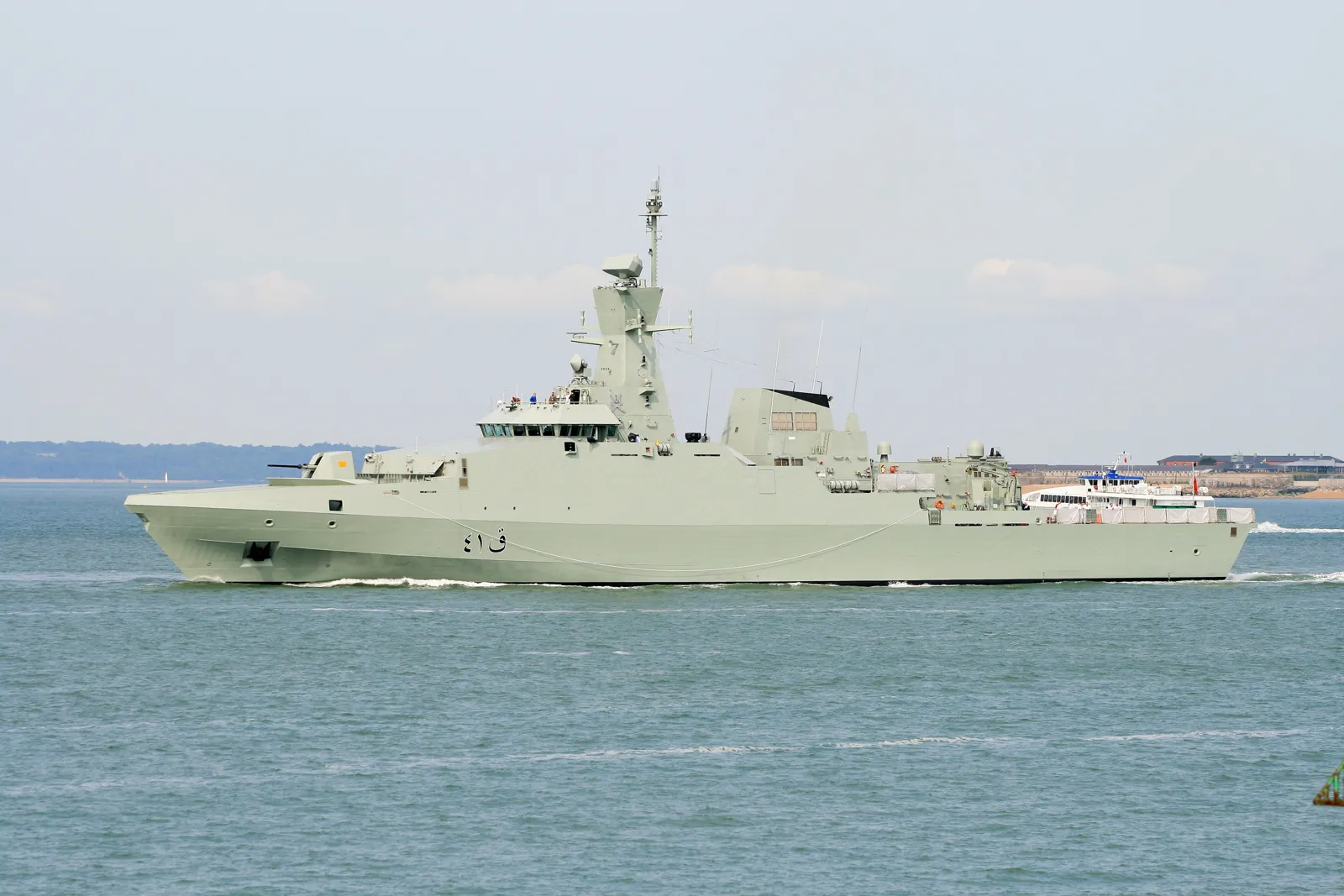
| Corvettes (3 Khareef / Al-Shamikh class built by BAE Systems, armed with MM40 Exocet Block 3 and VL MICA; 2 Qahir Al Amwaj class) | ≈ 5 |
| Patrol and offshore patrol vessels (4 Al-Ofouq class built by ST Marine of Singapore; 3 Al Bushra class) | ≈ 7 |
| Missile boats and fast attack craft (Dhofar class, armed with Exocet anti-ship missiles) | ≈ 4 |
| Amphibious and logistics element (Nasr al Bahr landing ship, Fulk Al Salamah support vessel, landing craft) | ≈ 8 |
| Submarines / frigates / aircraft carriers | None — the force structure is deliberately kept at corvette and patrol-vessel level |
The Turkey Angle: Turkish Defence Industry
Oman is the address of one of the Turkish defence industry’s most concrete references in the Gulf. Under a contract signed with FNSS on 20 September 2015, a total of 172 vehicles in 13 different configurations were delivered to the Royal Army of Oman: 145 Pars III 8×8 vehicles in eight configurations and 27 Pars III 6×6 vehicles in five. The first batch shipped in July 2017 and the programme was completed in May 2020. At the time of signature this was one of Turkey’s largest armoured vehicle export contracts in its class, and it carried Oman into the group of the Turkish defence industry’s biggest customers for several years. Between 2018 and 2022, Qatar, Oman and the United Arab Emirates ranked among the top three buyers of Turkish defence products.
How the programme ran shows something more than a one-off sale. FNSS also developed an engineering vehicle on the Pars III 8×8 platform to meet a Royal Army of Oman requirement, meaning the relationship went beyond off-the-shelf supply into customer-specific variant development. The vehicles were publicly seen in a major Omani exercise for the first time in 2024, an indication that the fleet is an operational element rather than stored inventory. The factors that won the tender are the same axes Turkish industry still leads with: the flexibility to produce many configurations from a single line, adaptation to desert and mountain conditions, adherence to the delivery schedule, and an export regime free of political conditions.
The open gaps in the inventory also show where a next step could sit. First, Oman has no dedicated attack helicopter; the NH90 and Super Lynx fleets are configured for transport and naval roles. TAI’s T129 ATAK answers that gap precisely, and the contract signed with the Philippines in 2020, with deliveries beginning in 2022, proves the platform can be operated outside Turkey. Second, open sources show no medium-altitude long-endurance unmanned aircraft fleet in Omani service, even though 3,000 kilometres of coastline, the dense maritime traffic of Hormuz, the Yemeni border and pipeline and facility security describe exactly that class’s mission. Bayraktar TB2, Akıncı and TAI’s ANKA answer the requirement directly, and Qatar’s TB2s, the Akıncı agreement Saudi Arabia signed with Baykar in 2023 and the UAE’s procurement decision in the same period have built a strong chain of precedent in the Gulf.
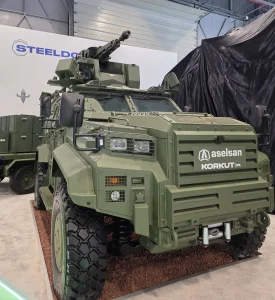
The third axis is the lower tier of air defence. NASAMS provides a solid medium-range backbone, but a dense and cost-effective layer is needed against low-altitude and unmanned threats; ASELSAN’s KORKUT and GÜRZ systems, its electronic-warfare-based counter-drone solutions and ROKETSAN’s short-range air-defence missiles fit precisely into that band. The fourth is naval. The Khareef corvettes were delivered in 2013-2014, and a sustainment and renewal window will open over the coming decade. ASFAT’s MİLGEM export line holds a real reference in this class, with Babur-class corvettes delivered to Pakistan and the frigate Hetman Ivan Mazepa to Ukraine. Oman’s ambition to make Duqm an industrial hub also suits joint production and MRO models, and the local sustainment experience accumulated in the Pars III programme is ready ground in that direction. Oman’s neutral posture favours suppliers that attach no political conditions, and that is Turkey’s real card in this market.
Frequently Asked Questions
How many tanks does Oman have? The Omani inventory holds roughly 117 main battle tanks. Thirty-eight of them are Challenger 2s acquired from Britain, making Oman the only Gulf army to operate the type. The remainder are American-built M60A3s and M60A1s, alongside Scorpion light tanks used in the reconnaissance role. Oman does not build tanks; sustaining the fleet depends on British and American supply chains.
What combat aircraft does Oman operate? The Royal Air Force of Oman operates two separate Western fighter lines: F-16C/D Block 50s delivered from 2005 onwards and 12 Eurofighter Typhoons ordered in 2012 and taken into service in 2017-2018. The Jaguar fleet was retired in 2014. Hawk Mk203 and Mk166 aircraft cover advanced training and light attack. The total fleet is around 125 aircraft, of which about 35 are combat types.
What air-defence systems does Oman have? The backbone of air defence is NASAMS, acquired under a contract worth about USD 1.28 billion signed with Raytheon of the United States in January 2014, with Norway’s Kongsberg as subcontractor. Rapier and Crotale batteries cover the short range, and part of the Rapiers were transferred from Qatar’s inventory. Mistral, Blowpipe and Javelin man-portable missiles cover the very short range. Oman has no Patriot-class upper tier and no ballistic missiles, a deliberate choice that sets it apart from its Gulf neighbours.
How strong is the Omani navy? The Omani navy is a force without submarines, deliberately kept at corvette and patrol-vessel level. Its striking element is the three Khareef (Al-Shamikh) class corvettes built by BAE Systems in Britain and delivered in 2013-2014, armed with MM40 Exocet Block 3 anti-ship and VL MICA air-defence missiles. To these are added two Qahir Al Amwaj corvettes in service since 1996, four Al-Ofouq patrol vessels built in Singapore, Dhofar-class missile boats and the landing ship Nasr al Bahr. The mission set is maritime security in the Strait of Hormuz and the Indian Ocean.
Is there defence cooperation between Turkey and Oman? Yes, and it rests on a concrete contract. Under the agreement signed with FNSS on 20 September 2015, 172 armoured vehicles in 13 configurations were delivered to the Royal Army of Oman: 145 Pars III 8x8s and 27 Pars III 6x6s. The first shipment went out in July 2017, the programme was completed in May 2020, and FNSS also developed an Oman-specific engineering vehicle on the platform. Oman ranked among the largest customers of Turkish defence exports between 2018 and 2022. The most mature areas for a next step are unmanned air systems, attack helicopters and low-altitude air defence.
Bottom Line
What sets Oman apart from other militaries in the region is choice, not scale. With about 43,000 personnel it is not the Gulf’s largest army, yet it has assembled a capable and balanced inventory around Challenger 2 tanks, two separate Western fighter lines, NASAMS batteries and Khareef corvettes. The weak links are equally clear: a defence industry unable to build platforms, a navy without submarines or frigates, gaps in the attack helicopter and medium-altitude long-endurance unmanned classes, and the absence of a Patriot-scale upper air-defence tier. Against that, the country seeks the final layer of deterrence in diplomacy rather than hardware; a state holding the southern shore of Hormuz and able to talk to everyone wields power independent of its inventory. For Turkey, Oman is one of the rare Gulf markets with a completed delivery programme rather than a letter of intent; the 172 Pars III vehicles are the proof, and the next step will most likely take shape around unmanned systems, attack helicopters and low-altitude air defence.