PrSM Increment 4: Five Firms Race to Build a 1,000 km Ship-Killer

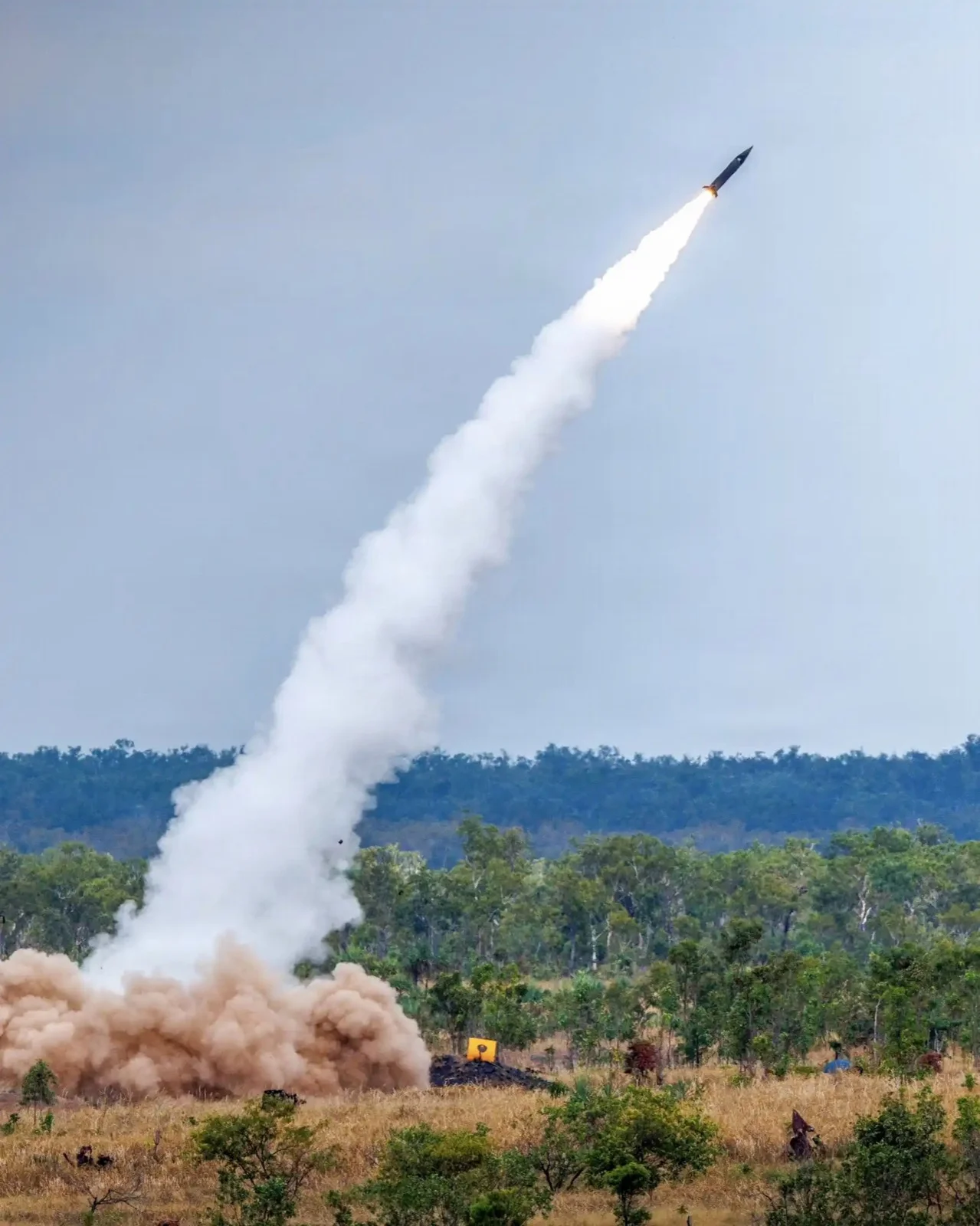
The US Army has selected five companies to build prototypes for Increment 4 of the Precision Strike Missile (PrSM), a longer-range version meant to add a ship-killing role to the land-attack weapon. Lockheed Martin, Anduril, Castelion, Mach Industries and RTX all signed prototype agreements on September 29, 2026.
PrSM was designed to replace the ageing ATACMS tactical missile, and its first increments were built mainly to strike fixed or relocatable land targets. Increment 4 adds a new dimension: the ability to hit moving ships from ground-based launchers, provided targeting and tracking data is available from other sensors.
Lockheed Martin’s entry centers on a ramjet propulsion system supplied by L3Harris. The company is targeting a range of at least 1,000 km when fired from a HIMARS launcher, and says the ramjet design could roughly double the baseline PrSM’s reach. That figure, however, is a stated goal rather than a range already proven in full flight tests.
A ramjet engine draws on atmospheric oxygen and needs an initial booster stage to reach operating speed. Lockheed Martin and L3Harris completed a booster-to-ramjet handoff test, called the Direct Connect Transition Test, at an L3Harris high-speed facility earlier in 2026. Guidance, control, sensors, data links and seeker technology draw on work done at Lockheed Martin’s Strigo center.
Crucially, the design keeps Increment 1’s transport container and fire-control interface, meaning the missile can be fired from existing M142 HIMARS and M270A2 launchers without major changes to logistics or crew training.
Lockheed Martin has disclosed investment figures that add up to more than $850 million: over $300 million with industrial partners on propulsion technologies, $300 million for an additive-manufacturing and automation production line, and $250 million for the Strigo center itself. Production is planned at the company’s Camden, Arkansas plant, which already builds Increment 1 and 2 rounds.
The schedule calls for a comparative evaluation and design-down-select phase in 2027, followed in 2028 by a further competition among the designs that show sufficient technical maturity. Each company must demonstrate its prototype meets requirements for range, accuracy, launcher integration, and strikes against both land and maritime targets.
Opening the competition to five companies is itself notable. Having newer defense-tech firms like Anduril and Mach Industries compete head-to-head with established primes such as Lockheed Martin and RTX reflects the Army’s push to reduce reliance on single-source suppliers and test software-first, rapid-prototyping approaches. Castelion is already working to integrate its hypersonic Blackbeard missile onto F-16s, so its presence in the PrSM race fits a broader pattern of fast, low-cost prototyping bids from newer entrants.
The program also carries weight for NATO planning. A long-range, ground-launched system capable of hitting ships gives European allies another reference point in coastal defense and deterrence debates, particularly as missile ranges and multi-domain strike concepts become central to discussions about countering a peer adversary’s naval forces in contested waters.
Sources
- Infodefensa, “Lockheed Martin competirá con Anduril, Castelion, Mach Industries y RTX por desarrollar un misil PrSM capaz de alcanzar objetivos a 1.000 kilómetros”, November 2, 2026, infodefensa.com — primary and sole source; figures and technical details attributed to Lockheed Martin’s own statements.