The ALTAY Programme From 2007 to 2026: Decisions, Powerpack and the Move to Series Production

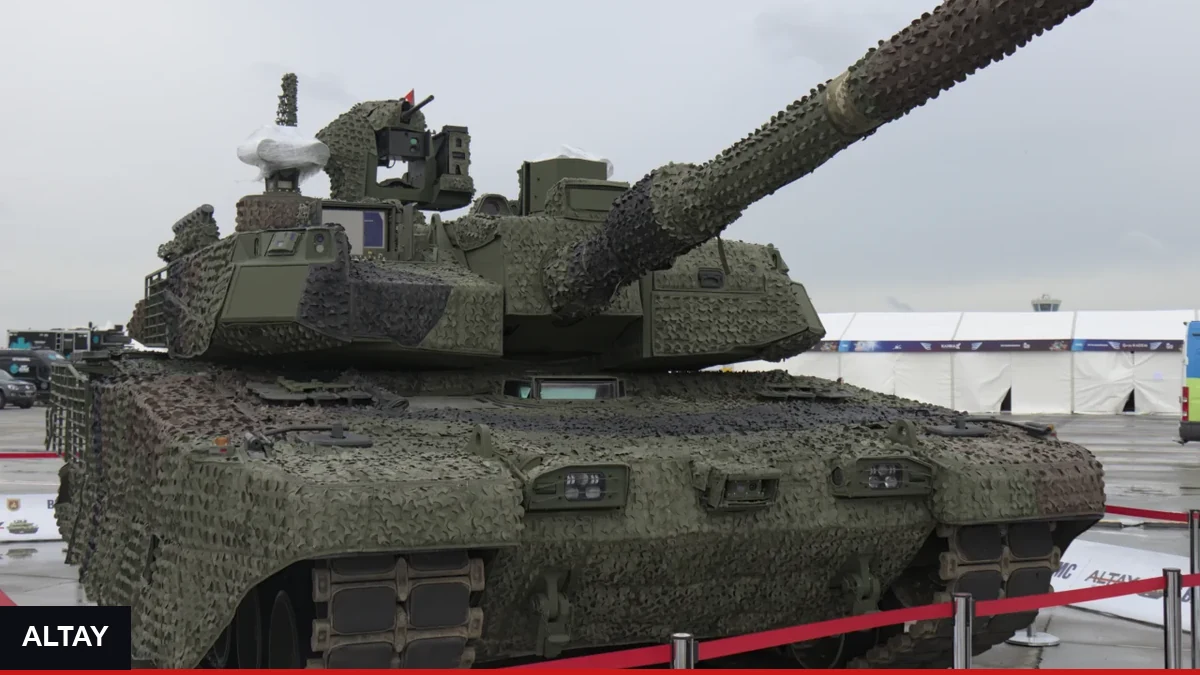
A tank programme is shaped not by a single decision but by a chain of linked ones: choice of contractor, powerpack supply, the series-production tender, the delivery plan. The ALTAY story from 2007 to 2026 is a clear example of that chain. Rather than compare the programme from outside, this file tells it from inside: which decision was taken when, and what came of each?
In file 13 we set the ALTAY beside the K2 and saw two programmes from a common root advance in different sequences. This file opens the ALTAY’s own sequence. The six-threshold model is again the frame, but this time we look at the decision points inside a single programme.
The file’s thesis
The ALTAY chronology can be read in three phases: the development phase (2007–2016), the contractor transition (2017–2018) and the series-production phase (2018 to the present). Each phase has its own defining decision, and the heaviest of these was taken in a component that does not carry the programme’s name: the powerpack. This file is a record, not an assessment: it lists dates that can be verified and leaves what cannot be verified explicitly outside.
What this file records, and what it does not
Recorded: contract and tender dates, prototype and test phases, powerpack candidates and the delivery plan announced by SSB. Not recorded: contract values (sources report different figures), performance claims (no verified comparable public data) and the internal reasons for decisions (no official statement). The class is single: main battle tank. What is a tank is covered separately.
Left out of the file
- Contract and budget values: sources report different figures.
- A single figure for 2026 deliveries: sources report 10 and 11.
- The series-production schedule of the domestic BATU engine: official statements differ on timing.
- Armour, firepower and mobility claims — no verified comparable data.
Phase 1: Development (2007–2016)
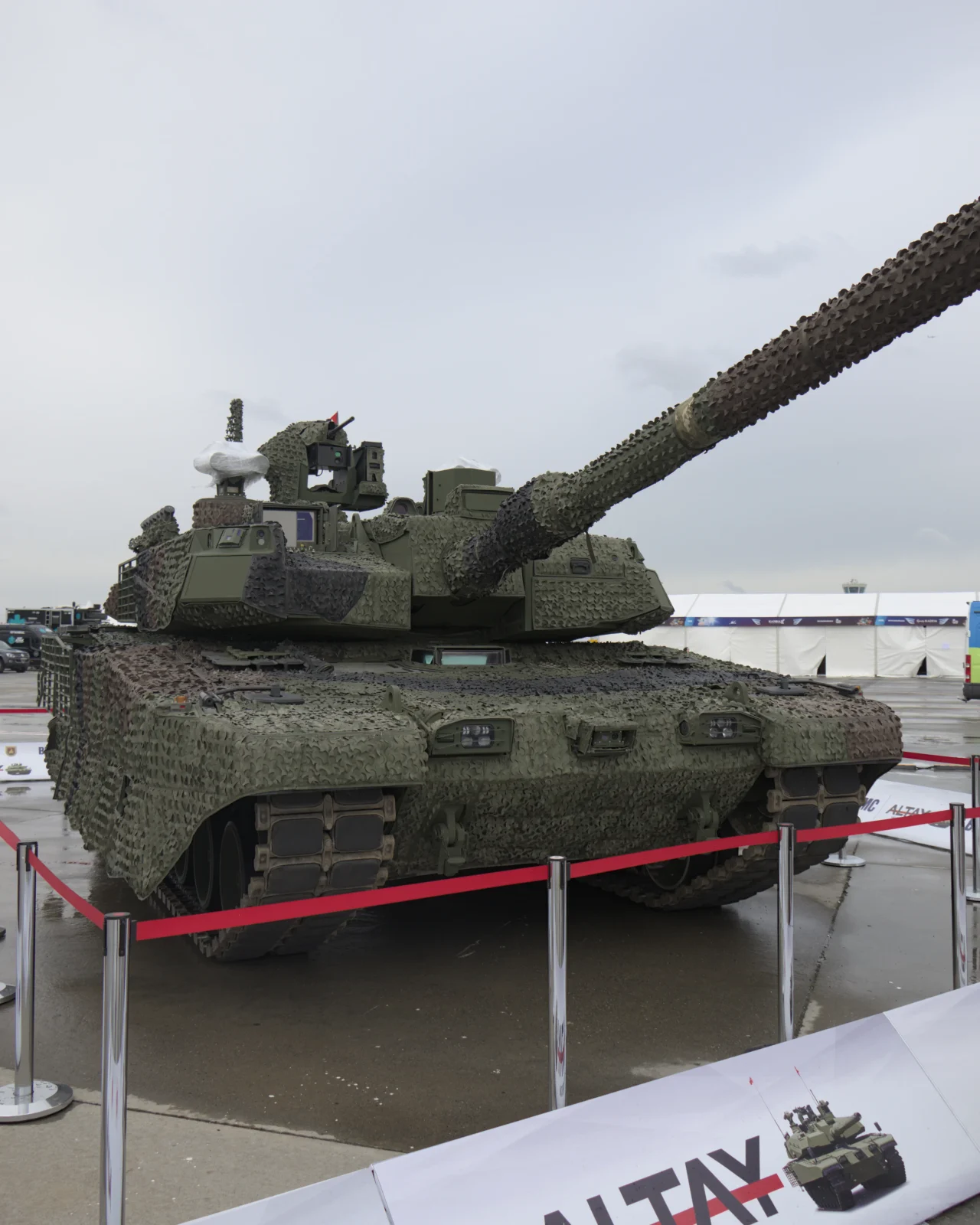
The process began in 2005 when the SSM asked BMC, FNSS and Otokar to assess the feasibility of domestic tank production; in February 2006 a request for proposals was issued to explore design options with state funding. On 30 March 2007 the National Tank Production Project was officially announced and Otokar was appointed prime contractor for four prototypes. In summer 2008 a memorandum between Türkiye and South Korea led to Hyundai Rotem being selected for technical assistance.
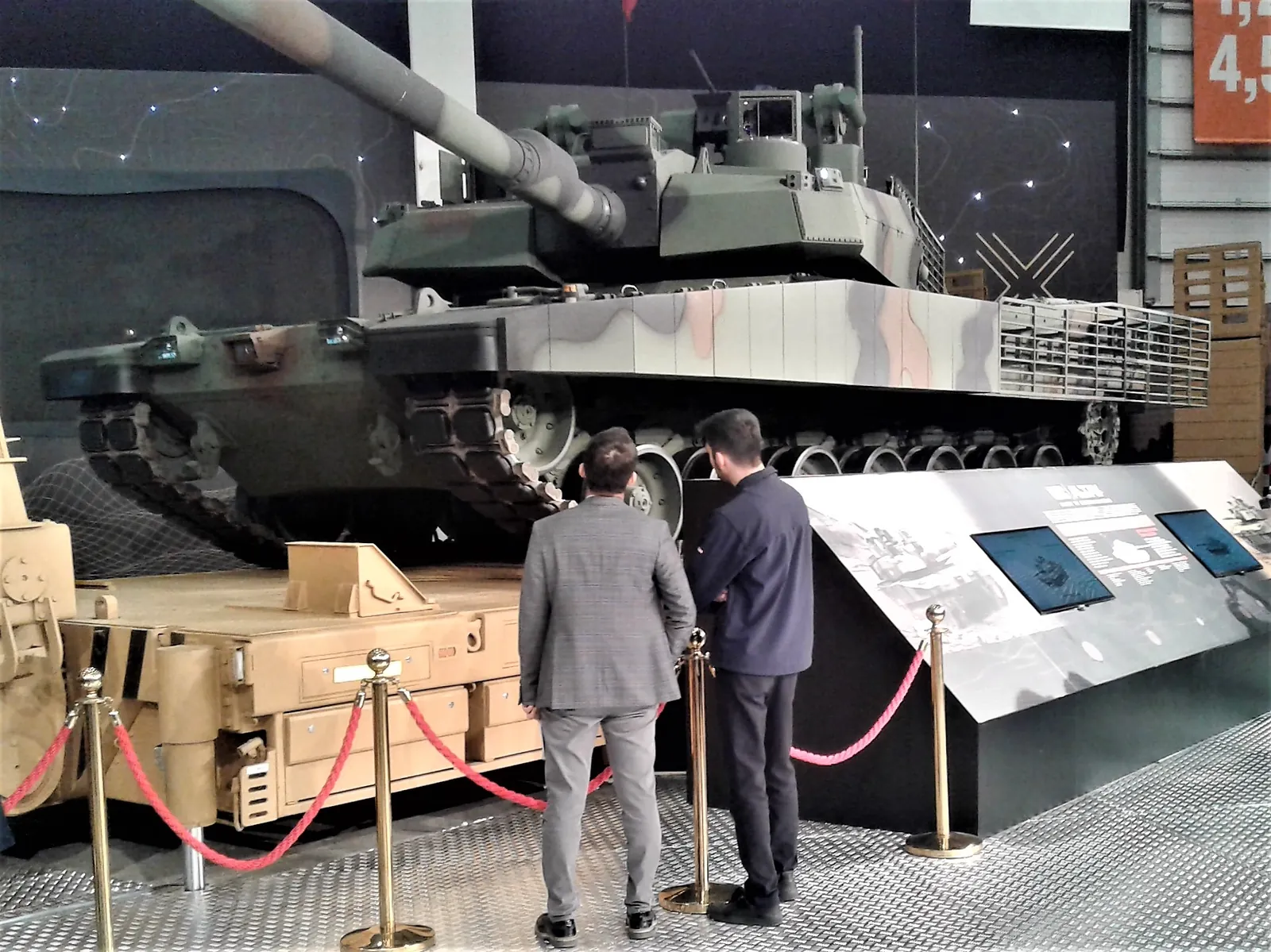
Development ran in three phases. In the first (2009–2010) Otokar contracted MTU and RENK for five EuroPowerPack units. In the second (2010–2012) the mobility test rig (MTR) was completed at the end of 2011, the firing test rig (FTR) was built in parallel, and both were shown to the public at Otokar’s Arifiye facility in 2012; the FTR’s first live firings took place in 2013. In the third (2012–2016) the PV1 and PV2 prototypes were delivered in 2016 and went through firing, mobility and environmental trials; the PV1 completed a 10,000 km endurance test.
| Date | Step | Note |
|---|---|---|
| 2005 | Domestic tank production feasibility | BMC, FNSS, Otokar asked to assess |
| February 2006 | Request for proposals | State-funded design options |
| 30 March 2007 | National Tank Production Project | Otokar prime, four prototypes |
| Summer 2008 | Türkiye–South Korea memorandum | Hyundai Rotem technical assistance |
| 2009–2010 | Phase I | Contract with MTU and RENK for five EuroPowerPacks |
| 2012 | MTR and FTR test rigs shown | Otokar Arifiye facility |
| 2013 | FTR first live firings | — |
| 2016 | PV1 and PV2 delivered | Firing, mobility, environmental trials |
This table expands the first table of file 13. The step we called ‘2012 first prototype’ there appears in the sources as the public showing of the test rigs; the full-vehicle prototypes were delivered in 2016. That also explains where the different readings of the programme timeline come from.
Phase 2: The contractor transition (2017–2018)
After the prototype trials the SSM issued a tender to determine the series-production contractor. Sources report that Otokar’s series-production bid was rejected in June 2017 and a second tender issued in July 2017. In November 2018 the series-production contract was signed with BMC Otomotiv and the prototype vehicles were transferred to BMC. The contract of 9 November 2018 foresaw 250 tanks in its first stage.
The reasons for the decisions were not announced
No official reason for the rejection of Otokar’s bid has been published. This file does not interpret it; it reports the tender sequence and the contract date. The phrase ‘change of contractor’ in programme sources is a statement of sequence, not an assessment.
The contract’s structure was refined over time. In 2018 the SSB’s first plan had three variants (T1: 40, T2: 210, T3: 1 test vehicle). The current plan, as reported from the SSB’s 24 February 2025 statement, is 85 T1 and 165 T2; the T3 does not appear in that statement. So the T1/T2 split was rebalanced within the programme while the contract total of 250 stayed fixed.
The ALTAY timeline
The chart shows two periods where decisions cluster: the contractor transition of 2016–2018 and deliveries after 2025. The years between are the period in which the powerpack solution was sought.
The powerpack: the programme’s real decision point
A tank’s engine and transmission are the subsystem that most determines its timeline. On the ALTAY that subsystem turned into a three-stage search. In the prototype phase Otokar used the EuroPowerPack — an MTU MT883 engine (1,500 hp) and a RENK HSWL 295TM transmission — and contracted for five units. For series production, German export restrictions on Türkiye — sources give 2018 and 2019 — prevented that European powerpack from continuing.
| Option | Country | Powerpack | Status |
|---|---|---|---|
| MTU + RENK | Germany | MT883 KA-501 (1,500 hp) + HSWL 295TM | Prototype phase; could not continue for series (5 units) |
| Doosan + S&T Dynamics | South Korea | DV27K + EST15K | Chosen for T1 |
| BMC Power BATU | Türkiye | Domestic V12 diesel, 1,500 hp | Planned for T2 |
The table shows the core of the decision chain: the first option needed another state’s export permission and was cut; the second came from another country; the third is a domestic engine. This is the tank-class counterpart of the fifth threshold in file six — supply-chain independence. The threshold has not yet been fully crossed here: T1 is built with a foreign powerpack, and the domestic engine’s series-production date has not been settled.
The BATU timeline is uncertain
BMC chairman Fuat Tosyalı said ALTAY series production would continue with the domestic, national powerpack from the end of 2026. It is also reported that the first 85 tanks will be fitted with the South Korean engine and transmission, and the SSB plan gives T2 from 2028. These three pieces of information do not fit one timeline and this file does not choose between them. For the current position, manufacturer and SSB statements should be followed.
Phase 3: Series production and delivery
Series production is carried out at BMC’s armoured-vehicle production facility in Ankara. Sources say the plant was designed to build eight ALTAYs a month; that is a design capacity, not realised output. The first delivery ceremony took place on 28 October 2025. According to SSB, the ALTAY went through a test process covering 1.5 million engineering hours, 35,000 kilometres of testing and 3,700 rounds fired.
| Year | Configuration | Planned quantity | Note |
|---|---|---|---|
| 2025 | T1 | 3 | First delivery 28 October 2025 |
| 2026 | T1 | 10–11 | Sources report two different figures |
| 2027 | T1 | 41 | — |
| 2028 | T1 | 30 | T1 total 85 |
| From 2028 | T2 | 165 | Move to the domestic powerpack foreseen |
At first glance the plan shows an acceleration curve: three in 2025, forty-one in 2027. But the same table shows something else: 165 of the 250 tanks depend on T2, and T2 is matched with completing the move to the domestic powerpack. So the larger part of the programme depends on how the powerpack decision turns out.
Quantities are those transferred from the SSB plan; actual delivery numbers should be tracked separately through official announcements.
Localised components
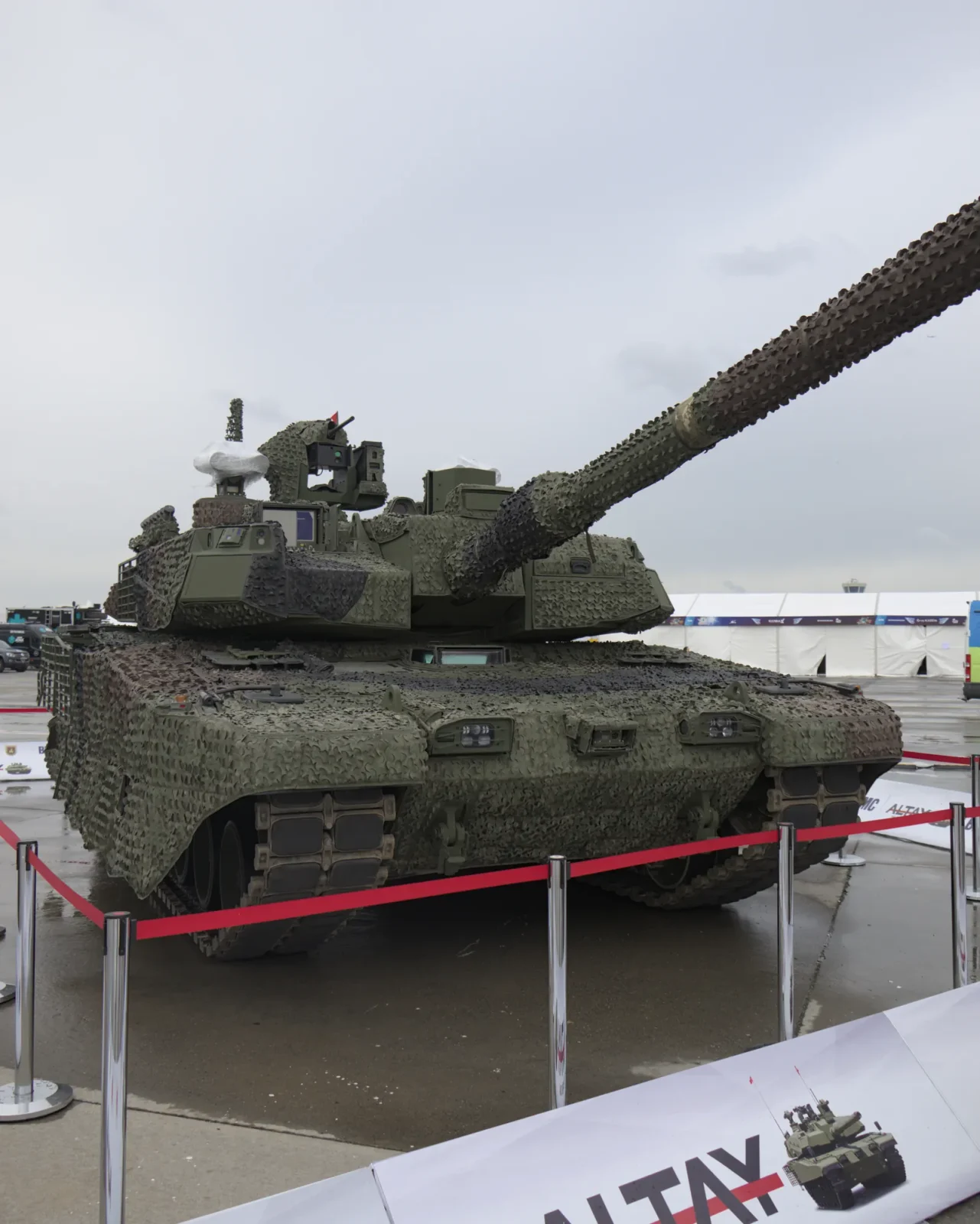
In SSB statements the ALTAY’s series version stands out for a renewed powerpack, an improved armour system, renewed fire-control and vehicle-control systems and an active protection system. Many components are also said to have been localised — reduction gears, gunner’s secondary sight, tracks, turret ring gear, fuel and hydraulic pumps, mobile camouflage nets and periscopes. This file does not assess the performance of any item on that list.
| Area | Wording in the statements |
|---|---|
| Armour | Improved armour; reactive armour and cage armour against RPGs |
| Protection | Active protection system |
| Fire control | Renewed fire-control system |
| Powerpack | Imported in the first series; domestic BATU planned |
| Localised components | Reduction gears, tracks, pumps, periscopes, etc. |
The same pattern appears here: localisation spreads across a wide field while the powerpack remains the last item to be completed. A similar pattern appears in other land systems in the last 25 years of Turkish defence industry; ecosystem growth explains the supplier base behind this range of components.
The K2’s timelines as a yardstick
A long development road for a main battle tank is not specific to the ALTAY. In South Korea, K2 development began in the mid-1990s; the first prototype came in 2007 and production of the first 100 tanks in 2014. For the ALTAY, eleven years passed from 2007 to the series contract and eighteen to the first delivery. The difference between the two spans and its causes were covered in file 13; here we note only that both programmes have long roads.
The limits of the comparison
- This file passes no verdict. Differences in duration arise from the programmes’ different starting points and decisions; they do not show one to be ‘better’ or ‘worse’ than the other.
- The K2 leads in some areas. Series production began in 2014, export contracts were signed and the first Polish batch was fully delivered.
- The ALTAY has thresholds that are open. The series contract is signed, the first delivery has been made, a delivery plan is published and a domestic powerpack is under development.
- There is no performance data. No verified comparable public data on armour, firepower and mobility exists.
The ALTAY’s five decision points
Reducing the chronology to decision points yields five headings, each tied to a verified date:
| Decision | Date | What it determined |
|---|---|---|
| Choice of prime contractor | 30 March 2007 | The structure of the development phase |
| Technical-assistance partner | 2008 | The design and technology link with South Korea |
| Series-production contractor | November 2018 | The production facility and contract structure |
| Powerpack source | After 2018 | The T1 timeline and the T2 transition condition |
| Delivery plan | 24 February 2025 | T1/T2 quantities and years |
Two of the decisions in the table set the programme’s structure (prime contractor and technical-assistance partner), and two set the conditions of production (series-production contractor and delivery plan). The powerpack decision stands outside these: it concerned the supply source of one component and, according to sources, was affected by a foreign state’s export restriction. This file does not rank the weight of these decisions; it records only what was decided on which date.
Conclusion: a record of decisions
The ALTAY story from 2007 to 2026 consists not of a single milestone but of a chain of linked decisions. The programme’s series-production contract is signed, the first delivery has been made and there is a delivery plan published by the SSB. The programme’s largest uncertainty lies in the powerpack: T1 proceeds with an imported powerpack, while T2’s move to a domestic engine is not yet backed by a settled timeline.
This file claims no outcome. It keeps a record rather than a verdict: which dates were verified, which were not, which source said what. The comparison in Europe’s strongest armies shows why tank fleets are a central item; the ALTAY’s delivery plan should be followed in that context.
Next in the series
File 15 — MİLGEM and similar national ship programmes. We move from land systems to naval systems. MİLGEM is the starting point of Türkiye’s national ship programmes; this file treats it together with similar programmes. The whole series is on the Türkiye and World Defence Programmes page.
Frequently asked questions
When did the ALTAY programme officially begin?
The Defence Industry Executive Committee announced the National Tank Production Project on 30 March 2007 and appointed Otokar as prime contractor for four prototypes. In summer 2008 a memorandum was signed between Türkiye and South Korea and Hyundai Rotem was selected for technical assistance.
Why did the series-production contractor change from Otokar to BMC?
Sources report that after prototype trials a tender for series production was issued; Otokar’s bid was rejected in June 2017, a second tender was issued in July 2017 and the contract was signed with BMC in November 2018. This file does not interpret the reasons; it reports only the verified sequence.
What is the difference between the ALTAY T1 and T2?
According to SSB statements, of the 250 tanks in the contract the first 85 are in the T1 configuration and the next 165 in T2. T1 uses an imported powerpack; a move to the domestic BATU powerpack is planned for T2. Sources give 2028 for the start of T2.
What is the delivery plan?
Under SSB’s revised schedule of 24 February 2025, T1 deliveries are planned at 3 in 2025, 41 in 2027 and 30 in 2028; for 2026 sources report both 10 and 11, and this file does not choose one. For T2, 165 tanks are foreseen from 2028.
Why did the ALTAY’s powerpack change?
Sources report that a European powerpack of an MTU engine and RENK transmission was used in the prototype phase, and that German export restrictions on Türkiye (sources give 2018 and 2019) prevented that supply from continuing. For T1 a South Korean Doosan (DV27K) engine and S&T Dynamics (EST15K) transmission were chosen.
When will the BATU engine enter series production?
BMC chairman Fuat Tosyalı said series production would continue with the domestic powerpack from the end of 2026; yet it is also reported that the first 85 tanks will be fitted with the South Korean powerpack. The timing gap between the two statements is not interpreted here: the domestic engine’s series-production date has not been settled by a verifiable official announcement.
Does this file say the ALTAY is late?
No. The file presents the programme’s verified chronology and decision points. Long development times are common in main battle tank programmes: development of the K2 began in the mid-1990s and production of the first 100 tanks began in 2014.