Libya’s Military Strength: How Many Tanks, Fighter Jets and Missiles? (2026)

The military inventory of Libya is a case in which the figures alone tell you nothing. Global Firepower data puts total personnel above 130,000 — but 100,000 of that sits in the paramilitary and militia category, with regular active strength closer to 32,000. The same distortion runs through the equipment: more than two thousand tank hulls were inherited from before 2011, yet the number of main battle tanks counted as serviceable is around fifty-five. Reading the inventory comes down to three headings — the destruction of 2011, the United Nations arms embargo in force ever since, and the dual command structure that has persisted since 2014. Together they turn what looks on paper like a mid-sized army into a fragmented force dependent on outside support.
At a Glance
- Active personnel: ≈ 32,000 regulars and ≈ 100,000 paramilitary / militia; no registered reserve
- Command structure: Split in two — the Government of National Unity in Tripoli and the Libyan National Army in the east
- Main battle tanks: ≈ 55 serviceable (most of the roughly two thousand Gaddafi-era hulls are in storage or unusable)
- Military aircraft (total): ≈ 83 (10 fighters, 22 helicopters; roughly 42 per cent of the fleet are trainers)
- Coastline and navy: 1,770 km of Mediterranean coast — one frigate and two patrol vessels in the inventory
- Submarines / carriers / ballistic missiles: None — the Foxtrot submarines and the Scud line are out of service
Note: The inventory figures below are approximate values drawn from open sources such as Global Firepower, the IISS Military Balance and SIPRI.
About the Libya Armed Forces
The Libyan Armed Forces do not sit under a single chain of command. Since 2014 the country has been effectively divided in two: in the west, the internationally recognised Government of National Unity based in Tripoli; in the east, the Libyan National Army under Khalifa Haftar, mandated by the House of Representatives in Tobruk. Air force assets are split between the two sides; most of the navy and coast guard answers to Tripoli, while eastern forces maintain their own coastal patrol boats. That structure divides not only the inventory count but the maintenance, spare-parts and training chains behind it.
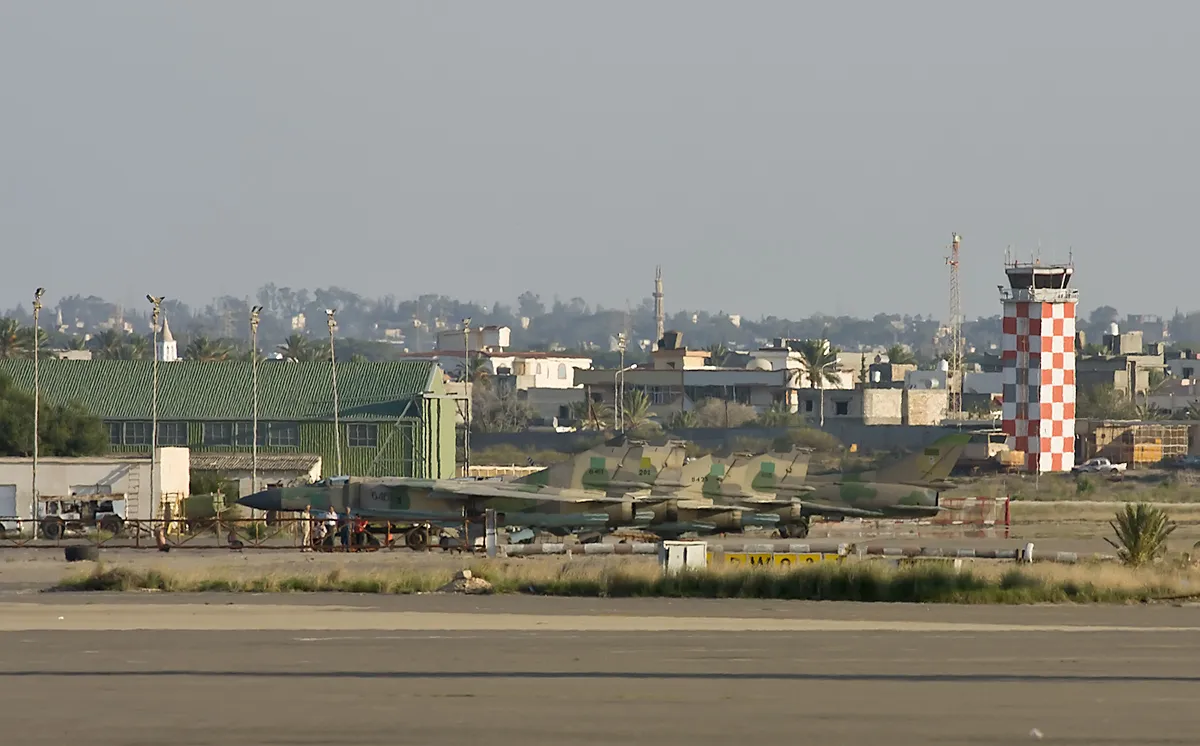
The second decisive factor is 2011. Under Gaddafi, large-scale procurement from the Soviet Union and France had built one of the region’s most numerous inventories: more than two thousand tanks, over two thousand artillery pieces, some 370 combat-capable aircraft and, after Egypt, the region’s densest air-defence network. A significant share of that was already in storage and unmaintained; the civil war and the NATO operation that followed then destroyed most of the combat aircraft and air-defence batteries caught on the ground. The navy suffered heavily in the same period, with the Nanuchka and Assad-class corvettes among many assets rendered unusable. Most of what appears in the inventory today consists of hulls that survived that destruction and are kept running with whatever parts remain.
The third factor is the embargo. The arms embargo adopted by the United Nations Security Council in 2011 remains in force and is renewed regularly. That makes it effectively impossible for Libya to follow the path taken by Jordan or Morocco — procuring new-generation platforms through open competitions. The consequence is an inventory fed not by formal procurement but by bilateral arrangements, support deployments and indirect flows. A 2019 United Nations panel of experts report stated that Turkey, the United Arab Emirates and Jordan had violated the embargo; Ankara for its part grounded its support for Tripoli in the bilateral security and military cooperation memorandum signed with the internationally recognised government. On the industrial side Libya is not a producer; its Military Industrialization Institution operates at the level of maintenance, sustainment and limited manufacture, and is pursuing its restructuring largely with foreign partners.
Land Forces Inventory
| System type | Est. quantity |
|---|---|
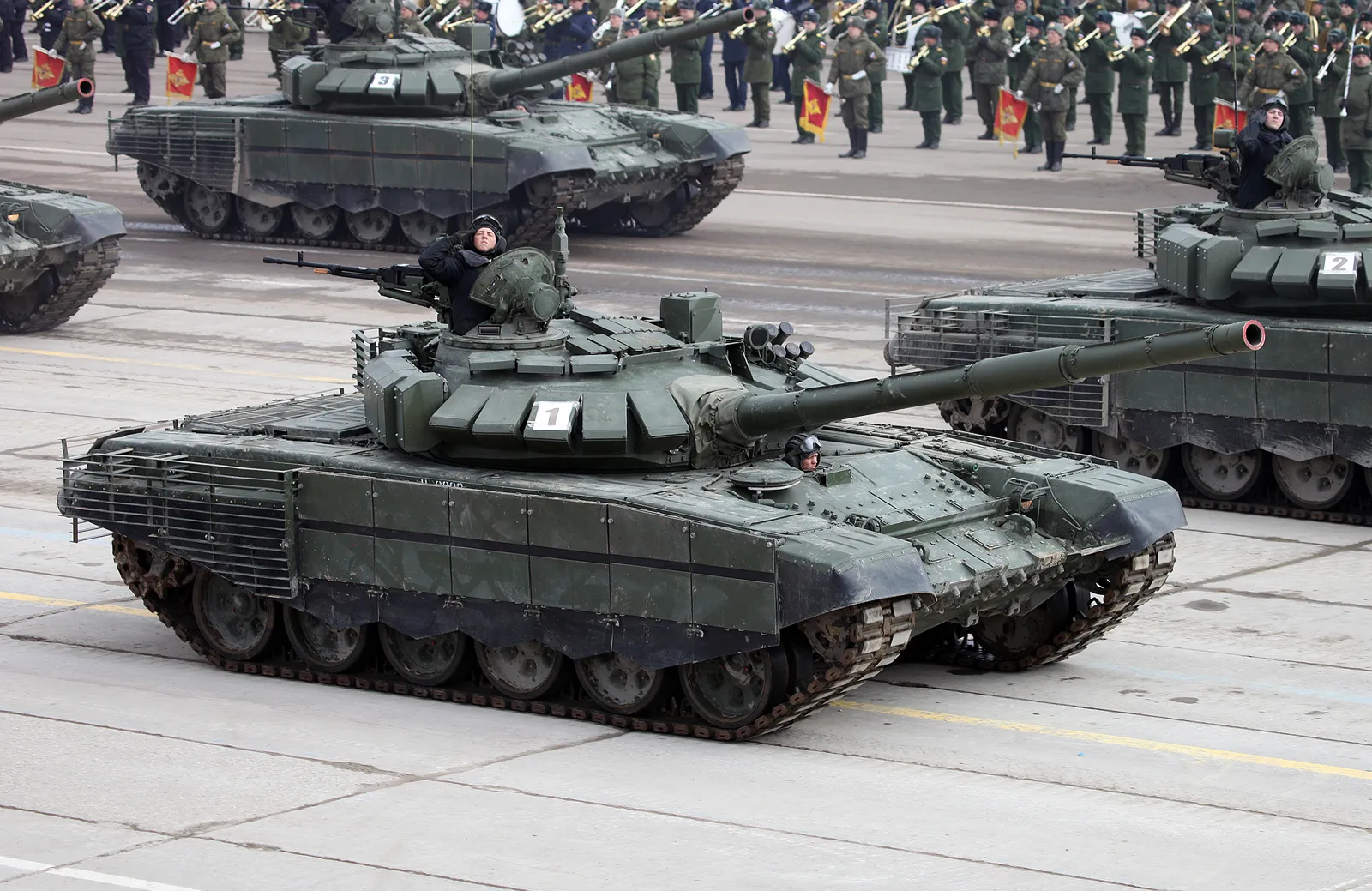
| Main battle tanks (T-72, T-62 and T-55 lines; only a small share of the roughly two thousand Gaddafi-era hulls is maintained and serviceable) | ≈ 55 serviceable |
| Armoured and wheeled vehicles (surviving BMP-1, BTR-60, BRDM-2, EE-9 Cascavel and EE-11 Urutu, plus mine-resistant types such as the Kirpi and Vuran brought in from abroad after 2019) | ≈ 2.700 |
| Self-propelled howitzers (surviving 2S1 Gvozdika, 2S3 Akatsiya and Italian Palmaria) | ≈ 20 |
| Towed howitzers (D-30, M-46 and M-101 lines) | ≈ 38 |
| Multiple rocket launchers (BM-21 Grad and 107 mm Type 63 lines) | ≈ 25 |
Air Force Inventory
| Platform | Est. quantity |
|---|---|
| Total military aircraft (split between the two commands; readiness far below the inventory count) | ≈ 83 |
| Fighter and combat aircraft (surviving MiG-21, MiG-23 and Mirage F1 lines; most aircraft caught on the ground were destroyed in the 2011 NATO operation) | ≈ 10 |
| Dedicated attack aircraft (individual survivors of the Su-22 line) | ≈ 1 |
| Training aircraft (L-39 Albatros, G-2 Galeb and SF.260 lines — roughly 42 per cent of the fleet) | ≈ 35 |
| Helicopters (Mi-8 and Mi-17 transports, Mi-24 and Mi-35 attack, SA 342 Gazelle and CH-47 Chinook; attack types account for only four of the total) | ≈ 22 |
Missile and Air-Defence Systems
| System | Type / Note |
|---|---|
| Soviet-era medium and long-range air defence (S-125 Neva/Pechora, 2K12 Kub, S-200 lines) | Gaddafi-era Libya was considered to hold the region’s second densest air-defence network; most of it was destroyed in the 2011 NATO operation and could not be renewed under embargo conditions |
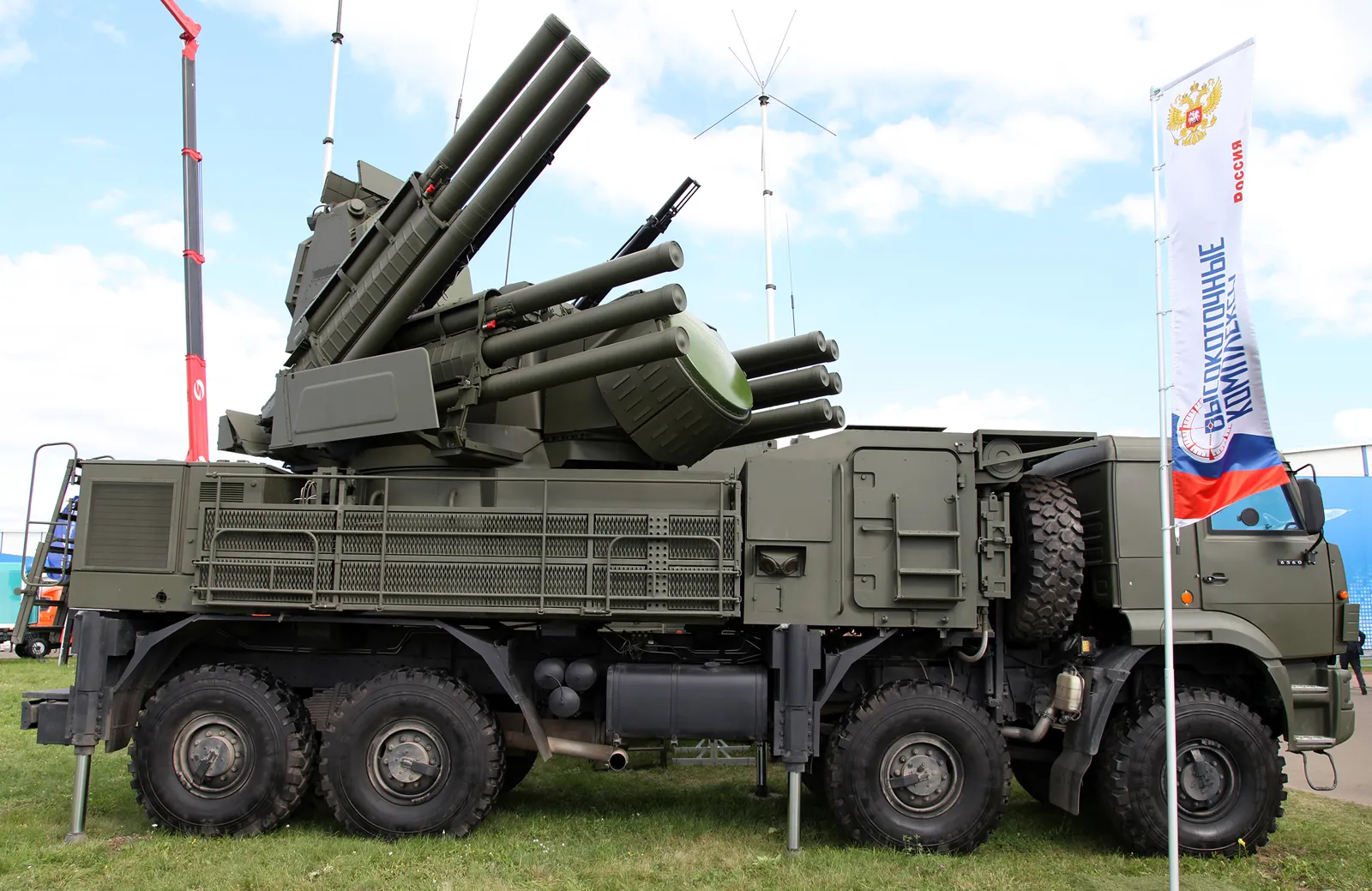
| Pantsir-S1 short-range air-defence system | During the 2019-2020 Tripoli campaign it was the most visible air-defence asset in eastern hands; in the same period Bayraktar TB2s supporting the Tripoli government destroyed a large number of Pantsir vehicles, opening the debate over the system’s weakness against unmanned aircraft |
| MIM-23 Hawk XXI and the low-altitude layer | The Tripoli government’s air defence was held together in 2020 by Hawk XXI batteries and electronic warfare assets deployed by Turkey; that layer belongs not to the country’s own inventory but to external support arrangements |
| Ballistic missiles and weapons of mass destruction | None — the Gaddafi-era Scud-B and FROG-7 line is out of service, and the chemical weapons stockpile was removed from the country and destroyed under Organisation for the Prohibition of Chemical Weapons supervision after 2011 |
Naval Power
| Class / Type | Est. quantity |
|---|---|
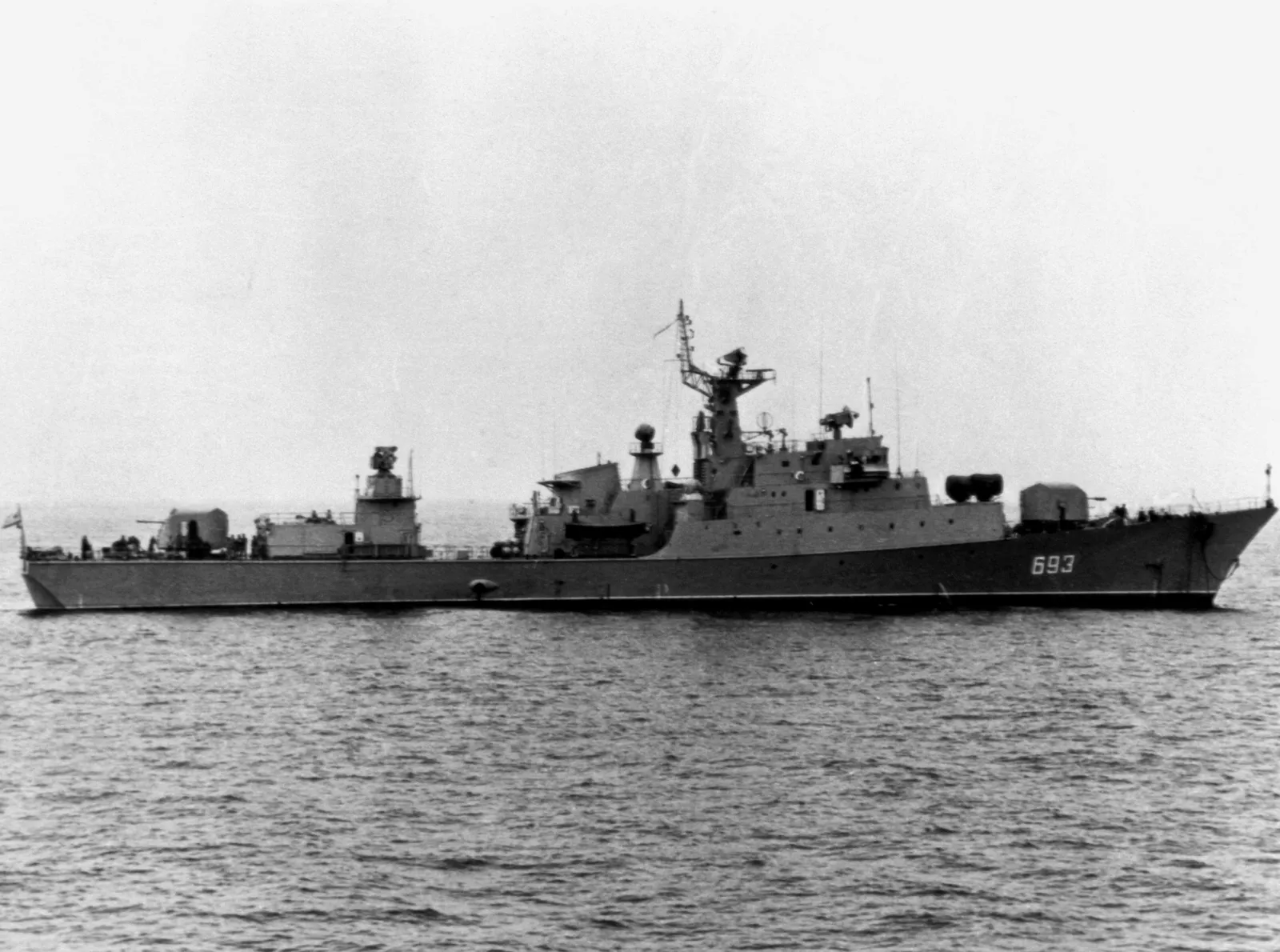
| Frigate (a Gaddafi-era Koni class; its serviceability is disputed in open sources) | 1 |
| Patrol vessels and fast patrol boats (MRTP-class boats procured from Turkey from 2012 are the newest elements of this line) | 2 |
| Coast guard and harbour elements (migration control and counter-smuggling; the European Union, Italy and Turkey each provide training and equipment support) | A dispersed boat-level force |
| Submarines / corvettes / aircraft carriers | None — the six Foxtrot-class submarines delivered between 1976 and 1982 were already inactive before 2011, and the Nanuchka and Assad-class corvettes were destroyed in 2011 |
The Turkey Angle: Turkish Defence Industry
The turning point in the Turkey-Libya defence relationship is 27 November 2019. Two separate memoranda of understanding were signed in Istanbul that day: one on the delimitation of maritime jurisdiction areas in the Mediterranean, the other on security and military cooperation. The second established the legal framework for Turkey to provide training, advisory support and equipment to the internationally recognised government in Tripoli. On 2 January 2020 the Turkish parliament approved the motion authorising the deployment of troops by 325 votes to 184, and the deployment began on 6 January. It was one of the first cases in which the Turkish defence industry did not merely sell a product but put an entire force package into the field at once — air defence, electronic warfare, unmanned aircraft and training.
The field result was seen in the 2019-2020 Tripoli campaign. Against the advance of eastern forces, the Tripoli government’s defence was rebuilt around Bayraktar TB2 unmanned aircraft, MIM-23 Hawk XXI air-defence batteries deployed by Turkey, and electronic warfare assets. On the other side were Chinese-built Wing Loong II unmanned aircraft supplied via the United Arab Emirates and Russian-built Pantsir-S1 short-range air-defence systems. It became one of the first major conflicts in which two generations of unmanned aircraft faced each other directly. The destruction of a large number of Pantsir vehicles by TB2s opened a worldwide debate on the vulnerability of short-range air-defence systems to small, low-flying platforms, and the capture of al-Watiya Air Base in May 2020 followed from the same equation. For the Turkish defence industry Libya is, alongside Syria and Karabakh, one of the three reference theatres in which its unmanned aircraft doctrine was tested in the field.
The centre of gravity today lies less in weapons than in institution-building. Under the Military Training, Cooperation and Consultancy Agreement, Libyan Armed Forces personnel are trained both in Turkey and in Libya; close to a thousand Libyan military personnel have received training in Turkey as visiting students, and more than two hundred Libyan cadets are studying at war colleges affiliated with the National Defence University. On the industrial side, under a long-term strategic cooperation agreement signed with Libya’s Military Industrialization Institution, Libyan engineering candidates have been enrolled in technical training and internship programmes at military factories in Konya. At sea the link goes back to 2012: among the newest elements of the Libyan navy are MRTP-class fast patrol boats procured from Turkey, and training cooperation for coast guard personnel continues.
Two headings will shape the coming period. The first is widening scope: since 2024 Ankara’s contacts with the eastern structure as well as with Tripoli have raised the possibility of cooperation spreading to the scale of the whole country rather than remaining tied to one side. The second is the limit: as long as the United Nations arms embargo stands and the command structure remains divided, Libya does not function as an export market in the conventional sense. The most realistic areas of progress are therefore not large platform sales but the deepening of lines already running: sustainment and new hull programmes with ASFAT on the patrol boat and maritime security side, ASELSAN’s KORKUT and GÜRZ systems and counter-drone solutions in low-altitude air defence, maintenance infrastructure for the Kirpi and Vuran armoured vehicle line, and above all a partnership in training, maintenance and localisation. For the Turkish defence industry, Libya remains the most comprehensive file demonstrating that what can be exported is not a single product but an entire security package.
Frequently Asked Questions
How many tanks does Libya have? Global Firepower data puts the number of main battle tanks counted as serviceable in the Libyan inventory at around fifty-five. That figure reflects not the country’s real stock but the maintained and usable portion of it: under Gaddafi, more than two thousand tank hulls were acquired across the T-55, T-62 and T-72 lines from the Soviet Union, but a very large share was already in storage and unmaintained, and the rest has suffered losses in the fighting that has continued since 2011. The fact that the inventory is spread across a command structure split in two is a further complication for any count.
Which fighter jets does Libya operate? The combat backbone of the Libyan air force still rests on Soviet and French lines inherited from the Gaddafi era: the MiG-21, MiG-23 and Mirage F1. The number of serviceable fighters is around ten, and roughly 42 per cent of the fleet consists of trainers such as the L-39 Albatros, G-2 Galeb and SF.260. Most combat aircraft caught on the ground were destroyed in the 2011 NATO operation; what remains is divided between the two commands, with readiness markedly below the inventory count. Procuring new-generation fighters is effectively impossible for Libya because of the United Nations arms embargo.
What air defence systems does Libya have? Under Gaddafi, Libya held the region’s densest air-defence network after Egypt; built on the S-125 Neva/Pechora, 2K12 Kub and S-200 lines, most of it was destroyed in the 2011 NATO operation and could not be renewed under embargo conditions. The most visible systems in the field today arrived through external support: eastern forces fielded Russian-built Pantsir-S1 batteries during 2019-2020, while the Tripoli government’s air defence was held together by MIM-23 Hawk XXI batteries and electronic warfare assets deployed by Turkey. Libya has no ballistic missiles; the Gaddafi-era Scud-B and FROG-7 line is out of service.
How strong is Libya’s navy? Libya has 1,770 kilometres of Mediterranean coastline — the longest Mediterranean shoreline in Africa — yet the navy is disproportionately small against it. The inventory shows a single Gaddafi-era Koni-class frigate and two patrol vessels; there are no corvettes, submarines or mine warfare assets. The six Foxtrot-class submarines delivered by the Soviet Union between 1976 and 1982 were already inactive before 2011, and the Nanuchka and Assad-class corvettes were destroyed in 2011. Real maritime power today sits at coast guard and patrol boat level, and among the newest elements of that line are MRTP-class boats procured from Turkey from 2012 onwards.
Is there military cooperation between Turkey and Libya? Yes, and it is one of Turkey’s most comprehensive defence files. The framework was set by the security and military cooperation memorandum of understanding signed on 27 November 2019; on 2 January 2020 the Turkish parliament approved the motion authorising a troop deployment. In the 2019-2020 Tripoli campaign, Bayraktar TB2 unmanned aircraft, MIM-23 Hawk XXI air-defence batteries deployed by Turkey and electronic warfare assets proved decisive. The centre of gravity today is training and institution-building: close to a thousand Libyan military personnel have trained in Turkey, more than two hundred cadets are studying at war colleges affiliated with the National Defence University, and a long-term strategic cooperation agreement with Libya’s Military Industrialization Institution is under way. At sea, the Libyan navy has procured MRTP-class patrol boats from Turkey since 2012.
Bottom Line
Libya’s inventory is an object lesson in the fact that an army stands on institutions rather than numbers. Gaddafi’s Libya accumulated one of the region’s largest equipment stocks; what remains today is fifty-five serviceable tanks out of two thousand hulls, ten fighters out of 370 combat aircraft, and, in place of the region’s second densest air-defence network, a layer held together by outside support. Three things compounded one another to create that gap: the destruction of 2011, the unbroken United Nations arms embargo, and the command structure split in two since 2014. The result turns inventory renewal from a technical problem into a political one — before a platform can be bought, a single counterpart and a legitimate channel within the embargo framework have to exist. That is precisely where Libya’s significance for Turkey lies. The relationship did not begin as a platform sale; it was built as an integrated package of air defence, electronic warfare, unmanned aircraft, training and defence-industry partnership, and it has run unbroken from the 2019 memorandum to today’s training programmes. For the Turkish defence industry, Libya remains the most comprehensive field file showing that what can be exported goes beyond products to a security architecture.