Germany and France Abandon FCAS Joint Fighter After Nine Years and €100 Billion Programme

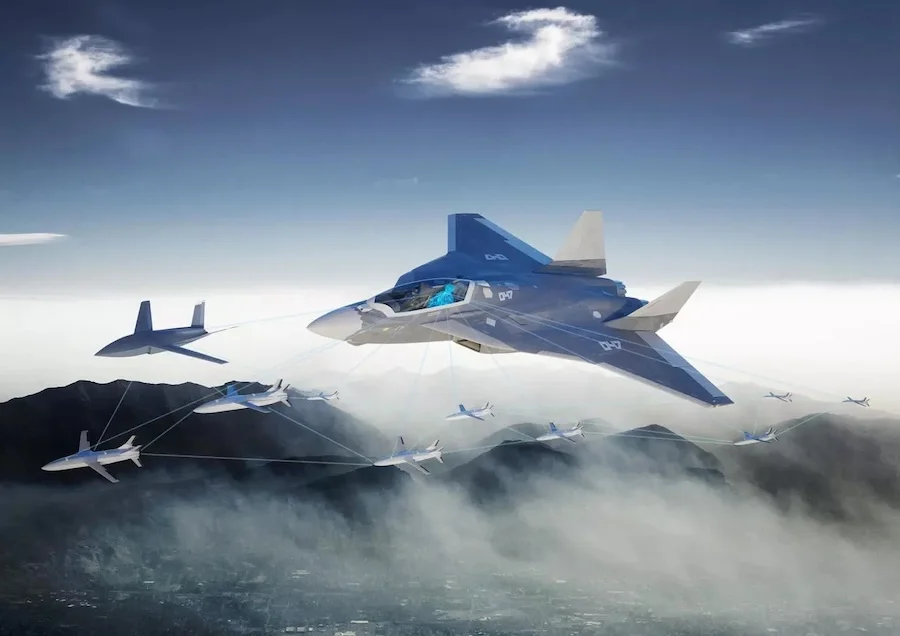
One of Europe’s most ambitious defence programmes has reached a definitive endpoint. The crewed fighter jet at the heart of the Future Combat Air System — the New Generation Fighter (NGF) intended to replace the Eurofighter and Rafale around 2040 — will not be developed jointly by Germany and France. According to reporting by Breaking Defense and Defence Industry Europe, the governments of both countries have concluded that their respective industrial champions, Dassault Aviation and Airbus, cannot reach agreement on the project.
The FCAS programme was launched in 2017 as a trilateral initiative by France, Germany, and Spain. Its centrepiece was to be the NGF, a sixth-generation manned fighter designed to operate alongside loyal wingman drones and linked to a “combat cloud” data architecture connecting all elements of the air battle space. The programme’s total projected cost was approaching €100 billion, with a target service entry date of around 2040.
The Root Cause: Dassault Versus Airbus
The programme’s failure traces back to unresolved tensions between Dassault and Airbus over project governance, workshare allocation, and fundamentally different design visions. France requires the successor aircraft to carry nuclear weapons — a capability that Dassault, as the current manufacturer of the Rafale, considers its sovereign domain. Airbus, meanwhile, proposed a two-aircraft approach allowing each country to develop its own platform while sharing a common digital infrastructure. Neither position gave ground. Final mediation attempts in March 2026 came to nothing, and a German official confirmed that “companies have failed to agree on building a joint combat aircraft.”
What Continues: The Combat Cloud and July’s Reset
The collapse of the fighter project does not necessarily end the entire FCAS architecture. German Chancellor Friedrich Merz proposed that partner nations continue the joint development of the “combat cloud communication network” — the software layer designed to connect fighters, UAVs, radars, and other sensors across the battlespace. A Franco-German ministerial council scheduled for July 2026 is expected to produce a revised joint work plan focused on, in official language, “a number of realistic and relevant projects.”
The fate of other programme elements — the Remote Carrier loyal wingman drones and the engine development track — remains unclear. Much of the research investment from the past nine years is expected to feed into national programmes rather than be written off entirely.
Europe’s Air Power Landscape After FCAS
With FCAS’s fighter component gone, the Global Combat Air Programme (GCAP) — the United Kingdom, Italy, and Japan partnership centred on BAE Systems, Leonardo, and Mitsubishi — now stands as NATO’s only serious sixth-generation fighter development effort outside the United States. Spain, which participated in FCAS, is evaluating whether to pivot toward GCAP or pursue other options.
France is expected to proceed with a nationally-led Dassault programme for a Rafale successor. Germany faces a harder choice: modernise the Eurofighter for the medium term while deciding whether to join an existing partnership or revisit a bilateral arrangement with France in a more limited form.
A Lesson for Independent Development
The FCAS story underscores a recurring tension in multinational defence programmes: the political logic of shared cost and industrial burden often collides with the commercial logic of national champions protecting their own market position. The pattern is familiar — Eurofighter itself took decades to reach service; A400M struggled with cost and capability disputes; MGCS, the Franco-German main battle tank programme, faces similar headwinds.
For countries that chose sovereign programmes over complex partnerships, the FCAS collapse provides a data point. Turkey’s KAAN fighter programme, developed independently by Turkish Aerospace Industries, has completed early flight tests and is progressing toward production — a path that, whatever its difficulties, avoids the governance gridlock that ultimately killed the NGF.
Sources: Breaking Defense, “Franco-German-Spanish FCAS Fighter Program Dead, Reports”, June 9, 2026 | Defence Industry Europe, “Germany and France Move to End Joint FCAS Fighter Project While Keeping Wider European System-of-Systems Work”, June 8-9, 2026