Serbia’s Bayraktar Grudge Comes Due: Kosovo Got Its Drones in Six Months, Belgrade Waits Until 2028

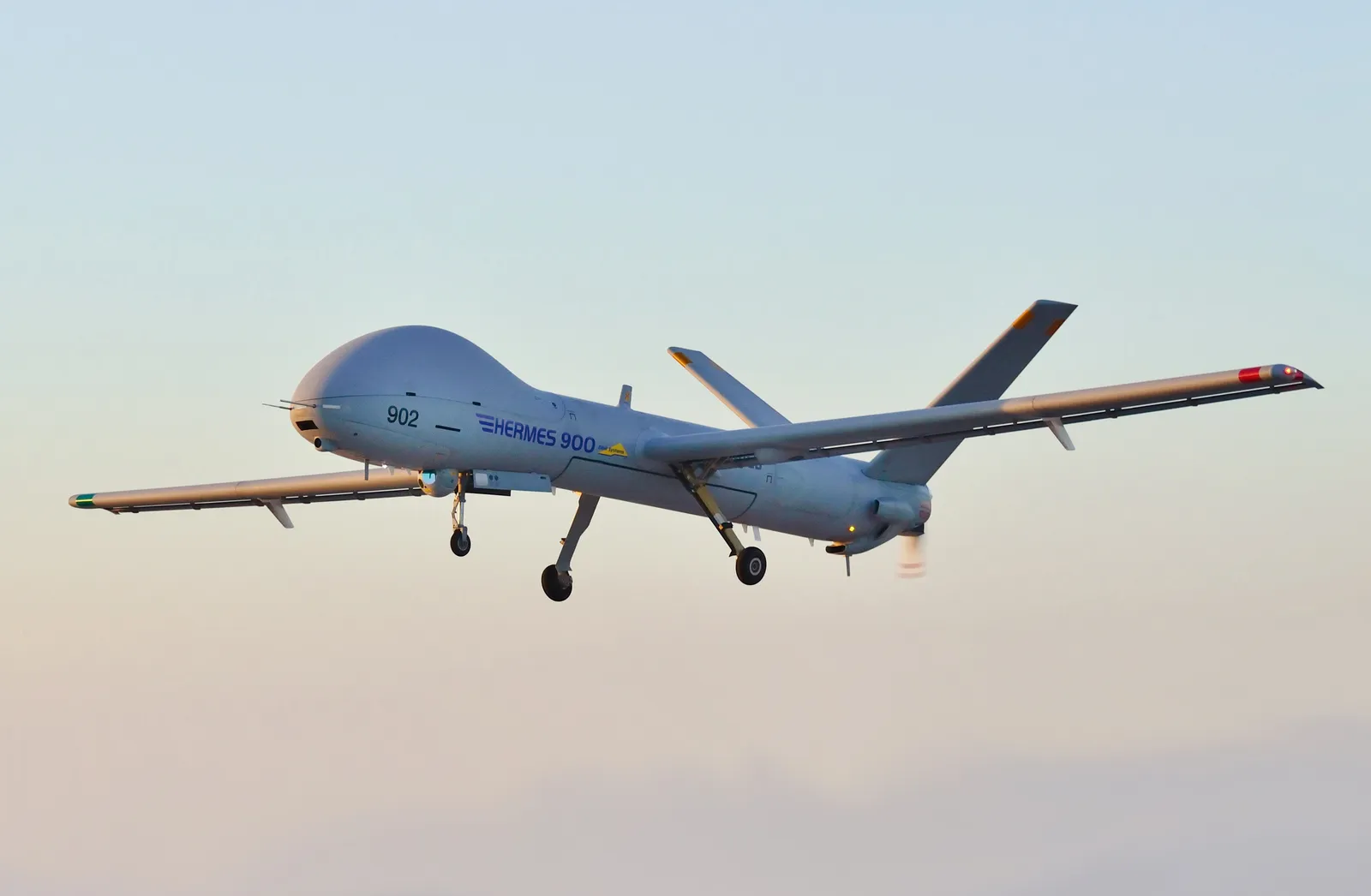
Serbian President Aleksandar Vučić has confirmed that the joint unmanned aerial vehicle plant built with Israel’s Elbit Systems will open between 15 and 20 September 2026. The facility in Simanovci, near Belgrade, is 51 percent owned by Elbit and 49 percent by Serbia’s state arms company SDPR. The wider picture is this: after shelving a Bayraktar TB2 purchase in 2023 for political reasons, Serbia has ended up paying several times what its neighbours paid for a comparable capability, on a delivery schedule that runs years longer.
At a Glance
- Serbia planned to buy the Bayraktar TB2 in 2022 but froze the process in 2023 after Türkiye sold the same platform to Kosovo.
- Kosovo placed its order in late 2022 and received five TB2s with a ground control station in April 2023 — roughly six months.
- In January 2025 Serbia signed a $335 million package with Elbit covering PULS artillery, Hermes 900 UAVs, long-range missiles and electronic warfare systems, with deliveries running to mid-2028.
- A second agreement worth around $1.6 billion followed in August 2025.
- For comparison: Croatia paid $95 million for six TB2s, and Bosnia and Herzegovina bought at what Balkan Insight called “half price”.
- Hermes 900 export configurations are overwhelmingly unarmed ISR variants; the armed version is in practice operated in combat only by the Israeli Air Force.
- Serbia does not hold the majority stake in the new plant, and export approval rests with the Israeli side.
A Political Decision, Not a Technical One
Talks between Ankara and Belgrade on a TB2 sale were advancing in 2022. What ended them was not performance, price or any technical shortfall — it was Türkiye’s parallel sale to Kosovo. Belgrade read this as a political signal and effectively cancelled the procurement in 2023.
Over the following three years the regional map filled in against Serbia. Kosovo, Bosnia and Herzegovina, Albania and Croatia all fielded the Bayraktar TB2. As Nordic Monitor put it, Serbia is now “surrounded” by Turkish drones. The 2023 decision did not merely deny Belgrade a capability its neighbours acquired; it forced Serbia to obtain the same capability by a far more expensive and far slower route.
Who Paid What in the Balkans
| Country | System | Known cost | Order-to-delivery |
|---|---|---|---|
| Kosovo | 5 × Bayraktar TB2 + ground control station | Undisclosed | About 6 months (late 2022 – April 2023) |
| Croatia | 6 × Bayraktar TB2 | $95 million | Contract signed late 2024 |
| Bosnia and Herzegovina | Bayraktar TB2 | Well below market rate (“half price”) | 2024 |
| Serbia | Hermes 900 + PULS + missiles + EW package | $335 million (2025) + ~$1.6 billion (2025) | Deliveries to mid-2028 |
The line items are not identical — Serbia’s package also covers artillery and electronic warfare. But the order of magnitude speaks for itself: what Croatia paid for six combat-proven UCAVs is less than a quarter of Serbia’s first Israeli payment.
Two Platforms, Two Different Realities
| Criterion | Bayraktar TB2 | Hermes 900 |
|---|---|---|
| Operators | 34 countries, more than 600 aircraft delivered | About 10 countries: Israel, Azerbaijan, Brazil, Chile, Colombia, India, Mexico, the Philippines, Switzerland, Thailand |
| Armed export configuration | Armed variant exported as standard | Export variants largely unarmed ISR; India’s order is the unarmed configuration |
| Combat record | Libya, Syria, Nagorno-Karabakh 2020, Ukraine and others | Armed use effectively limited to the Israeli Air Force |
| Approximate cost | Around $5 million per aircraft; system packages in the $15-20 million range | Substantially higher per system; Switzerland contracted CHF 250 million for six aircraft |
| Typical lead time | Six months in Kosovo’s case | Contracted in 2015 in Switzerland’s case; full capability now projected for 2029 |
Nobody Else Flies an Armed Hermes
The Hermes 900 is not a poor platform. Elbit has announced more than 120 orders and the type serves from Brazil to the Philippines. Almost all of those are reconnaissance configurations, however. India’s aircraft are unarmed; Switzerland’s ADS-15 programme is purely ISR. An armed Hermes 900 is not a system flown in combat outside Israel.
The practical consequence is that Serbia is adopting an armed configuration with no second national user to learn from. Doctrine, munitions integration, troubleshooting and the entire operational learning curve are Belgrade’s own bill to pay. On the TB2 side, a pool of 34 operators, a standardised training package and a usage record drawn from four separate conflicts were already available.
Schedule Risk: The Swiss Precedent
Switzerland paid roughly CHF 250 million for six Hermes 900s in 2015 and expected delivery in 2019. The programme slipped for years; the first two aircraft arrived in 2022, the contract was extended to the end of 2026, and the Swiss Federal Audit Office has said the system will not meet military requirements before 2029. Costs rose to about CHF 300 million, one aircraft was written off in a pre-delivery test flight, and Elbit paid penalties over the delays.
Deliveries under Serbia’s January 2025 package are scheduled through mid-2028. In other words, the capability Belgrade cancelled in 2023 will reach the field five years later at best. By then Kosovo’s TB2s will be entering their sixth year of service.
Whose Factory Is It?
Elbit Systems holds 51 percent of the Simanovci plant, SDPR 49 percent. Serbia presents this as domestic production and export capacity, but the majority stake, design authority and critical subsystems sit with the foreign partner. Israeli defence exports to third countries require Israeli Ministry of Defense approval — meaning Belgrade will not decide alone where a Serbian-built Hermes can be sold.
The comparison is next door again: Bosnia and Herzegovina was able to put local production on the table alongside its TB2 purchase, and Ukraine established a Baykar facility on its own territory. The Turkish model leaves the buyer with the majority stake and operational independence.
What Serbia Gave Up
- Cost: billion-dollar packages for a capability neighbours acquired on budgets an order of magnitude smaller.
- Time: six months for Kosovo against a 2028 horizon for Serbia — a capability gap of at least five years.
- Combat validation: the armed configuration entering Serbian service has no proven track record outside Israel.
- Freedom of action: majority ownership and export licensing sit with the foreign partner, which makes the “domestic production” label debatable.
None of this followed from a technical constraint. The option on the table in 2022 was the same capability, cheaper, faster and combat-validated. What closed that option was a political reaction, and the Serbian defence budget is paying the bill.
The View From Türkiye
The Belgrade market looks closed to Turkish industry in the medium term. Against that, Türkiye is effectively the sole supplier to every country around Serbia — Kosovo, Bosnia and Herzegovina, Albania and Croatia. Turkish platforms sit at the centre of the UAV architecture built in the Balkans since 2022, and Serbia is the single state outside it, absorbing the cost of that choice itself. The meaningful indicator is not one lost order but four neighbouring states choosing the same platform.
Frequently Asked Questions
Why did Serbia not buy the Bayraktar TB2? No technical or pricing reason was given. Talks that were advancing in 2022 were frozen by Belgrade in 2023 after Türkiye sold UCAVs to Kosovo.
How much has Serbia paid Israel? A $335 million PULS, Hermes 900, missile and electronic warfare package in January 2025, followed by a second agreement worth around $1.6 billion in August 2025.
Is the Hermes 900 armed? An armed version exists but is in practice operated by the Israeli Air Force. Export configurations have largely been unarmed ISR variants.
Who owns the new factory? Elbit Systems holds 51 percent, Serbia’s state company SDPR 49 percent.
When do deliveries arrive? The plant is due to open on 15-20 September 2026; deliveries under the 2025 package run to mid-2028.
Sources
- The Times of Israel, “Serbia and Israel’s Elbit set to open joint combat drone factory in September”, August 2026.
- The Defense Post, “Serbia Signs $335M Deal for Israeli PULS Artillery System, Hermes Drones”, 6 January 2025.
- The Defense Post, “Croatia to Procure Six Bayraktar TB2 Drones for $95 Million”, 19 November 2024.
- Balkan Insight, “Half-Price Bayraktars: Bosnia Buys Turkish Drones, Eyes Own Production”, 25 September 2024.
- Key.Aero, “Kosovo becomes latest Bayraktar TB2 operator”, 2023.
- Aviation Week, “Switzerland Scales Back Hermes 900 Requirement Over Delays”.
- Shephard Media, “Switzerland’s Hermes 900 procurement faces further delays and headwinds”.
- Global Defense Corp, “Elbit Systems will produce Hermes 900 drones in Serbia”, 12 August 2026.
- Nordic Monitor, “Serbia to be ‘surrounded’ by Turkish drones following Ankara’s sale to Bosnia”.