Denmark and Finland Buy Forcit’s BLOCKER Naval Mines as Five-Nation Baltic Deterrence Push Expands

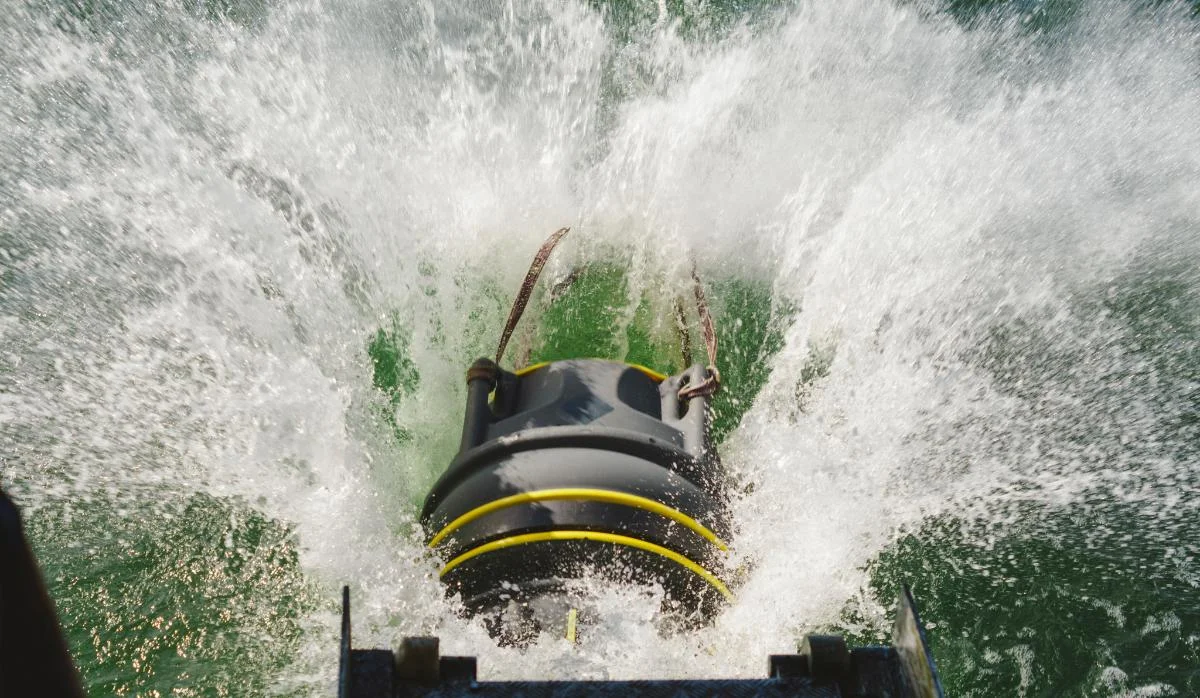
Denmark and Finland have signed separate agreements to procure Finnish company Forcit’s BLOCKER smart influence mine. Both purchases fall under the Finland-led International Naval Mines Cooperation (NMC) initiative, which also includes Germany, Lithuania and Norway.
Background to the deal
Finland’s Defence Forces Logistics Command signed a framework contract with Forcit in June 2026 on behalf of all five participating countries. Finland’s government valued the agreement at “hundreds of millions of euros,” though no exact national breakdown or delivery schedule has been disclosed.
The national agreements announced by Denmark and Finland on November 10 mark one of the first concrete steps turning that framework into actual purchases. The NMC initiative aims to strengthen cooperation on logistics, training, exercises and system life-cycle management through joint procurement.
What the BLOCKER can do
BLOCKER is described as a seabed-deployed “smart influence sea mine” with an explosive charge equivalent to more than 1,000 kg of TNT. It can be deployed by boat, ship or helicopter, and according to the company can remain active on the seabed for up to two years.
The system uses multi-sensor detection — acoustic, pressure, magnetic and inertial, with an optional photonic sensor. Participating countries can program detection and detonation algorithms for different target signatures and operational needs, and Forcit supplies the programming devices and tools for that purpose. The company says the mine is armed only after it reaches the seabed.
Baltic context and official statements
Lithuania’s Minister of National Defense, Robertas Kaunas, said naval mines are “an important part of Lithuania’s defense, helping to ensure security in the Baltic Sea.” He added that the participating countries will coordinate efforts and ensure interoperability with allies, and that naval mines strengthen collective defense and deter potential adversaries.
Commander Steen Balslev, head of the maritime division at Denmark’s Defence Acquisition and Logistics Organisation, said the purchase will strengthen Denmark’s maritime defense and interoperability with allies: “Through international cooperation, we can acquire an important capability together.”
What it means
Five nations converging on a common mine configuration signals growing weight given to naval mines within NATO’s Baltic Sea deterrence posture. The pace from the 2024 letter of intent to this week’s national agreements suggests a project moving steadily, if gradually, from framework to delivery.
For Turkish observers, naval mines are already part of the product lines of state-owned firms like MKE and Roketsan, but the NMC model’s multinational joint procurement and shared configuration approach offers a different cooperation template than single-nation purchases — one that lets smaller and mid-sized navies acquire costly capabilities by pooling demand.
Sources
- The Defense Post, “Denmark, Finland Sign Deals for Finnish BLOCKER Naval Mines”, November 10, 2026, thedefensepost.com — used for deal details and official statements.
- Naval News, “Finland Signs Multi-Million Euro Framework Agreement for Forcit Blocker Naval Mines”, navalnews.com — used for the NMC framework contract and technical specifications.
- Nordic Defence Sector, “Five countries procure naval mines from Forcit”, nordicdefencesector.com — used for the list of participating countries.