The Military Strength of Senegal: How Many Tanks, Aircraft and Missiles Are in the Inventory? (2026)

Senegal’s military inventory shows an unusual balance for Africa: there is no tank on the land side, no fighter aircraft in the air force and no air-defence missile on the ground; yet the navy operates some of the region’s most modern patrol vessels, armed with a 76 mm gun and MARTE anti-ship missiles. The choice is not accidental. The complete end of the French military presence in July 2025 and the start of offshore oil and gas production have shifted Senegal’s defence centre of gravity from land to sea.
At a Glance
- Active personnel: ≈ 17,000 (Global Firepower 2026); the reserve and paramilitary columns read zero and the gendarmerie is counted inside this total
- Main battle tanks: Zero; the Senegalese army has no tanks at all, and the heavy armour column is limited to 12 Chinese-built WMA-301 tank destroyers
- Military aircraft (total): ≈ 39-40; the fighter column is entirely empty and the only armable fixed-wing type is 4 KT-1 Woongbi
- Air defence: The ground-based missile layer is zero; the defence consists of 12 40 mm Bofors L/60 and 21 20 mm F2 anti-aircraft guns
- Navy: ≈ 2,000 personnel and 34 craft; three OPV 58 S patrol vessels carry a 76 mm gun, MARTE Mk2/N anti-ship and Mistral 3 missiles
- GFP ranking: 126th among 145 militaries (PwrIndx 2.8925); defence budget $777.8 million (GFP) versus 437.9 billion CFA francs in commitment authorisations in the 2026 budget law
Note: The inventory figures below are approximate values drawn from open sources such as Global Firepower, the IISS Military Balance and SIPRI.
About the Senegal Armed Forces
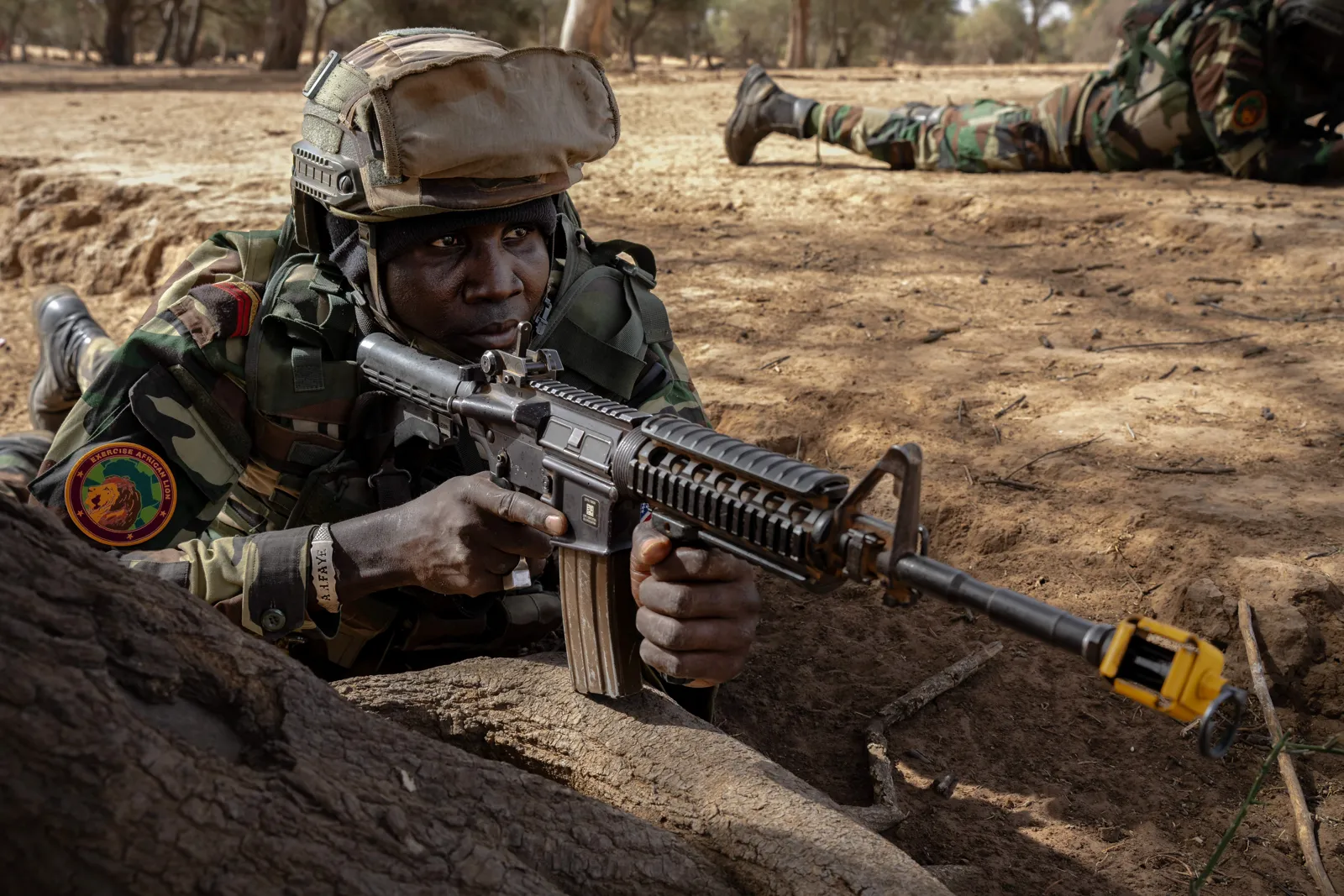
The Senegalese Armed Forces (Forces armées du Sénégal) consist of the Army, Navy, Air Force and National Gendarmerie. According to Global Firepower’s 2026 data they rank 126th among 145 militaries with roughly 17,000 personnel, at a power index of 2.8925. The reserve and paramilitary columns read zero, and the variation between sources stems from whether the gendarmerie is counted in the total. In the force breakdown the Army fields about 12,000, the Navy around 2,000 and the Air Force about 1,000 personnel.
The country is divided into seven military zones: Dakar, Saint-Louis, Kaolack, Tambacounda, Ziguinchor, Kolda and Thiès. The Army rests on a two-division structure, Operations and Logistics; open sources record the 22nd, 24th and 25th armoured battalions, the 26th Reconnaissance and Support Battalion at Kolda and six infantry battalions numbered 1 to 6.
The commander-in-chief is President Bassirou Diomaye Faye; the Ministry of the Armed Forces has been headed since April 2024 by retired Air Corps General Birame Diop. The Chief of the General Staff is General of Air Corps Mbaye Cissé, appointed on 6 April 2023. Senegal is one of the few African states never to have experienced a military coup and to have kept its army out of politics since independence.
The defence budget varies between sources. Global Firepower gives a figure of $777.8 million for 2026. In the 2026 budget passed by Senegal’s National Assembly on 6 December 2025, the Ministry of the Armed Forces received 437.9 billion CFA francs in commitment authorisations and 338.4 billion in payment appropriations; the territorial defence programme accounts for 191.2 billion CFA francs, of which 143 billion is personnel spending. A military programming law covering 2025-2029 has also been prepared.
What distinguishes the Senegalese military among its regional peers is the density of its operational record. The force sent 500 troops to the Gulf War in 1990, contributed a 1,500-strong contingent to ECOMOG in Liberia in 1992, deployed a battalion to Rwanda in 1994, intervened in the Guinea-Bissau civil war in 1998 and entered the Gambia in 2017 to enable the inauguration of newly elected President Adama Barrow. On a per-capita basis it ranks among Africa’s largest contributors to peacekeeping.
Two developments rewrote the security equation in 2025. The first was the Casamance peace agreement signed in Bissau on 23 February 2025 with Prime Minister Ousmane Sonko attending and Guinea-Bissau President Umaro Sissoco Embaló mediating: the furthest diplomatic step yet in a conflict running since the early 1980s, although some MFDC factions did not join it. The second was the end of France’s 65-year military presence: the handover began on 7 March 2025 with the Maréchal and Saint-Exupéry sites, continued with the Contre-Amiral Protet base at Dakar port on 15 May and the Rufisque base on 1 July, and closed on 17 July 2025 with Camp Geille at Ouakam and the airfield at Dakar airport, ending a permanent presence of about 350 French soldiers.
Land Forces Inventory
| System type | Est. quantity |
|---|---|
| Main battle tanks | None; Senegal fields the largest tank-free army in West Africa |
| Tank destroyers (WMA-301 Assaulter) | 12; Chinese-built wheeled fire-support vehicles with a 105 mm gun, the army’s heaviest direct-fire weapon |
| Infantry fighting vehicles (Ratel) | 26; South African-sourced, the only conventional IFV class in the land forces |
| Armoured reconnaissance (Panhard AML, Eland-90, RAM Mk3) | ≈ 155 (53 AML + 47 Eland-90 + 55 Israeli-built RAM Mk3); the numerical backbone of the armoured inventory |
| Armoured personnel carriers (Panhard M3, M3 half-track, EE-11 Urutu, RG-31, WZ-551) | ≈ 29 confirmed plus an undisclosed number of Urutu and RG-31; the M3 half-tracks date from the Second World War generation |
| Armoured personnel carriers (Dozor-B) | 6; Ukrainian-sourced light armoured vehicles |
| Mine-resistant vehicles (Nurol Makina Ejder Yalçın) | 25; Turkish-sourced, ordered by the National Gendarmerie in February 2018 and delivered the same year |
| Mine-resistant vehicles (Katmerciler Hızır II, Puma M26-15, Casspir) | 30 Puma + 9 Casspir (South Africa) + an undisclosed number of Hızır II (Türkiye) |
| Towed howitzers (TRF1 155 mm, M-50 155 mm, M101 105 mm) | 20 (8 TRF1 + 6 M-50 + 6 M101); the self-propelled howitzer column is entirely empty |
| Rocket artillery (Bastion-01) | 6; a Ukrainian-sourced BM-21 Grad derivative, the army’s only salvo-fire system |
| Mortars (MO-120-RT-61 120 mm) | 32; French-built rifled towed mortars, the main indirect fire support of the infantry battalions |
| Anti-tank missiles (MILAN) | 496; the only guided-missile line in the land inventory |
| Total armoured vehicles (GFP 2026, broad definition) | ≈ 1,860; in a tank-free army this figure consists mostly of wheeled light armour and tactical vehicles |
| Domestic production | The ISEVEM plant at Diamniadio was inaugurated by President Faye on 16 December 2025; it assembles KIA KM450 tactical vehicles in partnership with South Korea, with an annual capacity of 1,000 vehicles |
Air Force Inventory
| Platform | Est. quantity |
|---|---|
| Total military aircraft | ≈ 39-40; personnel strength about 1,000, with headquarters at Ouakam near Dakar |
| Fighter aircraft | None; the Senegalese Air Force has never operated a combat jet since its founding, and the 1970s Fouga Magisters have been retired |
| Light attack / trainer (KAI KT-1 Woongbi) | 4; South Korean-built, the only armable fixed-wing platform |
| Trainer aircraft (Socata TB 30 Epsilon) | 6; French-built basic trainers |
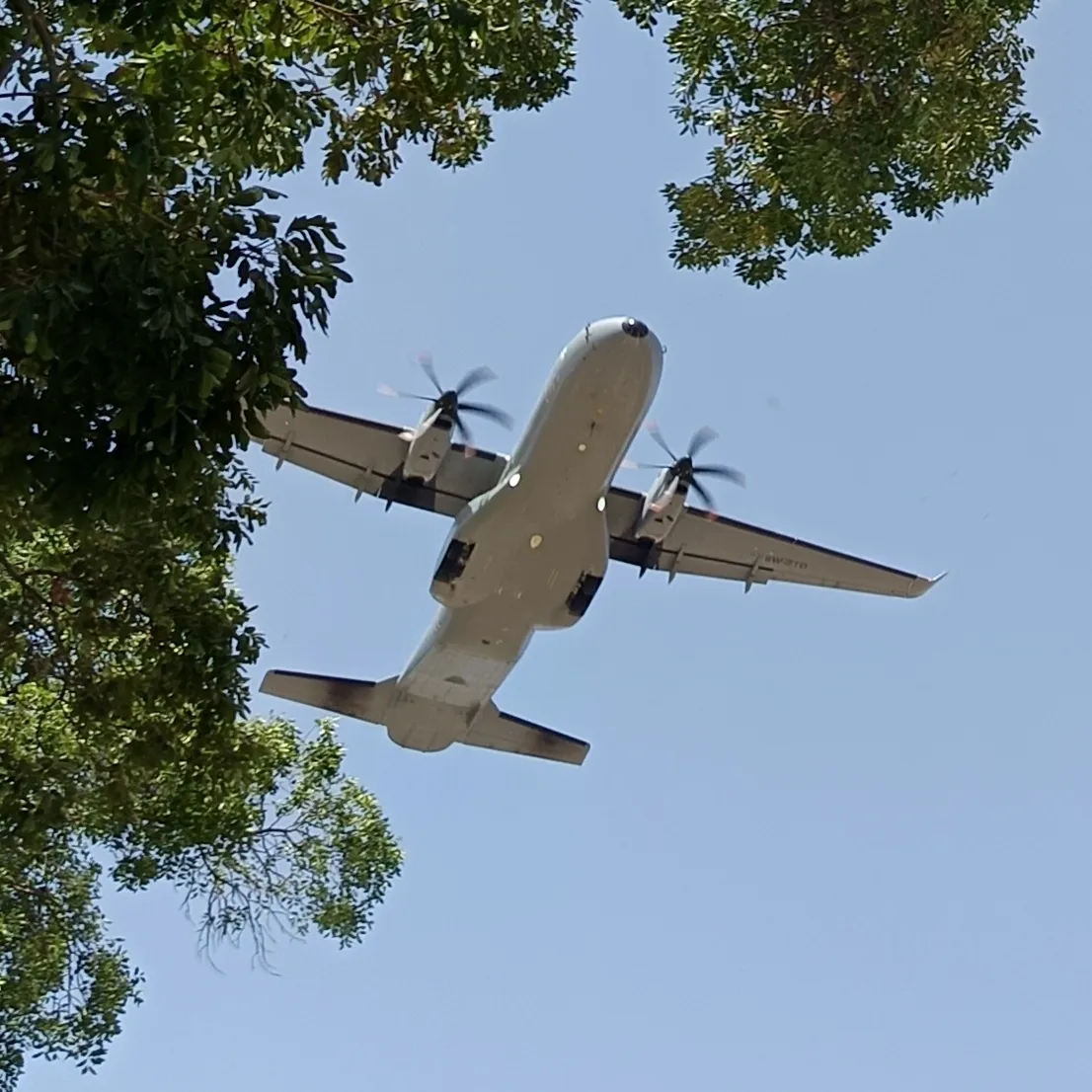
| Maritime patrol aircraft (CN-235 MPA) | 1; Indonesian-built, the main platform for exclusive economic zone surveillance |
| Transport aircraft (CN-235, C295, King Air 200) | ≈ 5 (2 CN-235 + 1 C295 + 2 King Air); the C295W joined the fleet in 2025 |
| Attack helicopters (Mi-24 / Mi-35) | 5; Russian-built, the air force’s only heavy firepower element |
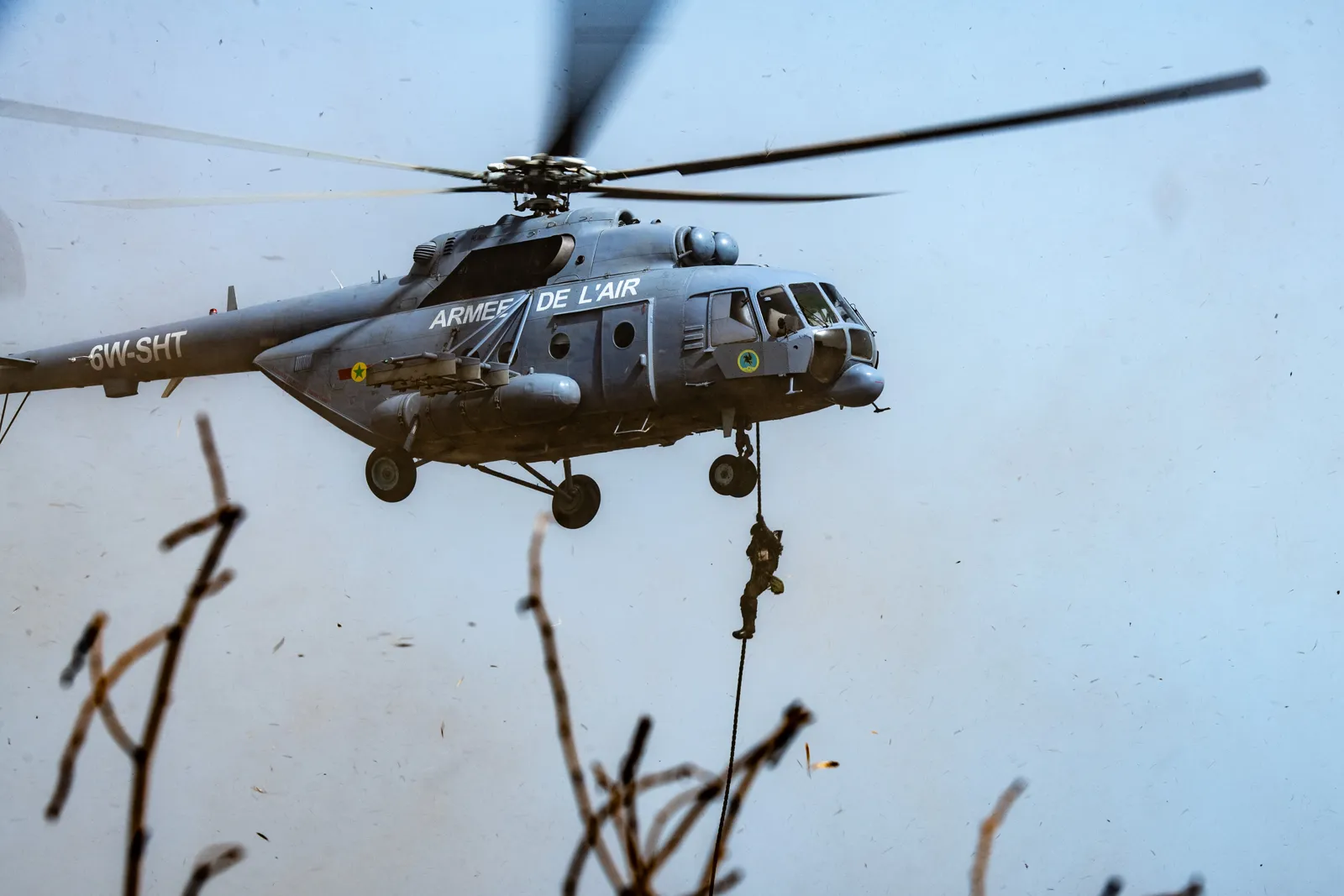
| Utility helicopters (Mi-17) | 4; the backbone of operational lift, used in special forces fast-rope and air assault training |
| Light helicopters (Bell 505, Bell 206, Alouette III) | 5 (3 Bell 505 + 1 Bell 206 + 1 Alouette III) in the liaison and observation role |
| Trainer helicopters (Hughes 269) | 6; the first step in pilot training |
| Cancelled programme (Aero L-39NG) | Four aircraft were ordered in April 2018 for light attack and training; by March 2022 the order was reported as cancelled |
| Unmanned aerial vehicles | No armed UAV; the navy has operated the Israeli-built Steadicopter Black Eagle 50H maritime surveillance rotary UAV since 2022, and the gendarmerie uses multicopters for crowd management |
Missile and Air-Defence Systems
| System | Type / Note |
|---|---|
| Ground-based air-defence missiles | None; there is not a single short-, medium- or long-range surface-to-air missile in Senegal’s inventory |
| Anti-aircraft guns (Bofors L/60 40 mm) | 12; Swedish-built, the heaviest line in the air defence |
| Anti-aircraft guns (20 mm modèle F2) | 21; French-built, carrying the entire low-altitude defence |
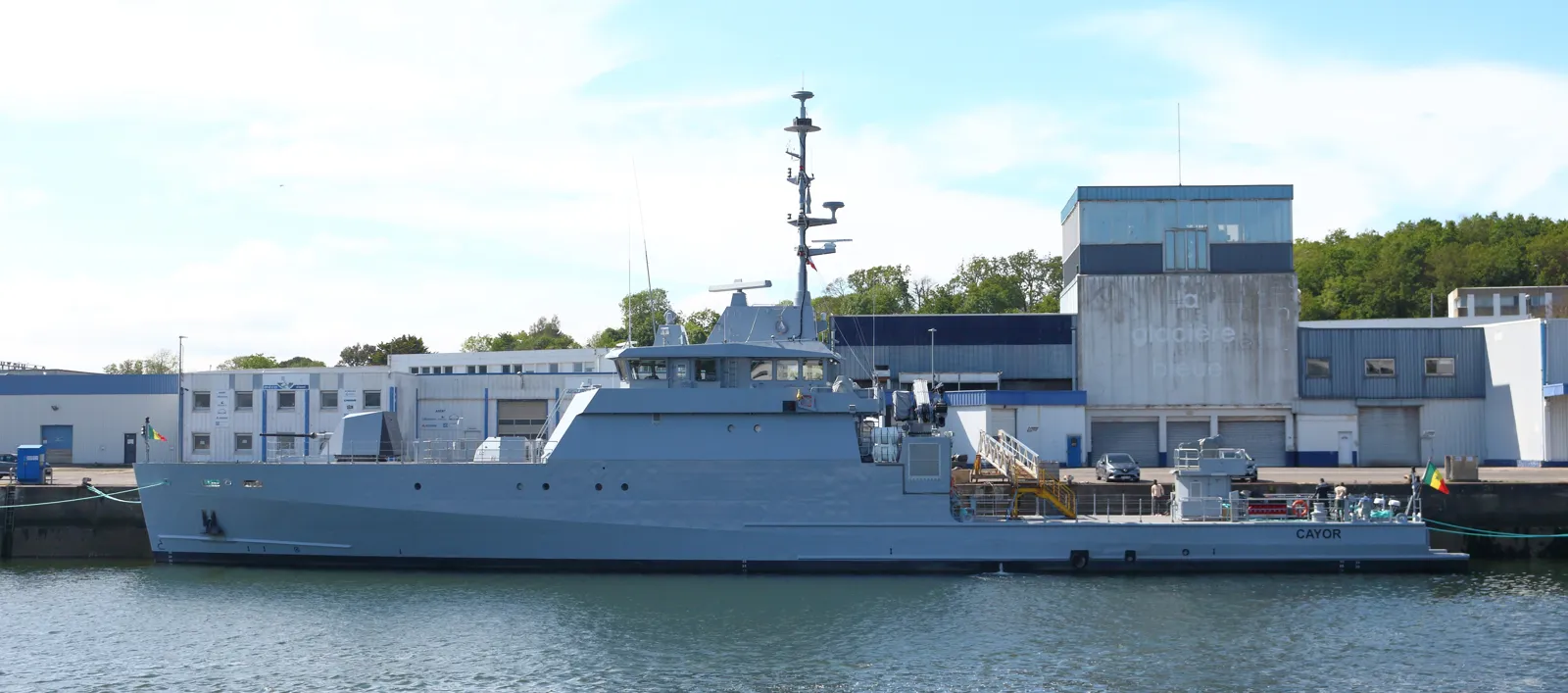
| Anti-ship missiles (MBDA MARTE Mk2/N) | Two launchers on each OPV 58 S; Senegal’s first anti-ship missile launch was conducted from Cayor on 9 November 2025, striking a decommissioned CTM-type landing craft about 15 km away |
| Point air-defence missiles (Mistral 3 / Simbad-RC) | Carried on the OPV 58 S class; the country’s only air-defence missile is deployed at sea |
| Anti-tank missiles (MILAN) | 496; Franco-German co-production, the entire guided-missile inventory of the land forces |
| Ballistic and cruise missiles | None; both columns are entirely empty |
| Radar and early warning | The navy runs continuous maritime surveillance with radar stations and semaphores along the coast, including at Dakar, Saint-Louis and Cap Skirring |
| What the gap means | All of Senegal’s guided air and naval missiles are concentrated on three patrol vessels, while guided defence on land is limited to MILAN anti-tank rounds |
Naval Power
| Class / Type | Est. quantity |
|---|---|
| Personnel and hull count | ≈ 2,000 personnel and 34 craft as of 2025, of which 8 are in the patrol-vessel class |
| Offshore patrol vessels (OPV 58 S / Walo class) | 3 (Walo 2023, Niani 2023, Cayor April 2024); built in France by Kership, the Piriou-Naval Group joint venture: 62.2 m long, 600 tonnes, 21 knots, 4,500 nm range |
| OPV 58 S weapon fit | One Leonardo 76 mm gun, two MARTE Mk2/N anti-ship launchers, Simbad-RC/Mistral 3 air defence, two Narwhal 20 mm and two 12.7 mm mounts; POLARIS combat management system |
| Other patrol vessels (Fouladou, Kédougou, Taouay, Ferlo, Lac de Guiers) | 5; Fouladou (OPV 190 Mk II, 2016) is the fleet flagship and Lac de Guiers is a Spanish-sourced Conejera class |
| Fast coastal surveillance craft (Shaldag Mk II / Mk V) | 4 (Lac Retba Mk V 2020 plus Cachouane, Soungrougrou and Anambe Mk II 2019-2020); Israeli-built, 40-45 knots |
| Landing and logistics craft | Gorée and Karabane (EDIC 700), Fadiouth and Yoff (Israeli-built LCM, 2024), CTM 2, plus the training ship Diender (South Korea, 2018) and the buoy tender Samba Laobe Fall |
| Fast coastal boats (RPB 20, RPB 12, Defiant 38, Defender RB-S) | ≈ 14; French- and US-sourced, used for river and coastal patrol |
| Bases | North: Saint-Louis (Hamédine Fall) covering the Mauritanian border and the Grand Tortue Ahmeyim gas field; centre: Dakar (Amiral Faye Gassama); south: Elinkine on the Guinea-Bissau border; the naval school EMAN was established in 2022 at Bel-Air camp in Dakar |
| Area of responsibility | 700 km of coastline and a 212,000 km² exclusive economic zone; securing the Sangomar oil field and the Grand Tortue Ahmeyim gas field is the top priority |
| Operational record | In 2024, 48 pirogues were intercepted and about 6,000 people rescued; illegal fishing costs Senegal roughly 2% of gross domestic product according to official estimates |
The Turkey Angle: Turkish Defence Industry
Senegal is one of West Africa’s most concrete files for the Turkish defence industry: there is both a signed military framework agreement and Turkish platforms that have actually entered the inventory. The Senegalese National Gendarmerie operates 25 Ejder Yalcin 4×4 armoured vehicles built by Nurol Makina. The contract was signed in February 2018 and the vehicles were delivered in batches in March and April-May of the same year; the same package also included Ejder Toma riot-control vehicles. Senegalese personnel were trained at Nurol Makina’s facilities, and at Senegal’s request open turrets were fitted to the vehicles. The gendarmerie inventory also includes Otokar Cobra II armoured vehicles, first shown publicly at the independence day parade on 4 April 2023. Sources additionally record the Katmerciler Hizir II in Senegal’s mine-resistant vehicle inventory, though no quantity has been disclosed. On the small-arms side, MKE’s KNT-76 designated marksman rifle also appears in the lists.
The institutional foundation was laid in 2022. During President Recep Tayyip Erdogan’s visit to Dakar on 21-22 February 2022 — which also included the opening of the Dakar Olympic Stadium built by Turkish contractors — Defence Minister Hulusi Akar and Senegal’s Minister of the Armed Forces Sidiki Kaba signed a Military Framework Agreement on 23 February 2022. Türkiye’s embassy in Dakar opened in 1962, making it one of the first Turkish missions in Africa; Senegal’s embassy in Ankara began operating in August 2006.
Contacts intensified markedly in 2025. In March 2025 the President of the Presidency of Defence Industries, Prof. Dr. Haluk Görgün, travelled to Dakar and met officials of Senegal’s Ministry of Defence, Prime Minister Ousmane Sonko and President Bassirou Diomaye Faye, with joint defence projects and technology sharing on the agenda. Sonko paid an official visit to Türkiye on 6-11 August 2025, toured the ASELSAN and HAVELSAN facilities, and four agreements were signed on 7 August 2025. Two of them fell directly under the defence heading: a Military Financial Cooperation Agreement signed by Defence Minister Yasar Güler and Senegal’s Minister of the Armed Forces, Lieutenant General Birame Diop, and a protocol amending the cash-assistance implementation protocol of 28 January 2020.
The second concrete step came on 6 October 2025, when Güler and Diop signed a memorandum of understanding on providing search-and-rescue and maritime surveillance training and support to the Senegalese Armed Forces. Under this document, personnel of the Turkish Naval Aviation Command conduct joint training flights in Senegalese airspace and maritime jurisdiction areas. The timing is notable: it was signed just three months after the French military presence closed in July 2025, and it targets precisely the Senegalese navy’s most critical requirement, offshore surveillance. The process continued into 2026; on 27 July 2026 Erdogan and Faye spoke by telephone, and Erdogan said that accelerating defence-industry ties between the two countries was of critical importance and that Türkiye would keep moving with a ‘win-win’ approach.
The economic base is broad as well. Bilateral trade reached $540 million in 2021 and $723 million in 2022; with the volume running at around $500 million as of 2026, an initial target of $1 billion is being discussed. Turkish contractors built Blaise Diagne International Airport (2017), the Dakar Arena (2018), the Dakar Olympic Stadium (2022) and Amadou Mahtar Mbow University (2022). TIKA’s West Africa office opened in Dakar in April 2007, the Yunus Emre Institute began operating in February 2022, and Turkish Airlines runs seven passenger and four cargo flights a week on the route.
One point needs clarifying: Senegal does not appear on Baykar’s disclosed customer list and has no armed Turkish unmanned aerial vehicle in its inventory. What exists today is not a broad armament programme born of the framework agreement, but a verifiable procurement in two armoured vehicle classes plus a training and financial cooperation base that deepened rapidly in 2025.
When the gaps in the inventory are mapped, they align almost exactly with the areas where the Turkish defence industry is strong. The ground-based air-defence missile column is entirely empty; Roketsan’s SUNGUR system is the direct answer to that gap, while ASELSAN’s KORKUT is the contemporary equivalent of the existing 40 mm Bofors and 20 mm F2 gun layer. The armed UAV column is empty too; the Bayraktar TB2 and TUSAS ANKA serve with several armies in West Africa and are a natural complement for a country watching 700 km of coast and a wide exclusive economic zone. The attack helicopter fleet amounts to five Mi-24/35s under supply-chain pressure from sanctions; the T129 ATAK is among the known alternatives in that column. At sea, Senegal has opted for French and Israeli platforms; but the patrol-boat and offshore patrol vessel lines of Turkish shipyards are among the rare options that could be tied through a co-production model to the domestic assembly approach that began with ISEVEM.
In short, Senegal is for the Turkish defence industry neither a virgin market nor a completed reference, but a file deepening fast. The first step was taken in 2018 with armoured vehicles, the institutional channel was opened by the 2022 Military Framework Agreement, and the relationship was widened in 2025 by two further defence documents. In the space left by the closure of the French presence, whether cooperation that began with training and maritime surveillance turns into platform procurement is the real question of the coming period.
Frequently Asked Questions
How many tanks does Senegal have? None. In Global Firepower’s 2026 data Senegal’s main battle tank column reads zero. The army’s heaviest direct-fire weapon is 12 Chinese-built WMA-301 wheeled tank destroyers with a 105 mm gun. The backbone of the armoured inventory consists of 53 Panhard AML, 47 Eland-90 and 55 Israeli-built RAM Mk3 reconnaissance vehicles plus 26 Ratel infantry fighting vehicles. The total armoured vehicle count on the broad definition is about 1,860.
What fighter aircraft does Senegal have? The Senegalese Air Force has no fighter aircraft in its inventory and has never operated a combat jet since its founding. The only armable fixed-wing platform is four South Korean-built KAI KT-1 Woongbi. The fleet of 39-40 aircraft is completed by 6 Socata TB 30 Epsilon trainers, 1 CN-235 maritime patrol aircraft, 2 CN-235 and 1 C295 transports, 2 King Airs and the helicopter component. An order for four Aero L-39NGs placed in April 2018 was reported as cancelled by March 2022.
How strong is Senegal’s navy? The Senegalese Navy operates with about 2,000 personnel and 34 craft, eight of them in the patrol-vessel class. The core of the fleet is three OPV 58 S vessels built at the Kership yard in France: Walo and Niani were delivered in 2023 and Cayor in April 2024. These 62.2-metre ships carry a 76 mm Leonardo gun, two MARTE Mk2/N anti-ship missile launchers, Mistral 3 air-defence missiles and 20 mm Narwhal guns. Added to them are the patrol vessels Fouladou, Kédougou, Taouay, Ferlo and Lac de Guiers plus four Israeli-built Shaldag fast craft.
What is Senegal’s air defence like? This is the weakest link in the inventory. Senegal has not a single ground-based surface-to-air missile; the short-, medium- and long-range columns are entirely empty. Air defence consists of 12 Swedish-built 40 mm Bofors L/60 and 21 French-built 20 mm modèle F2 anti-aircraft guns. The country’s only air-defence missile is the Simbad-RC/Mistral 3 system carried on the OPV 58 S patrol vessels, meaning guided air defence exists only at sea. The ballistic and cruise missile columns are also empty.
What has Senegal bought from the Turkish defence industry? Under a contract signed in February 2018 the Senegalese National Gendarmerie acquired 25 Ejder Yalcin 4×4 armoured vehicles and Ejder Toma riot-control vehicles from Nurol Makina, with delivery completed the same year. The gendarmerie inventory also includes Otokar Cobra II armoured vehicles, and open sources list the Katmerciler Hizir II among its mine-resistant vehicles. The institutional basis is the Military Framework Agreement signed on 23 February 2022 during Erdogan’s visit to Dakar, joined by the Military Financial Cooperation Agreement of 7 August 2025 and the search-and-rescue and maritime surveillance training memorandum of 6 October 2025. Senegal has no Turkish-built armed unmanned aerial vehicle in its inventory.
Bottom Line
Senegal’s inventory shows a consistency rarely seen in Africa: the country has not bought capabilities it would not use. A structure with no tanks, no fighter aircraft and no ground-based air-defence missiles may look weak on paper, but it largely matches the threat spectrum Senegal actually faces — a low-intensity insurgency in Casamance, illegal fishing across a wide exclusive economic zone, irregular migration, narcotics trafficking and the protection of newly opened offshore energy fields. Where the investment went confirms this: the three OPV 58 S vessels delivered in 2023-2024 made Senegal one of the few West African navies to combine a 76 mm gun, anti-ship missiles and point air defence on the same platform, and the first MARTE Mk2/N launch from Cayor on 9 November 2025 showed the capability is real. The land inventory, by contrast, is visibly old: the M3 half-tracks date from the Second World War generation, the Panhard AMLs and Eland-90s from 1960s technology, and the artillery amounts to just 20 towed howitzers and 6 rocket launchers. The direction is not unclear either: the ISEVEM assembly plant opened at Diamniadio in December 2025, an agreement with Mercedes for a military heavy-vehicle assembly line was signed in July 2025, and the training and logistics gap created by the French departure is being filled with new partners. The Turkish defence industry does not view this picture from the outside: it is already in the inventory with 25 Ejder Yalcin vehicles, user experience dates back to 2018, and three separate documents from 2022 and 2025 keep the institutional channel open. What comes next will be decided by Senegal’s ability to channel oil and gas revenue into defence modernisation, and by which supplier fills the two empty columns — air-defence missiles and armed unmanned aircraft.
Related Reading
Sources
- Global Firepower — Senegal
- IISS — The Military Balance
- SIPRI — Arms Transfers Database
- Wikipedia — Armed Forces of Senegal
- Wikipedia — Senegalese Air Force
- Wikipédia — Marine sénégalaise
- Turkish Ministry of Foreign Affairs — Türkiye-Senegal Political Relations
- Naval News — Senegalese Navy’s first anti-ship missile launch
- France 24 — France hands back its last military bases in Senegal