Taiwan’s Military Strength: Tanks, Jets and Warships (2026)

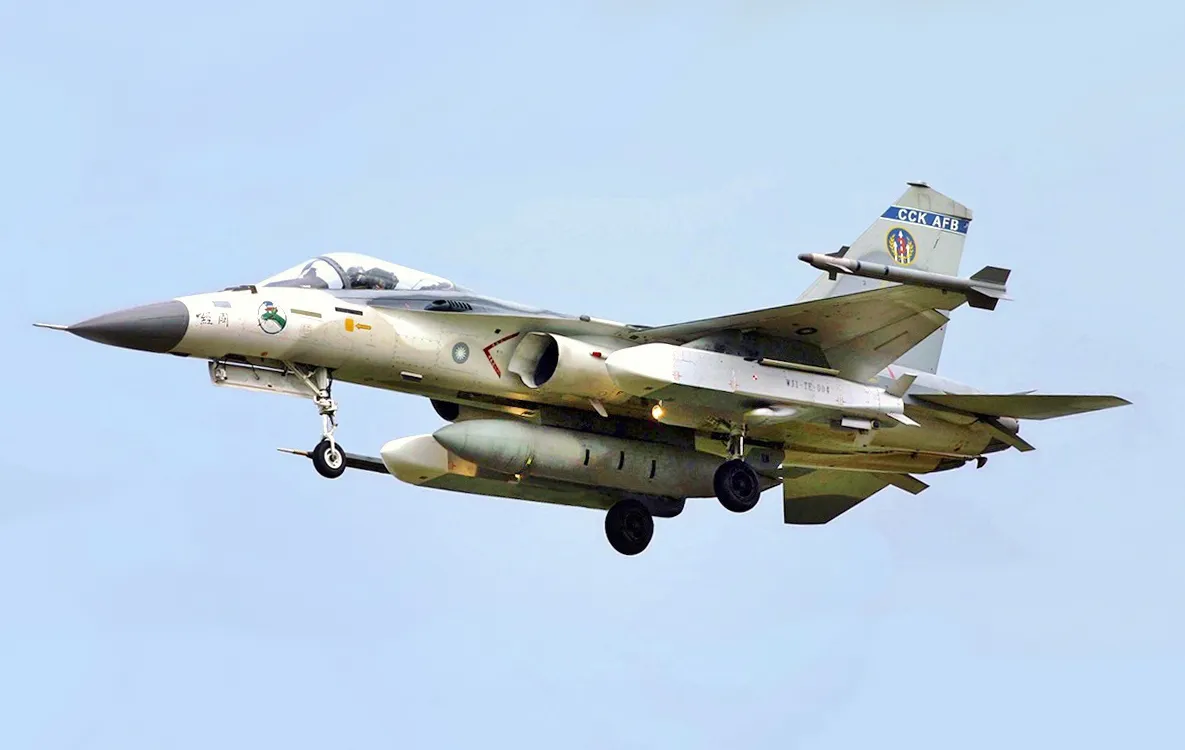
Taiwan’s military inventory reflects a defence doctrine that, against the overwhelming numerical superiority of the People’s Republic of China, relies not on quantity but on qualitative and asymmetric deterrence. The Republic of China Armed Forces are modernizing by adding upgraded F-16V fighters, newly delivered M1A2T Abrams tanks, indigenous F-CK-1 Ching-kuo fighters, Tien Kung air-defence systems and its first indigenous submarine, Hai Kun. Indigenization sits at the centre of the military’s strategy.
At a Glance
- Active personnel: ≈ 169.000
- Main battle tanks: ≈ 1.000
- Military aircraft (total): ≈ 750
- Key combat aircraft: F-16V
- GFP ranking: ≈ 24
- Submarines: ≈ 4
Note: The inventory figures below are approximate values drawn from open sources such as Global Firepower, the IISS Military Balance and SIPRI.
About the Taiwan Armed Forces
The Republic of China Armed Forces, with around 169,000 active personnel and a large reserve, maintain an intense mobilization capacity relative to the population. Comprising Army, Air Force, Navy and Marine Corps, the military builds all of its planning around a single scenario: deterring or delaying a possible amphibious landing by the People’s Liberation Army. As a result the inventory is shaped less by numerical parity than by an asymmetric, distributed defence logic that exploits the geography of the strait.
The inventory’s defining feature is the parallel advance of US-sourced procurement and rapidly growing indigenous production. From the US come F-16V upgrades, M1A2T Abrams tanks, Patriot PAC-3 and HIMARS; domestic industry produces the F-CK-1 Ching-kuo fighter, the Tien Kung air-defence family, the Hsiung Feng cruise missiles and the historically significant Hai Kun submarine. This dual structure aims to move Taiwan gradually toward a self-sufficient defence base resilient to arms-embargo risk.
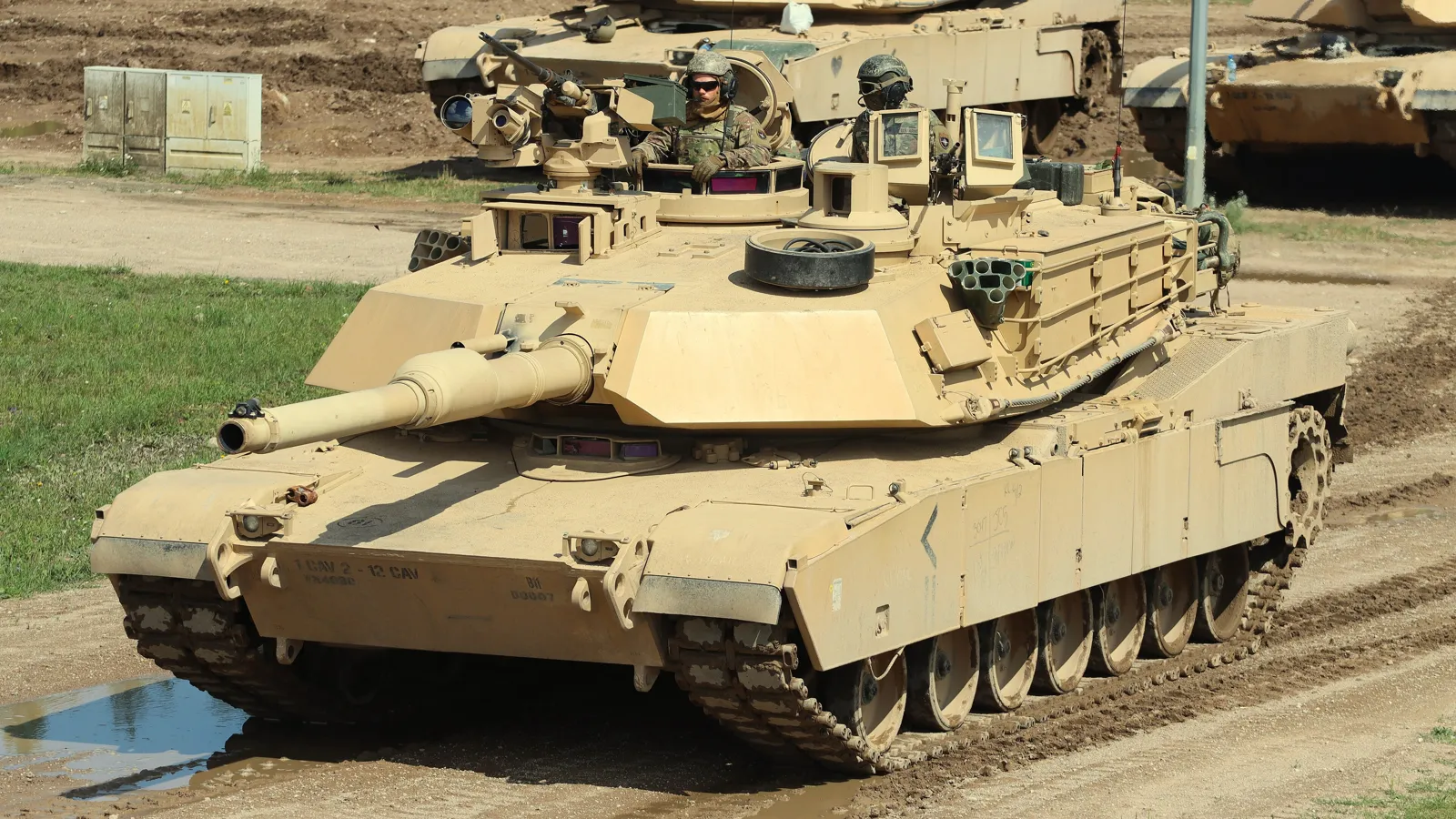
Land Forces Inventory
| System type | Est. quantity |
|---|---|
| Main battle tanks (M1A2T Abrams, CM-11 Brave Tiger, M60A3) | ≈ 1.000 |
| Armoured fighting vehicles (CM-32 Clouded Leopard, CM-21, M113) | ≈ 2.900 |
| Howitzers / self-propelled guns (M109, T-64/65, M110) | ≈ 1.100 |
| Multiple rocket launchers (Thunderbolt-2000 / RT-2000) | ≈ 100 |
Air Force Inventory
| Platform | Est. quantity |
|---|---|
| Total military aircraft | ≈ 750 |
| Combat (F-16V, Mirage 2000-5, F-CK-1 Ching-kuo) | ≈ 480 |
| Transport / trainer (C-130H, AT-3, T-5 Brave Eagle) | ≈ 120 |
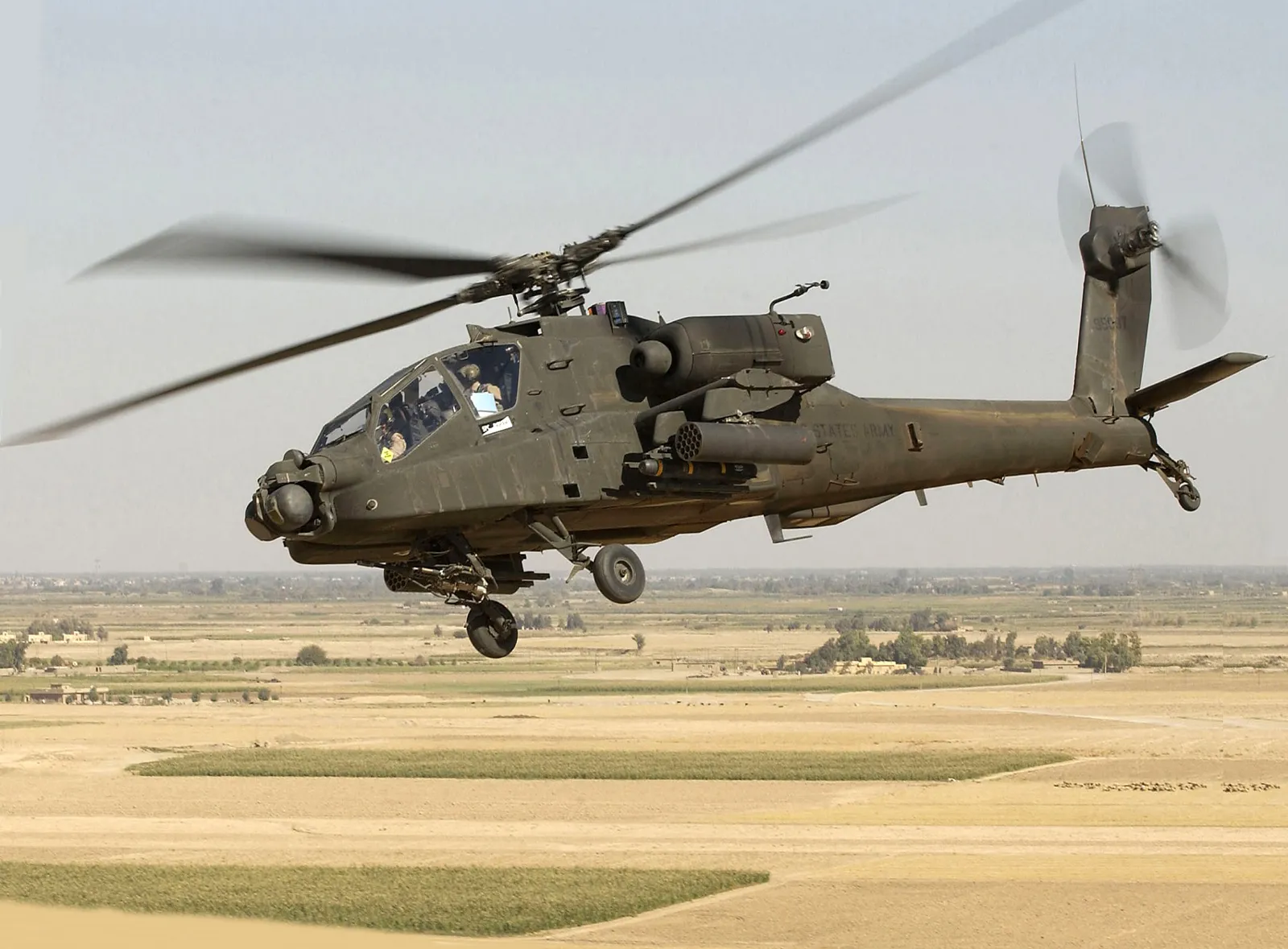
| Helicopters (AH-64E Apache, AH-1W Cobra, UH-60M, CH-47) | ≈ 200 |
Missile and Air-Defence Systems
| System | Type / Note |
|---|---|
| Tien Kung (Sky Bow) I/II/III indigenous long-range air defence | Layered air and missile defence |
| Patriot PAC-3 / MIM-104 air and missile defence (US) | Ballistic-missile defence |
| Hsiung Feng II/III anti-ship and land-attack cruise missiles (indigenous) | Supersonic anti-ship deterrence |
| Yun Feng medium-range cruise missile (indigenous, strategic) | Deep-strike capability |
Naval Power
| Class / Type | Est. quantity |
|---|---|
| Destroyers (Kee Lung / Kidd-class) | ≈ 4 |
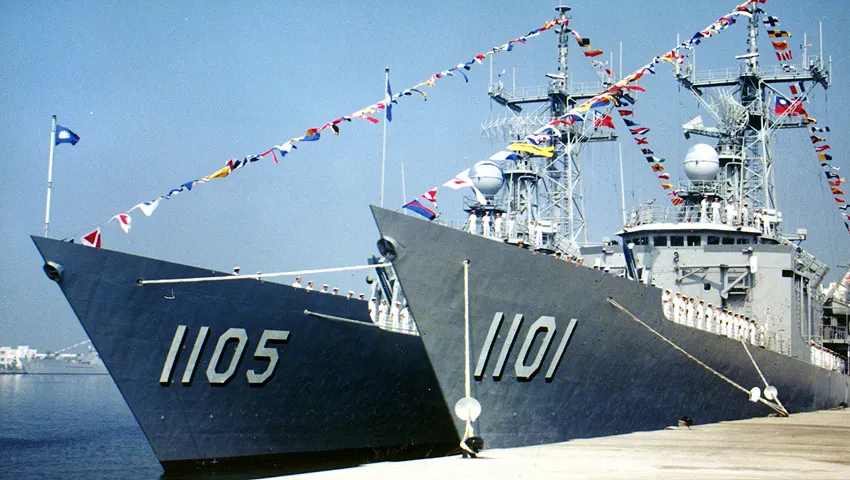
| Frigates (Cheng Kung, Kang Ding, Chi Yang-class) | ≈ 22 |
| Corvettes (Tuo Chiang-class stealth catamaran) | ≈ 8 |
| Submarines (Hai Lung + indigenous Hai Kun) | ≈ 4 |
The Turkey Angle: Turkish Defence Industry
Turkey adheres to the One-China policy internationally and has no official diplomatic relations with Taiwan; there is therefore no direct defence procurement or military cooperation between the two countries. For the Turkish defence industry, Taiwan is not treated as a conventional export market because of geopolitical constraints. Stating this plainly matters for the credibility of an inventory analysis.
That said, Taiwan’s defence model offers an instructive parallel for Turkey. Both countries have positioned an indigenous, national defence industry as a strategic necessity in the face of external-supply constraints and embargo risk. Taiwan’s indigenous F-CK-1 Ching-kuo fighter and next-generation fighter efforts run conceptually parallel to Turkey’s KAAN programme; its first indigenous submarine Hai Kun to Turkey’s MILGEM and national-submarine goals; and its Tien Kung air-defence family to the HISAR and SIPER systems. Both cases show how reducing external dependence creates leverage in deterrence.
Frequently Asked Questions
What is Taiwan’s main fighter jet? The backbone of the Republic of China Air Force is the upgraded F-16V (brought to Block 70/72 standard). Alongside it, the indigenous F-CK-1 Ching-kuo and the French Mirage 2000-5 remain in service. With its advanced AESA radar and modern munitions, the F-16V is the most capable element of the fleet.
Does Taiwan have an indigenous submarine? Yes. Taiwan, whose undersea force long relied on the Dutch-origin Hai Lung-class submarines, is strengthening it with Hai Kun (Narwhal), its first indigenously designed and built submarine. Unveiled in 2024, Hai Kun is regarded as one of the most ambitious projects of Taiwan’s indigenous defence industry.
Does Taiwan have defence cooperation with Turkey? No. Because Turkey adheres to the One-China policy, it has no official diplomatic relations or direct defence cooperation with Taiwan. However, since both countries pursue a strategy of reducing external dependence through an indigenous defence industry, a conceptual parallel can be drawn between programmes such as KAAN-F-CK-1, MILGEM-Hai Kun and HISAR/SIPER-Tien Kung.
Bottom Line
Taiwan is pursuing a distinctive modernization that bases its military not on a numerical race with China but on asymmetric deterrence exploiting the geography of the strait and on an indigenous defence industry. The F-16V, M1A2T Abrams, F-CK-1 Ching-kuo, Tien Kung and the indigenous Hai Kun submarine symbolize this strategy. For Turkey, Taiwan is not a direct market; the One-China policy and diplomatic constraints preclude that. But its drive to break external dependence through an indigenous defence industry forms a strong conceptual parallel with Turkey’s KAAN, MILGEM and HISAR/SIPER programmes. The inventory’s future depends on how the pace of indigenization keeps up with China’s military modernization.