Otokar in Africa: Cobra and ARMA Armoured Vehicles Explained

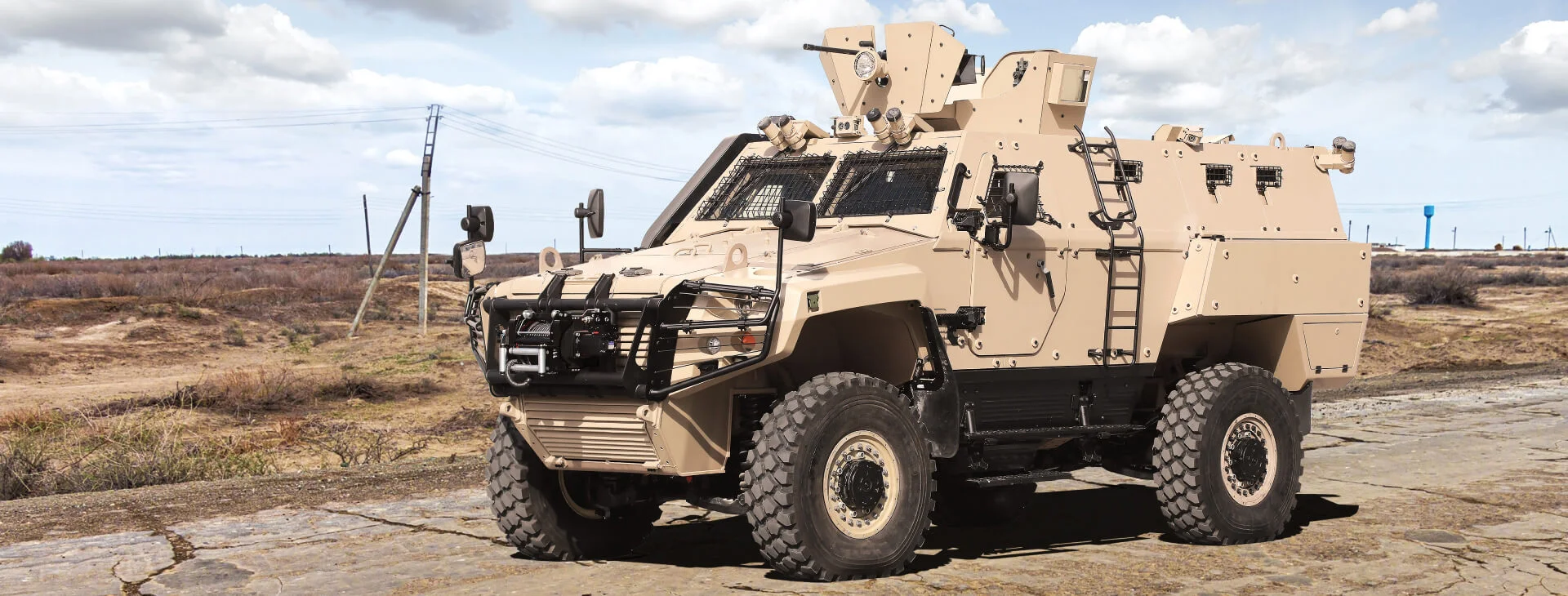
Otokar, the Koç Holding-controlled Turkish vehicle manufacturer, is one of the most widely fielded suppliers of tactical wheeled armoured vehicles on the African continent. Confirmed operators of its Cobra and Cobra II 4×4s include Nigeria, Rwanda, Ghana, Tunisia, Algeria, Chad, Burkina Faso, Mauritania and Gambia, while a separate 2020 contract for ARMA 8×8 vehicles went to an African buyer whose identity Otokar has never confirmed. This guide separates what is documented from what is only reported, with sources.
Table of Contents
- What Is Otokar?
- Ownership and Corporate Structure
- Main Products Relevant to African Markets
- Revenue, Employees and Global Exports
- Otokar in Africa: Confirmed vs Reported Operators
- Major Contracts Timeline
- Competitors in the African Market
- Otokar and the Wider Turkish Defence Ecosystem
- FAQ
- Sources
What Is Otokar?
Otokar Otomotiv ve Savunma Sanayii A.Ş. was founded in 1963, initially to build Türkiye’s first domestically produced intercity buses. Over the following decades it expanded into military vehicles, and today it designs, produces and exports tactical wheeled armoured vehicles, main battle tanks (as design lead on the ALTAY programme), commercial vehicles and buses. The company’s defence arm brands its military exports as “Otokar Defence” and its two best-known product families outside Türkiye are the Cobra light tactical vehicle line and the ARMA modular multi-wheeled armoured vehicle line.
Otokar states that it exports to more than 75 countries across five continents, a figure that includes a long list of African, Gulf, Central Asian, European and Latin American customers.
Ownership and Corporate Structure
Otokar is a subsidiary of Koç Holding, Türkiye’s largest industrial and financial conglomerate, which holds roughly 44.7% of the company alongside minority holdings by Ünver Holding and free-float shareholders on Borsa Istanbul (ticker: OTKAR). Koç Holding also controls other industrial names such as Ford Otosan and Tofaş, giving Otokar access to the group’s automotive manufacturing and supply-chain expertise, though Otokar’s defence division operates as a distinct business line with its own facilities in Sakarya, Türkiye.
Main Products Relevant to African Markets
Two vehicle families account for almost all confirmed and reported Otokar activity in Africa: the Cobra/Cobra II 4×4 and the ARMA 6×6/8×8.
| Vehicle | Class | Gross weight | Crew/troops | Engine | Typical armament |
|---|---|---|---|---|---|
| Cobra (1st generation) | Light tactical 4×4 | ~6.2 t | 1+8 | 6.5 L V8 diesel, ~190 hp | 12.7mm HMG, 20mm cannon, ATGM options |
| Cobra II | MRAP-protected 4×4 | ~19 t (GVW) | up to 11 | 6.7 L turbo-diesel, ~375–400 hp | RWS with HMG/grenade launcher, short-range SAM option |
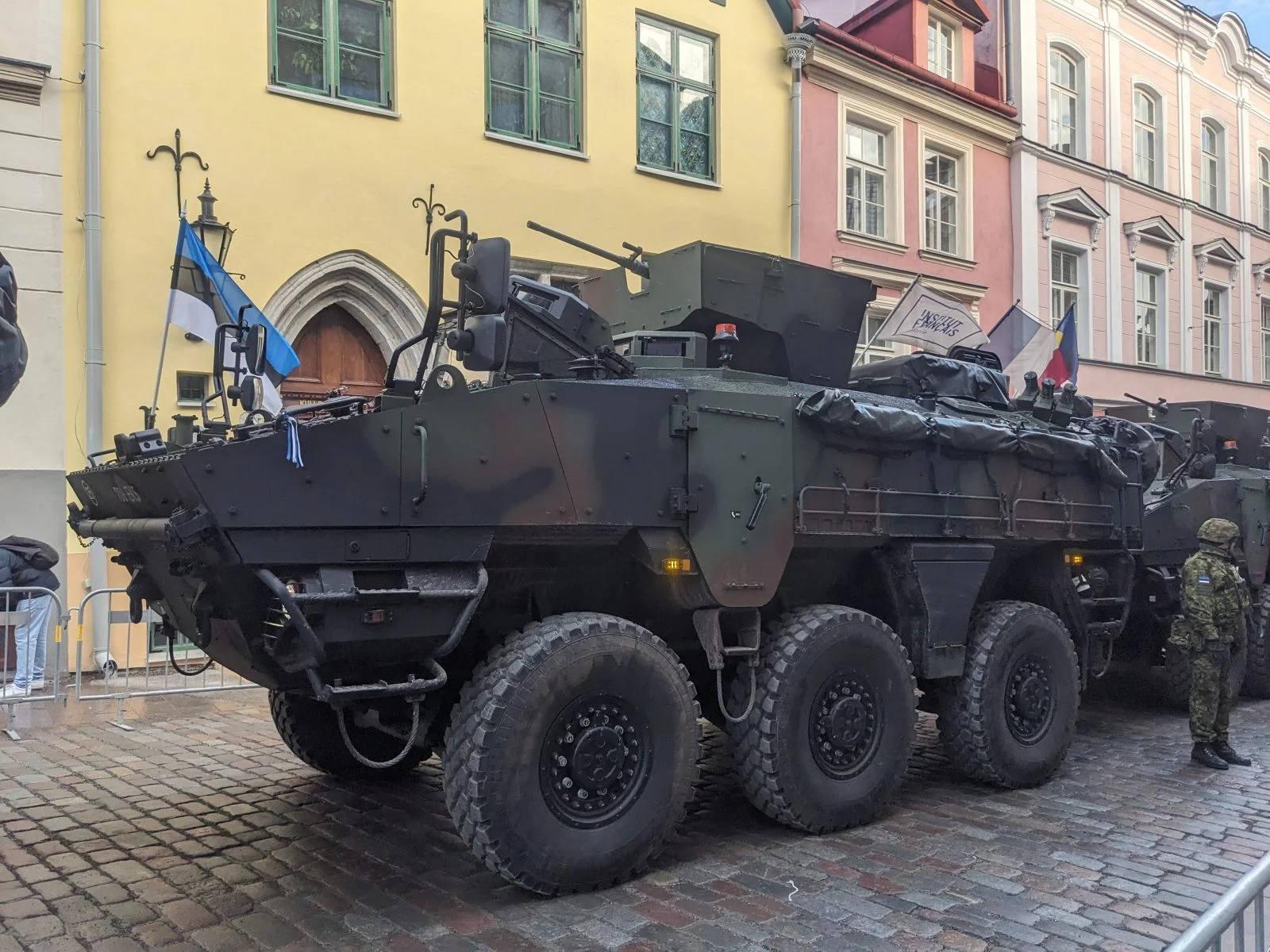
| ARMA 6×6 | Modular wheeled AFV | ~18.5 t | 2+8 (mission dependent) | Diesel, armoured drivetrain | RWS/turret up to 30mm, ATGM |
| ARMA 8×8 | Modular wheeled AFV | ~24 t | 2+10 (mission dependent) | Diesel, armoured drivetrain | Turret up to 30–105mm depending on configuration |
Cobra and Cobra II remain the entry-priced, most widely exported members of the family and are the vehicles actually confirmed in African service. ARMA is a heavier, more expensive step up sold mainly to Gulf and European militaries, with only one disclosed — but not publicly named — African order to date.
Revenue, Employees and Global Exports
Otokar’s trailing twelve-month revenue was reported at roughly $1.25 billion as of Q1 2026, up from about $958 million for full-year 2024, reflecting both currency effects and a growing defence order book. Headcount figures vary by source and reporting date, generally in the 2,200–3,700 range across the group’s bus, commercial-vehicle and defence lines. The company’s largest single armoured-vehicle export contract to date is not African: a deal to supply 1,059 Cobra II 4×4s to Romania, worth roughly €857 million — useful context for how large Otokar’s programme scale can get outside Africa, where individual African orders have so far been far smaller.
Otokar in Africa: Confirmed vs Reported Operators
Global Firepower-style rankings are not primary defence-procurement data, and this section relies instead on national defence reporting, manufacturer statements and specialist outlets (DefenceWeb, Army Recognition, Daily Sabah, military.africa). Where a claim could not be verified against more than one independent source, it is marked accordingly rather than presented as confirmed.
| Country | Vehicle | Status | Context |
|---|---|---|---|
| Nigeria | Cobra | Confirmed operator | Reported fleet of around 194 Cobras; used by the Nigerian Army against Boko Haram/ISWAP since roughly 2013. |
| Rwanda | Cobra | Confirmed operator | Reported fleet of around 30 Cobras; used in Rwanda’s UN peacekeeping deployments to the Central African Republic (MINUSCA). |
| Ghana | Cobra | Confirmed operator | New-build Cobras entered Ghanaian service from 2019. |
| Tunisia | Cobra | Confirmed operator | Longstanding Cobra operator; used in border and counter-terrorism roles. |
| Algeria | Cobra | Confirmed operator | Listed among Cobra operators; force details not publicly itemised. |
| Chad | Cobra | Confirmed operator | Listed among Cobra operators; force details not publicly itemised. |
| Burkina Faso | Cobra | Confirmed operator | In service; at least one publicly reported IED strike on a Burkinabé Cobra. |
| Mauritania | Cobra | Confirmed operator | Used in peacekeeping deployment reporting. |
| Gambia | Cobra | Confirmed, donated | Received as a Turkish government-to-government donation in 2023, not a commercial Otokar sale. |
| Unnamed African state | ARMA 8×8 + Cobra II | Reported, unconfirmed identity | $110 million contract announced in 2020 for ARMA 8×8 and Cobra II plus spares/training; Otokar publicly denied media speculation naming Uganda as the buyer, and no confirmed country has since been attached to the deal. |
Two points of caution follow directly from Otokar’s own rules of engagement with the press: first, an African government showing “interest” in Cobra or ARMA at a defence expo is not the same as a confirmed order, and second, SIPRI Trend-Indicator Values (TIV), where they exist for these deals, measure a standardised capability index rather than an actual contract price — treat any “$X billion” figure derived from TIV data as an order-of-magnitude proxy, not an invoice total.
Major Contracts Timeline
- Since 2013: Nigerian Army begins fielding Cobra 4×4s in counter-insurgency operations in the northeast.
- 2019: Ghana takes delivery of new-build Cobra vehicles.
- 2020: Otokar announces a $110 million export contract — its first ARMA 8×8 sale to Africa — covering ARMA 8×8, Cobra II 4×4, spare parts and training, for delivery from early 2021 through 2022; the buyer’s identity was not disclosed, and Otokar publicly denied it was Uganda.
- 2023: Türkiye donates a batch of Cobra vehicles to Gambia’s armed forces.
- 2024–2026: Otokar continues to report new Cobra II orders (including an $83.6 million contract for 2025 delivery) without disclosing the customer state in most cases, alongside its large, publicly confirmed Cobra II programme for Romania.
Competitors in the African Market
Otokar does not have the light-MRAP/wheeled-AFV segment in Africa to itself. Its main competitors include:
- Paramount Group (South Africa) — Marauder and Mbombe MRAP/APC families, with an established manufacturing and integration footprint across several African states.
- Streit Group (UAE, with African assembly partnerships) — a very high-volume, price-competitive MRAP and APC line widely sold across West and Central Africa.
- NORINCO and other Chinese manufacturers — CS/VP-series MRAPs and APCs, typically offered with financing packages attractive to budget-constrained buyers.
- Arquus/ACMAT (France) — the Bastion APC, in service with Nigeria alongside its Cobras, among other regional operators.
Turkish vehicles such as the Cobra and Cobra II compete primarily on unit cost, a mature spare-parts and training package, and a combat-use track record from Nigeria’s own counter-insurgency campaign — a real, demonstrable advantage rather than a claimed one. That does not make competitor platforms inferior; several, particularly Paramount’s mine-protected designs, have their own long African service records and are not being outperformed here, only compared on the specific dimensions above.
Otokar and the Wider Turkish Defence Ecosystem
Otokar’s African footprint sits alongside a broader push by Turkish defence companies into the continent. Related company and product coverage on Envanter Medya includes:
- Turkish Armoured Vehicles in Africa — Kirpi, Cobra II, ARMA, PARS and Nurol NMS compared.
- ROKETSAN in Africa — Türkiye’s main missile and munitions house.
- Turkish Aerospace (TUSAŞ) in Africa — aircraft and UAV programmes.
- Nigeria Military Strength 2026 — full force profile of Otokar’s largest confirmed African Cobra operator.
- Ghana Military Strength 2026
- Rwanda Military Strength 2026
FAQ
Which African countries operate Otokar armoured vehicles?
Confirmed Cobra/Cobra II operators include Nigeria, Rwanda, Ghana, Tunisia, Algeria, Chad, Burkina Faso, Mauritania and Gambia (the last via a 2023 Turkish government donation). A separate, larger ARMA 8×8 and Cobra II contract was sold to an African state in 2020, but Otokar has never confirmed which one.
Is Otokar a state-owned company?
No. Otokar is majority-owned by Koç Holding, a privately held Turkish industrial group, alongside Ünver Holding and public shareholders on Borsa Istanbul. It is not a state defence enterprise.
What is the difference between Cobra II and ARMA?
Cobra II is a roughly 19-tonne, mine-protected 4×4 tactical vehicle carrying up to about 11 personnel. ARMA is a larger, modular 6×6 or 8×8 armoured combat vehicle (18.5–24 tonnes) designed for a wider range of turret and mission-system configurations, and it sits at a higher price point.
Has any African country bought the Otokar ARMA 8×8?
Yes, in principle: Otokar announced its first African ARMA 8×8 order in 2020. In practice, the buyer’s name has never been officially released, and Otokar has denied press speculation that named Uganda.
Are Otokar vehicles assembled locally anywhere in Africa?
Not publicly disclosed. Unlike some of Otokar’s Gulf partnerships (such as its joint venture with the UAE’s Tawazun on the Rabdan 8×8), no local assembly or technology-transfer arrangement in Africa has been officially confirmed as of this writing.
Who competes with Otokar for African armoured-vehicle contracts?
South Africa’s Paramount Group, the UAE’s Streit Group, Chinese manufacturers such as NORINCO, and France’s Arquus/ACMAT (whose Bastion serves alongside Nigeria’s Cobras) are among the main competing suppliers in this vehicle class.
Sources
- Otokar corporate site
- Otokar Defence — Cobra II MRAP brochure
- DefenceWeb — “African country orders Arma, Cobra vehicles from Turkey’s Otokar”
- Daily Sabah — Otokar $110M export deal
- Army Recognition — Otokar denies Uganda is the ARMA 8×8/Cobra II client
- military.africa — Otokar to deliver ARMA 8×8 and Cobra II to African country
- Defence Industry Europe — Otokar $83.6M Cobra II order
- Wikipedia — Otokar (company profile, cross-checked against primary reporting)
- Wikipedia — Otokar Cobra (operator list, cross-checked)
- Wikipedia — Otokar Arma
Last updated: 20 September 2026.