ROKETSAN in Africa: Owner, Products, Munitions (2026)

ROKETSAN in Africa: Who Owns It, What It Sells, and Which African Militaries Use Its Munitions (2026)
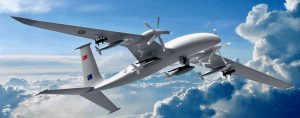
ROKETSAN is Türkiye’s national missile and precision-munitions manufacturer, majority-owned by the Turkish Armed Forces Foundation (TSKGV) and ranked 87th on SIPRI’s 2024 list of the world’s top 100 arms producers with $1.39 billion in revenue. In Africa, ROKETSAN’s profile is less about the company’s own name recognition and more about the munitions riding under the wings of Turkish drones: MAM-L and MAM-C smart micro munitions are the actual weapons fired by the Bayraktar TB2 and AKINCI aircraft that Niger, Mali, Chad, Ethiopia, Nigeria and other African air forces already operate. ROKETSAN’s own leadership has named Niger, Mali, Ethiopia, Chad and Djibouti as existing African relationships, with Saudi Arabia and the wider Gulf identified as the next expansion target.
What is ROKETSAN?
Founded in 1988 by Türkiye’s Defense Industry Executive Committee (SSİK) to build a domestic missile and rocket industrial base, ROKETSAN (Roketsan Roket Sanayii ve Ticaret A.Ş.) is headquartered in Ankara with its main production complex in Elmadağ, Kırıkkale. It designs and manufactures guided and unguided artillery rockets, anti-tank and air-defense missiles, naval weapons and torpedoes, precision-guided munitions for unmanned aircraft, and space-launch systems. The company delivered its first domestically developed missile into Turkish Armed Forces inventory in the 1990s and exported its first missile system in 2011; by 2025 it reported exports to close to 50 countries.
Who owns ROKETSAN?
ROKETSAN is not a private arms company in the Western sense — it is a state-linked industrial champion built by Türkiye’s own defense establishment:
| Shareholder | Stake |
|---|---|
| Turkish Armed Forces Foundation (TSKGV) | 55% |
| ASELSAN | 15% |
| MKE (Mechanical and Chemical Industry Corporation) | 15% |
| VakıfBank | 10% |
| Other | 5% |
Two of ROKETSAN’s own shareholders — ASELSAN and MKE — are themselves major Turkish defense suppliers active in Africa, which is one reason Turkish “national” systems (Bayraktar TB2 airframe, ASELSAN sensors, ROKETSAN munitions) are frequently sold and serviced as an integrated package rather than as separate purchases.
Main products
| Category | System | Role |
|---|---|---|
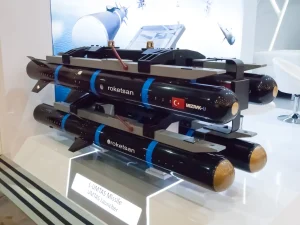
| UCAV smart munitions | MAM-C, MAM-L, MAM-T | Mini/micro guided bombs fired from Bayraktar TB2, AKINCI and other UCAVs; ranges from roughly 8 km (MAM-C) to 50 km (MAM-T) |
| Guided rockets | CİRİT | 70 mm laser-guided rocket for helicopters, UCAVs and light attack aircraft, ~8 km range |
| Anti-tank missiles | OMTAS, UMTAS/L-UMTAS (MIZRAK-U) | Medium (~4 km) and long-range (~8 km) guided anti-tank missiles |
| Air defense | HİSAR-O, SUNGUR | Medium-range (~25 km) and short-range/MANPADS-class air defense missiles |
| Artillery rockets | TRG-122, TRLG-230 (RG-230) | Multiple rocket launcher munitions, guided variants ranging 20–70 km |
| Naval / cruise missiles | ATMACA, ÇAKIR | Anti-ship missile and land-attack cruise missile |
| Tactical ballistic missile | Bora, Tayfun, KHAN | Short-range ballistic missile family |
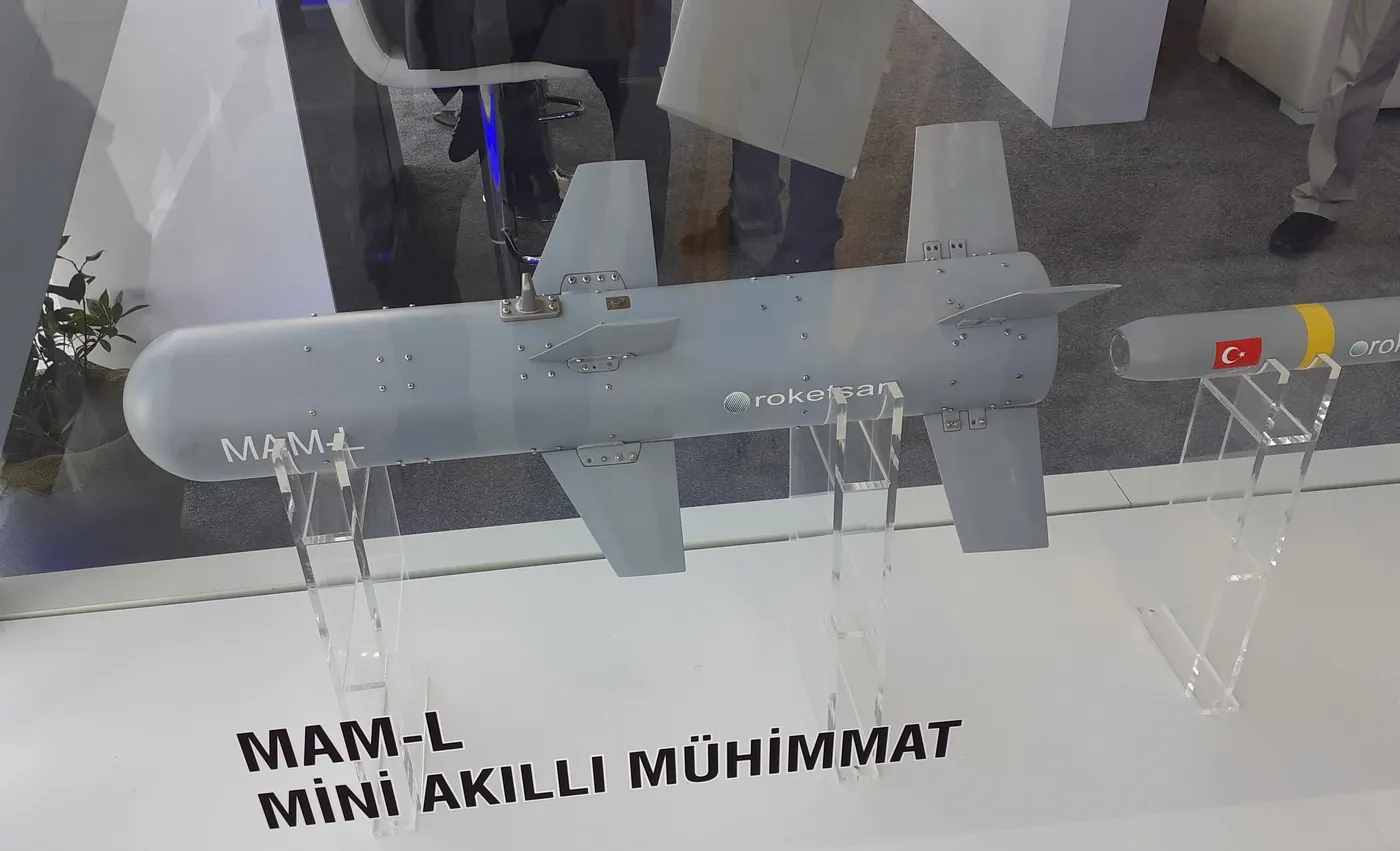
For African and Sahelian air forces, the MAM-L/MAM-C family matters more than any single headline missile: it is the munition that turns a Bayraktar TB2 or AKINCI from a surveillance asset into a strike platform against irregular threats such as Boko Haram, ISWAP and JNIM-linked groups, without the cost or logistics burden of a fighter jet.
Revenue and R&D
ROKETSAN reported $1.39 billion in 2025 SIPRI-tracked 2024 arms revenue, a 13% year-on-year increase that placed it 87th on SIPRI’s Top 100 Arms-Producing and Military Services Companies list — one of five Turkish firms on that list, whose combined 2024 revenue reached $10.1 billion. Preliminary company figures put 2025 revenue above $2 billion. ROKETSAN was also ranked among Türkiye’s top R&D spenders in 2024, reflecting continued investment in guided-munitions and space-launch technology rather than a mature, flat product line.
Employees
ROKETSAN employed roughly 5,000 people as of 2024, of whom about 2,000 work in R&D — a research-heavy headcount typical of a missile house rather than a mass-production arms manufacturer.
Exports
ROKETSAN contributed more than $400 million to Türkiye’s defense-industry exports in 2024 and by 2025 counted customers in close to 50 countries. Its first missile export took place in 2011; since then the company has expanded from single-system sales (such as the TRG-300 Tiger rocket system delivered to Bangladesh under a 2021 government-to-government agreement) toward the kind of “airframe plus munitions” packages that now define its African footprint — where the munition often travels alongside a Bayraktar TB2 or AKINCI sale rather than as a standalone contract.
ROKETSAN’s Africa and Middle East presence
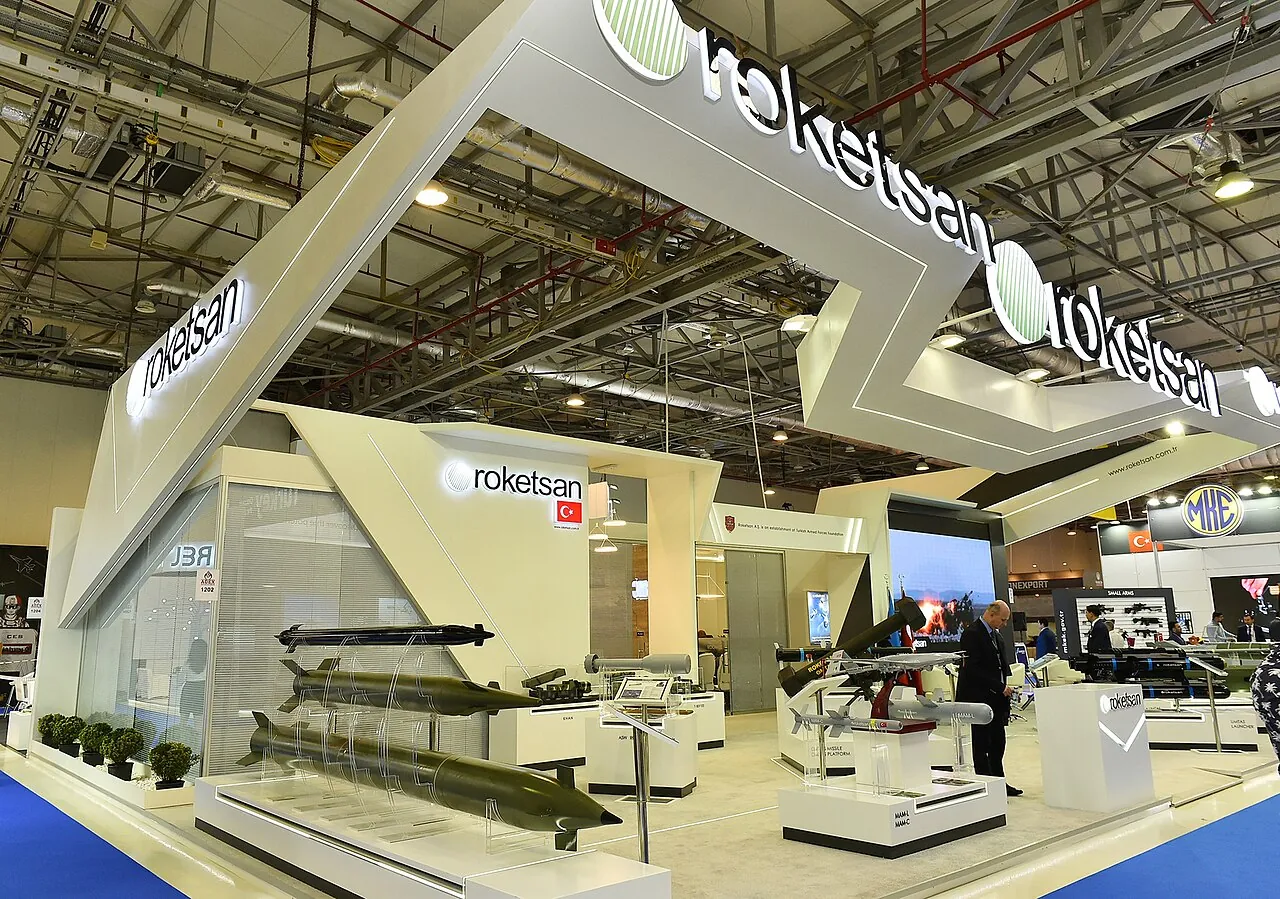
ROKETSAN General Manager Murat İkinci has publicly named Niger, Mali, Ethiopia, Chad and Djibouti as countries where ROKETSAN already has relationships, saying the company intends “to further develop relations with Africa” by building on Türkiye’s existing political and cultural ties to the continent. Industry reporting on those comments notes that several of these states arm their Turkish-made UAVs with ROKETSAN munitions — consistent with Niger, Mali, Chad and Ethiopia’s confirmed status as Bayraktar TB2 and/or AKINCI operators. Readers should treat this as ROKETSAN’s own characterization of its African relationships as reported in trade press, not as a government-confirmed procurement list; specific quantities and contract values are not publicly disclosed.
On the Gulf side, İkinci said ROKETSAN aims to build new collaborations at the World Defense Show in Saudi Arabia, describing the kingdom and the wider Middle East as an important growth market. As of this writing there is no confirmed Saudi ROKETSAN order — only exhibition presence and stated interest — so any claim of a signed Gulf contract should be checked against Türkiye’s SSB or the relevant Gulf ministry of defense before being treated as fact.
This mirrors the pattern already visible with other Turkish suppliers on the continent — see our profile of ASELSAN in Africa and our region-by-region look at Turkish armoured vehicles in Africa: Turkey’s defense-industrial expansion into the continent tends to move company by company and system by system, well ahead of any single omnibus “Turkey-Africa defense pact.”
Affiliated companies
ROKETSAN absorbed its precision-machining affiliate Tapasan A.Ş. in 2012, folding that supply-chain capability directly into the parent company. Beyond its own shareholder structure (TSKGV, ASELSAN, MKE and VakıfBank, above), ROKETSAN also runs a strategic supplier ecosystem — the company has described sourcing components for systems such as the L-UMTAS/MIZRAK-U anti-tank missile from a network of roughly 88 partner firms, a domestic-supply-chain model similar to the one BAYKAR and ASELSAN use for their own African-bound platforms.
Major contracts and milestones
- 2011: ROKETSAN’s first missile system export.
- 2012: Tapasan A.Ş. merged into ROKETSAN.
- 2021: Government-to-government MoU with Bangladesh for TRG-300 Tiger rocket systems, with deliveries following.
- 2024: $1.39 billion in SIPRI-tracked arms revenue (87th globally, +13% year-on-year); more than $400 million in export contribution.
- 2025–2026: Preliminary revenue above $2 billion; continued African outreach (Niger, Mali, Ethiopia, Chad, Djibouti relationships) and Gulf exhibition push at the World Defense Show in Saudi Arabia.
ROKETSAN does not publish country-by-country contract values, and no African or Gulf government has published a matching public procurement notice for a dedicated ROKETSAN contract as of this writing — the confirmed data point in each case is the presence of MAM-family munitions on already-confirmed Turkish UCAV fleets, not a separate, itemized ROKETSAN sale.
Products already in regional service
The clearest confirmed use of ROKETSAN hardware in Africa is indirect: any African air force operating the Bayraktar TB2 or AKINCI with a strike capability is, by definition, also operating ROKETSAN’s MAM-L or MAM-C munitions, since Baykar’s UCAVs are not cleared to carry third-country smart micro munitions in their standard configuration. That includes forces covered in our guides to which African countries use the Bayraktar TB2 and AKINCI’s African operators, and country profiles such as Ethiopia’s military strength and Nigeria’s military inventory. For the wider competitive picture in the Sahel, see our comparison of Turkish vs. Chinese drones in the Sahel.
Competitors
In the guided-munitions and tactical-missile segment ROKETSAN competes globally with firms such as France’s Nexter and MBDA, Germany’s Rheinmetall and Diehl, China’s NORINCO and CASC, and South Africa’s Denel — each offering comparable rocket-artillery, anti-tank or precision-guided-munition product lines. None of these rivals is inherently unsuitable for African militaries; ROKETSAN’s practical edge in the region has been less about unit performance and more about bundling — its munitions ship as part of an already-proven, cost-competitive Bayraktar TB2/AKINCI package with shorter delivery timelines and, in some cases, technology-transfer or local-assembly options that Western and Chinese competitors have been slower to offer at comparable price points.
FAQ
Who owns ROKETSAN?
The Turkish Armed Forces Foundation (TSKGV) holds 55%, with ASELSAN and MKE each holding 15%, VakıfBank 10%, and other shareholders 5%.
What does ROKETSAN make?
Guided and unguided rockets, anti-tank and air-defense missiles, UCAV smart munitions (MAM-L/MAM-C/MAM-T), naval weapons including the ATMACA anti-ship missile, and space-launch systems.
Which African countries use ROKETSAN products?
ROKETSAN’s own leadership has named Niger, Mali, Ethiopia, Chad and Djibouti as existing relationships, largely through MAM-family munitions carried on Turkish-made TB2 and AKINCI drones. This is company-reported, not an official government procurement list.
Does ROKETSAN sell directly to Nigeria?
There is no public record of a standalone ROKETSAN contract with Nigeria; Nigeria’s confirmed Turkish strike capability runs through its Bayraktar TB2/AKINCI fleet, which uses ROKETSAN’s MAM munitions by default.
How big is ROKETSAN?
About 5,000 employees (2,000 in R&D) and $1.39 billion in 2024 SIPRI-tracked revenue, ranking 87th among the world’s largest arms producers.
Is ROKETSAN expanding into the Gulf?
Yes — the company has said it wants to build new partnerships in Saudi Arabia and the wider Gulf, but as of this writing no signed Gulf contract has been publicly confirmed.
Sources
- SIPRI, “The SIPRI Top 100 Arms-Producing and Military Services Companies, 2024” (2025)
- DefenceWeb, “Roketsan aims to increase its exports to Africa” (2026)
- ROKETSAN, “About Us” (roketsan.com.tr)
- Wikipedia, “Roketsan” (ownership, employee and export figures cross-checked against company and SIPRI data)
- Breaking Defense / Turkish Minute, coverage of SIPRI Top 100 Middle East and Turkish rankings (2025)
Last updated: September 2026.