Barak MX Air Defense System: IAI’s Multi-Layer Shield for Sea and Land

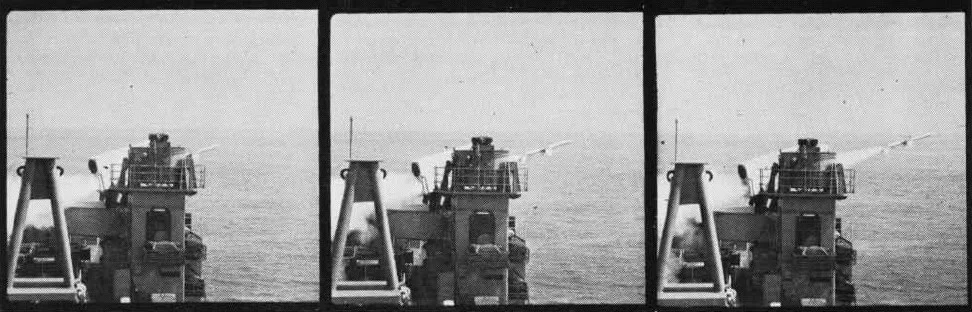
Barak MX (also designated MRSAM in Indian service) is a medium-range, vertically-launched surface-to-air missile system jointly developed by Israel Aerospace Industries (IAI) and India’s DRDO/BEL. Capable of engaging aircraft, helicopters, UAVs, cruise missiles, and short-range ballistic missiles out to 70 km, the system entered operational service with the Indian Navy in 2017 and has since become IAI’s most commercially successful air defense export, with contracts worth over $14 billion across India’s three services.
System Overview
Barak MX integrates point and area defense in a single VLS-based architecture. Key capabilities:
- Multi-layer defense: Engages threats from 0.5 km to 70 km simultaneously across threat categories.
- Active radar homing: Fire-and-forget engagement — the missile autonomously tracks its target using its onboard active radar seeker.
- Vertical launch: 360-degree coverage without trainable launchers; minimal deck space on vessels.
- Simultaneous multi-target engagement: Can guide multiple missiles against multiple targets in a single engagement cycle.
Technical Specifications
| Parameter | Value |
|---|---|
| Missile length | 4.5 m |
| Missile diameter | 225 mm |
| Launch weight | ~275 kg |
| Warhead | 60 kg HE fragmentation |
| Minimum range | 0.5 km |
| Maximum range | 70 km |
| Maximum altitude | 16 km |
| Speed | Mach 2+ |
| Guidance | Active radar seeker + mid-course INS/datalink |
| Launch mode | Cold vertical launch (VLS) |
| Radar (naval) | IAI ELM-2248 MF-STAR |
| Radar (land) | IAI ELM-2084 MMR |
Development History
Development began in the late 1990s as an evolution of IAI’s Barak 1 point-defense system. A joint development agreement with India was signed in 2006, making DRDO and BEL co-developers. First successful firing tests were conducted in 2011. Indian Navy achieved initial operational capability in 2017 on INS Kolkata-class destroyers. The Indian Air Force MRSAM variant was accepted in 2021; the Indian Army MRSAM contract was signed in 2022.
Export Contracts
| Customer | Variant | Value | Status |
|---|---|---|---|
| Indian Navy | Naval MRSAM | ~$3 billion | Operational (2017+) |
| Indian Air Force | AF-MRSAM | ~$5 billion | Partially operational (2021+) |
| Indian Army | Army MRSAM | ~$6 billion | Delivery phase (2022+) |
| Azerbaijan | Land version | Classified | Reported operational (2022+) |
| Israeli Navy | Barak 8 (Sa’ar 6) | Domestic | Operational |
Competitor Systems
| System | Country | Range | Guidance |
|---|---|---|---|
| Barak MX / MRSAM | Israel/India | 70 km | Active radar |
| MBDA VL MICA | France | 20 km | IR / Active radar |
| ESSM Block 2 (RIM-162) | USA | 50 km | Active radar |
| CAMM-ER (MBDA) | Europe | 45 km | Active radar |
| HHQ-16 | China | 40 km | Active radar |
Turkish Equivalent — HISAR and SIPER
Turkey covers Barak MX’s threat envelope through the domestically developed HISAR family (HISAR-A: 5 km; HISAR-O: 15 km; HISAR-O+: 25 km) and the longer-range SIPER program (100+ km, Block 2 targeting ballistic missiles). The SIPER system’s first firing was successfully completed in 2023 despite Western component restrictions. As the MİLGEM corvette program matures, integrating domestic air defense systems equivalent to Barak MX’s naval version will be a critical test for Turkey’s shipborne defense capability.
Envanter Media Assessment
Barak MX represents IAI’s most successful translation of technology partnership into sustained commercial dominance. The India program — spanning three services, domestic production rights, and a combined value exceeding $14 billion — demonstrates that IAI’s competitive advantage lies not just in missile performance but in its ability to build national defense industrial ecosystems alongside selling weapons. No other Western or Israeli competitor has replicated this depth of industrial partnership with India.