Capacity on Call: Four European Air Forces Start Sharing F-35s

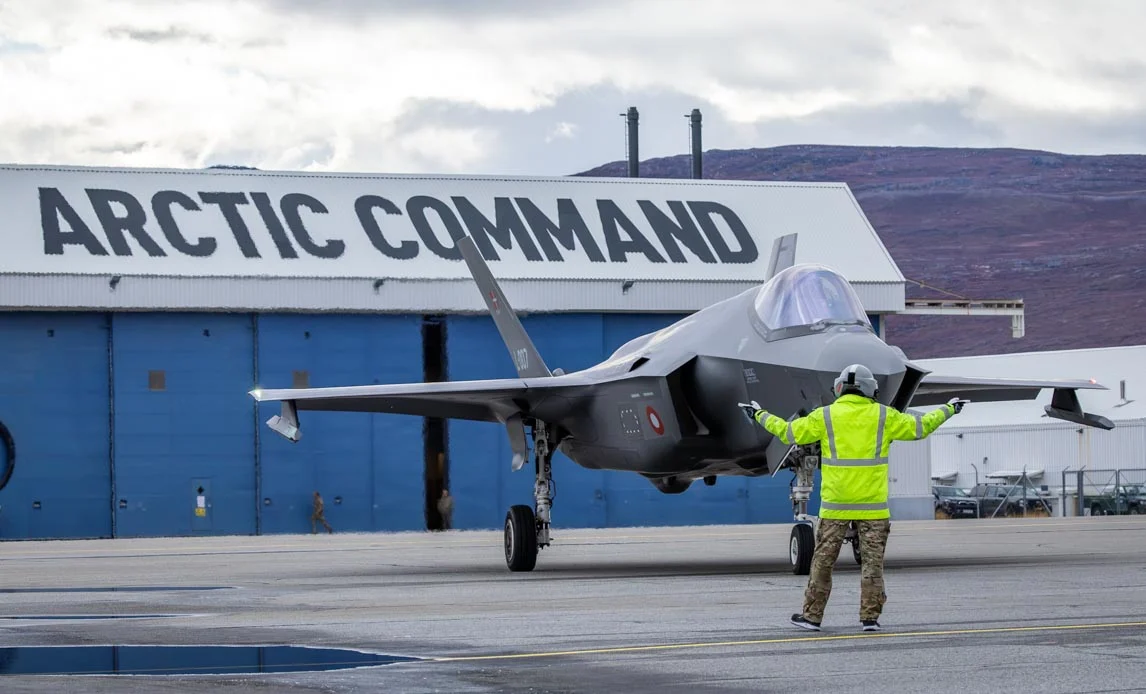
Belgium, Denmark, the Netherlands and Norway have begun trading F-35A airframes, weapons and maintenance crews between their air forces under an arrangement called Capacity on Call. The model was put through eight months of live testing during the 2026 Weapons Instructor Course.
Four air forces, one capability pool
Europe’s four F-35A operators have moved past shared procedures and into shared hardware. Under Capacity on Call, the Belgian, Danish, Dutch and Norwegian air forces can draw on one another’s aircraft, munitions, maintenance capacity and technical personnel within previously agreed rules.
The problem the arrangement addresses is a familiar one for any modern fighter fleet. Availability is rarely limited by how many aircraft sit on the ramp; it is limited by spares, by certified technicians and by how many airframes are out of the line for scheduled work on any given week. If a partner has slack in exactly the area where you are short, the aircraft that matters is the one you can borrow.
Tested at Leeuwarden and Ørland
The model was exercised throughout the 2026 Weapons Instructor Course, which opened in May at Leeuwarden Air Base in the Netherlands before moving its activities to Ørland in Norway. The eight-month course combines academics, tactical training, live weapons employment and multinational exercise phases — a demanding enough environment to expose whether a paper arrangement actually works.
What happened during the course is more instructive than the framework itself. Denmark borrowed five Norwegian F-35As and had Danish technicians handle their day-to-day maintenance. Danish pilots dropped Danish bombs from Dutch aircraft. Dutch pilots fired Dutch AIM-9X Sidewinders from Norwegian jets. At the Vliehors range, Dutch aircraft were loaded by multinational arming teams.
Why the F-35 makes this possible — and why it is still hard
The F-35 was designed around centralised configuration management and a common logistics architecture. Software blocks, spares pools and maintenance procedures are broadly standardised across the user community, which is precisely what makes cross-servicing technically feasible in a way it never was for earlier European fleets operating divergent national variants.
The technical part, however, was never the hard part. Each nation runs its own airworthiness authority, its own weapons certification chain and its own security classification regime. Hanging a Danish weapon on a Dutch aircraft requires a certification and liability chain both states recognise. Capacity on Call’s real achievement is administrative: it aligns the paperwork with the engineering.
What it means for NATO’s European air power
Norway and the Netherlands were early programme partners; Denmark and Belgium have been receiving aircraft more recently. All four operate the same A model, which removes the configuration mismatches that would otherwise complicate pooling. Together they account for a substantial share of Europe’s fifth-generation inventory outside the United Kingdom and Italy.
For NATO planners, the attraction is straightforward: a way to raise the number of jets that can actually be generated in a crisis without buying more jets. Whether that translates into operational practice is a separate question.
The unresolved questions
As it stands, the arrangement has been demonstrated in a training context. The stated ambition is to turn it into something usable on real operations, and that is where the difficult issues sit. Who carries liability if a borrowed aircraft is lost. Whose rules of engagement govern a sortie flown by one nation’s pilot in another nation’s jet. Whether munitions loaded onto an allied airframe remain subject to the exporting state’s national controls.
None of the four defence ministries has published a detailed legal framework covering those points, and no timeline has been announced for extending Capacity on Call beyond exercises.
Sources
- Netherlands Ministry of Defence (Ministerie van Defensie) — Weapons Instructor Course 2026 activity releases and imagery
- Royal Norwegian Air Force (Luftforsvaret) — Ørland WIC 2026 activities
- Aviacionline, “Four European operators take the F-35 into a shared fleet model”, 19–20 September 2026
- Zona Militar, 20 September 2026