Peru Asks Congress for $348M to Fund Second Batch of 12 F-16 Block 70s

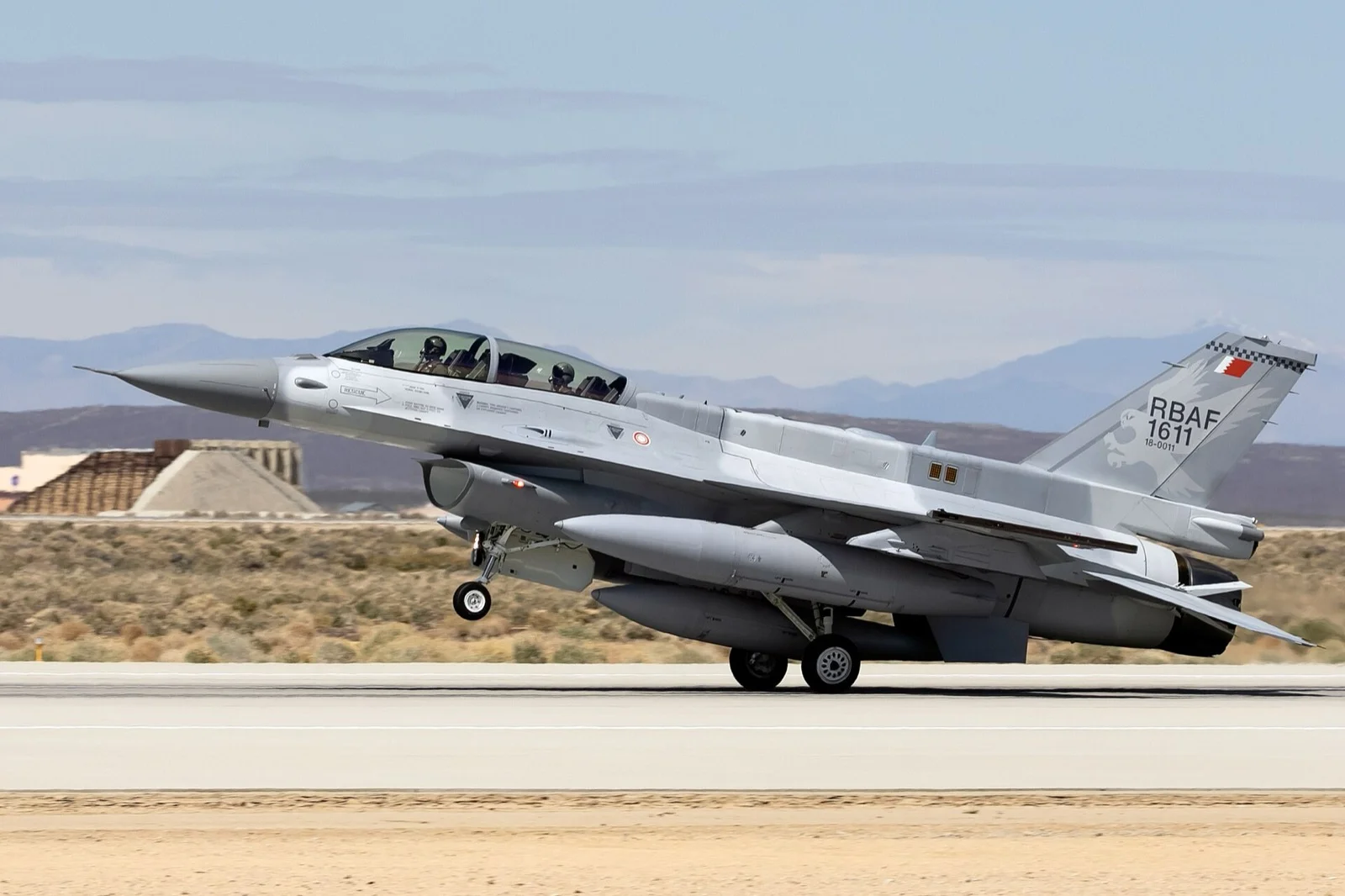
Peru’s government has submitted a bill to Congress requesting supplementary budget credits to finance a second batch of 12 F-16 Block 70 fighters from Lockheed Martin. The bill, introduced on September 30, 2026, calls for 1,197 million soles, roughly $348 million.
The second tranche would complete a 24-aircraft programme. The first 12-jet contract was signed in April 2026, with an initial disbursement of $462 million. The government says the second contract must be finalised by the end of 2026, with the corresponding funds obligated within the same fiscal year.
The programme has not advanced smoothly. Interim President José María Balcázar abruptly postponed the signing ceremony for the first 12 aircraft, arguing that a financial commitment of this scale should be left to the incoming administration. The decision triggered political fallout in Lima, prompting the resignations of Defence Minister Carlos Díaz and Foreign Minister Hugo de Zela, both of whom opposed Balcázar’s move.
Peru’s government stresses that the new spending will not destabilise public finances. Strong mineral export revenues are projected to bring the 2026 fiscal deficit down to its lowest level since 2015, in the 1.2-1.4% range; officials say the additional F-16 expenditure will not alter that trajectory.
The F-16 Block 70 is described as the newest and most capable version of the F-16 in production, measuring 15 metres in length, 5 metres in height and 9.4 metres in wingspan, with a top speed of Mach 2. Lockheed Martin markets the variant as offering the longest service life, lowest lifecycle cost and broadest global support network among F-16 versions currently built.
Peru’s existing fighter fleet is largely aged, and the Block 70 deliveries are meant to bring the air force’s deterrent capacity onto a modern platform. Once complete, the programme would place Peru alongside neighbours such as Chile and Colombia in pursuing a similar modernisation path built around the F-16.
Latin America’s fighter market is no longer limited to US-origin offers alone. South Korea’s KAI is actively marketing its FA-50 across the region, while Turkey’s fifth-generation KAAN programme has drawn early-stage interest in markets such as Spain — a diversification that points to intensifying competition in future Latin American procurement decisions. Peru’s current path stays firmly within the US supply line, but the broader regional trend is shifting toward a more multipolar supplier landscape.
Peru’s air force has long operated Soviet-era MiG-29s and French-built Mirage 2000s, both of which have grown increasingly costly to sustain in spare parts and maintenance. Shifting to a single modern fleet type is intended to simplify logistics and bring training and maintenance closer to NATO-aligned standards.
Congress must approve the bill within a tight window before the fiscal year closes. Any delay in approval could affect the timing of the second contract and, by extension, the delivery schedule for the remaining 12 aircraft.
Sources
- Infodefensa, “Perú inicia el trámite para la compra del segundo lote de 12 cazas F-16 Bloque 70”, October 5, 2026, 12:00 CEST — https://www.infodefensa.com/texto-diario/mostrar/6038726/peru-inicia-tramite-compra-segundo-lote-12-cazas-f-16-bloque-70 — primary source for budget figures and timeline
- EDR Magazine, “Peru selects Lockheed Martin F-16 Block 70, strengthening sovereignty and U.S. partnership” — confirmation of the first contract and political background
- Military Embedded Systems, “F-16 Block 70 fighter aircraft selected for Peru by Lockheed Martin” — technical specification confirmation