Safran to Double Texas Turbojet Output by 2028, Adding New NSM Engine Line

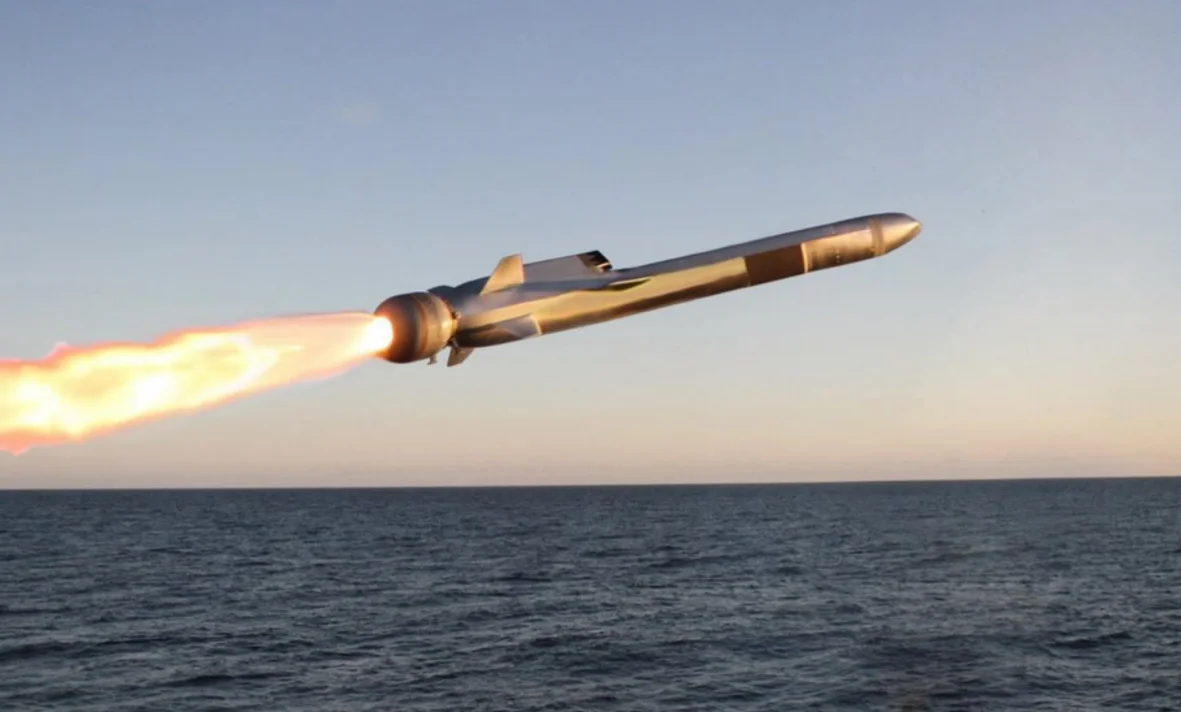
French engine maker Safran Power Units has announced plans to double turbojet production capacity at its Grand Prairie, Texas facility by 2028. At the centre of the investment is a new assembly line dedicated to the TR40 engine family, which powers the Kongsberg-built Naval Strike Missile (NSM).
According to Safran, demand for TR40 engines has quadrupled in recent years, a surge the company attributes largely to the broader global expansion of the missile and drone markets. With more than 20 years of operational history, the TR40 family has already logged over 1,200 units delivered worldwide.
The Grand Prairie site is one of 71 Safran locations across the United States, where the group employs more than 11,000 people. Once the new line comes online in 2028, Safran says it stands ready to expand capacity further based on the needs of the American defence industry.
Safran CEO Olivier Andries said the investment is intended to strengthen “the resilience of critical supply chains,” language that echoes concerns raised across NATO members in recent years about munitions bottlenecks. Reducing dependence on a single production line for core guided-weapon components has become a priority for sustaining delivery continuity during periods of heightened demand.
NSM is described as a fifth-generation anti-ship missile, cruising at Mach 0.7-0.9 with a low radar cross-section and sea-skimming flight profile designed to evade air defence systems. Operators include the US Navy and Marine Corps, and the Spanish Navy’s F100 and F110-class frigates; Norway, Poland, Malaysia, Germany, Japan, Romania, Canada, Australia, Denmark and the United Kingdom have also adopted the NSM/JSM family.
The TR40 family is known for its compact design and high thrust-to-weight ratio, characteristics that allow the missile to achieve sufficient range and manoeuvrability within a constrained airframe volume. The engine also powers other guided munitions derived from the same family.
The investment fits a broader pattern of NATO and allied navies expanding their anti-ship missile inventories. Russian naval activity in the Black Sea and Baltic, alongside intensifying maritime competition in the Indo-Pacific, has pushed many navies to accelerate investment in long-range, low-observable anti-ship weapons. Indigenous alternatives such as Roketsan’s ATMACA aim to fill a similar operational gap; Safran’s capacity expansion helps Western suppliers maintain competitiveness in that same space.
Safran’s Texas footprint is not new. The company has steadily expanded its investment in the state since 2016, often promoting the idea that “everything is bigger in Texas” as it grows its regional presence. The new assembly line represents the latest chapter in that long-running growth strategy, with the facility reportedly designed to allow further expansion once its initial capacity is filled.
Sources
- The Defense Post, “Safran to Double Texas Production of Naval Strike Missile Engines”, October 5, 2026, 08:57 UTC — https://thedefensepost.com/2026/10/05/safran-nsm-missile-engines/ — primary source for figures and timing
- defence-industry.eu, “Safran to double Texas turbojet capacity by 2028 to meet rising missile and drone demand and add Naval Strike Missile engine assembly” — confirmation and additional technical detail
- Kongsberg Defence & Aerospace, Naval Strike Missile product page — NSM operator countries and specifications