Tron TRPA RF power amplifiers: L band and 18-40 GHz

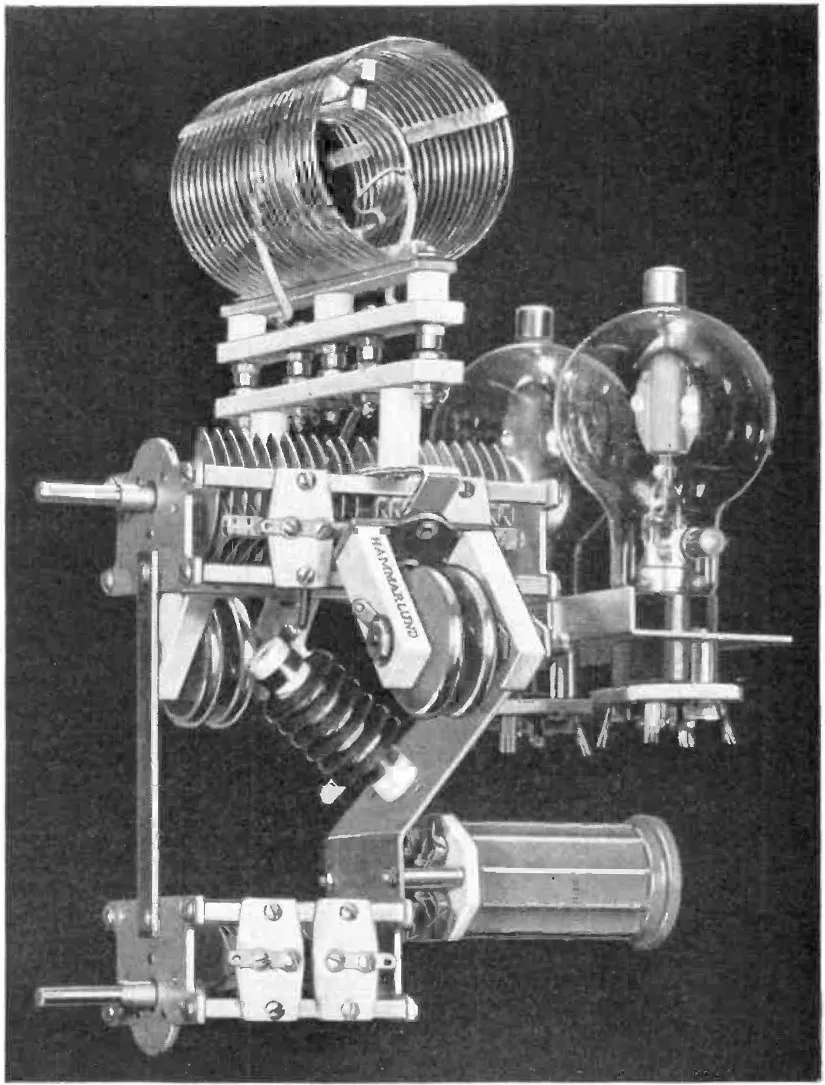
Quick answer: TRPA is Tron Elektronik’s RF power amplifier product family. In the SSB 2026 Product Catalogue entry the family is listed as L band and 18-40 GHz power amplifiers. The company’s archived product pages carry one L band power amplifier from this family under the model name TRPA-L-015C. There is also a group of amplifier modules coded TRA: the TRA-0115, TRA-0122, TRA-0314, TRA-0315, TRA-0330 and TRA-1628 appear in archived listings. Output power, gain and efficiency values for these products are not published in public sources.
What does an RF power amplifier do?
The power amplifier is the last stage in a transmitter before the signal is handed to the antenna. Its job is to raise a low-level signal to the power the antenna needs. That is where it differs from the preamplifier on the receive side: a preamplifier enlarges a weak signal without adding noise, while a power amplifier enlarges a strong signal without distorting it.
Two quantities pull against each other in that job. The harder the amplifier is pushed towards higher power, the better its efficiency but the worse its linearity; frequencies that were not in the input appear at the output. To preserve linearity the amplifier is run below its saturation point, which lowers efficiency and produces heat. The quality of a power amplifier design shows in the balance struck between those three quantities.
The family and its models
| Product / group | Scope | Source | Published performance |
|---|---|---|---|
| TRPA L band | L band power amplifiers | SSB 2026 catalogue entry | Not officially disclosed. |
| TRPA-L-015C | L band power amplifier | Archived product page (title only) | Not officially disclosed. |
| TRPA 18-40 GHz | Power amplifiers in bands close to millimetre wave | SSB 2026 catalogue entry | Not officially disclosed. |
| TRA-0115 / 0122 | Amplifier modules | Archived product list | Not officially disclosed. |
| TRA-0314 / 0315 / 0330 | Amplifier modules | Archived product list | Not officially disclosed. |
| TRA-1628 | Amplifier module | Archived product list | Not officially disclosed. |
The code structure of the TRA models may look as though it points to a frequency range, but the company has not published what the codes stand for. Because inferring a frequency range from the codes would be speculation, that step has not been taken in this file.
What does 18-40 GHz mean?
The 18-40 GHz band cited in the SSB 2026 catalogue covers part of the K, Ka and Q bands. Working at those frequencies calls for a different design discipline from the lower bands: as the wavelength drops to the millimetre scale, the physical length of the transmission lines on the circuit directly determines electrical behaviour, losses rise and assembly tolerances tighten.
The company’s statements about this band are supported in two sources. The archived corporate timeline carries a record of design capability above 10 GHz for 2019; the SAHA İstanbul company profile states that design is carried out up to 40 GHz. Those two records are consistent with the 18-40 GHz range in the SSB catalogue entry. Which product the band belongs to, and its output power, have not been officially disclosed.

Traces of the broadband heritage
The company’s amplifier experience is older than its defense segment. The archived corporate timeline records the first cable TV amplifier design in 2003, the DOCSIS 3.1 series in 2016 and work on DOCSIS 4.0 in 2019. Cable network amplifiers carry many carriers at once across a wide frequency band, which makes them a demanding application in terms of intermodulation performance.
The company’s practice of tying its move into defense electronics to that experience finds a technical counterpart at this point: the problem of preserving linearity in a multi-carrier environment rests on the same physics in cable networks and in spectrum monitoring applications. That power amplifier design appears on the 2020-2021 line of the archived timeline on the defense side is consistent with that sequence.
Where are they used?
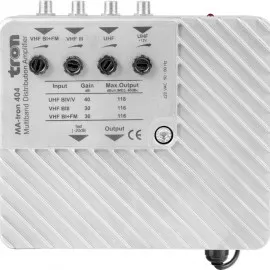
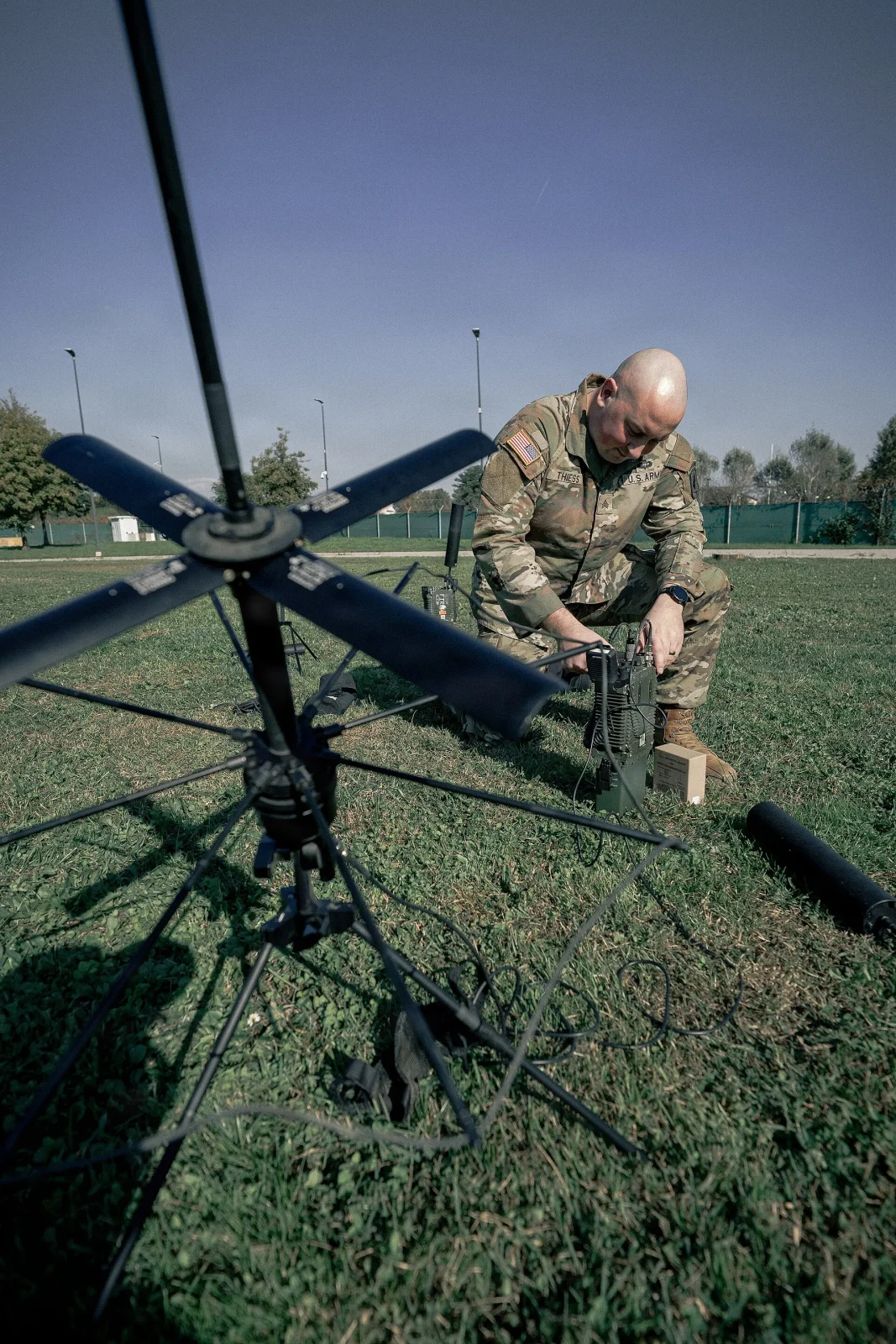
The company’s archived solutions menu positions the power amplifiers under electronic warfare, radio communications and aviation. In the current product categories on the official site, amplifiers appear under the RF modules heading in the “RF Amplifiers & Dividers” subgroup.
The TRR-L-758-805 VHF/UHF/LTE repeater, one of the company’s newer products and described as designed to sustain radio coverage in enclosed spaces, also rests on the amplification function. A repeater is a device that takes a weakly received signal, amplifies it and retransmits it. The whole product group is listed in the product guide; the company’s general profile is in the hub file.
Frequently asked questions
What is the output power of the TRPA amplifiers?
Output power, gain and efficiency values are not published in public sources. Not officially disclosed.
What is the difference between a power amplifier and a preamplifier?
A preamplifier is used on the receive side to enlarge a weak signal without adding noise. A power amplifier, on the transmit side, raises the signal to the power the antenna needs.
Does the company really design up to 40 GHz?
The SAHA İstanbul company profile states design capability up to 40 GHz, and the SSB 2026 catalogue lists 18-40 GHz power amplifiers. No product-level verification of these statements has been published.
What do the TRA module codes mean?
The company has not published what the codes stand for. Inferring a frequency range from a code is not verifiable information, and has therefore not been done in this file.
To which standards are the amplifiers built?
The company states that all of its engineering and production activity is certified under AS9100. Product-specific qualification documents have not been published.
Sources and verification note
The model names in this file rest on the company’s archived product listings and the SSB 2026 Product Catalogue entry. The archived TRPA-L-015C page carries only the product title and no technical text, so no product characteristics are given for it. Because the frequency equivalents of the TRA module codes are not published, no inference was drawn from them. Accessed: August 12, 2026.
- https://tron.com.tr/
- https://web.archive.org/web/2022/https://tron.com.tr/en/product/trpa-l-015c
- https://web.archive.org/web/2022/https://tron.com.tr/en/product/tra-0115
- https://web.archive.org/web/2022/https://tron.com.tr/en/product/tra-1628
- https://www.sahaistanbul.org.tr/firma/tron-elektronik-sistemleri-san-ve-tic-a-s
- SSB 2026 Product Catalogue, Tron Elektronik entry