GÖKBEY Firefighting Variant: What Aerial Firefighting Requires and What Has Not Been Disclosed

Turkish Aerospace (TUSAŞ) lists firefighting support among the mission profiles of the GÖKBEY (T625) helicopter. Earlier parts of this series covered the MEDEVAC, search and rescue, coast guard and VIP roles. This article looks at what aerial firefighting demands from a helicopter, how GÖKBEY’s published characteristics fit the task, and which details are still undisclosed.
What aerial firefighting demands from a helicopter
A helicopter does not extinguish a wildfire on its own. It cools the fire line and slows spread so ground crews can work. The mission is a repeated cycle of dipping water from a lake, reservoir or the sea, dropping it on the fire line and returning quickly. Payload, power reserve in hot air, low-level manoeuvrability and engine reliability decide how effective the aircraft is.
How external water buckets apply to GÖKBEY
In this weight class, firefighting is usually done with a flexible bucket (a “bambi bucket”) hung from the cargo hook. No fixed tank is needed, so the helicopter returns to its normal configuration after the task. The same airframe can drop water in the morning and carry personnel in the afternoon, which matches GÖKBEY’s multi-role design approach.
The cargo hook capacity, approved bucket volume, any fixed-tank option and a firefighting kit for GÖKBEY have not been officially disclosed. Task assessments here rest on class practice and published baseline performance; no certified firefighting configuration has been announced.
Turkey’s aerial firefighting fleet
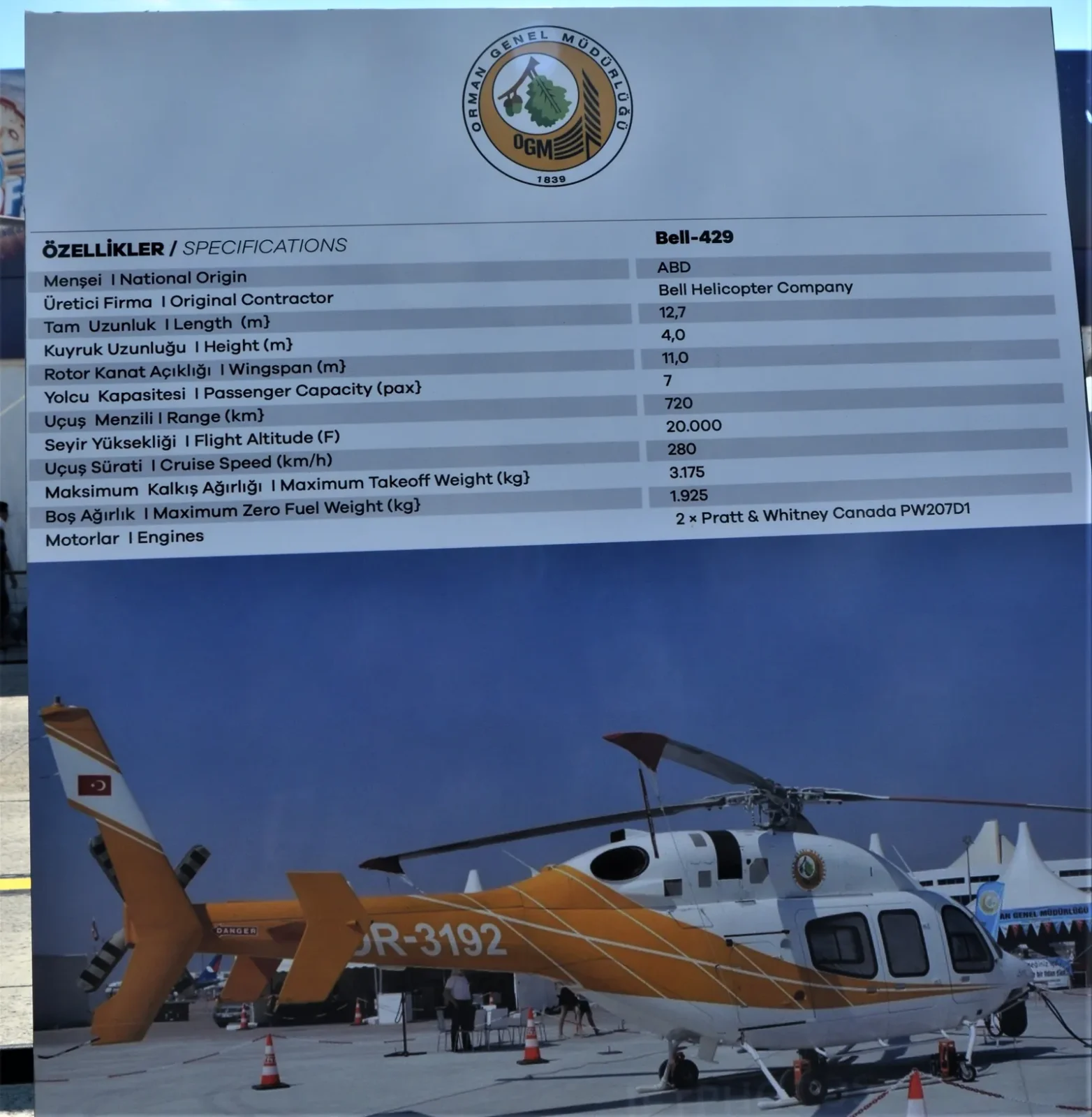
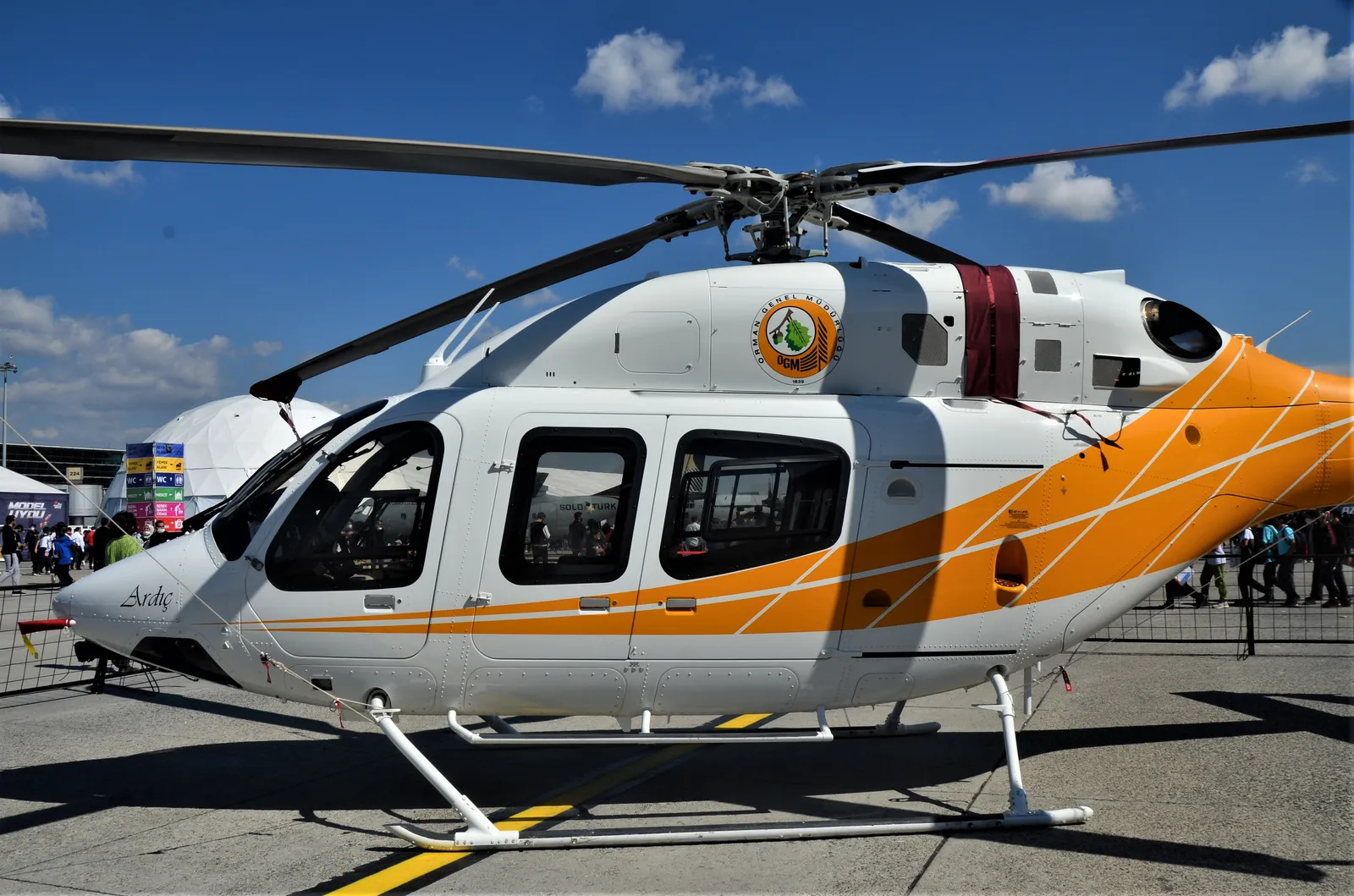
Aerial response to forest fires in Turkey is coordinated by the General Directorate of Forestry (OGM). Its fleet includes light twin helicopters such as the Bell 429, and in peak seasons it is supported by heavy helicopters and aircraft hired from civil operators. A domestically designed medium twin could fit into this structure, but no firefighting order for GÖKBEY from OGM or any other agency has been officially announced.
Class comparison
GÖKBEY sits in the middle: more payload and cabin than light types, less water volume than heavy firefighters. Initial attack, ground-crew support and personnel transport are the roles the class suggests. That is an assessment, not an official statement.
Frequently asked questions
Can GÖKBEY be used as a firefighting helicopter? TUSAŞ lists firefighting support among its mission profiles. A certified firefighting kit and bucket capacity have not been officially disclosed.
How many litres of water can GÖKBEY carry? No official figure has been published. It would depend on the cargo hook rating and mission weight.
Who operates firefighting helicopters in Turkey? Aerial response is coordinated by the General Directorate of Forestry, whose fleet includes Bell 429 helicopters.
Is there a firefighting order for GÖKBEY? No such order has been officially announced.
Is GÖKBEY suited to hot conditions? Hot-and-high performance is among the programme’s goals; certified firefighting-specific figures have not been published.