EJ200 Turbofan Engine: The Rolls-Royce/EUROJET Powerplant Behind the Eurofighter Typhoon — Full Technical Profile 2026

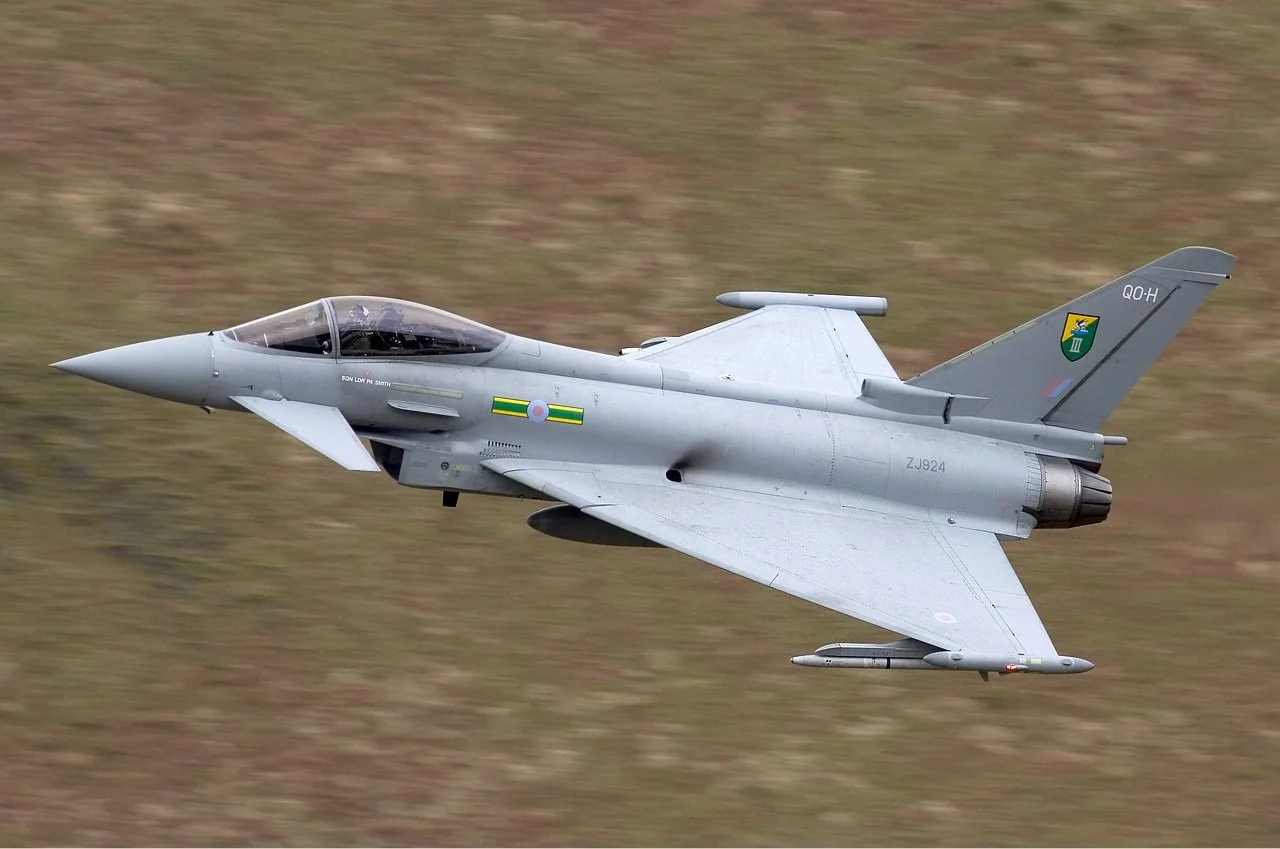
The EJ200 is the afterburning turbofan engine powering the Eurofighter Typhoon, jointly developed by the EUROJET Turbo GmbH consortium — comprising Rolls-Royce (33%), MTU Aero Engines (33%), Avio Aero (21%), and ITP Aero (13%). It represents the most significant independently-developed European military jet engine programme of the post-Cold War era, delivering proven combat performance across operations in Yemen, Libya, and against ISIS in Iraq and Syria.
Development History
Formed in 1986 on the basis of the Rolls-Royce XG-40 technology demonstrator, EUROJET received the development contract in 1987 and the production contract in 1998. The engine first ran in 1988 and entered production service with NATO air forces from 2003 onwards. The 1,400-engine production contract covers partner nation fleets; over 700 engines have been delivered to date.
Technical Specifications
| Parameter | Value |
|---|---|
| Type | Low-bypass afterburning turbofan |
| Dry Thrust | 60.0 kN (13,490 lbf) |
| Augmented Thrust | 89.3–90.0 kN (20,000–20,250 lbf) |
| Thrust-to-Weight | >9:1 |
| Overall Pressure Ratio | 26:1 |
| Compressor Stages | 3 LP + 5 HP |
| Control System | Dual-channel FADEC |
| Dry Weight | ~988 kg |
| TBO | 6,000 hours |
Operators
Germany (~140), UK (~157), Italy (~96), Spain (~73), Austria (15), Saudi Arabia (72+), Qatar (24), Kuwait (28), Oman (12). Saudi Arabia is the largest export customer with combat-confirmed operations in Yemen since 2015 — the engine has recorded no combat losses attributable to propulsion failure.
Key Contracts
- Saudi Arabia Al Salam (2005): ~£4.4bn for 72 Typhoons; largest single-nation export.
- Qatar (2017): 24 Typhoons in a £6bn+ package.
- Kuwait (2016): 28 Typhoons, 60 EJ200 engines contracted.
- EJ230 upgrade proposal: ~100 kN, improved SFC for Tranche 4 — negotiations ongoing.
Competitors
Principal competitors include the GE F414-GE-400 (98 kN, F/A-18E/F and Gripen E), Safran M88-2 (75 kN, Rafale), and GE F110 family. The EJ200 maintains competitive parity with the F414 on thrust-to-weight ratio while offering European supply-chain independence not available with US-sourced alternatives.
Turkey Assessment
Turkey has no operational EJ200 equivalent. The TEI TF35000 programme targets ~156 kN — significantly more ambitious than EJ200 — but remains in development with no confirmed operational date. ASELSAN has an MOU with EUROJET for engine control software, providing incremental capability building. The gap between Turkey’s current fighter propulsion situation (foreign dependency) and the EJ200’s four-nation independent model illustrates both the difficulty and the strategic value of indigenous turbofan development.